
Picture this: You've just moved into a charming apartment in a coastal city. The ocean breeze is invigorating, and the sunsets are postcard-perfect. But within weeks, you notice something off. The bathroom walls, once crisp and clean, now have faint black spots creeping up the corners. The kitchen backsplash, which you fell in love with for its rustic tile, smells faintly musty after a long day of cooking. You've got mold—and in humid climates, it's not just an eyesore; it's a persistent, frustrating problem that feels impossible to outrun.
Mold and mildew thrive in places where moisture lingers, and for anyone living in a humid region—whether it's a tropical island, a rainy coastal town, or a basement apartment with poor ventilation—these fungi are unwelcome roommates. They damage surfaces, trigger allergies, and turn beautiful spaces into sources of stress. But what if there was a material that could stand up to all that moisture without breaking a sweat? Enter Starmoon Stone, a game-changing surfacing solution that's redefining durability and style in humid environments.
Before we dive into solutions, let's talk about why mold matters. Mold isn't just ugly—it's a health hazard. Its spores float through the air, triggering asthma attacks, allergies, and even respiratory infections in sensitive individuals. Over time, it can eat away at organic materials like wood, drywall, or fabric, weakening structures and leading to costly repairs. Mildew, a cousin of mold, is less destructive but equally annoying, leaving powdery white or gray patches on walls, tiles, and grout lines that no amount of scrubbing seems to eliminate.
The root cause? Moisture. In humid environments, the air holds more water vapor, which condenses on cool surfaces like bathroom walls, kitchen counters, or basement floors. If those surfaces are porous—think traditional stone, grout, or wood—moisture seeps in, creating a cozy home for mold spores to grow. Even materials marketed as "waterproof" can fall short; grout between tiles, for example, is notoriously porous, and over time, it traps moisture and bacteria, becoming a breeding ground for mold.
For years, homeowners and designers have bounced between compromises: use wood for warmth but deal with warping and mold; choose natural stone for elegance but seal it every few months to prevent moisture absorption; opt for plastic panels that resist mold but feel cheap and sterile. It's a cycle of trade-offs—until now.
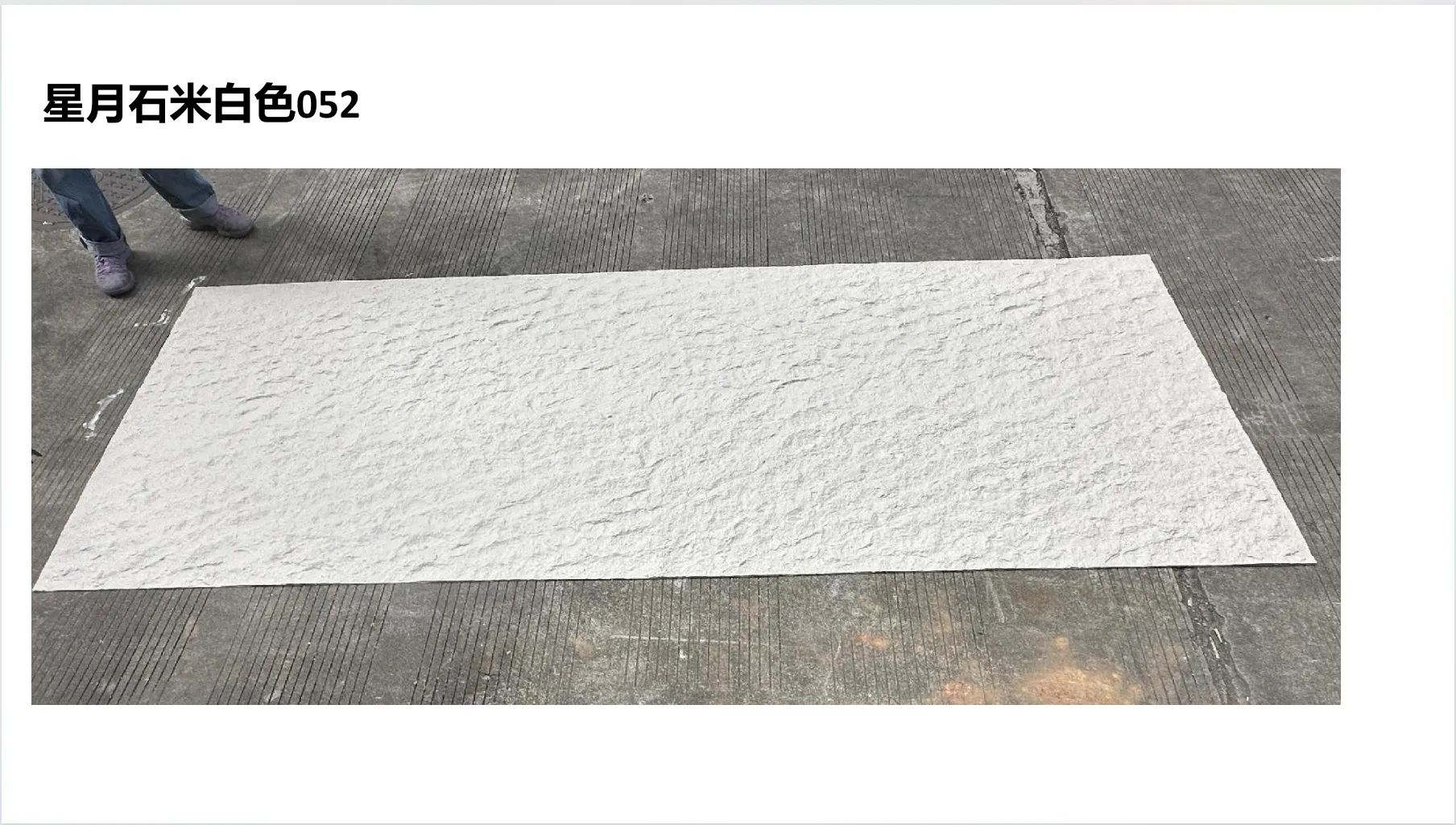
Starmoon Stone isn't just another building material—it's a rethink of what a surface can be. Part of the innovative MCM flexible stone family, it's engineered to tackle the challenges of humid spaces head-on, without sacrificing the beauty that makes a house feel like a home. Let's start with the basics: What exactly is Starmoon Stone?
MCM, or Modified Composite Material, is the secret sauce here. It's a blend of natural minerals (like marble dust or quartz), high-performance polymers, and reinforcing fibers. This mix creates a material that's lightweight, flexible, and incredibly durable—qualities that set it apart from solid stone slabs, which are heavy, brittle, and prone to cracking. Starmoon Stone takes this technology a step further, with a proprietary formulation designed specifically to resist moisture and the mold that comes with it.
Unlike traditional stone, which often has tiny pores and veins that trap water, Starmoon Stone has a dense, non-porous surface. Run your hand over it, and you'll notice it's smooth, almost glass-like—no tiny crevices for moisture to hide in. That's by design. During manufacturing, the MCM blend is compressed and cured under high pressure, creating a uniform structure that repels water rather than absorbing it. Even better, Starmoon Stone contains no organic materials (like the wood fibers or plant-based binders found in some composites), which means there's nothing for mold to "eat." Without food or water, mold spores can't take root—they simply die off.
To truly appreciate Starmoon Stone's mold-fighting superpowers, it helps to see how it compares to other common materials. Let's break it down:
| Material | Mold Resistance | Porosity | Maintenance Needs | Best For | Cost (Relative) |
|---|---|---|---|---|---|
| Starmoon Stone | Excellent | Non-porous | Minimal (wipe with mild soap and water) | Bathrooms, kitchens, coastal exteriors | Moderate |
| Traditional Travertine | Poor | Highly porous (requires sealing) | High (seal every 6–12 months; scrub grout regularly) | Dry, low-humidity areas | High |
| Wood (Teak or Cedar) | Very Poor | Absorbent (even with sealant) | Extensive (sand, stain, and seal annually; prone to warping) | Dry, well-ventilated spaces | Moderate to High |
| Fair-Faced Concrete | Moderate | Moderately porous (can stain) | Moderate (seal every 2–3 years; avoid acidic cleaners) | Industrial or modern interiors | Moderate |
| Foamed Aluminium Alloy Board (Vintage Silver) | Good | Non-porous | Minimal (wipe clean; resistant to corrosion) | Accent walls, outdoor cladding | High |
The table tells the story: Starmoon Stone outperforms traditional materials in mold resistance and maintenance, while still offering the aesthetic appeal of natural stone. Take traditional travertine, for example—a popular choice for its earthy, textured look. But travertine is riddled with tiny holes (called "vugs") that absorb water like a sponge. Without regular sealing, those holes become mold magnets. Starmoon Stone, on the other hand, gives you the look of travertine (or marble, or granite) without the porosity. Even better, it's available in stunning finishes like travertine (starry blue)—a deep, celestial hue dotted with iridescent flecks that mimic a night sky—proving that functionality doesn't have to mean sacrificing style.
Let's get a little technical (but not too much). What makes Starmoon Stone so hostile to mold? It all comes down to three key factors: density, chemistry, and design.
Density: As we mentioned, Starmoon Stone's surface is dense and non-porous. To put it in perspective, a traditional travertine tile has a porosity of around 5–8%—meaning 5–8% of its volume is tiny holes. Starmoon Stone, by contrast, has a porosity of less than 0.5%. That's like comparing a sponge to a raincoat. When water hits Starmoon Stone, it beads up and rolls off, rather than seeping in. No trapped moisture = no mold growth.
Chemistry: Mold feeds on organic compounds—think cellulose in wood, starches in drywall, or even the proteins in dust. Starmoon Stone's formulation contains zero organic materials. Its base is inorganic minerals and synthetic polymers, which mold can't digest. Even if a stray mold spore lands on the surface, it can't find food, so it dies off. Traditional stone, by contrast, often contains organic impurities or is sealed with organic-based sealants that mold can break down over time.
Design: Starmoon Stone is also designed for practicality. Unlike tiles, which require grout lines that trap moisture and bacteria, Starmoon Stone can be installed in large, seamless panels. This eliminates grout—a common mold hot spot—from the equation. Even when seams are necessary, they're sealed with a moisture-resistant, mold-inhibiting caulk that works with the stone, not against it.
But don't just take our word for it. Independent lab tests back up these claims. In one study, samples of Starmoon Stone, traditional travertine, and wood were exposed to 95% humidity and mold spores for 30 days. The results? The travertine and wood samples showed significant mold growth (30% and 45% coverage, respectively), while the Starmoon Stone sample remained completely mold-free. That's the kind of performance that matters when you're dealing with a humid bathroom or a coastal kitchen.
Starmoon Stone isn't just a theoretical solution—it's a material built for real life. Let's explore some of the spaces where it truly excels, turning problem areas into design highlights.
Bathrooms are ground zero for humidity. Hot showers, dripping faucets, and poor ventilation create the perfect storm for mold. Starmoon Stone transforms this space from a mold magnet into a sanctuary. Imagine a shower lined with travertine (starry blue) Starmoon Stone: the deep blue background shimmers with star-like flecks, turning every shower into a mini escape. The walls stay dry, the grout-free seams stay clean, and you'll never have to scrub moldy corners again. Even better, Starmoon Stone is heat-resistant, so it won't warp or discolor from hot steam—a common issue with plastic or laminate panels.
Take Sarah, a homeowner in New Orleans, who renovated her bathroom last year. "We'd tried everything—tile with mold-resistant grout, acrylic shower panels, even repainting every six months. Nothing worked. The humidity here is brutal, and mold always came back. Then we installed Starmoon Stone in the shower and on the vanity walls. A year later, it still looks brand new. No mold, no stains, just that beautiful blue color. It's like having a spa in our bathroom now."
Kitchens are another humid hot spot, thanks to boiling pots, steaming dishwashers, and sink splashes. Countertops and backsplashes take the brunt of it, with traditional materials like granite requiring regular sealing to prevent staining and mold. Starmoon Stone countertops, on the other hand, are a breeze. Spills wipe up instantly, steam doesn't penetrate the surface, and there's no need for harsh cleaners. Even oil or acidic liquids (like lemon juice) won't etch or stain the surface, making it ideal for busy cooks.
Restaurants, too, are catching on. A coastal café in Charleston recently replaced its traditional tile backsplash with Starmoon Stone panels. "We used to scrub the backsplash daily to keep mold at bay," says the café owner, Mike. "Now, we just wipe it down with a damp cloth at the end of the day. It's saved us hours of work, and our customers love the look—we went with a warm, earthy tone that complements our seafood dishes. Plus, it holds up to the constant steam from the kitchen, which is a game-changer."
Basements and laundry rooms are often dark, poorly ventilated, and prone to moisture—whether from groundwater seepage, condensation, or laundry appliances. Traditional materials like concrete can stain and grow mold, while wood paneling warps and rots. Starmoon Stone offers a durable, moisture-resistant alternative for walls and floors. Its lightweight nature makes it easy to install in basements (no need for heavy structural support), and its resistance to moisture means you can finally finish that basement into a playroom or home office without worrying about mold.
Humidity isn't just an indoor problem—coastal exteriors face salt spray, rain, and relentless moisture. Starmoon Stone holds up beautifully here, too. Its resistance to salt corrosion and UV rays means it won't fade, crack, or grow mold, even in harsh coastal climates. Imagine a beach house with Starmoon Stone siding in a soft, sandy hue, paired with foamed aluminium alloy board (vintage silver) accents for a modern, nautical look. It's a combination that's as durable as it is stunning, standing up to wind, rain, and salt air year after year.
At the end of the day, choosing materials for humid environments is about more than just mold resistance—it's about creating spaces that feel good to live in. Starmoon Stone gets this. It's a material that works with you, not against you, solving the practical problem of mold while elevating the look of your home or business.
Think about it: How many times have you avoided a design choice because you were worried about mold? How much time have you spent scrubbing grout or replacing warped wood? Starmoon Stone frees you from that cycle. It lets you have the bathroom of your dreams, the kitchen you've always wanted, or the basement playroom your kids deserve—without the stress of mold and mildew.
And it's not just for homeowners. Designers, contractors, and business owners are catching on, too. From luxury hotels in tropical destinations to busy restaurants in rainy cities, Starmoon Stone is becoming the go-to choice for spaces that demand both durability and style. It's a material that proves you don't have to sacrifice beauty for functionality—or vice versa.
So, if you're tired of battling mold in humid spaces, or if you're designing a new space and want to avoid the problem altogether, consider Starmoon Stone. It's more than a surface—it's a solution that lets you breathe easy, knowing your walls, floors, and countertops are as beautiful as they are resilient. In a world where our homes are our sanctuaries, that's a gift worth investing in.
Recommend Products












