
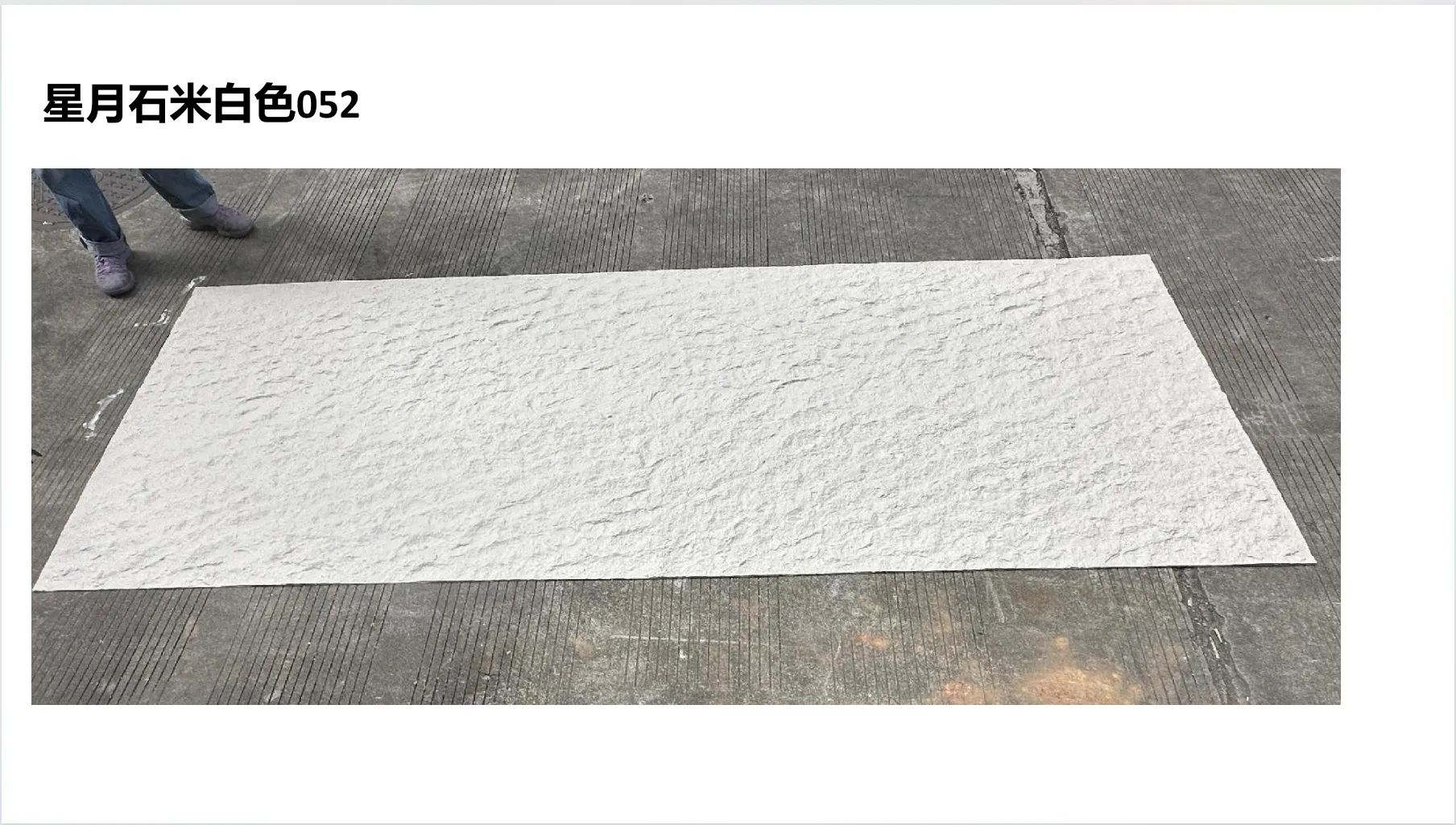
Picture this: You've just spent months designing your dream outdoor patio. The tiles are a rich, earthy travertine (starry green), the facade features sleek lines of lunar peak silvery, and every detail feels like a reflection of your style. Then, a year passes. The sun beats down day after day, and slowly but surely, that vibrant green fades to a dull gray. The silvery sheen? Now a patchy, lackluster version of its former self. Sound familiar? For homeowners, architects, and designers alike, the battle against UV rays is one of the most frustrating challenges of creating outdoor spaces that stand the test of time. But what if there was a material that didn't just tolerate the sun—what if it thrived under it? Enter Starmoon Stone, a game-changer in the world of exterior design, and a hero for anyone who refuses to let UV rays steal their space's beauty.
Before we dive into how Starmoon Stone solves this problem, let's talk about the enemy: ultraviolet (UV) radiation. The sun emits three types of UV rays—UVA, UVB, and UVC—but it's UVA and UVB that cause the most damage to building materials. UVA rays penetrate deep into surfaces, breaking down the chemical bonds in pigments and dyes, while UVB rays are responsible for surface-level degradation, like chalking or discoloration. Over time, this double whammy turns once-vibrant reds into pinks, deep blues into pastels, and rich grays into washed-out shadows.
Traditional materials like regular travertine, concrete, or even some types of natural stone are particularly vulnerable. Take travertine (starry red), for example—a popular choice for patios thanks to its unique veining. Without proper protection, its warm red hues can fade to a pale salmon in just 2-3 years of direct sunlight. Similarly, wood decking, while charming, often requires annual staining to combat UV damage, and even then, it's a losing battle. For architects and homeowners, this means constant maintenance, unexpected replacement costs, and the disappointment of watching a carefully curated aesthetic slowly unravel.
Starmoon Stone isn't just another building material—it's a result of years of innovation in the modified composite material (MCM) industry. At its core is flexible stone , a revolutionary technology that combines the durability of natural stone with the adaptability of modern composites. But what truly sets it apart is its unmatched resistance to UV radiation. How? Let's break it down.
First, the manufacturing process. Unlike traditional stone, which relies on natural pigments that are prone to breaking down, Starmoon Stone uses advanced UV-stabilized pigments and a proprietary bonding agent. This agent acts like a shield, locking the pigments in place and preventing UV rays from penetrating the surface. Think of it as a sunscreen for your building materials—except this sunscreen never wears off, even after years of exposure.
Second, the structure of the material itself. Starmoon Stone is part of the mcm big slab board series , which means it's engineered as a single, continuous slab (up to 1200x2400mm) with minimal seams. Seams are often weak points where moisture and UV rays can sneak in, causing uneven fading. By reducing seams, Starmoon Stone ensures consistent protection across the entire surface, so your facade or patio fades uniformly—if at all.
Finally, flexibility plays a role too. Traditional rigid stone can crack under thermal expansion (from hot sun to cold nights), creating micro-fissures that let UV rays deeper into the material. Starmoon Stone's flexibility allows it to expand and contract with temperature changes without cracking, preserving its structural integrity and, in turn, its color.
Numbers tell a story, so let's put Starmoon Stone head-to-head with some common outdoor materials. The table below compares UV resistance, color retention, and durability based on industry testing and real-world performance data:
| Material | UV Resistance (1-10 Scale) | Color Retention (Years in Direct Sunlight) | Durability (Resistance to Cracking/Chipping) | Best For |
|---|---|---|---|---|
| Starmoon Stone | 9.5 | 15+ | Excellent (Flexible, No Cracking) | Facades, Patios, Pool Surrounds, Outdoor Kitchens |
| Traditional Travertine (Starry Green) | 5 | 3-5 | Good (Prone to Cracking in Freeze-Thaw) | Low-Traffic Walkways, Indoor Accents |
| Regular Concrete | 6 | 5-7 | Fair (Shrinks/Cracks Over Time) | Driveways, Basic Patios |
| Lunar Peak Silvery (Traditional MCM) | 7.5 | 8-10 | Good (Rigid, Less Flexible Than Starmoon) | Mid-Rise Facades, Commercial Exteriors |
The difference is clear: Starmoon Stone outperforms traditional options by a mile, especially when it comes to long-term color retention. Take, for example, a restaurant in Miami with a Starmoon Stone facade installed in 2018. Five years later, its travertine (starry blue) finish still looks as vivid as the day it was installed, even with 8+ hours of daily sunlight. Compare that to a neighboring building with traditional travertine (starry orange), which required a full facade replacement in 2022 due to severe fading. For business owners, that's not just a cost savings—it's peace of mind.
While UV resistance is Starmoon Stone's superpower, its inclusion in the mcm big slab board series adds another layer of appeal for large-scale projects. Imagine designing a luxury hotel with a sprawling outdoor terrace. Using small tiles would mean hundreds of seams, each a potential weak point for dirt, moisture, and UV damage. With Starmoon's big slabs, you can cover vast areas with minimal joints, creating a seamless, high-end look that's also easier to clean and maintain.
Architects love it for another reason: design flexibility. The big slabs come in a range of finishes, from the subtle shimmer of lunar peak silvery to the bold texture of rust mosaic stone . This means you're not sacrificing aesthetics for durability. Whether you're going for a modern, minimalist vibe or a rustic, earthy feel, there's a Starmoon Stone finish that fits—and it will stay true to that vision for decades.
Let's step away from the specs and talk about real people. Meet Sarah, a homeowner in Phoenix, Arizona, who renovated her backyard in 2020. She chose Starmoon Stone's travertine (vintage gold) for her patio and outdoor kitchen countertops. "I was skeptical at first," she admits. "We'd tried concrete before, and it faded so bad we had to replace it after four years. But with Starmoon, even after three Arizona summers—you know, 110-degree days with relentless sun—the gold still pops. My neighbors ask if we just installed it!"
Then there's the team at a boutique resort in Bali, which used the mcm big slab board series for their poolside cabanas. The resort sits just 500 meters from the beach, meaning constant exposure to salt air and intense tropical sun. "We needed something that could handle the elements without losing that luxurious look," says the resort's architect. "Starmoon Stone's bali stone finish was perfect. Two years later, the cabanas still look brand-new, and our guests can't believe it's not real stone."
At the end of the day, choosing building materials is about more than just aesthetics—it's about investing in the future. A patio, facade, or outdoor space is a reflection of your style, your brand, or your home's personality. Watching it fade is like watching a story lose its color. Starmoon Stone doesn't just protect against UV rays; it protects that story.
Whether you're a homeowner dreaming of a patio that stays vibrant for your kids' childhoods, an architect designing a landmark building, or a business owner wanting to make a lasting first impression, Starmoon Stone delivers. It's not just a material—it's a promise: that the spaces you create today will still turn heads tomorrow, and for years to come.
UV rays don't take days off, but with Starmoon Stone, neither does your space's beauty. From the flexible stone technology that bends without breaking to the UV-stabilized pigments that stand strong, it's a material built for the way we live—outdoors, in the sun, making memories. So the next time you're planning an outdoor project, ask yourself: Do I want something that fades, or something that endures ? With Starmoon Stone, the answer is clear.
Recommend Products












