
Blending Innovation, Aesthetics, and Environmental Stewardship in the Heart of the Middle East
The Gulf Cooperation Council (GCC) region is undergoing a transformative urban revolution. From the glittering skylines of Dubai to the cultural renaissance in Riyadh, cities here are expanding at an unprecedented pace, driven by visionary projects that aim to redefine modern living. Yet, this rapid growth brings a critical question: How can we build cities that are not just iconic, but also kind to the planet? As skyscrapers rise and communities expand, the demand for construction materials that balance durability, beauty, and sustainability has never been higher. This is where Starmoon Stone steps in—a brand that has quietly become a cornerstone of sustainable urban development, offering materials that don't just build structures, but nurture a greener future.
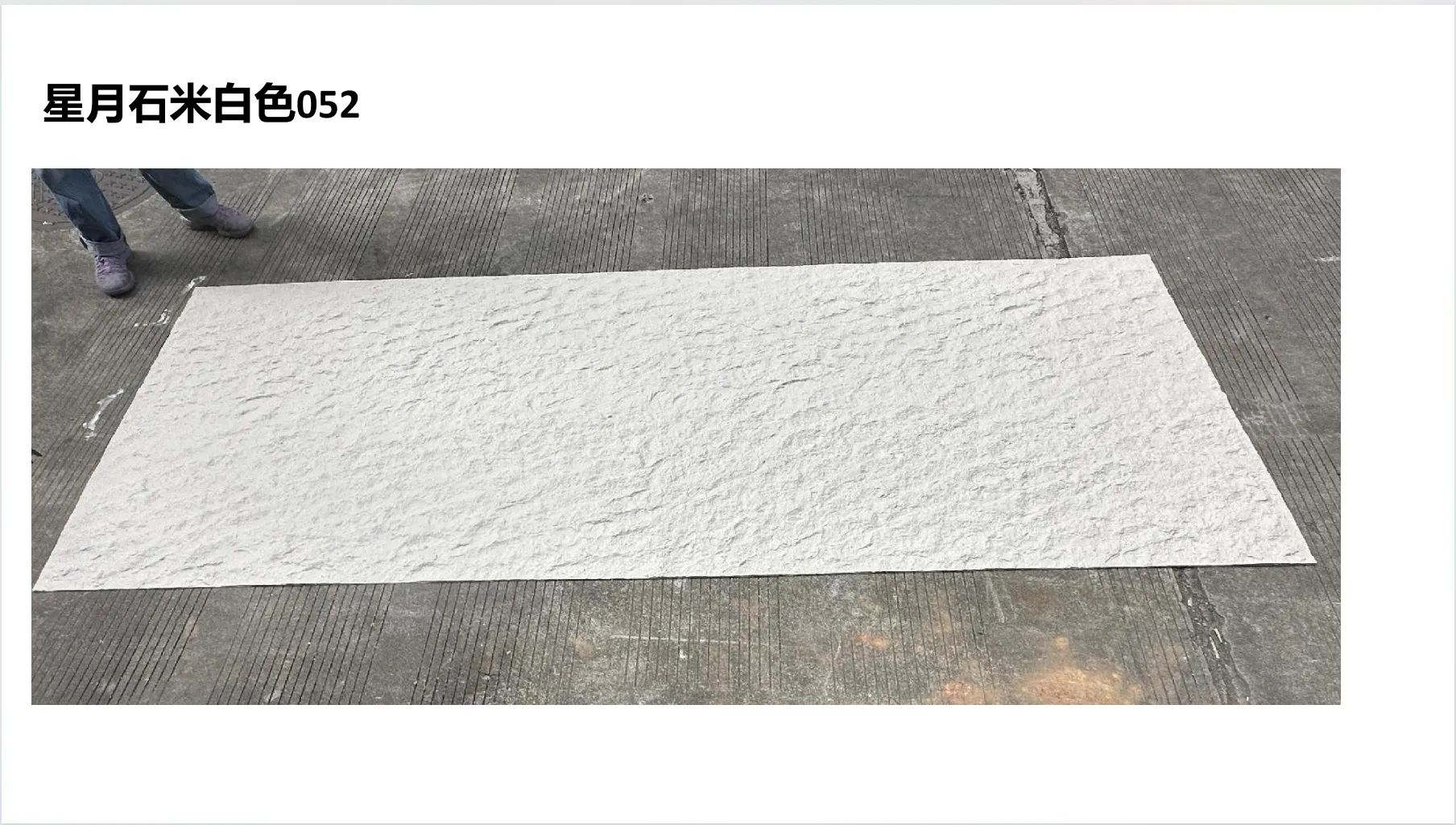
At its core, Starmoon Stone is more than a manufacturer—it's a storyteller. Each product in its extensive lineup tells a tale of how human ingenuity can work with nature, not against it. Take, for instance, the mcm flexible stone series—a game-changer in the world of cladding. Unlike traditional stone, which is heavy, resource-intensive, and difficult to install, mcm flexible stone is lightweight, flexible, and crafted using recycled materials, reducing its carbon footprint by up to 40% compared to conventional options. It's a material that bends without breaking, adapts to curved surfaces, and brings the warmth of natural stone to spaces that once seemed impossible to adorn.
Then there are the foamed aluminium alloy boards , available in elegant finishes like vintage silver, vintage gold, and gold. These aren't just about aesthetics—though their metallic sheen adds a touch of timeless luxury. Foamed aluminium is 70% lighter than solid aluminium, making transportation and installation a breeze, while its cellular structure provides exceptional thermal insulation. In a region where temperatures soar above 45°C in summer, this means buildings stay cooler, reducing reliance on air conditioning and cutting energy bills. And because aluminium is 100% recyclable, these boards close the loop on sustainability, ensuring they can be repurposed at the end of their lifecycle.
But perhaps the most poetic of Starmoon's offerings is the travertine (starry green) collection. Travertine, a natural stone formed by mineral deposits in hot springs, has been used in architecture for millennia—think of the Colosseum in Rome or the Hagia Sophia in Istanbul. Starmoon's starry green variant reimagines this ancient material with a modern twist: tiny, iridescent flecks embedded in the stone catch the light, mimicking a starry night sky. Beyond its beauty, travertine is porous, allowing it to absorb and release heat slowly, a natural form of temperature regulation that keeps interiors comfortable year-round. It's a material that honors history while embracing the future.
Dubai's Waterfront District, a sprawling development along the Arabian Gulf, was envisioned as a "city within a city"—a place where residents could live, work, and play in harmony with the sea. But with its proximity to saltwater, high humidity, and the need for a material that could withstand the harsh coastal climate, developers faced a unique challenge: traditional stone cladding would corrode quickly, while synthetic alternatives lacked the organic feel the project demanded.
Enter Starmoon's mcm flexible stone. "We needed something that could handle the salt air, curve around the district's signature wave-like buildings, and still look like natural stone," says Lina Hassan, lead architect at Dubai-based firm UrbanVisions. "mcm flexible stone checked all those boxes. Its flexibility meant we could wrap it around the building's organic shapes without cutting corners on design, and its resistance to corrosion has kept the facades looking fresh even five years after completion."
The numbers tell an even more compelling story. By choosing mcm flexible stone over traditional granite, the project reduced transportation costs by 30% due to its lightweight nature, and installation time by nearly half. More importantly, the use of recycled materials in its production meant the Waterfront District's carbon footprint was 2,500 tons lower than initially projected—a significant step for a development of its scale. Today, as residents stroll along the district's promenades, they're not just enjoying the view; they're living in a space built with the planet in mind.
In Riyadh, where the desert sun beats down relentlessly, the Green Tower was designed to be a beacon of energy efficiency. Part of the city's Vision 2030 plan to become a global hub for sustainability, the 45-story tower needed a facade that could reflect sunlight, insulate against heat, and reduce the building's reliance on air conditioning. The solution? Starmoon's foamed aluminium alloy board (vintage silver) .
"We wanted the tower to shimmer like a desert mirage, but with a purpose," explains Omar Al-Mansoori, project manager at Riyadh Construction Authority. "The vintage silver finish of the foamed aluminium boards does exactly that—it reflects up to 70% of solar radiation, keeping the interior cool. On the hottest days, the tower's energy consumption for cooling is 35% lower than similar buildings in the area. That's not just good for the environment; it's good for the tower's tenants, who save hundreds on utility bills each month."
But the sustainability doesn't stop there. When the tower's facade needed minor repairs last year, the old panels were collected and recycled into new ones—a closed-loop system that aligns with Saudi Arabia's goal of achieving net-zero emissions by 2060. "Foamed aluminium is a material that keeps giving," Al-Mansoori adds. "It's durable, recyclable, and beautiful. For us, it was a no-brainer."
Qatar's capital, Doha, is undergoing a cultural renaissance, and at its heart is the Doha Cultural Center—a sprawling complex housing museums, theaters, and art galleries, designed to celebrate the country's heritage while embracing modernity. For the center's exterior, architects wanted a material that would evoke the warmth of Qatari sandstone but with the durability to withstand the city's humid summers and sandstorms. Starmoon's travertine (starry green) emerged as the perfect fit.
"Travertine has been used in Qatari architecture for centuries, but the starry green variant adds a contemporary twist," says Khalid Al-Thani, curator of the Cultural Center. "The green hue echoes the date palms that dot our landscape, while the starry flecks—created by embedding recycled glass particles—pay homage to the night skies our ancestors navigated by. It's a material that tells our story."
Beyond its cultural significance, travertine (starry green) offers practical benefits. Its porous surface absorbs moisture, reducing the risk of mold growth in humid conditions, and its natural thermal mass helps regulate indoor temperatures, cutting down on heating and cooling needs. "During the summer, the center's galleries stay 5-7°C cooler than the outside air, even without cranking up the AC," Al-Thani notes. "That's a game-changer for preserving delicate artworks and keeping visitors comfortable."
Perhaps most touching is the reaction from locals. "My grandfather was a stonemason," says Amina Ahmed, a frequent visitor to the center. "Seeing travertine used here, in such a modern space, makes me feel like our traditions are alive and evolving. It's not just a building—it's a bridge between past and future."
| Project Name | Key Materials Used | Sustainability Features | Environmental Impact | Community Benefit |
|---|---|---|---|---|
| Dubai Waterfront District | mcm flexible stone | Recycled materials, lightweight (reduced transport emissions), corrosion-resistant | 2,500 tons lower carbon footprint; 30% less transportation energy | Reduced energy costs for residents; aesthetically cohesive waterfront |
| Riyadh Green Tower | Foamed aluminium alloy board (vintage silver) | 70% lighter than solid aluminium; thermal insulation; 100% recyclable | 35% lower cooling energy consumption; 70% reduction in installation waste | Lower utility bills for tenants; cooler, more comfortable workspaces |
| Doha Cultural Center | Travertine (starry green) | Natural thermal regulation; moisture resistance; recycled glass inlays | 5-7°C natural cooling; reduced AC usage by 20% | Preservation of cultural heritage; comfortable spaces for art appreciation |
As GCC cities continue to grow, the role of sustainable materials will only become more critical. Starmoon Stone, for its part, is already looking to the next chapter. "We'reing new variants of mcm flexible stone that incorporate even more recycled content, and exploring how foamed aluminium can be paired with solar panels for integrated energy generation," says Mohammad Faraj, Starmoon's sustainability director. "The goal is simple: to make sustainability the default, not the exception."
Upcoming projects include a zero-carbon residential complex in Abu Dhabi using Starmoon's fair-faced concrete (a material that requires no additional cladding, reducing waste) and a cultural village in Kuwait City featuring lunar peak silvery stone, inspired by the region's desert landscapes. "These aren't just buildings," Faraj adds. "They're proof that we can build cities that thrive—for people and the planet."
In the end, sustainable urban development isn't just about numbers or materials—it's about people. It's about the family in Dubai's Waterfront District enjoying lower energy bills, the artist in Riyadh's Green Tower finding inspiration in a cooler workspace, the child in Doha's Cultural Center marveling at the starry green stone and asking, "How was this made?" Starmoon Stone understands that. Every product, every project, is a step toward a world where our cities don't just grow—they grow wiser, kinder, and more connected to the earth.
As the sun sets over the GCC's skyline, casting a golden glow on buildings clad in mcm flexible stone, foamed aluminium, and travertine, there's a sense of hope. These aren't just structures of steel and stone—they're promises. Promises that the future we're building is one where progress and sustainability walk hand in hand. And with Starmoon Stone leading the way, that future is closer than we think.
Recommend Products












