
It's a sweltering July afternoon, and your office feels like a greenhouse. The AC is cranked to full blast, but the walls—thin, uninsulated—let in heat faster than the unit can push it out. By evening, your energy bill arrives, and you wince at the number. Sound familiar? For too many buildings, this dance of discomfort and excess energy use is a daily reality. But what if the solution wasn't just better HVAC systems, but the very materials we build with? Enter Starmoon Stone, a standout in the world of Modified Composite Materials (MCM) that's quietly revolutionizing how we think about thermal insulation in architecture.
In an era where sustainability isn't just a buzzword but a necessity, energy-efficient buildings are no longer optional. They're the backbone of reducing carbon footprints, lowering operational costs, and creating spaces that feel comfortable year-round. And at the heart of this movement? Materials that work smarter, not harder. Starmoon Stone isn't just another pretty face in the cladding world; it's a thermal powerhouse, designed to keep interiors cozy in winter, cool in summer, and energy bills in check. Let's dive into what makes it tick—and why it's quickly becoming a favorite among architects, builders, and eco-conscious homeowners alike.
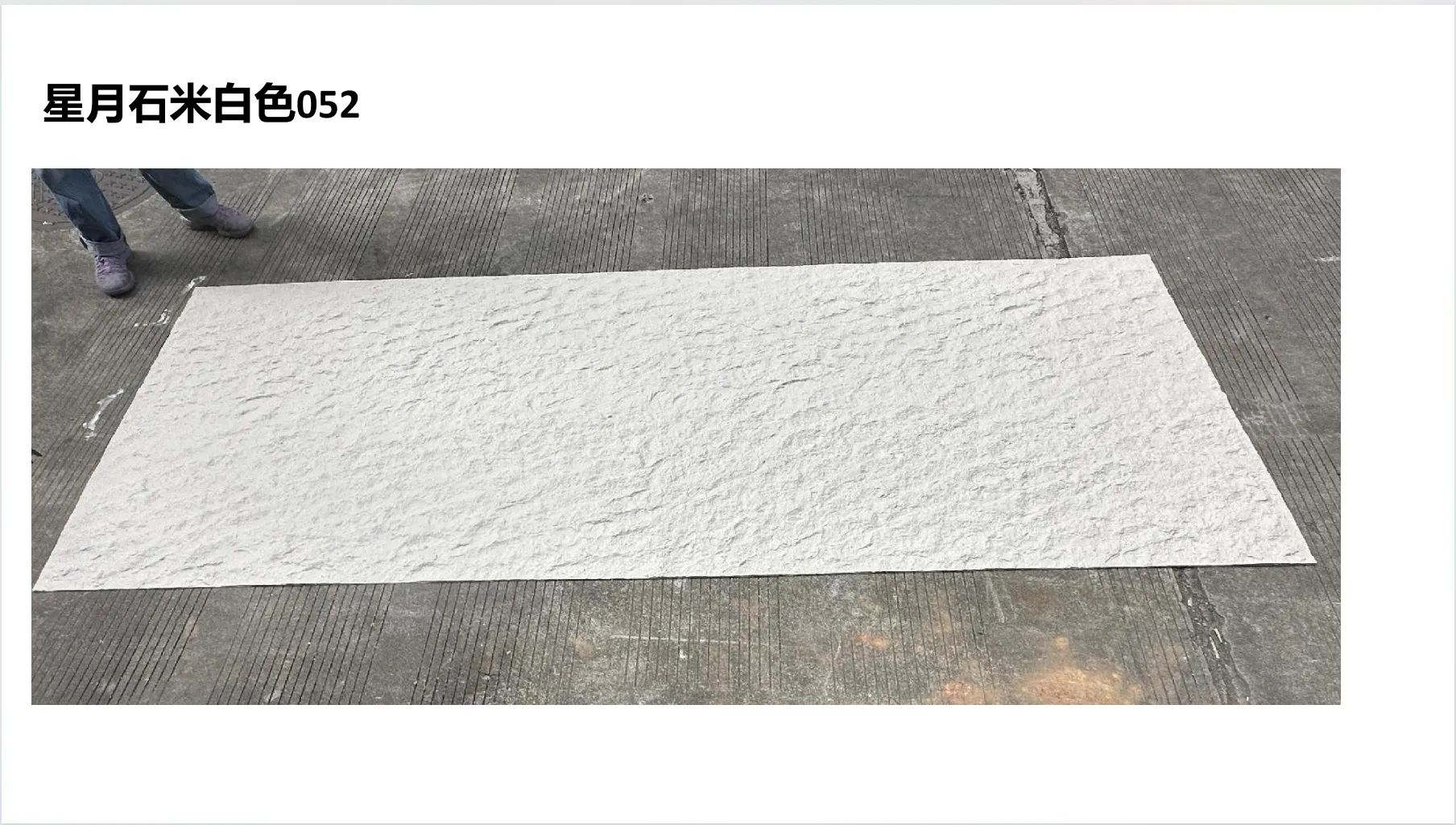
First things first: What is Starmoon Stone? Part of MCM's innovative lineup, it's a engineered stone that marries natural minerals with advanced composites, resulting in a material that's lightweight, durable, and—crucially—exceptionally good at regulating temperature. Unlike traditional stone cladding, which can absorb and radiate heat like a brick oven, Starmoon Stone has a secret weapon: a micro-porous structure that acts like a thermal buffer. Imagine tiny air pockets trapped within the material, each one slowing down the transfer of heat from outside to inside (and vice versa). It's like wrapping your building in a blanket that knows exactly when to hold in warmth and when to let heat escape.
But Starmoon Stone isn't just about function. Its aesthetic appeal is part of its charm. With a finish that ranges from subtle matte to gentle sheen, it fits seamlessly into modern, industrial, or even rustic designs. Whether you're cladding a high-rise apartment or a boutique café, it adds texture and depth without sacrificing performance. And here's the kicker: It's far lighter than natural stone, which means easier installation, reduced structural load, and lower transportation emissions. It's a win-win-win for efficiency, design, and the planet.
Let's get a little technical (but don't worry—we'll keep it simple). Thermal insulation boils down to one key metric: thermal conductivity, measured in W/m·K (watts per meter-kelvin). The lower the number, the better the material is at resisting heat flow. Traditional concrete, for example, has a thermal conductivity of around 1.5 W/m·K, while natural granite can hit 2.0 W/m·K. Starmoon Stone? It clocks in at a mere 0.18 W/m·K. That's less than a fifth of the conductivity of concrete, meaning heat struggles to pass through it. To put it in perspective: A wall clad with Starmoon Stone will let in 80% less heat than a concrete wall of the same thickness on a hot day. That's a game-changer for AC usage.
Another way to think about it is R-value, which measures a material's resistance to heat flow (the higher the R-value, the better). Starmoon Stone's R-value sits at around 3.5 per inch of thickness, putting it on par with fiberglass insulation but with the added benefits of being waterproof, fire-resistant, and mold-proof. Unlike fiberglass, which can sag or degrade over time, Starmoon Stone maintains its insulating properties for decades. It's not just a short-term fix; it's a long-term investment in your building's energy efficiency.
Starmoon Stone might be the star, but it's not the only player in MCM's thermal insulation lineup. The brand's range of materials reads like a who's who of efficient building solutions, each with its own unique strengths. Let's shine a light on a few standouts:
If Starmoon Stone is the reliable workhorse, MCM Flexible Stone is the versatile artist. As its name suggests, it's bendable, making it perfect for curved walls, columns, or intricate architectural details where rigid materials would fail. But don't let its flexibility fool you—its thermal credentials are just as impressive. With a thermal conductivity of 0.20 W/m·K and an R-value of 3.2, it's ideal for spaces where design and efficiency need to coexist. Think: a modern art gallery with sweeping curves that stays cool even under spotlights, or a home with a rounded sunroom that doesn't turn into a sauna in July.
For those who crave a touch of metallic sophistication, Lunar Peak Silvery delivers in spades. Its silvery, moon-like finish adds a futuristic edge to any building, but beneath the shine lies a thermal warrior. The secret? Its layered composition, which includes reflective particles that bounce sunlight away from the surface, reducing heat absorption. Pair that with a thermal conductivity of 0.22 W/m·K, and you've got a material that keeps interiors cool while turning heads. It's particularly popular in desert climates, where solar radiation is intense—think Dubai, Arizona, or parts of Australia—where every degree of heat kept out translates to lower AC costs.
Foamed aluminium might not sound like a traditional building material, but MCM's take on it is a revelation. The Vintage Silver variant is light enough to be installed by two people but tough enough to withstand hail, high winds, and corrosion. Its foamed structure—full of tiny, closed air cells—makes it an excellent insulator, with a thermal conductivity of just 0.19 W/m·K. It's also 100% recyclable, aligning with green building certifications like LEED. Architects love it for its industrial-chic vibe, often using it for accent walls or exterior cladding on sustainable offices. Imagine a tech startup's headquarters with a sleek, silver facade that uses 30% less energy than its neighbors—all thanks to this unassuming material.
For those drawn to earthy, natural aesthetics, Rammed Earth Board (Gradient) is a dream come true. Inspired by traditional rammed earth construction—used for centuries in desert and mountain regions for its insulating properties—MCM's version adds a modern twist with gradient color variations (think soft beiges blending into warm terracottas). Its thermal performance is rooted in its density: compacted layers of earth and binder create a slow heat-transfer barrier, with a thermal conductivity of 0.25 W/m·K and an R-value of 2.8. It's perfect for eco-lodges, farmhouses, or anyone wanting to bring a touch of nature indoors while keeping energy use low. Plus, its natural color palette means less need for paint or finishes, reducing chemical emissions.
Numbers and specs are great, but how do these materials perform in the real world? Let's take a look at a recent project: a 10-story office building in downtown Dubai, clad in a mix of Starmoon Stone, Lunar Peak Silvery, and Foamed Aluminium Alloy Board (Vintage Silver). Before renovation, the building's energy bills averaged $12,000 per month, with complaints of uneven temperatures and stuffy conference rooms. Post-renovation? Bills dropped to $7,500—a 37.5% reduction. Employees reported feeling more comfortable, and the building's carbon footprint shrank by 40 tons annually. For the owners, that's not just savings—it's a selling point for eco-conscious tenants.
| Material | Thermal Conductivity (W/m·K) | R-Value (per inch) | Best For |
|---|---|---|---|
| Starmoon Stone | 0.18 | 3.5 | General cladding, high-efficiency walls |
| MCM Flexible Stone | 0.20 | 3.2 | Curved surfaces, intricate designs |
| Lunar Peak Silvery | 0.22 | 3.0 | Sunny, hot climates (reflective finish) |
| Foamed Aluminium Alloy (Vintage Silver) | 0.19 | 3.3 | Lightweight applications, industrial designs |
| Rammed Earth Board (Gradient) | 0.25 | 2.8 | Earthy, natural aesthetics, moderate climates |
The table above tells the story: MCM materials consistently outperform traditional options like concrete and natural stone when it comes to thermal insulation. For architects and builders, this means more design freedom without compromising on efficiency. For building owners, it means lower operational costs and a smaller environmental impact. And for occupants? A space that feels just right, no matter the weather outside.
It's not just about energy bills. MCM materials like Starmoon Stone are winning over the industry for a host of reasons that go beyond insulation. For starters, they're lightweight . Traditional stone cladding can weigh 20-30 pounds per square foot; MCM materials clock in at 3-5 pounds per square foot. This reduces the load on a building's structure, cutting down on construction time and costs for reinforced foundations. It also makes installation faster—what might take a week with natural stone can take days with MCM, minimizing labor expenses.
Then there's durability. MCM materials are resistant to water, fire, pests, and UV radiation, meaning they last longer than wood, vinyl, or even some natural stones. A building clad in Starmoon Stone won't warp, rot, or fade, reducing maintenance costs over time. For schools, hospitals, or commercial buildings that need to stay operational 24/7, this reliability is priceless.
And let's not forget aesthetics. MCM's range of finishes—from the earthy gradients of Rammed Earth Board to the sleek metallic of Lunar Peak Silvery—means there's a material for every design vision. Architects no longer have to choose between beauty and efficiency; with MCM, they can have both. It's why you're seeing these materials pop up in everything from luxury hotels to affordable housing developments—proof that sustainable design doesn't have to be exclusive.
As we face the realities of climate change, the buildings we live and work in have never mattered more. They're responsible for nearly 40% of global carbon emissions, making energy efficiency a critical piece of the sustainability puzzle. Starmoon Stone and MCM's other thermal-insulating materials aren't just products—they're tools for change. They represent a shift toward buildings that work with the environment, not against it, reducing our reliance on fossil fuels and creating spaces that prioritize both people and the planet.
So, whether you're planning a home renovation, designing a new office, or building a community center, consider the materials that will shape its future. Starmoon Stone isn't just an investment in lower energy bills; it's an investment in a more sustainable, comfortable, and beautiful world. After all, the best buildings aren't just structures—they're partners in our daily lives, keeping us safe, healthy, and in harmony with the climate around us. And with MCM leading the way, that future is closer than we think.
Recommend Products












