
A deep dive into durability, performance, and why your building's first line of defense matters
Walk up to any building, and its exterior wall is the first thing you notice. But beyond aesthetics, these walls are silent warriors—shielding interiors from scorching sun, pouring rain, freezing snow, and relentless wind. For homeowners, architects, and builders, choosing the right exterior material isn't just about looks; it's about longevity. Two names often rise to the top of the list: Starmoon Stone and traditional ceramic tiles. Both promise durability, but when it comes to weather resistance—the ability to stand strong against nature's whims—how do they really stack up?
In this article, we'll peel back the layers of these materials, examining their composition, performance in harsh conditions, and real-world reliability. By the end, you'll have a clear picture of which one deserves a spot on your next building project.
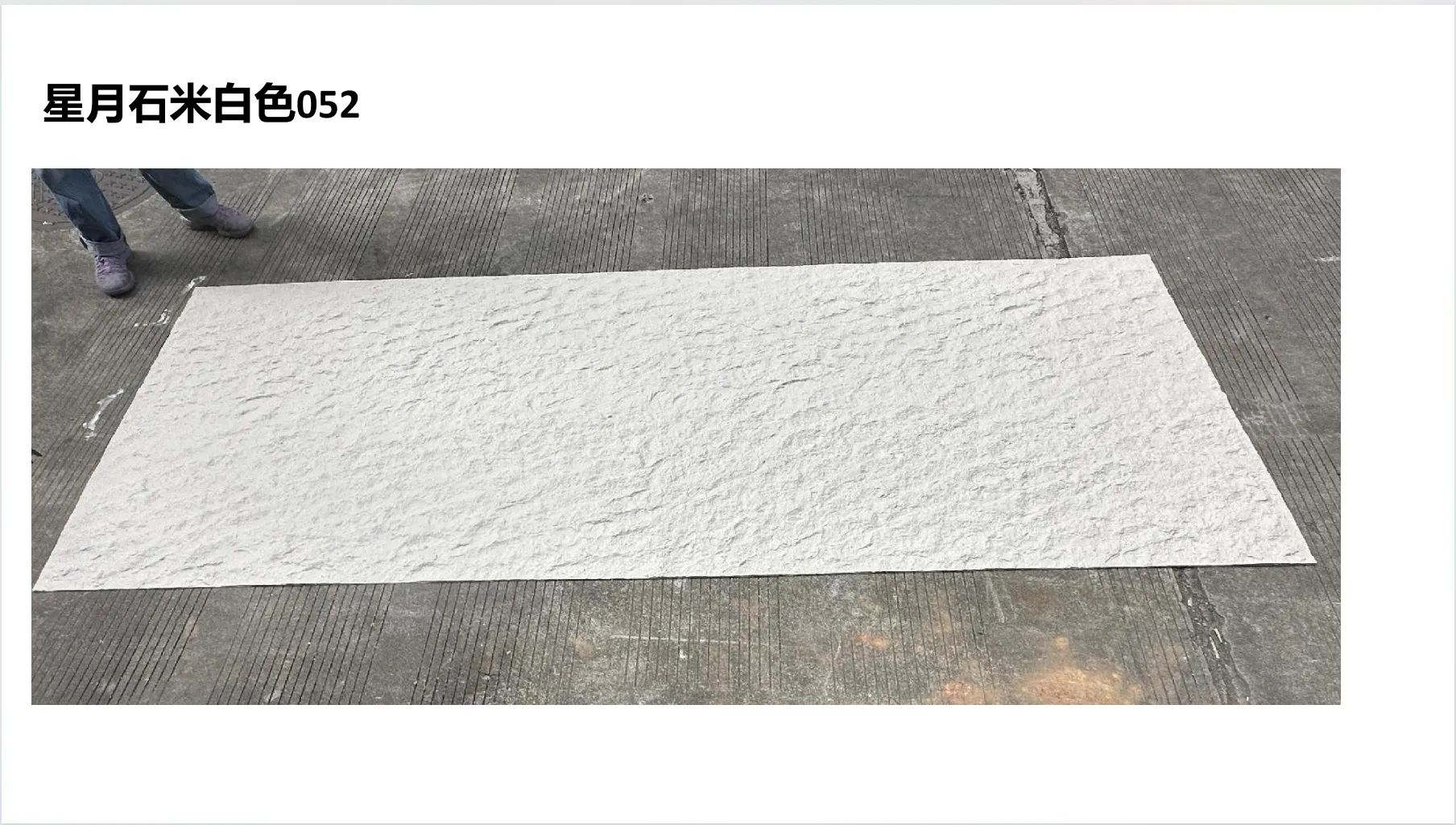
Starmoon Stone isn't your average building material. Part of the innovative MCM flexible stone family—short for Modified Composite Material—it's a modern engineering marvel designed to blend the best of natural stone and cutting-edge technology. Unlike traditional stone, which is heavy and brittle, Starmoon Stone starts with a base of natural minerals (think crushed travertine, marble, or slate) mixed with high-performance polymers. This fusion creates a material that's lightweight, flexible, and surprisingly tough.
What makes it stand out? Its flexibility. While natural stone cracks under stress, Starmoon Stone bends slightly, absorbing impact and temperature shifts without breaking. It's also—typically 3-5mm thick—making installation a breeze compared to bulky stone slabs. And let's not forget aesthetics: with finishes ranging from the subtle glow of travertine (starry blue) to the industrial chic of fair-faced concrete, it's a designer's dream.
Ceramic tiles are the old reliable of exterior design. For decades, homeowners have turned to them for their classic look and perceived durability. Made from clay, sand, and minerals, these tiles are shaped, glazed (or left unglazed), and fired at temperatures over 1,000°C. The result? A hard, dense surface that's resistant to scratches and easy to clean.
Traditional ceramic tiles come in two main types: glazed and unglazed. Glazed tiles have a protective layer of glassy coating, which adds color and shine but can chip over time. Unglazed tiles, on the other hand, are denser and more slip-resistant but lack the vibrant hues of glazed options. Both are popular for exteriors, thanks to their affordability and wide range of styles.
Weather resistance isn't a single trait—it's a battle against five foes: extreme temperatures, moisture, UV rays, chemicals, and physical impact. Let's see how Starmoon Stone and ceramic tiles fare against each.
Imagine a winter in Chicago: sub-zero nights followed by sunny, 10°C days. Or a desert summer where daytime highs hit 45°C and plummet to 15°C at night. These extremes cause materials to expand and contract, and over time, that stress leads to cracks.
Starmoon Stone: Thanks to its polymer blend, it's a master of adaptability. The material expands minimally in heat and contracts gently in cold, reducing the risk of splitting. Installers often note that even after years in regions with harsh freeze-thaw cycles, Starmoon Stone panels stay intact—no unsightly cracks or loose edges.
Ceramic Tiles: Rigid by nature, ceramic tiles don't bend. When temperatures swing, the tile and the wall behind it (often concrete or brick) expand at different rates. This mismatch creates stress, and eventually, the tile can crack or pop loose. Glazed tiles are especially vulnerable: the glaze, which is stiffer than the tile body, may chip or craze (develop tiny cracks) over time.
Rain, snow, and humidity are silent enemies. Water seeps into tiny pores, freezes, and expands—breaking materials from the inside. It also breeds mold and mildew, which discolor surfaces and weaken structures.
Starmoon Stone: Its secret weapon? Low water absorption. The polymer binder fills in microscopic gaps, creating a barrier that repels water. Tests show it absorbs less than 0.5% of its weight in water, compared to 3-5% for unglazed ceramic tiles. Even in tropical climates with year-round rain, Starmoon Stone walls stay dry and mold-free.
Ceramic Tiles: It depends on the tile. Glazed tiles have a protective layer that resists water—if the glaze is intact. But if the glaze chips (from impact or age), water seeps into the porous ceramic body below. Unglazed tiles are even more absorbent, making them risky in damp areas. Over time, trapped moisture can cause tiles to loosen or the wall behind to rot.
The sun's UV rays don't just tan skin—they fade colors and break down materials. Exterior walls in sunny regions (think Arizona or Dubai) face constant UV exposure, turning bright hues into dull shadows.
Starmoon Stone: Its color is mixed into the material, not just applied as a top coat. That means even if the surface wears slightly, the color remains consistent. Add UV-stabilizing additives, and you get a material that retains its vibrancy for decades. Take travertine (starry blue) , for example: its deep blue flecks stay vivid even after years in direct sunlight.
Ceramic Tiles: Glazed tiles rely on a surface layer for color. While high-quality glazes are UV-resistant, cheaper ones fade quickly. Unglazed tiles, which get their color from natural clay, are more stable but offer fewer color options. Either way, expect some fading after 5-7 years in intense sun.
City air isn't kind to buildings. Acid rain (from pollution) and industrial chemicals can eat away at surfaces, leaving stains or pitting.
Starmoon Stone: The polymer matrix is resistant to most acids and alkalis. In lab tests, it withstands exposure to sulfuric acid (a component of acid rain) without discoloration or erosion. That's why it's a favorite for urban buildings, where pollution levels are high.
Ceramic Tiles: Glazed tiles hold up well to chemicals—if the glaze is thick and high-quality. Thin or poorly applied glaze, however, can etch when exposed to acid, leaving permanent marks. Unglazed tiles are more vulnerable, as their porous surface soaks up chemicals, leading to stains that are hard to remove.
Exterior walls take hits—from flying debris in storms to accidental bumps from ladders or tools. A material that dents or cracks easily won't last long.
Starmoon Stone: Its flexibility is a superpower here. A falling branch or a stray baseball might leave a small mark, but the panel won't shatter. Contractors often compare it to a "flexible shield"—tough enough to absorb impact without breaking.
Ceramic Tiles: Hard but brittle. A sharp impact can chip the glaze or crack the tile entirely. Once cracked, the tile becomes a weak spot, letting in water and worsening over time. Replacing a single cracked tile is possible, but it's a hassle—and the new tile may not match the faded old ones.
| Factor | Starmoon Stone | Ceramic Tiles |
|---|---|---|
| Temperature Resistance | Flexible; expands/contracts minimally; resists cracking in freeze-thaw cycles. | Rigid; prone to cracking with extreme temperature swings; glaze may craze. |
| Moisture Resistance | Low water absorption (<0.5%); resists mold and mildew. | Glazed tiles: good if glaze is intact; unglazed: high absorption (3-5%); prone to mold. |
| UV Stability | Color mixed into material; UV-stabilized additives; minimal fading over time. | Glazed tiles: fading possible with low-quality glaze; unglazed: more stable but limited colors. |
| Chemical Resistance | Resistant to acids, alkalis, and pollutants; ideal for urban areas. | Glazed tiles: good with high-quality glaze; unglazed: stains easily from chemicals. |
| Impact Resistance | Flexible; absorbs impact without shattering; minor surface marks at worst. | Brittle; prone to chipping/cracking with sharp impacts; requires replacement if damaged. |
Numbers and tests tell part of the story, but real buildings tell the rest. Take the Seaside Residences in Miami, a luxury condo complex built in 2018. The architects chose Starmoon Stone in travertine (starry blue) for the exterior, citing its resistance to saltwater and humidity. Five years later, the walls still look brand new—no fading, no cracks, no mold—despite facing annual hurricanes and salt spray.
Compare that to a suburban home in Minneapolis, where the owner installed ceramic tiles in 2015. After just three harsh winters, the tiles began cracking along the edges. By 2020, nearly 15% of the tiles needed replacement, and the once-bright glaze had faded to a dull gray. "I thought ceramic was 'forever,'" the homeowner told us. "Now I'm stuck redoing the whole exterior."
We spoke with Elena Martinez, a senior architect at a leading design firm, who summed it up: "Ten years ago, I'd default to ceramic tiles for exteriors. Now? I specify Starmoon Stone 9 times out of 10—especially for projects in harsh climates. Its weather resistance is unmatched, and clients love that it looks like natural stone without the weight or maintenance headaches."
She added, "The MCM flexible stone technology is a game-changer. On a recent coastal project, we used Starmoon Stone panels that curved around the building's unique shape—something ceramic tiles could never do. And after two hurricane seasons, there's not a single crack. That's peace of mind."
Ceramic tiles have their place—they're affordable and familiar. But when it comes to weather resistance, Starmoon Stone outshines them in almost every category: it handles temperature swings, repels moisture, resists UV fading, stands up to chemicals, and absorbs impacts without breaking. Add in its flexibility, lightweight design, and stunning aesthetics (hello, travertine (starry blue) !), and it's clear why it's becoming the go-to choice for modern exteriors.
Whether you're building a beach house in Florida, a mountain cabin in Colorado, or a city apartment in New York, Starmoon Stone isn't just a material—it's an investment in your building's future. After all, the best exterior wall is one that looks great and lasts for decades, no matter what Mother Nature throws its way.
Recommend Products












