
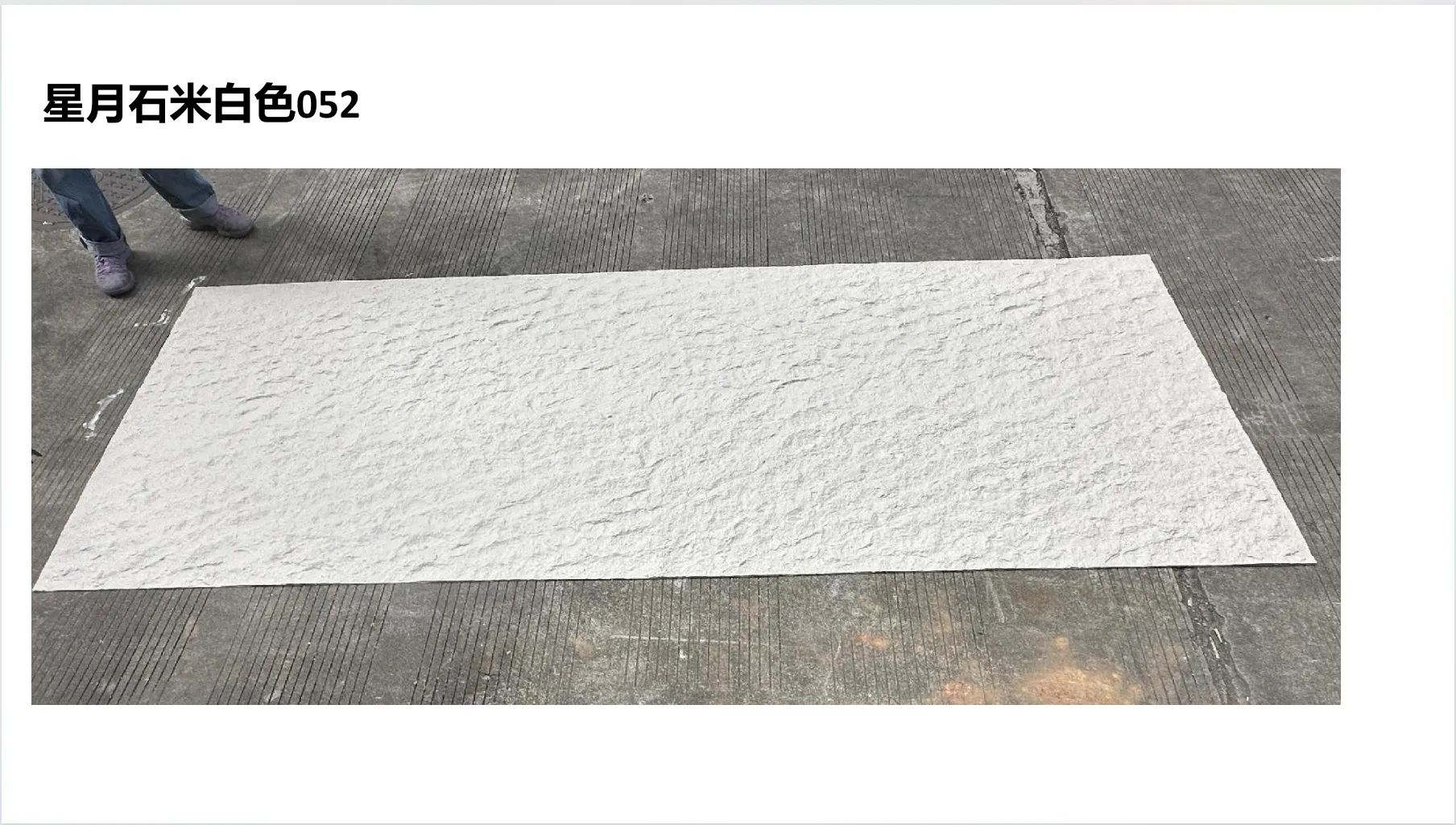
Choosing the right material for your space is like picking the perfect soundtrack for a movie—its texture, color, and feel set the tone for everything around it. Whether you're designing a cozy home kitchen, a sleek office lobby, or a bustling café, the materials you select don't just fill a room; they shape it. They tell a story about who you are, what you value, and how you want people to feel when they step inside. Today, we're diving into two materials that've been turning heads in the design world: Starmoon Stone and Granite. Both bring unique strengths to the table, but which one is right for your project? Let's break it down—no jargon, just honest talk about cost, durability, and that all-important "wow" factor.
First, let's get acquainted. Granite is the old reliable—you've probably seen it in kitchens, bathrooms, even hotel lobbies. It's a natural stone formed from cooled magma, known for its speckled patterns and tough-as-nails reputation. Think of it as the workhorse of materials: dependable, versatile, and steeped in tradition. Then there's Starmoon Stone, a relative newcomer that's been making waves in modern design. Part of the innovative mcm flexible stone family, it's a modified composite material that blends natural minerals with advanced engineering. What sets it apart? Unique textures, bold colors, and a flexibility that traditional stones just can't match. Imagine a material that feels like stone but moves with the subtle shifts of a building—no cracks, no fuss. That's the magic of MCM, and Starmoon Stone leans into that legacy.
But Starmoon isn't just about function—it's about expression . Walk into a space clad in Starmoon, and you might spot hints of travertine (starry green) , a variant that shimmers like a forest at night, with tiny flecks of color that catch the light. Or maybe you'll encounter lunar peak silvery , a finish that mimics the soft glow of moonlight on rock, adding an otherworldly touch to walls and surfaces. It's stone, but reimagined—crafted for designers who crave something beyond the ordinary.
Let's talk numbers—because at the end of the day, budget matters. Granite, being a natural stone, has a price tag tied to where it's quarried. Popular types (like Black Galaxy or Ubatuba) are more affordable because they're widely available, while rare variants (think Blue Bahia or Labradorite) can spike in cost due to limited supply. On average, you're looking at $50–$100 per square foot for basic Granite, including installation. It's a mid-range option, which is why it's a go-to for homeowners balancing quality and cost.
Starmoon Stone, on the other hand, sits in the premium category. Why? Its production process is more specialized. As part of the MCM (Modified Composite Material) family, it requires blending natural stone particles with polymers to achieve that signature flexibility and durability. Add in unique finishes like lunar peak silvery or travertine (starry green) , which involve artisanal coloring techniques, and you're looking at $80–$150 per square foot, installed. It's pricier, but here's the catch: Starmoon often requires less material overall because it's lighter than Granite, and its flexibility can reduce installation time (and labor costs) in tricky spaces like curved walls or high ceilings. For designers working on statement projects—like a boutique hotel lobby or a luxury retail store—those extra dollars often translate to a one-of-a-kind look that sets the space apart.
If you're a homeowner redoing your kitchen on a tight budget, Granite might be the smarter pick. It's a safe investment that adds value to your home without breaking the bank. But if you're a designer aiming to create a "wow" moment—say, a feature wall in a high-end restaurant—Starmoon's unique aesthetics could justify the higher cost. Think of it this way: Granite is like a classic leather sofa—timeless, comfortable, worth every penny. Starmoon is like a custom-designed piece from a boutique atelier—pricier, but impossible to replicate.
Another angle: long-term cost. Starmoon's durability (we'll dive into that next) might mean fewer repairs or replacements down the line, offsetting the initial expense. For example, if you're cladding the exterior of a commercial building, a material that resists fading and cracking could save you money on maintenance over 10–15 years. It's not just about what you pay now, but what you'll avoid paying later.
Let's get real: life is messy. Kids spill juice, guests track in mud, coffee mugs leave rings—your surfaces take a beating. So how do these two materials stack up? Granite is legendary for its toughness. It scores a 6–7 on the Mohs hardness scale (diamonds are a 10, for reference), which means it resists scratches from keys, knives, and even pet claws. It's also heat-resistant—you can set a hot pot directly on it without worrying about burns. Moisture? Not a problem, as long as you seal it annually. Granite in a busy kitchen? It'll laugh off spills and scrapes for decades.
Starmoon Stone, thanks to its mcm flexible stone DNA, brings a different kind of durability to the table. It's not as hard as Granite (around 5–6 on the Mohs scale), but its composite structure makes it more resilient . Unlike natural stone, which can crack under pressure, Starmoon bends slightly, absorbing impact. That makes it ideal for high-traffic areas like hallways or exterior walls, where vibrations or minor shifts in the building could cause traditional stone to chip. It's also water-resistant and UV-stable, so colors like travertine (starry green) won't fade in sunlight—perfect for outdoor patios or pool surrounds.
But here's the trade-off: Granite can handle heavy impacts (like a dropped cast-iron skillet) better than Starmoon, which might dent or scratch if hit with enough force. For a family with young kids, Granite's brute strength might be reassuring. For a boutique hotel with careful guests, Starmoon's resilience to daily wear (think: luggage wheels, high heels) could be more important.
No material is maintenance-free, but some are easier to care for than others. Granite requires annual sealing to prevent stains—spill red wine on unsealed Granite, and you'll be left with a permanent reminder of that dinner party. But sealing is a quick DIY job (or a $100 professional service), and once done, Granite is a breeze to clean: just soap and water. Starmoon, on the other hand, needs no sealing. Its non-porous surface repels liquids, so spills wipe up with a damp cloth. That's a big win for busy spaces like restaurants or offices, where time is money.
Another point: Starmoon's flexibility reduces the risk of cracks due to temperature changes. In regions with harsh winters, where freeze-thaw cycles can split natural stone, Starmoon holds steady. Granite can handle cold, too, but it's more prone to cracking if water seeps into tiny pores and freezes. For outdoor projects in extreme climates, Starmoon might be the safer bet.
Let's talk about the fun stuff: how these materials look and feel . Starmoon Stone is a designer's dream for one simple reason: it breaks the rules of traditional stone. Take travertine (starry green) , for example. Run your hand over it, and you'll feel tiny indentations—like the surface of a moonlit pond—with flecks of iridescent green that shift when you move. It's not just a color; it's an experience . Then there's lunar peak silvery , which has a matte, almost metallic finish that mimics the texture of weathered steel. It's industrial yet elegant, perfect for minimalist spaces that crave warmth.
Starmoon also plays with texture in ways Granite can't. Some variants feature wave panel patterns, where the surface undulates like ocean swells, adding movement to walls. Others have thread textures—fine, linear grooves that catch shadows, creating depth in a room. It's stone, but it feels alive, responding to light and angle to create different moods throughout the day. Imagine a morning sunbeam hitting a Starmoon feature wall: the travertine (starry green) flecks glow, making the space feel vibrant. As evening falls, the lunar peak silvery finish softens, casting a calm, ambient light. It's a material that evolves with time, keeping your space feeling fresh.
Granite, on the other hand, is a master of classic elegance. Its natural veining and speckling tell a story of millions of years of geological activity—no two slabs are exactly alike. A slab of White Ice Granite, for instance, has swirling patterns of white, gray, and black that look like a winter landscape frozen in stone. It's bold but not overwhelming, making it a staple in both traditional and modern kitchens. Then there's Absolute Black Granite, which is sleek and uniform, like a sheet of polished obsidian. It's the ultimate backdrop for colorful accents, letting your decor take center stage.
Granite's beauty lies in its familiarity. It's a material we associate with comfort and longevity—like a well-loved book or a family heirloom. When you choose Granite, you're not just picking a surface; you're choosing a legacy. It ages gracefully, too—over time, it develops a subtle patina that makes it look even more rich and inviting. A Granite countertop in a 50-year-old home doesn't feel outdated; it feels like a testament to good taste.
So which material fits which style? Starmoon Stone shines in modern, industrial, or bohemian spaces. Pair travertine (starry green) with warm woods and brass accents for a boho-chic vibe, or use lunar peak silvery with black metal and concrete for an edgy, urban look. It's also a star in commercial spaces—think hotels, restaurants, or art galleries—where making a statement is key. A Starmoon feature wall in a lobby? It'll have guests reaching for their phones to snap photos.
Granite, meanwhile, is a chameleon. It works in traditional kitchens with wooden cabinets and subway tiles, in rustic cabins with log walls, and even in contemporary bathrooms with floating vanities. Its versatility is why it's been a favorite for decades. If you're drawn to timelessness—spaces that feel cozy and familiar—Granite is your ally. It doesn't compete with your decor; it elevates it.
| Factor | Starmoon Stone | Granite |
|---|---|---|
| Cost (per sq ft, installed) | $80–$150 (premium, niche production) | $50–$100 (mid-range, widely available) |
| Durability | Resilient to bending/impact; UV/water-resistant; less hard than Granite | Extremely hard; scratch/heat-resistant; prone to cracking under pressure |
| Maintenance | No sealing needed; wipe with soap and water | Annual sealing required; stain-resistant when sealed |
| Aesthetics | Unique textures (starry, wave, lunar); bold colors; modern/experimental | Classic veining/speckling; natural patterns; timeless/versatile |
| Best For | Statement walls, modern/commercial spaces, outdoor areas with UV exposure | Kitchen countertops, high-impact areas, traditional/rustic spaces |
At the end of the day, there's no "better" material—only the one that fits your needs. If you're prioritizing budget and brute strength, Granite is the way to go. It's a tried-and-true choice that'll serve you well for decades, and it works with almost any design style. But if you're willing to invest in something unique—something that'll make your space feel one-of-a-kind—Starmoon Stone delivers. Its innovative textures, bold colors, and flexibility open up possibilities that traditional stone can't match.
Think about your space's purpose. Is it a family kitchen where durability trumps all? Granite. A boutique hotel lobby where first impressions matter most? Starmoon. And don't forget to consider long-term goals. Are you flipping a house and want a material that appeals to most buyers? Granite. Building your forever home, where you want every surface to tell your story? Starmoon might be worth the splurge.
Materials are more than just building blocks—they're storytellers. Granite tells a story of tradition, resilience, and the beauty of nature's slow, steady work. Starmoon Stone tells a story of innovation, creativity, and pushing the boundaries of what stone can be. Both are powerful, and both have the ability to transform a space from ordinary to extraordinary.
So whether you lean into the classic charm of Granite or the bold innovation of Starmoon, remember this: the best material is the one that makes you smile every time you walk into the room. After all, that's the true measure of a space—how it makes you feel. And isn't that what design is all about?
Recommend Products












