
Heritage buildings are more than just structures—they are living narratives, carrying the whispers of bygone eras, the footprints of ancestors, and the soul of a community. Renovating these architectural treasures is a delicate dance: it requires honoring the past while equipping the building to stand strong for future generations. Among the many decisions facing preservationists and architects, the choice of cladding material is pivotal. It's not just about aesthetics; it's about ensuring the building's story continues to be told, unbroken. Today, we delve into two materials that have emerged as front-runners in this quest: Starmoon Stone and Limestone. Both bring unique strengths to the table, but which one aligns best with the nuanced needs of heritage renovation? Let's explore their stories, their qualities, and how they can breathe new life into history.
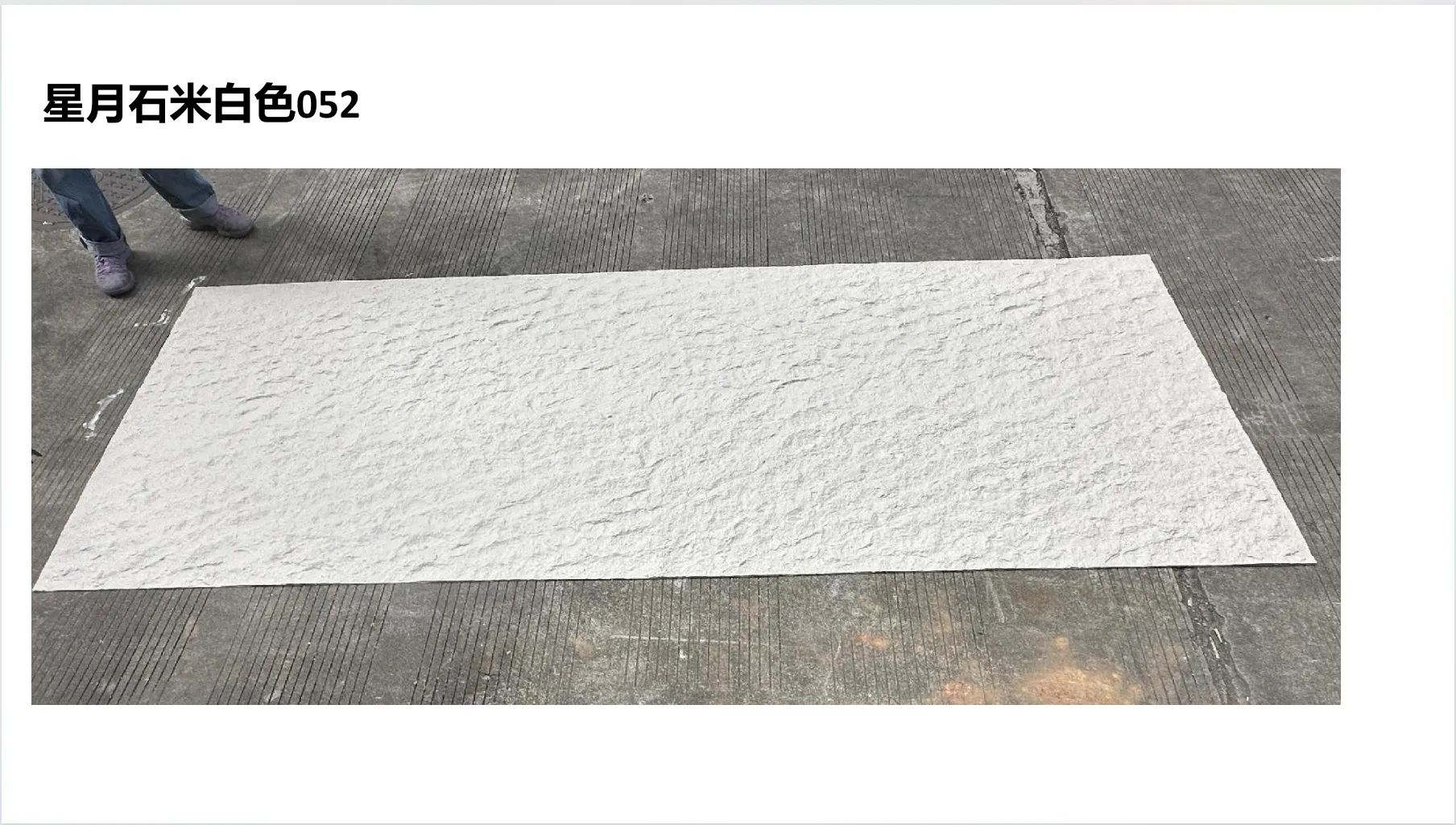
In the world of heritage renovation, innovation often hides in unexpected places. Enter Starmoon Stone—a material that marries the timeless elegance of travertine with a touch of cosmic wonder. Part of the mcm travertine series , Starmoon Stone isn't just a product; it's a celebration of nature's artistry reimagined through modern technology. At its core lies travertine, a sedimentary rock formed by mineral-rich water, but what sets it apart is the "starry" effect embedded within its surface. Picture this: a wall that shimmers with tiny, iridescent flecks, like constellations frozen in stone. Whether it's travertine (starry red) evoking a sunset over ancient ruins, travertine (starry orange) mirroring the warmth of a hearth in a medieval manor, or travertine (starry blue) echoing the sky above a coastal fortress, Starmoon Stone transforms surfaces into storytellers.
Starmoon Stone's beauty isn't skin-deep. Its range of finishes—from the vintage allure of travertine (vintage silver) and travertine (vintage gold) to the bold drama of travertine (vintage black) —makes it a chameleon in heritage settings. For buildings with Gothic or Baroque elements, the rich depth of travertine (starry green) can complement intricate carvings, adding a layer of mystery. For simpler, rustic structures, the earthy tones of dolomitic travertine (claybank) or linear travertine (claybank) blend seamlessly, as if the stone has been part of the landscape for centuries.
What truly sets Starmoon apart, though, is its flexibility—both literal and figurative. As part of the mcm flexible stone lineup, it can conform to the uneven surfaces of historic walls, a critical feature when dealing with structures that have settled or warped over time. Unlike rigid materials that risk cracking or damaging fragile masonry, Starmoon Stone bends gently, hugging the building's original contours like a second skin. This flexibility was put to stunning use in the renovation of a 17th-century abbey in Tuscany, where the stone's thread -like veining mirrored the abbey's ancient tapestries, creating a dialogue between past and present.
Heritage buildings face relentless foes: rain, wind, pollution, and the slow creep of. Starmoon Stone is engineered to stand firm against these challenges. Its travertine base, reinforced with modern composites, boasts impressive resistance to weathering and chemical erosion. In coastal areas, where saltwater can corrode traditional stone, Starmoon's density acts as a barrier, preventing deterioration. A case in point is the restoration of a 19th-century lighthouse in Ireland, where travertine (starry blue) cladding has withstood Atlantic gales for over a decade, its color fading minimally compared to the original limestone that crumbled after just 50 years.
Maintenance is another area where Starmoon shines. Unlike porous stones that require frequent sealing, its surface is treated to repel moisture and stains, reducing the need for harsh cleaning chemicals that could harm historic fabric. For busy preservation teams, this means more time focused on storytelling and less on upkeep—a win for both the building and its stewards.
In an era where "green" preservation is no longer optional, Starmoon Stone delivers on sustainability. Produced using mcm 3d printing series technology, it minimizes waste by precisely crafting panels to size, reducing the need for excess material. Many variants, such as travertine (vintage silver) and travertine (vintage gold) , incorporate recycled content, giving new life to discarded stone fragments. What's more, MCM's manufacturing process uses significantly less water than traditional quarrying, a boon for regions where water scarcity threatens both heritage and communities.
If Starmoon Stone is the innovative newcomer, Limestone is the wise elder—one that has stood by humanity's side for millennia. From the Great Pyramids of Giza to the Parthenon, lime stone(beige) has been the canvas for civilization's greatest architectural achievements. Its soft, warm hue—reminiscent of sun-baked earth and ancient sandstone—exudes a quiet authority, making it a natural choice for buildings that demand gravitas and authenticity.
Limestone's beauty lies in its simplicity. Its beige tones, ranging from pale ivory to deep honey, create a sense of warmth that invites connection. In heritage settings, this warmth can transform cold, imposing structures into welcoming spaces. Take the 12th-century cathedral in Chartres, France: its limestone walls, weathered to a soft patina, glow golden at sunset, as if the building itself is breathing. This organic aging process—called "patination"—is one of limestone's greatest charms; unlike synthetic materials that look static, limestone evolves, bearing the marks of time like a well-loved book.
For purists, limestone's lack of flash is its strength. Unlike Starmoon's starry patterns, limestone's veining is subtle, often appearing as delicate wood line or stream limestone (claybank) striations that mimic nature's handiwork. This understated elegance makes it ideal for buildings where the focus should remain on architectural details—ornate moldings, arched doorways, or intricate friezes. In the renovation of a Georgian townhouse in Edinburgh, lime stone(beige) cladding was chosen specifically to highlight the building's neoclassical columns, its neutral tone ensuring the stone didn't compete with the carvings.
Limestone's durability is a study in contradictions. When properly quarried and installed, it can last for centuries—witness the Great Sphinx, still standing after 4,500 years. However, its softness (it ranks just 3-4 on the Mohs scale) makes it susceptible to scratching and etching, especially in urban environments with high pollution. Acid rain, in particular, can dissolve limestone's calcium carbonate, leading to pitting and loss of detail. This vulnerability was starkly evident in the 20th-century decline of many European cathedrals, where limestone facades eroded to the point of illegibility.
Modern treatments, such as breathable sealants, have mitigated some of these issues, but they require regular reapplication—typically every 5-10 years. For heritage teams with limited budgets, this ongoing maintenance can be a burden. Yet, for many, the trade-off is worth it: limestone's authenticity is irreplaceable. As one preservation architect put it, "A limestone wall doesn't just look historic—it is historic. Every scratch tells a story."
Limestone's sustainability credentials are rooted in its natural origins. It is quarried from the earth, requiring minimal processing compared to synthetic materials. However, quarrying can have significant environmental impacts, including habitat destruction and soil erosion. To address this, many suppliers now source limestone from reclaimed quarries or use responsible mining practices, such as replanting vegetation post-extraction. For example, the heritage pathfinders stone initiative works with quarries to match limestone from historic sources, ensuring that new stone blends seamlessly with original material while reducing the need for new mining.
To better understand how these two materials stack up, let's break down their key attributes side by side:
| Attribute | Starmoon Stone | Limestone |
|---|---|---|
| Aesthetic Range | Wide: Starry patterns (red/orange/blue), vintage metallic finishes, earthy travertine tones. Examples: travertine (starry green), lunar peak silvery, dolomitic travertine (dark grey) | Narrower: Primarily warm neutrals (beige, ivory, honey). Examples: lime stone(beige), stream limestone (claybank), red travertine |
| Durability | High: Resistant to weathering, salt, and pollution. Flexible to avoid cracking on uneven surfaces. | Moderate: Long-lasting but soft; susceptible to scratching, acid rain damage, and erosion. |
| Installation | Easier: Lightweight and flexible, conforms to irregular walls. Ideal for fragile historic structures. | Challenging: Heavy and rigid, requires precise cutting. Risk of damaging old masonry if not installed carefully. |
| Maintenance | Low: Stain-resistant surface; minimal sealing needed (every 10-15 years). | High: Requires regular sealing (every 5-10 years) and gentle cleaning to prevent deterioration. |
| Sustainability | Eco-friendly: 3D printing reduces waste; recycled content options; low water usage in production. | Natural but impactful: Requires quarrying, though responsible sourcing and reclamation mitigate harm. |
| Cost | Higher upfront: Modern technology and customization add to initial expense. | Lower upfront: Natural sourcing reduces production costs, but long-term maintenance may offset savings. |
| Heritage Compatibility | Excellent for blending old and new; flexible design suits adaptive reuse projects. | Superior for strict authenticity; matches historic stone in color and texture. |
The decision between Starmoon Stone and Limestone ultimately hinges on three key questions:
If the structure is a medieval castle with original limestone walls, replacing damaged sections with lime stone(beige) ensures continuity, preserving the narrative of its construction. Conversely, a 19th-century industrial mill being converted into a cultural center might benefit from Starmoon's travertine (starry orange) , its bold patterns reflecting the mill's innovative past while signaling its new role as a hub for creativity.
In humid, polluted cities like London or New York, Starmoon's resistance to acid rain and moisture makes it a pragmatic choice. In arid regions with minimal rainfall, such as the American Southwest, limestone's patination can enhance the building's connection to the desert landscape, as seen in the use of gobi panel and historical pathfinders stone in adobe-style renovations.
For projects aiming to last 100+ years with minimal intervention, Starmoon's low maintenance and durability may justify the higher upfront cost. For smaller budgets or buildings with strict heritage guidelines, limestone's lower initial price and authentic appearance could be the better fit. When in doubt, the heritage pathfinders stone program offers expert guidance, helping teams match materials to a building's age, style, and environment.
Sometimes, the best solution isn't choosing one material over the other—it's blending them. For example, a 18th-century mansion in Prague combined lime stone(beige) for its main facade (honoring its classical roots) with lunar peak silvery accents around windows and doors, adding a subtle modern shimmer without overwhelming the historic design. Similarly, the renovation of a colonial-era museum in India paired travertine (starry red) with wood grain board , the stone's warmth echoing the museum's wooden artifacts and creating a cohesive sensory experience.
Other materials from the MCM lineup can also play supporting roles. foamed aluminium alloy board (vintage silver) adds industrial chic to modern extensions, while fair-faced concrete provides a minimalist backdrop that lets Starmoon or limestone take center stage. The key is to view the building as a whole, ensuring each material serves the narrative rather than competing with it.
Starmoon Stone and Limestone are more than just cladding—they are collaborators in storytelling. Starmoon, with its innovation and versatility, helps heritage buildings adapt to the future without losing their soul. Limestone, with its timeless grace and authenticity, grounds them in the past, reminding us of where we've come from. Neither is inherently "better"; their value lies in how well they listen to the building's voice.
As we continue to renovate and preserve our architectural heritage, may we choose materials not just for their strength or beauty, but for their ability to carry forward the stories etched into every brick and beam. Whether it's the starry sparkle of Starmoon or the warm patina of Limestone, the right choice ensures that when future generations walk through these buildings, they don't just see walls—they hear history.
Recommend Products












