
Walk down any city street, and the first thing that catches your eye about a commercial building isn't just its shape—it's the material that wraps around it. A facade is more than a protective layer; it's a silent storyteller, whispering hints about the brand inside, the values it holds, and the experience it promises. For architects, developers, and business owners, choosing between materials like Starmoon Stone and traditional natural stone isn't just a practical decision—it's an emotional one. It's about balancing timeless beauty with modern innovation, durability with design freedom, and legacy with sustainability. Let's dive into the heart of this debate, exploring how these two contenders stack up in the real world of commercial architecture.
First, let's clarify what we're comparing. Natural stone is the earth's own artwork—think travertine (starry green) with its celestial veining, the warm beige of limestone, or the rugged charm of granite portoro. It's been used for millennia, from the Colosseum to modern skyscrapers, and carries an unspoken prestige: "This building was built to last."
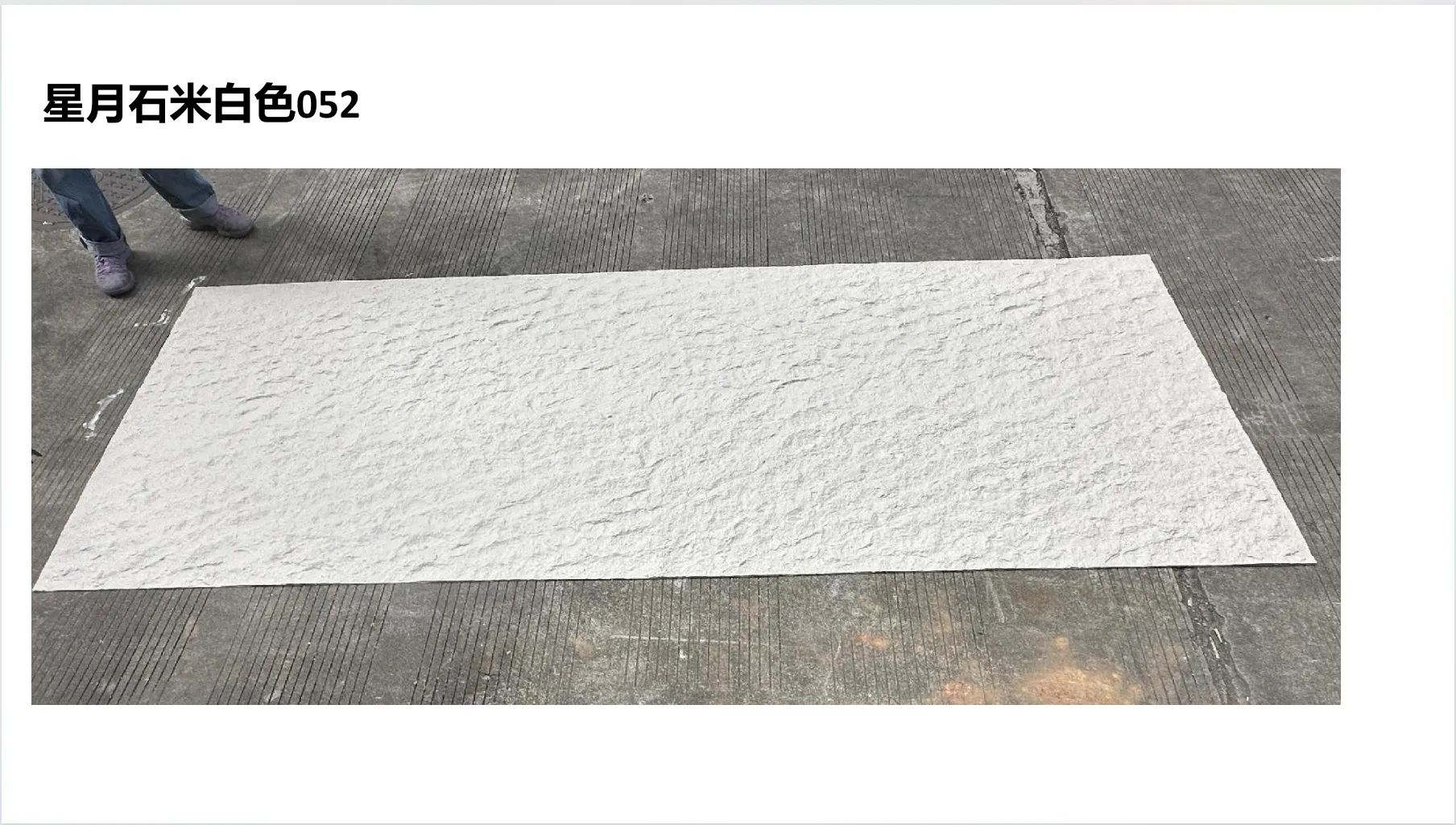
Starmoon Stone , on the other hand, is a product of innovation—a modified composite material designed to mimic the look of natural stone while addressing its limitations. Part of the broader MCM (Modified Composite Material) family, it often incorporates elements like mcm flexible stone or 3D printing technology, blending durability with flexibility. Imagine a material that captures the depth of lunar peak silvery or the richness of travertine (vintage gold) but weighs half as much and resists cracks better. That's Starmoon in a nutshell.
When it comes to looks, natural stone has a head start. There's something irreplaceable about the uniqueness of a travertine (starry blue) slab, where no two pieces are identical. Each pore, each vein, tells a story of millions of years of geological activity. For brands aiming for heritage or luxury—think a high-end hotel or a boutique jewelry store—natural stone like marble interstellar gray or golden travertine (white golden) screams "craftsmanship" and "legacy." It's warm, organic, and feels grounded in history, like running your hand over a piece of the earth itself.
But here's where Starmoon Stone shines: design freedom . Natural stone is heavy, brittle, and often limited by the size of quarry slabs. Starmoon, being a composite, can be molded into shapes that natural stone can't—think wave panels that curve like ocean swells, or semicircle boards that wrap around a building's corners without cracking. Want the look of lunar peak black but in a lightweight, 3D-printed geometric pattern? Starmoon delivers. It also offers consistent coloration, which is a godsend for large-scale projects where matching natural stone slabs can be a logistical nightmare. For a tech startup or a modern art gallery, that sleek, uniform finish of Starmoon's epoch stone or century stone feels fresh and forward-thinking—like a building that's not just built for today, but for tomorrow.
Take the example of a café chain aiming for a cozy, rustic vibe. Natural stone like bali stone or wood grain board might feel perfect, with its organic textures inviting customers to linger. But for a sleek, urban coworking space? Starmoon's foamed aluminium alloy board (vintage silver) or fair-faced concrete finish would fit right in, exuding a minimalist cool that aligns with the brand's "innovative and efficient" ethos. It's not about one being "better"—it's about which one tells your brand's story.
Commercial buildings face a lot: rain, wind, UV rays, and even the occasional hailstorm. So how do Starmoon and natural stone hold up over time?
Natural stone is a survivor—granite, for instance, has been around for billions of years. But it's not invincible. Travertine, with its porous surface, can stain if not sealed regularly; limestone (beige) is prone to etching from acidic rain; and even tough granite can crack under extreme temperature changes. A client once told me about a hotel in a coastal city that had to replace its travertine (starry red) facade after just five years because saltwater had eroded the stone's surface, leaving it pitted and discolored.
Starmoon Stone, by contrast, is engineered to be a workhorse. Its composite structure—often reinforced with materials like foamed aluminium alloy or mcm flexible stone—resists water, UV damage, and impact better than many natural stones. It doesn't require sealing, and its color is integrated throughout the material, so scratches or chips are less noticeable. I worked with an architect last year who chose Starmoon's gobi panel for a restaurant in a desert climate; after two years of scorching sun and sandstorms, the facade still looks brand new. Natural stone would have faded or cracked under those conditions.
That said, natural stone has a trump card: patina . Over time, natural stone ages gracefully, developing a unique character that many find charming. A weathered limestone wall might look "lived-in" in the best way, telling the story of the building's history. Starmoon, being a newer material, doesn't age—it stays consistent. For some, that's a pro (no unexpected discoloration); for others, it's a con (losing that "soul" of aging).
In today's world, sustainability isn't just a buzzword—it's a priority. Natural stone, being a natural resource, has a complex environmental footprint. Quarrying stone disrupts ecosystems, consumes massive amounts of energy, and generates waste. Transporting heavy slabs across the globe adds to carbon emissions, too. On the flip side, natural stone is biodegradable and can be recycled (think reclaimed marble from old buildings), which is a plus for eco-conscious projects.
Starmoon Stone, as a composite, is often marketed as more sustainable—and for good reason. Many variants, like mcm flexible stone, use recycled materials or require less energy to produce than quarrying natural stone. Its lightweight nature also reduces transportation emissions; a truck can carry twice as much Starmoon as natural stone, cutting fuel use in half. Plus, since it's durable and low-maintenance, it lasts longer, reducing the need for replacements. For a brand that prides itself on sustainability—like a green tech company or a LEED-certified office building—Starmoon's lower carbon footprint is a compelling selling point.
But here's the catch: some composites use synthetic resins that may off-gas or aren't recyclable. It's important to ask manufacturers about their materials—look for Starmoon variants made with eco-friendly binders or recycled content, like the relic rammed earth board, which mimics the look of ancient adobe while using sustainable production methods.
Let's talk numbers—because for many projects, cost is the bottom line. Natural stone is expensive upfront. Quarrying, cutting, transporting, and installing heavy slabs requires specialized labor and equipment, driving up costs. Rare stones like travertine (starry orange) or marble interstellar gray can cost upwards of $100 per square foot, not including installation. And that's before factoring in maintenance: sealing, cleaning, and occasional repairs can add thousands over the years.
Starmoon Stone, by contrast, is often cheaper upfront. Its lightweight nature reduces installation costs (no need for reinforced structural support), and its composite materials are generally less expensive than rare natural stones. A basic Starmoon panel might cost $40–$60 per square foot, with installation included. Maintenance is minimal, too—no sealing, just occasional washing with soap and water. Over 20 years, the total cost of ownership for Starmoon can be significantly lower than natural stone, especially for large projects.
But here's the nuance: natural stone can add value to a property. A historic building with original travertine (vintage gold) facades might command higher rents or resale prices, as its material speaks to timeless quality. Starmoon, being newer, doesn't have that same "prestige premium"—yet. For a luxury hotel or a high-end retail space, that upfront cost for natural stone might be worth it as a marketing tool, signaling exclusivity to customers.
| Factor | Starmoon Stone | Natural Stone |
|---|---|---|
| Aesthetics | Modern, customizable, consistent finish (e.g., wave panels, 3D-printed designs) | Timeless, unique, organic textures (e.g., travertine starry green, granite portoro) |
| Durability | Lightweight, impact-resistant, low-maintenance | Heavy, prone to staining/cracking, requires sealing |
| Sustainability | Lower carbon footprint, often uses recycled materials | Natural but energy-intensive to quarry/transport |
| Cost | Lower upfront and long-term costs | Higher upfront and maintenance costs |
| Best For | Modern, large-scale, or budget-conscious projects | Luxury, heritage, or small-scale, high-impact projects |
At the end of the day, there's no "winner"—only what's right for your project. If you're building a boutique hotel in a historic district, natural stone like travertine (vintage gold) or muretto stone might be non-negotiable, tying the building to its surroundings. But if you're designing a sprawling tech campus with bold, 3D-printed facades, Starmoon's flexibility and cost-effectiveness will shine.
I once worked with a developer who split the difference: using natural stone (travertine starry blue) for the building's entrance—where first impressions matter most—and Starmoon's gobi panel for the upper floors, balancing beauty with budget. It's a reminder that architecture, at its core, is about problem-solving—finding the right tool for the job.
Whether you choose Starmoon Stone or natural stone, remember this: a facade isn't just a material—it's a feeling. It's the way sunlight hits travertine (starry red) at dusk, turning a building into a glowing beacon. It's the way Starmoon's linear travertine (claybank) catches the wind, its wave panels rippling like a flag. It's about creating spaces that make people stop, look, and think, "This place matters."
So ask yourself: What story do you want your building to tell? Is it one of tradition, rooted in the earth's history? Or one of innovation, reaching for the future? Once you answer that, the choice between Starmoon and natural stone will feel less like a decision—and more like coming home.
Recommend Products












