
When it comes to interior design, walls are more than just dividers—they're the canvas that sets the mood, tells a story, and transforms a space from ordinary to extraordinary. In recent years, two materials have risen to prominence for their ability to elevate interior walls: Starmoon Stone and quartz. Both bring unique strengths to the table, but choosing between them can feel overwhelming. Is it the organic allure of Starmoon Stone, with its celestial patterns and natural texture? Or the sleek consistency of quartz, known for its durability and versatility? Let's dive into a detailed exploration of these materials, weighing their pros and cons to help you make the best choice for your next project.
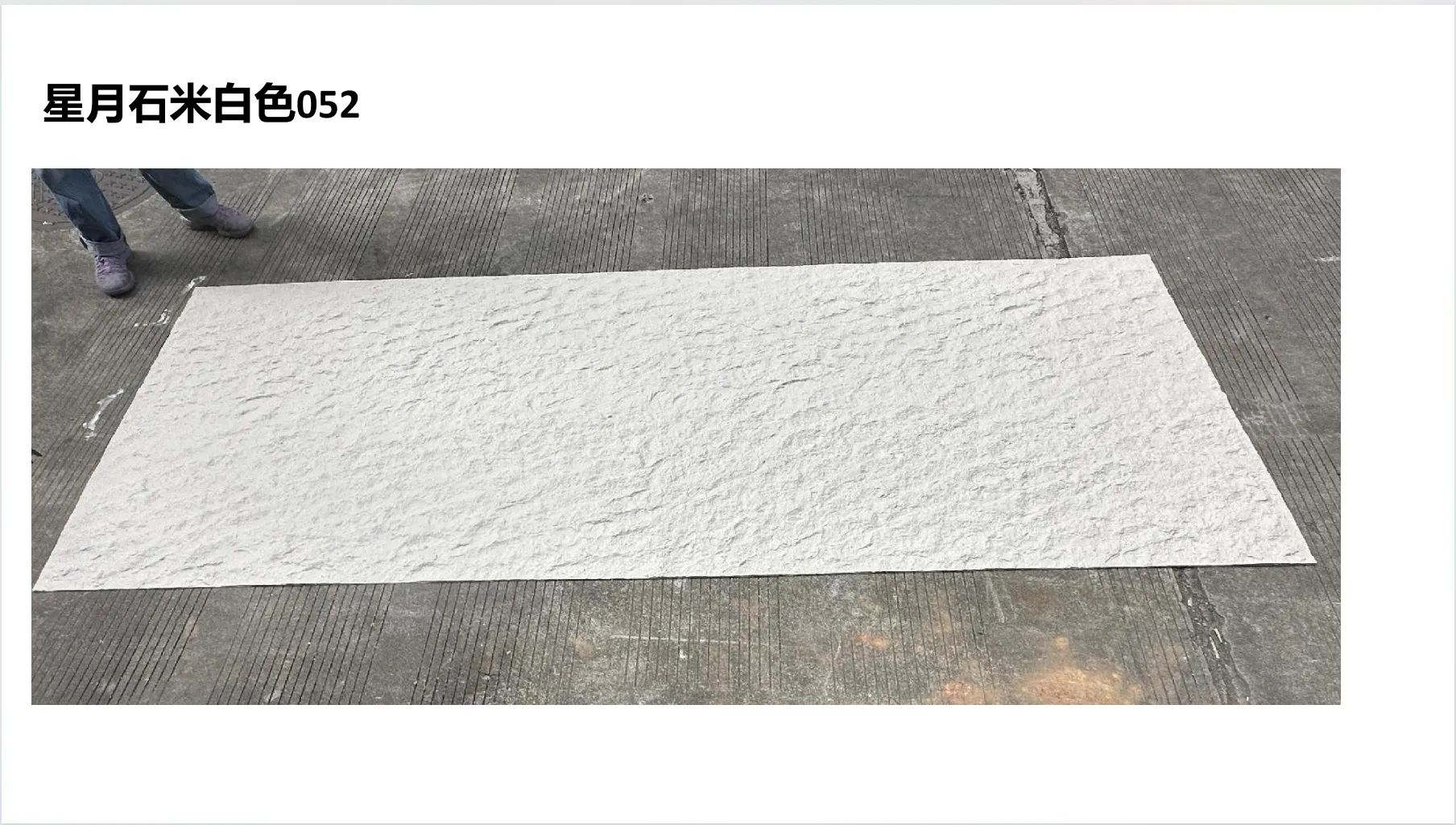
First, let's get to know Starmoon Stone . Part of the broader MCM flexible stone series, Starmoon Stone is a modified composite material (MCM) that blends natural minerals with advanced polymers. What makes it stand out? Its name gives a hint: many variants, like travertine (starry blue) , feature tiny, shimmering flecks that mimic a starry night sky—adding depth and whimsy to walls. Unlike traditional stone, MCM flexible stone is lightweight, flexible, and easy to install, making it a favorite among designers looking to push creative boundaries.
Starmoon Stone isn't just about looks, though. Its composition makes it resistant to moisture, impact, and temperature fluctuations—qualities that make it suitable for both residential and commercial spaces. Think of it as nature meets innovation: it captures the beauty of natural stone (like travertine or marble) but with the practicality of modern engineering. Whether you opt for the deep blues of travertine (starry blue) or the earthy tones of other variants, Starmoon Stone brings a sense of uniqueness that's hard to replicate with synthetic materials.
Quartz, on the other hand, is an engineered stone made from 90-95% ground quartz crystals mixed with resins and pigments. Unlike Starmoon Stone, which leans into natural variation, quartz is celebrated for its consistency. Want a wall with zero color variation or a specific pattern repeated flawlessly? Quartz delivers. It's also incredibly durable—scratch-resistant, heat-resistant, and non-porous, making it a low-maintenance option for high-traffic areas.
Quartz comes in a rainbow of colors and finishes, from classic whites and grays to bold hues and even imitations of natural stone like marble or granite. Its versatility has made it a staple in modern design, particularly in kitchens and bathrooms. But don't sleep on it for walls: quartz panels can create a sleek, contemporary look that pairs beautifully with other materials like wood grain board or metal accents.
When it comes to aesthetics, the choice between Starmoon Stone and quartz often boils down to personal style. Starmoon Stone thrives on uniqueness. Each panel of travertine (starry blue) , for example, has its own arrangement of "stars," ensuring no two walls look exactly alike. Its texture is tactile—you can run your hand over it and feel the subtle grooves and bumps, adding warmth and organic charm to a room. It's perfect for spaces aiming for a rustic, bohemian, or nature-inspired vibe. Imagine a living room with a Starmoon Stone accent wall in travertine (starry blue) , paired with wood grain board furniture and soft lighting—the effect is cozy yet otherworldly.
Quartz, by contrast, is all about precision. Its smooth, uniform surface exudes modernity and sophistication. If your design leans minimalist, industrial, or ultra-contemporary, quartz might be the way to go. It's also a chameleon: want a wall that looks like polished marble? There's a quartz for that. Prefer a bold, solid color to make a statement? Quartz can do that too. The downside? Some might find its consistency lacking in "character"—it doesn't have the same "lived-in" feel as natural materials like Starmoon Stone.
Durability is a non-negotiable factor for wall materials, especially in busy homes or commercial spaces. Let's break down how Starmoon Stone and quartz stack up.
Starmoon Stone, thanks to its MCM flexible stone composition, is surprisingly tough. Its flexibility means it can absorb minor impacts without cracking—a big plus if you have kids or pets. It's also moisture-resistant, making it suitable for bathrooms or basements (though proper sealing is still recommended for porous variants). However, it's not invincible: heavy objects dropped directly on it could cause chips, and harsh chemicals might damage its finish over time.
Quartz, on the other hand, is a durability champion. Its high quartz content makes it scratch-resistant (you can even cut directly on it, though we don't recommend it for walls!), and its non-porous surface repels moisture, stains, and bacteria. It's also heat-resistant up to 300°F, so proximity to fireplaces or radiators isn't an issue. The only real vulnerability? Extreme force—quartz is rigid, so a hard impact could cause it to crack, and repairs are often difficult (you'd likely need to replace the entire panel).
Let's be honest: no one wants a wall material that requires constant upkeep. Here's how Starmoon Stone and quartz compare in the maintenance department.
Starmoon Stone, particularly variants like travertine (starry blue) , is slightly porous (though less so than natural travertine). This means it may need periodic sealing (every 1-2 years) to prevent stains from liquids like wine or coffee. Day-to-day care is simple, though: just wipe with a damp cloth and mild soap. Avoid abrasive cleaners, as they can dull the finish.
Quartz is the low-maintenance king. Its non-porous surface means no sealing is needed—spills can be wiped up with a cloth, and it resists stains, mold, and mildew. You can even use mild disinfectants without worrying about damage. The only caveat? Avoid harsh chemicals like bleach or oven cleaner, which can discolor the resin binding.
Installation is another key consideration, especially if you're working with a tight timeline or budget. MCM flexible stone products like Starmoon Stone shine here. Their lightweight nature (typically 3-5 lbs per square foot) makes them easy to handle, reducing labor costs and installation time. They can be cut with standard tools and adhered to most surfaces, including drywall, concrete, and even existing tile. This flexibility opens up creative possibilities—think curved walls, accent niches, or even ceiling applications.
Quartz, by comparison, is heavier (around 15-20 lbs per square foot), requiring professional installation to ensure safety and proper alignment. It also needs a sturdy substrate, so walls may need reinforcement in some cases. Cutting quartz requires specialized tools (like diamond blades) to avoid chipping, adding to the complexity and cost. That said, once installed, quartz panels are incredibly secure and long-lasting—just be prepared for a longer installation process.
Budget is often the deciding factor, and here's where the two materials diverge. Starmoon Stone, as part of the MCM flexible stone series, is generally mid-range in cost. Prices vary by style (e.g., travertine (starry blue) may cost more than basic variants) but typically range from $15-$30 per square foot, including installation. This makes it accessible for most homeowners looking to add a high-end touch without breaking the bank.
Quartz, on the other hand, is a premium material. Prices start around $25 per square foot and can climb to $60+ for high-end brands or custom colors. Installation costs are also higher due to its weight and complexity, pushing total costs to $40-$80 per square foot. For luxury projects, this may be justified, but for budget-conscious homeowners, Starmoon Stone offers better value.
In an era of eco-conscious design, environmental impact matters. Starmoon Stone has a leg up here: MCM flexible stone is often made with recycled materials and requires less energy to produce than natural stone. Its lightweight nature also reduces transportation emissions. Additionally, many manufacturers prioritize low-VOC (volatile organic compound) resins, making it a healthier choice for indoor air quality.
Quartz, while durable, has a higher carbon footprint. Its production involves mining quartz crystals (which can disrupt ecosystems) and energy-intensive processing to bind the crystals with resins. Some brands use recycled content, but this isn't universal. If sustainability is a top priority, Starmoon Stone is the greener option.
| Factors | Starmoon Stone | Quartz |
|---|---|---|
| Aesthetics | Organic, unique patterns (e.g., travertine (starry blue) ), tactile texture, natural variation. | Sleek, consistent patterns, wide color range, modern look. |
| Durability | Flexible, impact-resistant, moisture-resistant (with sealing). | Scratch-resistant, heat-resistant, non-porous, rigid. |
| Maintenance | Requires periodic sealing (1-2 years), mild soap cleaning. | No sealing needed, easy to clean with soap and water. |
| Installation | Lightweight, easy to cut, flexible application (curves, ceilings). | Heavy, requires professional installation, specialized tools. |
| Cost | Mid-range: $15-$30/sq ft (installed). | Premium: $40-$80/sq ft (installed). |
| Eco-Friendliness | Recycled materials, low-VOC, lower carbon footprint. | Higher energy use in production, less recycled content. |
Still undecided? Let's look at specific scenarios where one material might outperform the other.
Choose Starmoon Stone if… You want a wall with personality and natural charm. It's ideal for accent walls in living rooms, bedrooms, or home offices, where its texture and starry patterns can serve as a focal point. It also works well in commercial spaces like cafés or boutique hotels, where ambiance is key. Pair it with wood grain board shelves or warm lighting to enhance its organic feel.
Choose Quartz if… You prioritize durability and low maintenance. It's perfect for high-traffic areas like entryways, kitchens, or bathrooms, where spills and scratches are common. Its sleek look also complements modern or industrial designs, such as loft apartments or corporate offices. For a bold statement, pair with fair-faced concrete floors or metal accents.
At the end of the day, the choice between Starmoon Stone and quartz depends on your priorities. If you value uniqueness, texture, and eco-friendliness, Starmoon Stone (especially variants like travertine (starry blue) ) is a standout choice. It brings a piece of the outdoors inside, creating walls that feel alive and full of character.
If durability, consistency, and low maintenance are your top concerns, quartz is the reliable workhorse. It's a practical investment that will look great for years with minimal effort.
Whichever you choose, remember: the best wall material is the one that aligns with your design vision, lifestyle, and budget. Both Starmoon Stone and quartz have the power to transform a space—now it's up to you to decide which story you want your walls to tell.
Recommend Products












