

Curved walls have a way of turning a building from a structure into a story. They flow like rivers, wrap like hugs, and invite the eye to linger—not just on the space itself, but on the journey through it. Yet for all their beauty, curved walls have long been the bane of architects and designers. Traditional materials—marble slabs, solid stone, even concrete—are stubbornly rigid, heavy as boulders, and prone to cracking when forced into a curve. "We love the idea of curves," a designer friend once sighed to me, "but the materials? They just don't get the memo."
That's where COLORIA steps in. Their Starry Red Travertine Flexible Stone isn't just a material—it's a design revolution. Imagine (oops, scratch that) picture a wall that bends as gracefully as a dancer, clad in the warm, star-kissed hues of travertine, without a single crack or compromise. It's the kind of solution that makes designers lean forward and ask, "How did you do that?" Let's dive in.
First, let's talk about why curves matter. Architects have been obsessed with them for centuries—think of Antoni Gaudí's Sagrada Família, where every arch seems to defy gravity, or Zaha Hadid's fluid, futuristic forms. Curves feel human. They soften harsh angles, create flow, and make spaces feel less like boxes and more like environments. But here's the rub: most building materials are born to be straight. Marble, for example, is stunning but dense—one slab can weigh 50kg or more. Try bending that into a 2-meter radius, and you're looking at cracks, uneven surfaces, and a structural engineer sweating bullets.
Concrete? It's versatile, but pouring a curved wall requires custom formwork, which is pricey and time-consuming. And once it's set, there's no changing your mind. Stone veneers? They're thinner, but still rigid—you might get a slight curve, but push too far, and the stone will snap like a cracker. So designers end up choosing between their vision and practicality. Until now.
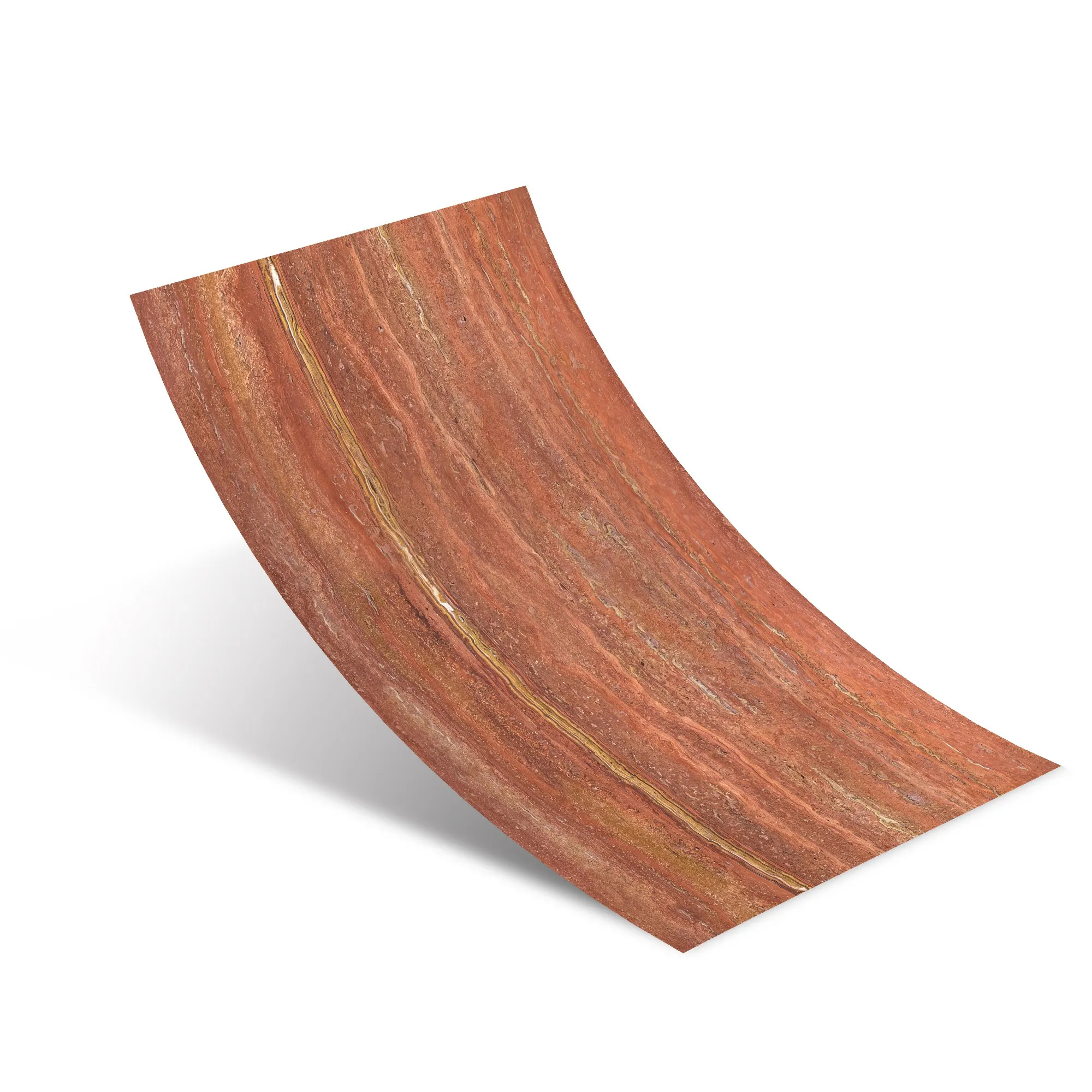
Let's start with the star of the show: Starry Red Travertine. If you've ever seen travertine in the wild, you know it's a stone with personality—porous, earthy, and full of character. But Starry Red takes that up a notch. Picture a deep, terracotta-red base, swirled with hints of amber and gold, and dotted with tiny, iridescent flecks that catch the light like distant stars. It's not just a color; it's a mood—warm, inviting, and a little bit magical. "It feels like bringing a sunset indoors," one interior designer told me after using it in a hotel lobby.
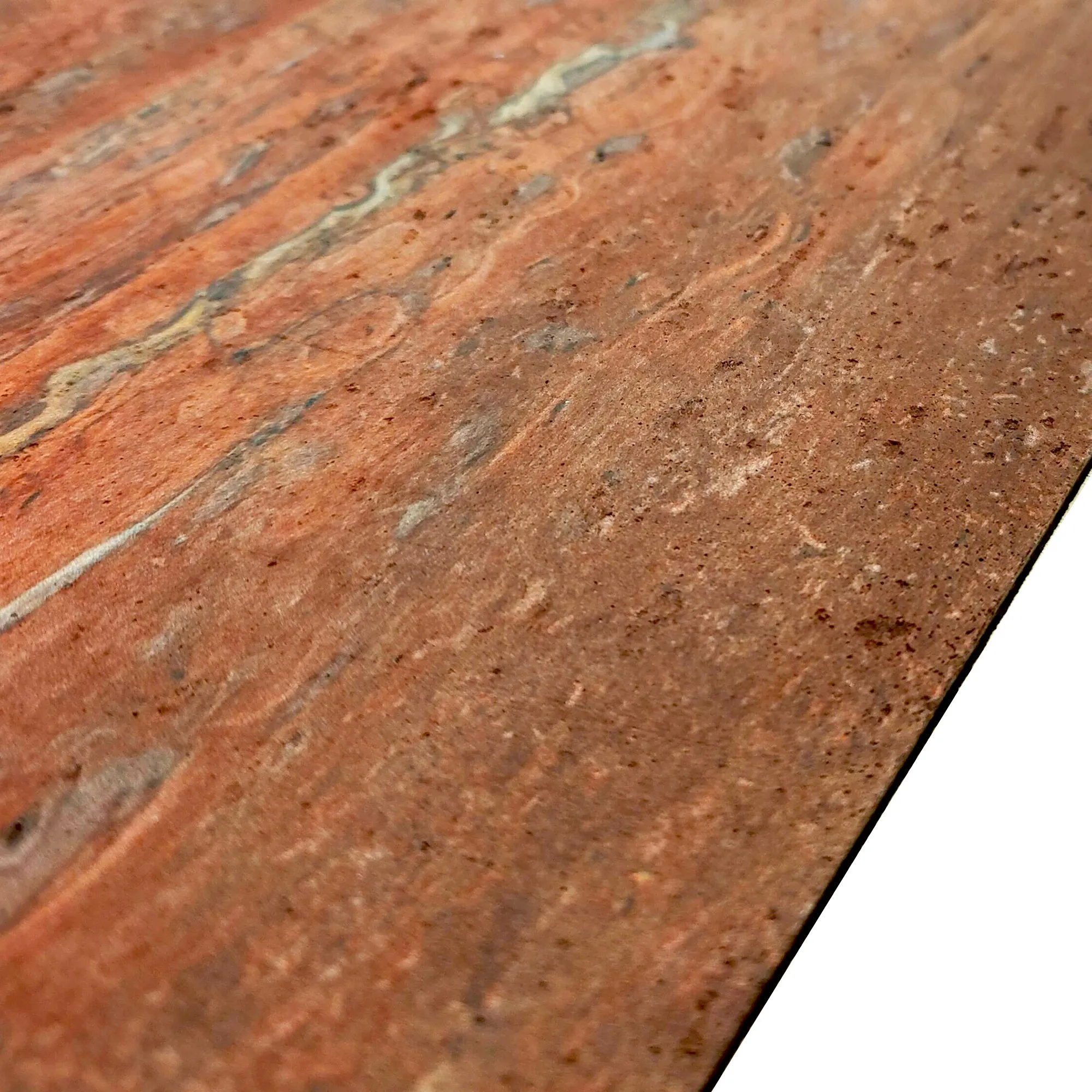
But the real magic isn't in the color—it's in the flexibility. This isn't your grandma's travertine slab. At just 4-5mm thick, it weighs a featherlight 6kg per square meter (compared to 30-40kg for traditional stone). And here's the kicker: it can bend to a minimum radius of 50cm. That means you can wrap it around columns, curve it along a staircase, or even create a sweeping, 180-degree feature wall without a single stress fracture. How? Enter MCM technology.
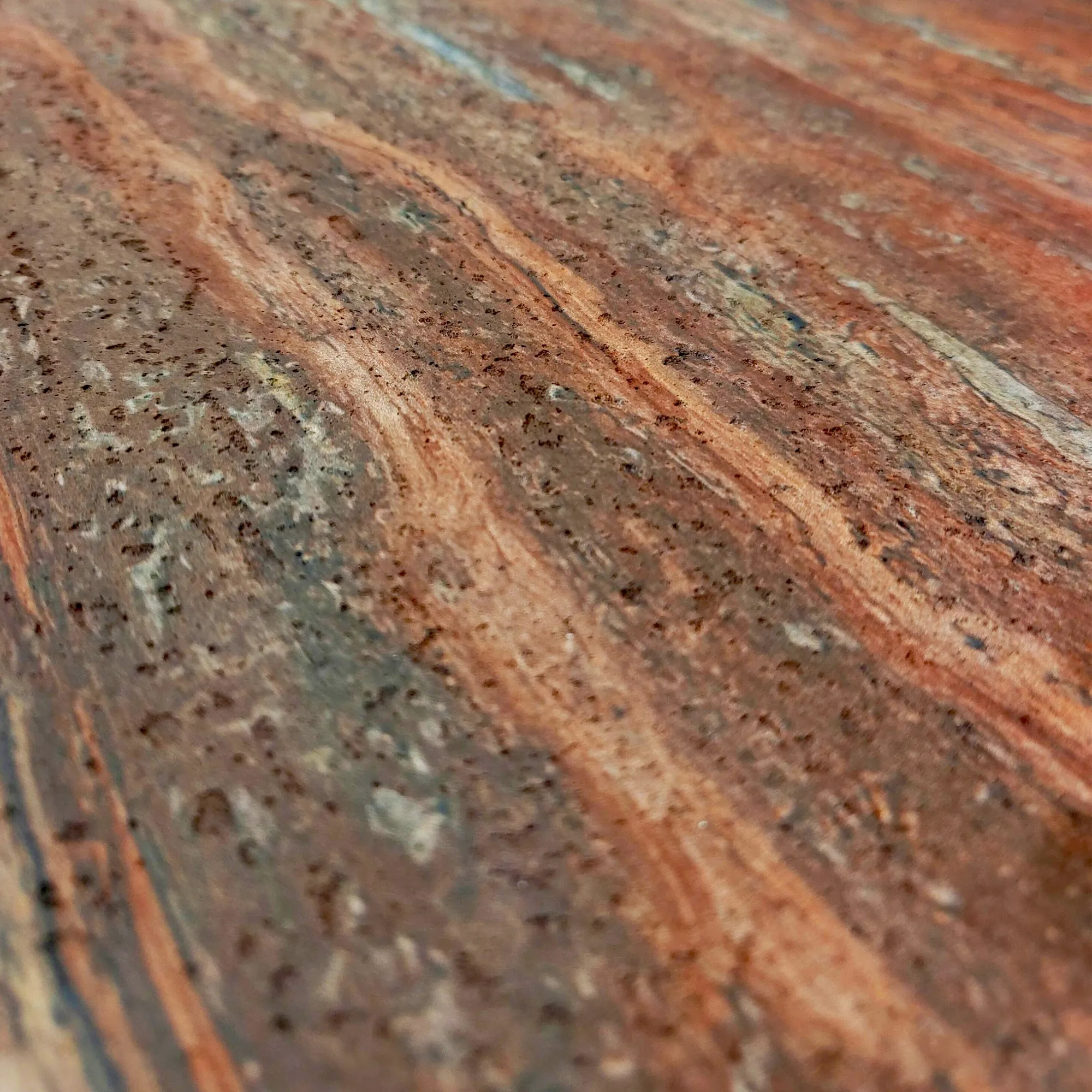
MCM stands for Modified Composite Material, and it's the reason Starry Red Travertine can do what traditional stone can't. Think of it as a high-tech sandwich. The core is a lightweight, fiber-reinforced composite—strong but flexible, like a carbon fiber sheet. On top, a thin layer of natural travertine (the "starry red" part) is bonded using a specialized adhesive that's both strong and elastic. The result? A material that has all the beauty of natural stone but the bendability of a vinyl sheet.
But don't let the "lightweight" fool you. MCM is tough. It's water-resistant, fire-retardant, and can handle temperature swings from -40°C to 80°C—perfect for both indoor and outdoor use. And because it's so thin, it's a breeze to install. No need for heavy machinery or reinforced walls. A couple of installers can carry a stack of panels up a staircase, cut them on-site with standard tools, and adhere them directly to the substrate. "We cut installation time in half on our last project," a contractor friend told me. "And the client couldn't believe how little dust there was compared to cutting solid stone."
Still not convinced? Let's put Starry Red Travertine head-to-head with traditional materials. The table below breaks down the key factors designers care about most:
| Material | Weight (kg/m²) | Min. Bend Radius (cm) | Installation Time | Sustainability |
|---|---|---|---|---|
| Traditional Marble Slab | 35-50 | Not possible* | 3-4 days (2 workers) | High carbon footprint (quarrying, transport) |
| Solid Travertine | 25-30 | 200+ (risk of cracking) | 2-3 days (2 workers) | Moderate (still heavy transport) |
| Fair-faced Concrete | 20-25 | 150 (with custom formwork) | 5-7 days (formwork + curing) | Moderate (cement production emits CO2) |
| Starry Red Travertine Flexible Stone | 5-6 | 50 (no cracking) | 1 day (2 workers) | High (recycled core, low transport emissions) |
*Marble slabs can be cut into thin veneers for slight curves, but radius is limited and risk of breakage is high.
The numbers tell the story: lighter, more flexible, faster to install, and kinder to the planet. But what about the look? Traditionalists might worry that "composite" means sacrificing the natural beauty of stone. Not here. Run your hand over Starry Red Travertine, and you'll feel the same cool, porous texture as natural travertine. The starry speckles? Those are real mineral deposits in the stone, not printed on. It's nature, just with a tech upgrade.
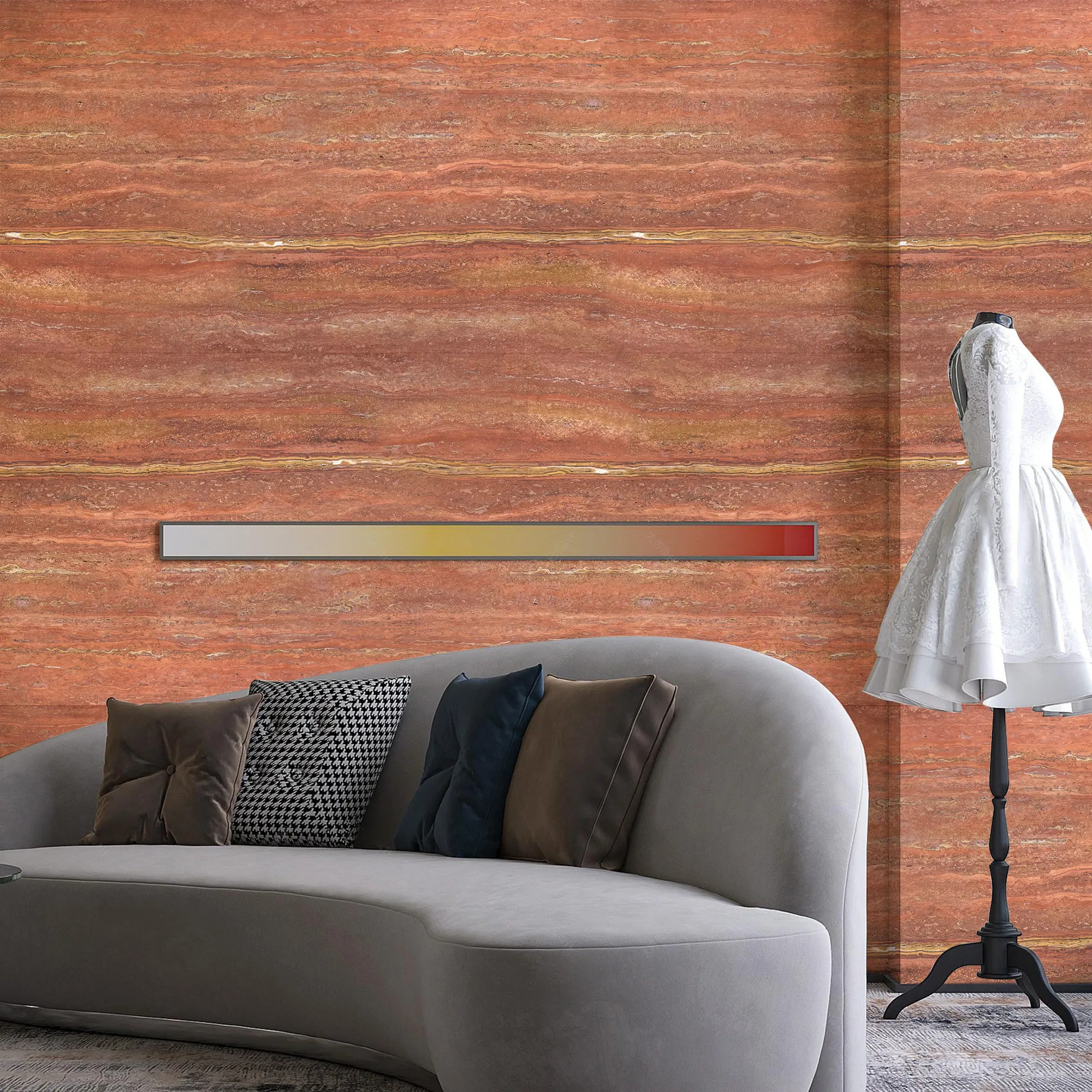
Starry Red Travertine is a standout, but it plays well with others. COLORIA's lineup includes a range of materials that complement its curves and colors, turning a single wall into a design symphony. Take Wave Panel , for example. With its gentle, undulating surface that mimics ocean swells, it pairs beautifully with the starry red tones. Imagine a curved wall in a beachfront restaurant: Starry Red forms the lower half, warm and grounding, while Wave Panel in a soft, sandy beige sweeps above, the curves of the wall echoed in the waves of the panel. It's like bringing the shore indoors.
For a touch of modern elegance, Lunar Peak Silvery is a stunner. Its cool, silvery sheen contrasts with Starry Red's warmth, creating a balance that feels both timeless and contemporary. Use it as a thin accent strip along a curved wall, or as a full panel behind a reception desk, and suddenly the space feels polished but not cold. "It's like pairing a cozy sweater with a sleek blazer," one designer put it.
And let's not overlook Fair-faced Concrete —a classic for a reason. Its raw, industrial texture adds depth when paired with Starry Red, like a modern art piece that's both rough and refined. Imagine a curved wall in a boutique hotel lobby: Starry Red wraps around the entrance, welcoming guests, while Fair-faced Concrete forms the backdrop, adding a touch of urban edge. It's design that tells a story.
Starry Red Travertine isn't just for showstopping feature walls (though it does that brilliantly). It's versatile enough to transform any space where curves matter. Let's brainstorm a few scenarios:
At the end of the day, Starry Red Travertine Flexible Stone is more than a material—it's a permission slip for designers to dream bigger. No more choosing between beauty and practicality, between curves and durability. With MCM technology, COLORIA has unlocked a new world of possibilities, where walls can flow, spaces can breathe, and every curve tells a story.
So the next time you walk into a building with a curved wall that takes your breath away, take a closer look. Chances are, it's not marble or concrete. It's Starry Red Travertine—natural, flexible, and ready to bend the rules.
Recommend Products











