

A deep dive into how this innovative material turns surface challenges into design opportunities
Imagine standing in front of a wall that feels more like a topographical map than a flat surface—dips here, bumps there, a gentle curve where straight lines should be. For architects and designers, this isn't just a quirk; it's a roadblock. Traditional materials like natural marble or rigid concrete panels crack under the pressure of uneven substrates. Heavy stone slabs add weight to already unstable surfaces, risking long-term damage. And let's not forget the aesthetic toll: a beautiful material that doesn't lie flat looks more like a mistake than a design choice. It's enough to make even the most creative minds sigh and reach for the same old, safe (but boring) options.
But what if there was a material that didn't just tolerate uneven surfaces—it embraced them? A material that bends without breaking, clings without slipping, and adds beauty without bulk? Enter Starry Red Travertine MCM Flexible Stone, a standout in the MCM project board series that's redefining how we approach tricky surfaces. It's not just a building material; it's a problem-solver with a personality, turning frustration into inspiration, one uneven wall at a time.
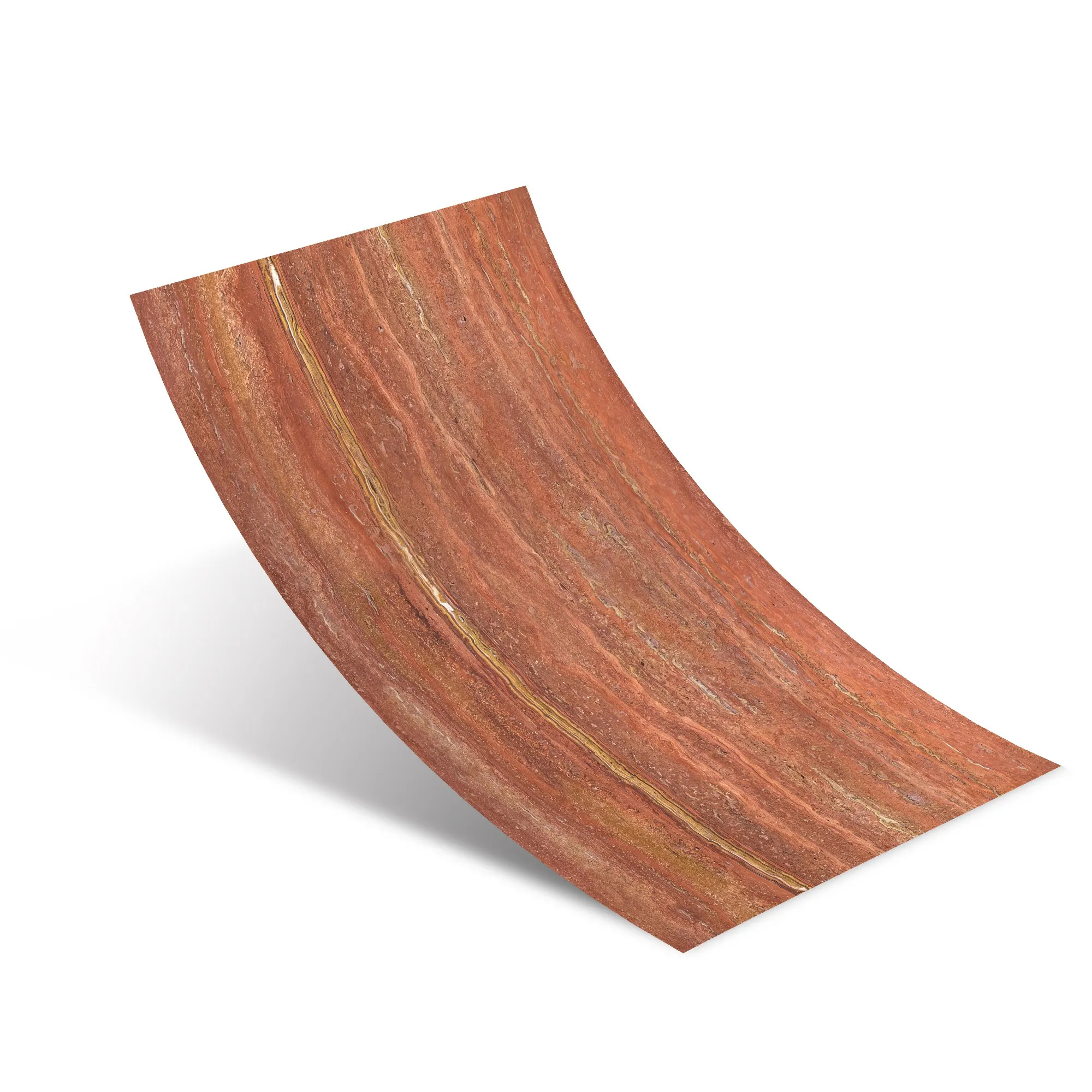
First, let's talk about the star of the show: the appearance. Starry Red Travertine isn't your average stone. Close your eyes for a second (but not too long—you'll want to keep reading) and picture a twilight sky, where the sun has just set and the first stars are flickering to life. Now, tint that sky a warm, earthy red—like the hue of terracotta roof tiles at dusk—and add delicate, cream-colored veins that wind through the surface like shooting stars. That's Starry Red Travertine. It's bold but not overwhelming, vibrant but grounded, with a texture that invites touch. Run your hand over it, and you'll feel the subtle, natural grain, a reminder that even in a composite material, nature's artistry shines through.
Part of the broader MCM flexible stone family—short for Modified Composite Material—Starry Red Travertine is engineered to combine the best of natural beauty and modern functionality. Unlike its rigid cousins in the stone world, MCM panels are thin (usually 3-5mm), lightweight (around 4-6kg per square meter), and, crucially, flexible. This flexibility isn't just a technical spec; it's the reason why uneven surfaces suddenly become canvases instead of obstacles.
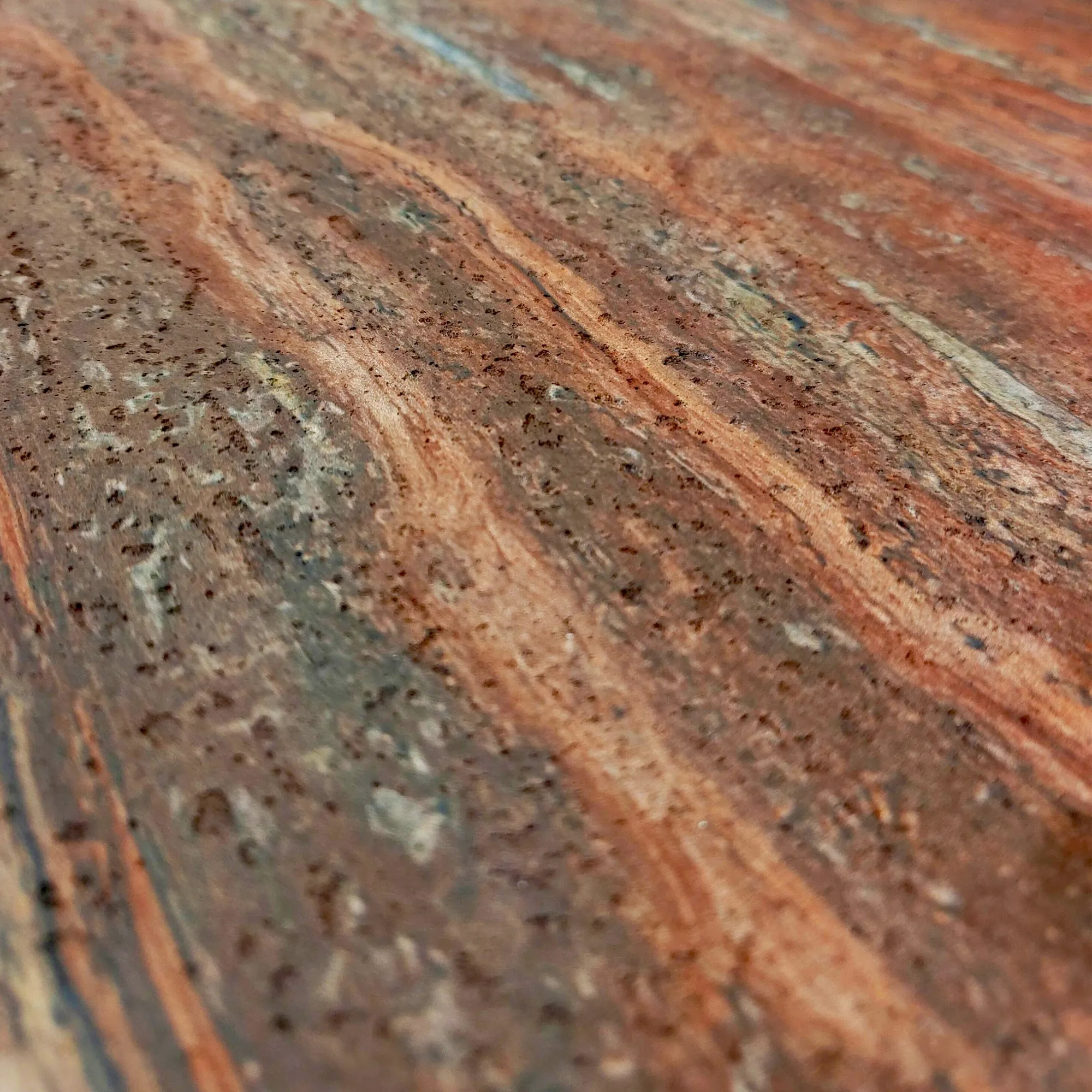
To understand why Starry Red Travertine MCM works where others fail, let's break down the science (but don't worry—we'll keep it light). Traditional stone panels are dense and unforgiving. When you press them against an uneven surface, the high points take all the pressure, leaving gaps underneath. Over time, those gaps weaken the bond, leading to cracks or even detachment. MCM flexible stone, on the other hand, acts more like a well-tailored garment: it stretches and conforms to the body (or in this case, the wall) without losing its shape. The secret? A composite core made from natural stone powder and a polymer binder, which gives it both strength and elasticity.
Let's put this in real terms. Suppose you're renovating a 100-year-old cottage with walls that have settled over decades, creating gentle waves in the plaster. Hanging natural marble here would be a disaster—even with careful installation, the marble would crack along the curves. Foamed aluminium alloy board (vintage silver) might be lightweight, but its metallic rigidity still struggles with pronounced unevenness. Starry Red Travertine MCM? It bends to the wall's contours, hugging every bump and dip like it was made for them. The result? A surface that looks seamless, intentional, and full of character—exactly what the cottage deserves.
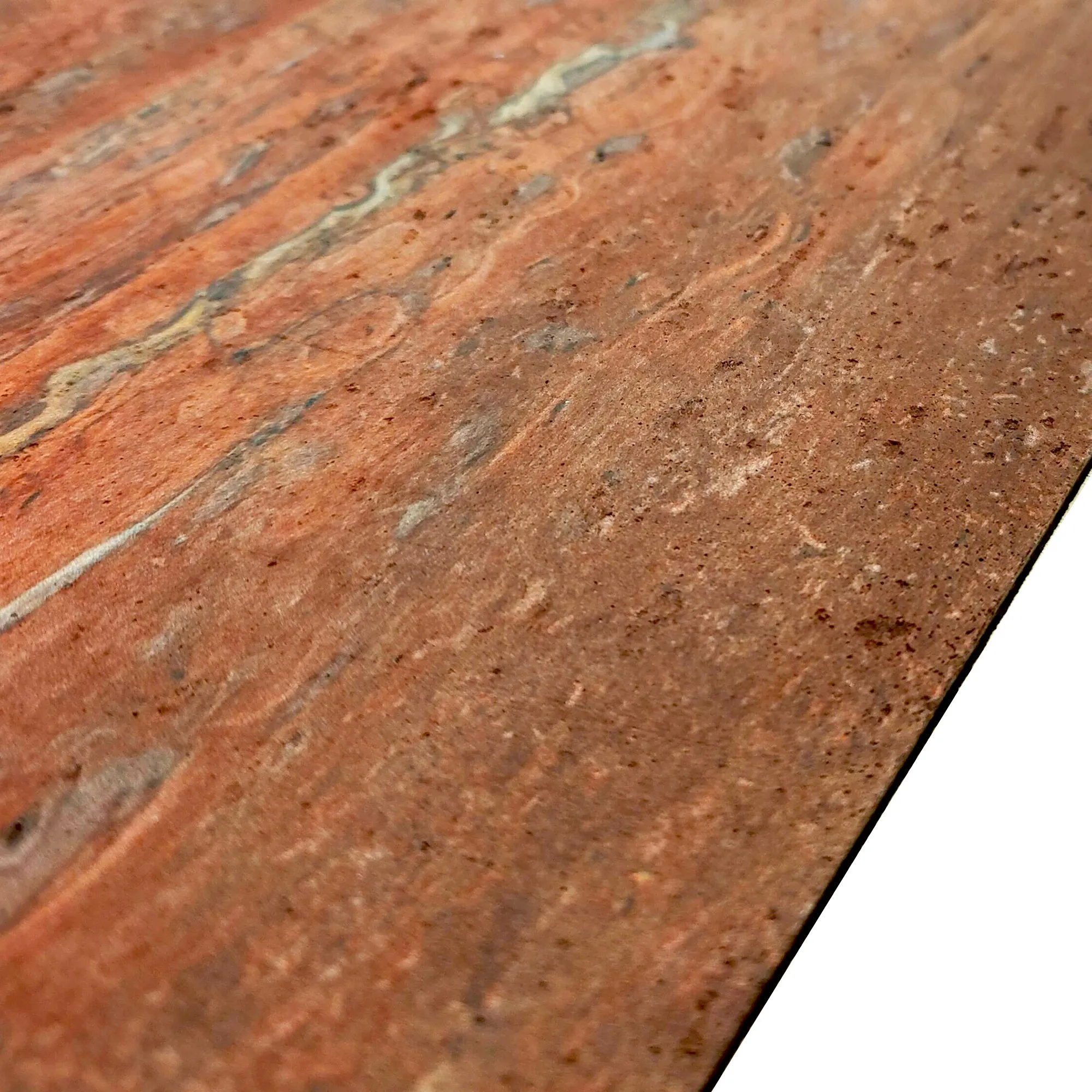
Installing material on an uneven surface shouldn't feel like solving a Rubik's Cube. With Starry Red Travertine MCM, the process is refreshingly straightforward, even for DIY enthusiasts (though we still recommend consulting a pro for large projects). Here's how it works:
Compare this to installing natural travertine (beige) on an uneven surface, where you'd spend hours leveling the substrate with mortar, adding weight and time to the project. With MCM, the process is faster, lighter, and infinitely less stressful.
Don't just take our word for it—let's see how Starry Red Travertine MCM holds up against other popular materials when it comes to uneven surfaces. The table below breaks down the key factors that matter most to designers and homeowners:
| Material | Flexibility | Weight per sqm (kg) | Installation on Uneven Surfaces | Durability |
| Starry Red Travertine MCM | High (bends up to 30° without cracking) | 4-6 | Excellent (conforms to contours easily) | High (resistant to impact, moisture, and UV rays) |
| Natural Marble | Low (brittle; cracks under minimal flex) | 20-25 | Poor (requires perfectly level substrate) | Medium (prone to staining and etching) |
| Fair-Faced Concrete | Very Low (rigid; no flex) | 15-20 | Poor (gaps form over unevenness) | High (but heavy and hard to repair) |
| Foamed Aluminium Alloy Board (Vintage Silver) | Medium (metallic flex, but limited) | 3-5 | Moderate (struggles with pronounced curves) | High (resistant to rust, but less warm aesthetically) |
As the table shows, Starry Red Travertine MCM outshines the competition in flexibility, weight, and ease of installation on uneven surfaces—all while matching (or exceeding) durability. And let's not overlook the aesthetic edge: while foamed aluminium has a sleek, modern look, it can feel cold. Starry Red Travertine brings warmth, texture, and that one-of-a-kind starry pattern that turns a wall into a conversation starter.
Still skeptical? Let's step into the real world. Take the case of "The Rustic Nook," a cozy café in Portland, Oregon. The owners fell in love with a historic building, but its interior walls were a mess—uneven, pockmarked, and full of character (the kind that's charming until you try to hang something). They wanted a feature wall behind the counter that felt inviting, not institutional. Natural stone was too heavy; painted drywall felt flat. Then they discovered Starry Red Travertine MCM.
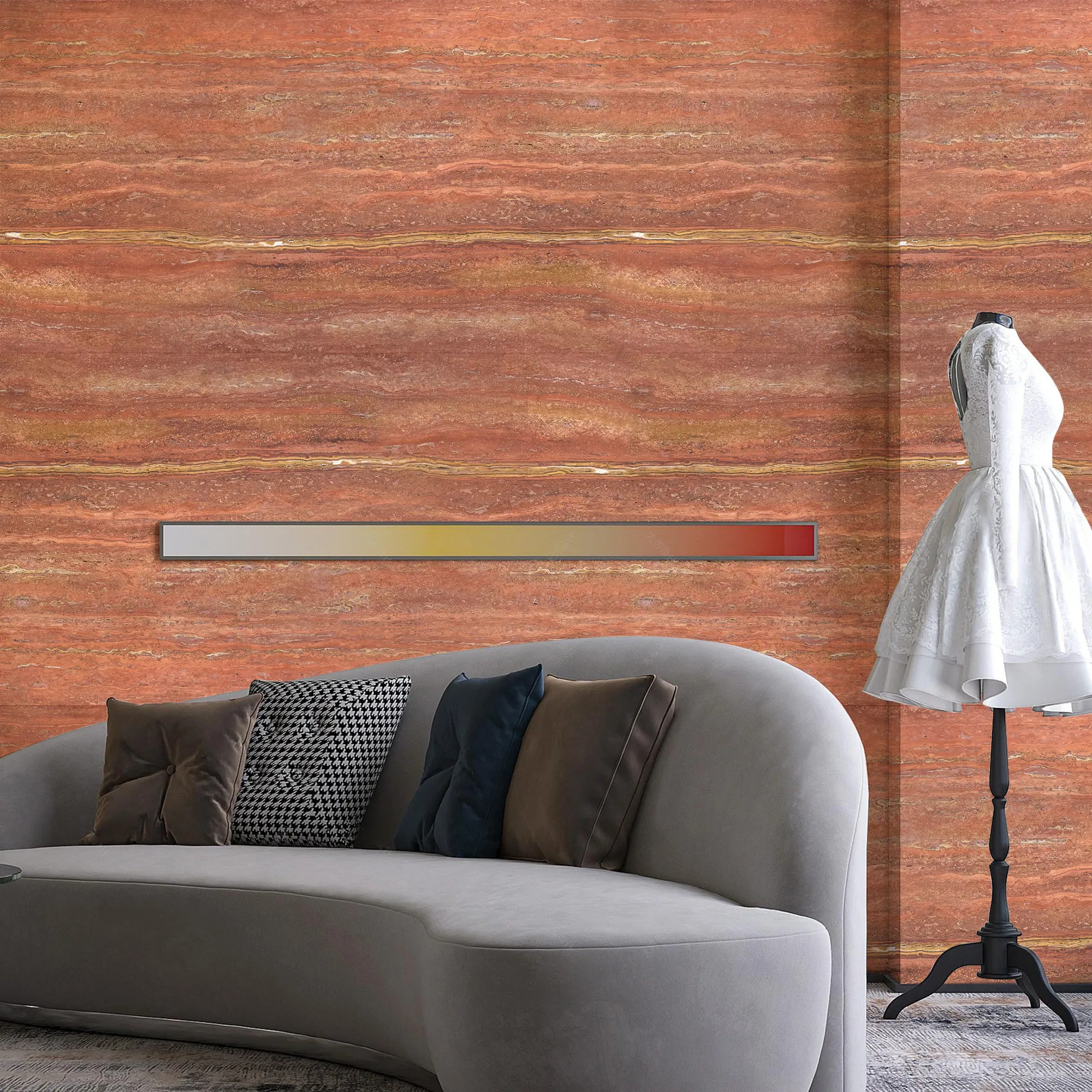
Today, that wall is the café's crown jewel. The Starry Red panels hug the wall's curves, their red and cream tones complementing the warm wood of the counter and the soft glow of pendant lights. Customers often linger, commenting on how the "starry" pattern makes the space feel like a cozy cabin under the night sky. "It's not just a wall anymore," says the owner. "It's part of the experience."
Another example: a backyard patio in Colorado with uneven ground, thanks to years of freeze-thaw cycles. The homeowner wanted an outdoor space that looked like it was carved from stone, but traditional flagstone kept shifting and cracking. Enter Starry Red Travertine MCM panels. Installed directly over the existing uneven concrete, they now form a seamless patio that withstands the elements and looks stunning year-round. Even better? The lightweight panels didn't require reinforcing the ground, saving time and money.
What good is a beautiful material if it fades, stains, or needs constant upkeep? Starry Red Travertine MCM checks the "easy maintenance" box, too. Unlike natural travertine (beige), which often requires sealing to prevent stains, MCM is non-porous. Spill coffee on it? Wipe it up with a damp cloth. Rain, snow, or humidity? No problem—it resists moisture and won't warp. Even UV rays won't fade that starry red hue over time. For outdoor installations, an annual rinse with a garden hose is all it takes to keep it looking fresh. In short: it's built to last, so you can spend less time maintaining and more time enjoying.
Starry Red Travertine is a standout, but it's not alone. The MCM project board series includes a wealth of options for every design vision. Love the starry effect but prefer a cooler tone? Check out Travertine (starry blue) or Travertine (starry orange). Want something more earthy? Lunar Peak Golden or Rust Board Granite offer warm, grounded vibes. For a modern twist, Foamed Aluminium Alloy Board (vintage gold) adds metallic shine, while Fair-Faced Concrete brings industrial chic. No matter the surface—uneven or smooth—there's an MCM panel that fits.
Uneven surfaces have long been treated like flaws, but maybe we've been looking at them wrong. They're not mistakes—they're opportunities to create something unique, something that tells a story. Starry Red Travertine MCM Flexible Stone doesn't just cover up those stories; it amplifies them, turning bumps into beauty and curves into character.
So the next time you're faced with a surface that's less than perfect, don't reach for the boring solution. Reach for Starry Red Travertine MCM. It's more than a material—it's a reminder that sometimes, the best designs come from working with what you have, not against it. And who knows? That "flawed" wall might just become your favorite part of the space.
Recommend Products











