

Because your walls deserve to tell a story as unique as your home
Let's talk about walls. Not the "just there" kind—the ones that make you pause when you walk into a room. The ones that feel less like barriers and more like backdrops to your life: morning coffee rituals, lazy Sunday afternoons, quiet evening conversations. We spend so much time picking paint colors or hanging art, but what if the wall itself could be the art? That's where materials like Starry Red Travertine MCM come in—a game-changer for anyone who wants their home to feel not just decorated, but deeply alive .
If you've ever scrolled through interior design blogs or flipped through home magazines, you know the struggle: finding a material that's bold enough to make a statement but versatile enough to fit your space. Too often, we're stuck choosing between "safe" and "dull," or "striking" and "impractical." But what if there was something that checked all the boxes—beauty, durability, flexibility, and that intangible "wow" factor? Enter Starry Red Travertine MCM, part of the innovative MCM flexible stone family that's redefining what walls can be.
In this article, we're diving deep into why Starry Red Travertine MCM isn't just another building material—it's a design partner. We'll explore its unique character, how it stacks up against traditional options like fair-faced concrete, and how pairing it with complementary textures like wood grain board can turn any room from "nice" to "unforgettable." Whether you're renovating a tiny apartment or building your dream home, this is the guide to making your walls work for you, not just around you.
First things first: MCM stands for Modified Composite Material, but let's not get bogged down in jargon. Think of it as nature and science shaking hands. MCM starts with real mineral aggregates—think crushed stone, natural travertine particles—and binds them with a high-performance polymer. The result? A material that looks and feels like it was plucked straight from a mountain, but behaves like a dream during installation and everyday life. And Starry Red Travertine is its rockstar sibling.
Starry Red isn't just a color—it's a mood. Picture a deep, warm red base, like the glow of a sunset over desert cliffs, flecked with tiny, iridescent particles that catch the light. Those "stars" aren't just for show; they're mineral deposits that give the surface depth, making the wall look different at 9 a.m. than it does at 9 p.m. On a bright morning, the red leans terracotta, soft and inviting. In the evening, under warm overhead lights, the stars twinkle, turning the wall into a quiet celebration of light and shadow.
But what really sets it apart is that it's part of the MCM flexible stone lineup. Traditional natural stone? Heavy, brittle, and a nightmare to install on curves or uneven surfaces. MCM flexible stone? Thin (usually 3-5mm), lightweight, and bendable enough to wrap around columns, archways, or even accent walls with gentle slopes. It's like having the beauty of natural travertine without the back-breaking installation or fear of cracks if your house settles.
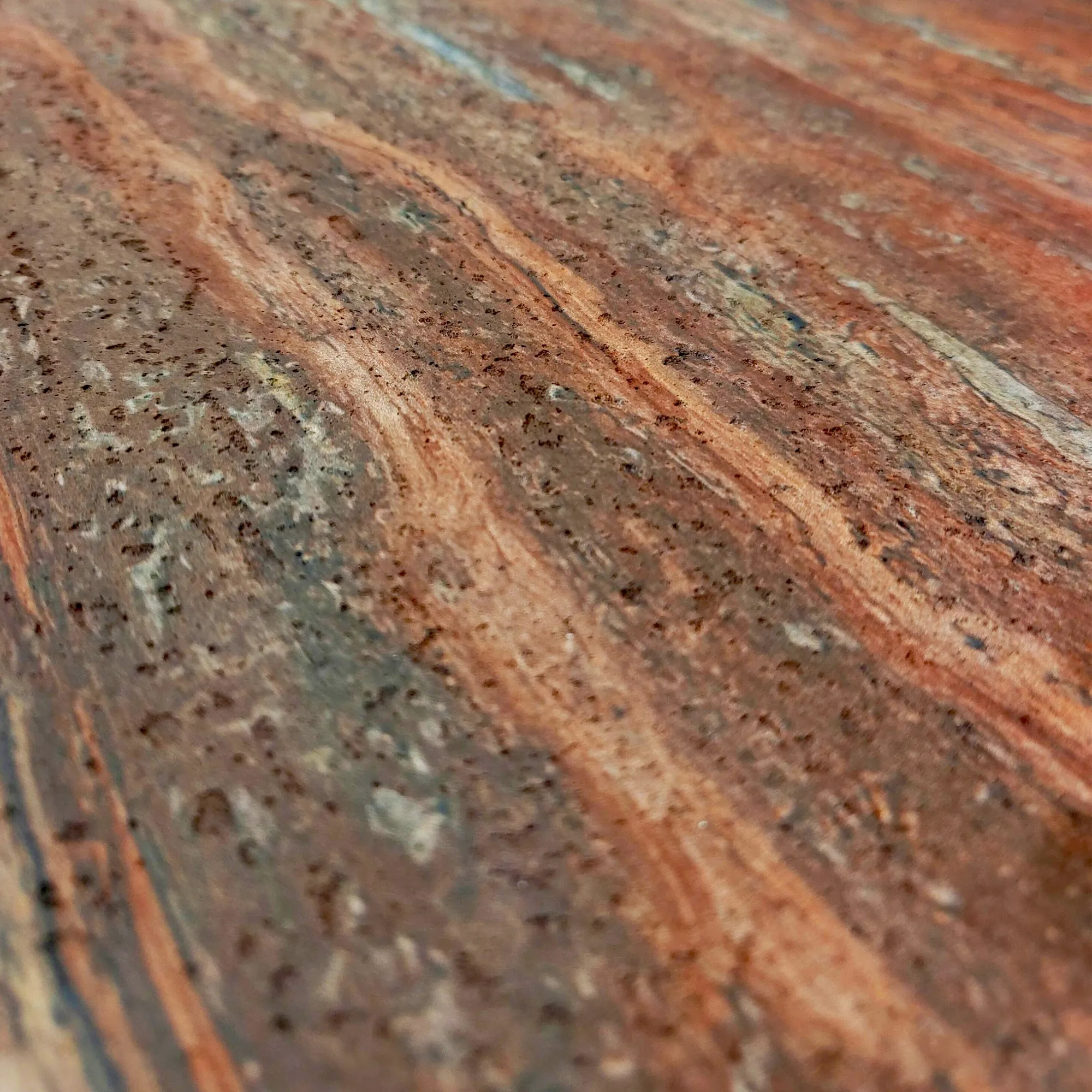
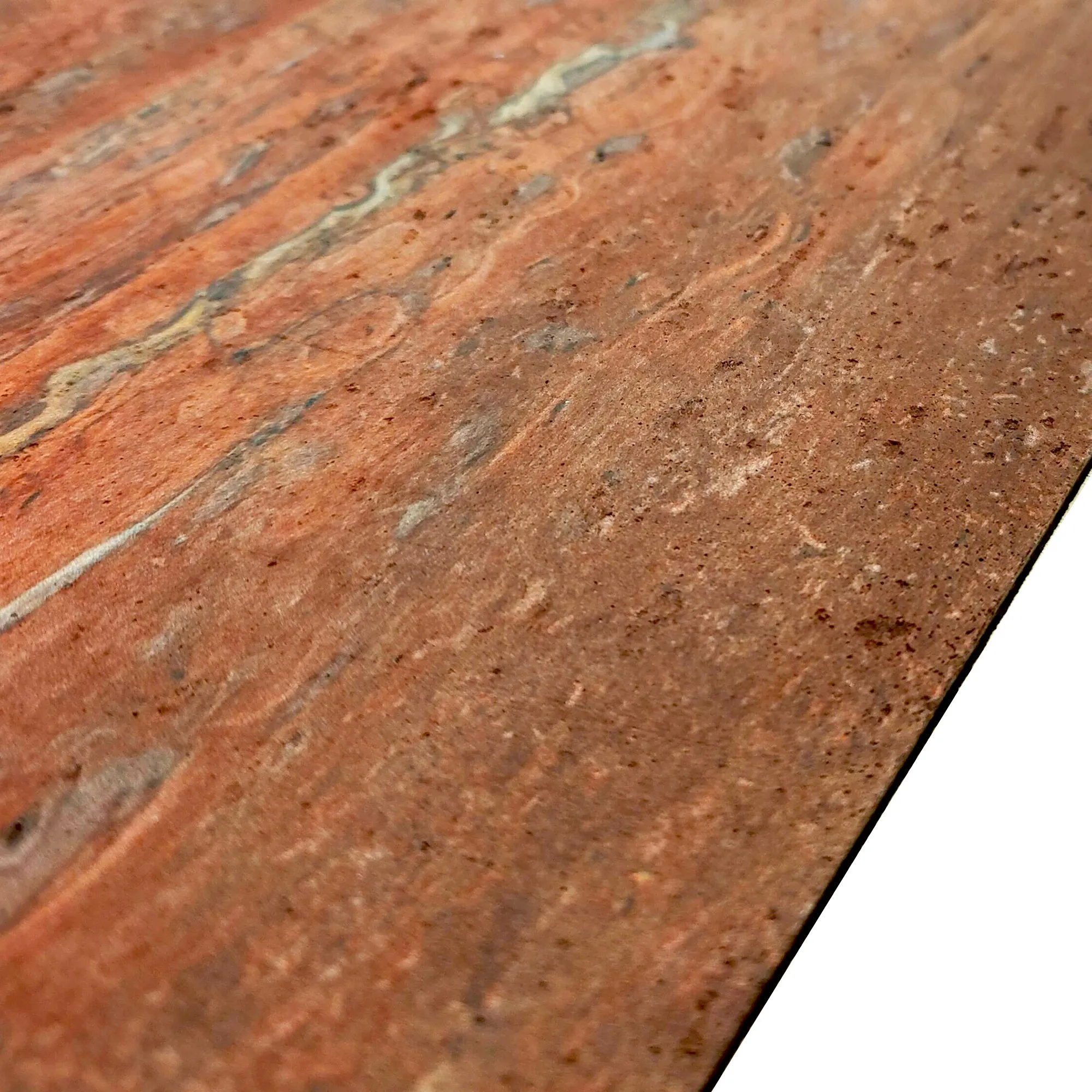
And let's talk texture. Run your hand over Starry Red Travertine MCM, and you'll feel a subtle, tactile surface—smooth enough to be cozy, but with just enough grain to feel organic. It's not the rough, porous texture of raw stone that collects dust, nor is it the cold, sterile finish of some synthetic panels. It's that sweet spot where nature meets practicality: a surface that invites touch, not just sight.
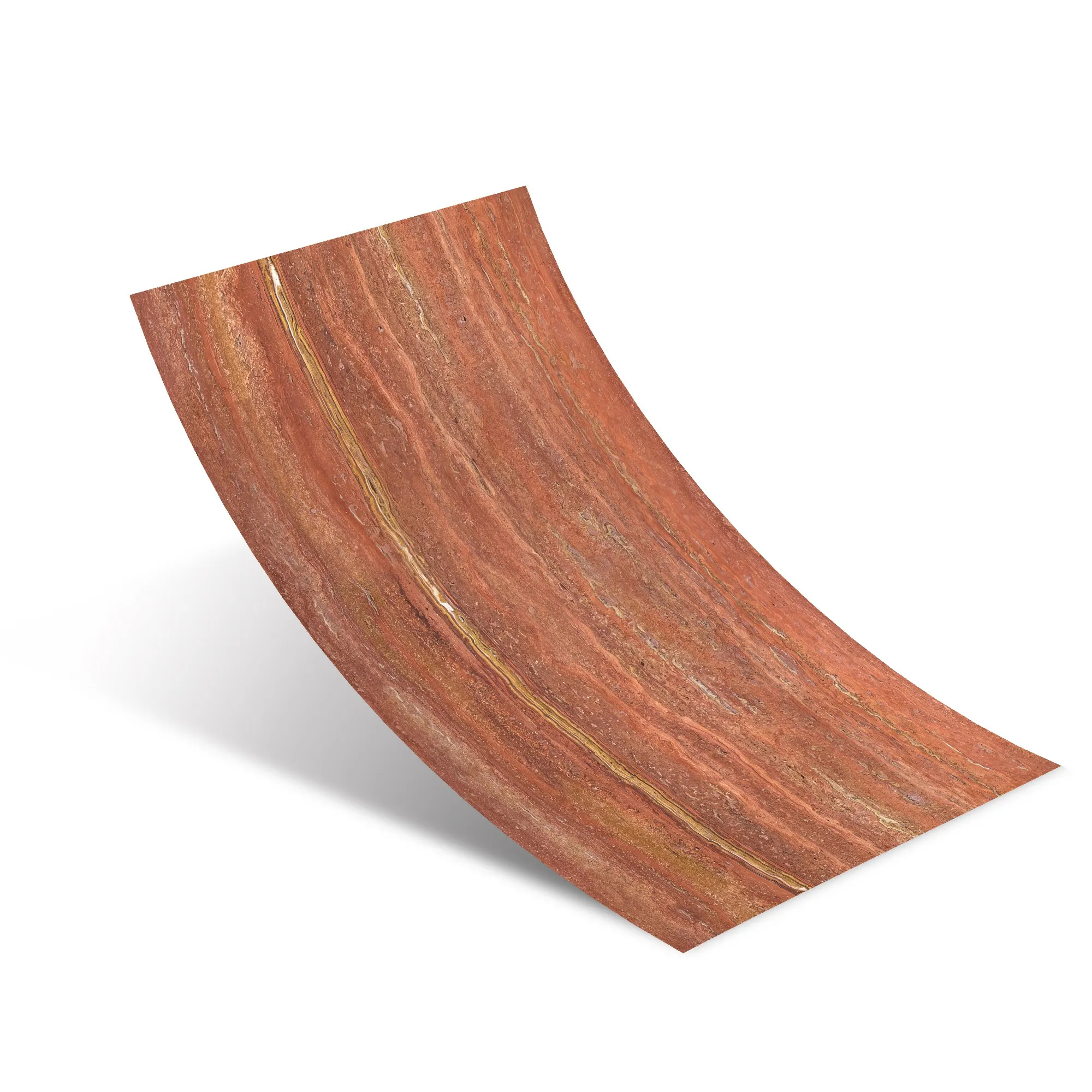
Red can be tricky, right? Too bright, and it feels like a traffic cone. Too muted, and it fades into the background. Starry Red Travertine hits that perfect balance between bold and grounded. The base color is a rich, earthy red—think aged terracotta or the rust of a well-loved vintage truck—so it never feels overwhelming. But the "starry" flecks? They're what make it magic.
These flecks are tiny, crystalline mineral deposits that vary in size from pinpricks to specks the size of a grain of sand. Some are silver, others gold, and a few even have a subtle rainbow sheen when the light hits them just right. It's not glittery or gaudy—more like looking up at a clear night sky, where stars aren't just bright dots but distant suns with their own stories. In a room with natural light, the wall shimmers gently; in a dimly lit bedroom, it glows, creating a cozy, almost intimate atmosphere.
I once worked with a client who was hesitant about red walls. She'd tried cherry red paint in her last apartment and hated how it made the space feel "closed in." Then she saw Starry Red Travertine in a showroom, and within 10 minutes, she was reimagining her living room. "It's not just red," she told me. "It's red with depth . It feels like a landscape, not a paint swatch." That's the power of this material: it's not a flat color—it's a narrative.
And because the color runs through the entire thickness of the panel (not just a printed top layer), it won't fade or scratch off over time. Sunlight, kids, pets—even the occasional furniture bump—won't dull that starry glow. Your wall will look as vibrant on year five as it did on day one. That's the kind of longevity that turns a design choice into a family heirloom.
Let's get real: beauty means nothing if a material is a nightmare to live with. I've seen clients fall in love with natural stone only to regret it six months later when a spilled glass of wine stains it permanently or a moving box chips a corner. Starry Red Travertine MCM? It's designed for the messiness of real life.
First, durability. Thanks to that polymer binding, it's scratch-resistant (goodbye, dog nails and rogue toy trucks), moisture-resistant (perfect for bathrooms or kitchens), and even fire-retardant (a huge plus for peace of mind). I had a client in Miami install it in her outdoor covered patio, and after two hurricane seasons, it still looks brand new. No warping, no fading—just that same starry sparkle.
Then there's weight. Natural travertine slabs can weigh 50-100 pounds each, requiring heavy machinery and reinforced walls. Starry Red MCM panels? Around 3-4 pounds per square foot. That means you can install them on standard drywall without hiring a structural engineer. A friend of mine did a DIY accent wall in her bedroom over a long weekend—no contractors, no stress, just a few basic tools and a YouTube tutorial. "I thought it'd take weeks," she said. "Turns out, it was easier than hanging wallpaper."
Maintenance? A breeze. Unlike natural stone, which needs regular sealing, Starry Red MCM just needs a quick wipe with a damp cloth and mild soap. No special cleaners, no expensive sealants, no worrying about etching from acidic spills (looking at you, lemon juice and vinegar). It's low-maintenance enough for busy families but luxurious enough for those who love to entertain.
Compare that to fair-faced concrete—a popular industrial-chic option. Don't get me wrong, fair-faced concrete has its place; it's sleek, modern, and pairs well with minimalist design. But it's cold to the touch, prone to staining, and can feel harsh in cozy spaces. Starry Red MCM offers that same "statement wall" impact but with warmth. It's industrial edge softened by nature's beauty—a perfect middle ground for homes that want to feel modern but not sterile.
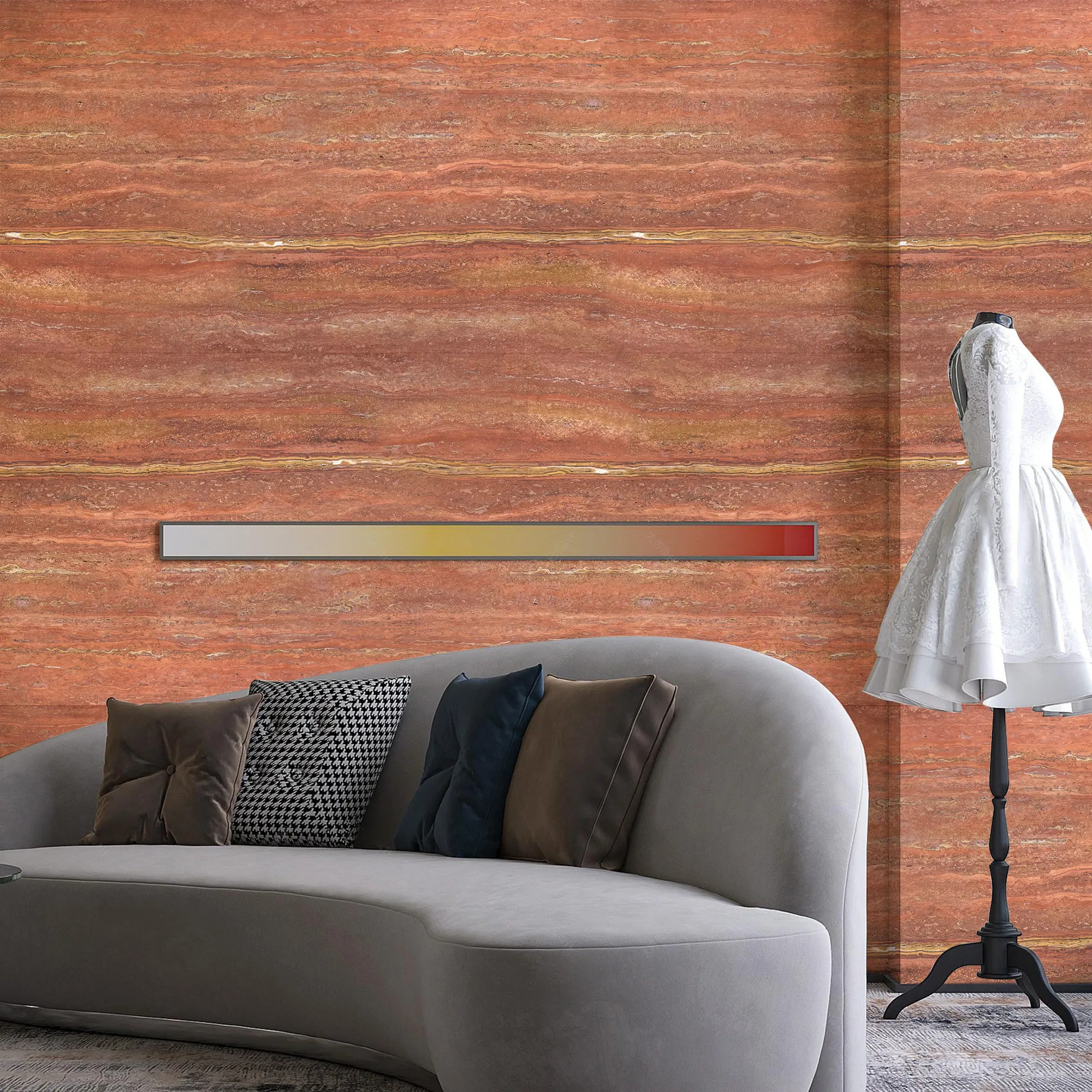
Starry Red Travertine MCM isn't a one-trick pony. It plays well with others, adapts to different styles, and can transform any room from ordinary to extraordinary. Let's break down how to make it work in your space—no matter your aesthetic.
Wood and stone are nature's best friends, and Starry Red Travertine with wood grain board is no exception. I recently designed a home office where we used Starry Red as the accent wall behind the desk, then added floating shelves made of light oak wood grain board. The contrast between the rich red and warm wood is stunning—like bringing a forest sunset indoors. The wood softens the red, making the space feel cozy enough for long workdays but sophisticated enough for client meetings over Zoom.
Pro tip: Stick to light or medium-toned wood grain board (think oak, maple, or ash) to keep the focus on the starry red. Dark wood can make the space feel heavy, but a lighter tone creates balance. Add some potted plants on the shelves, and you've got a workspace that feels more like a retreat than a desk job.
If your style is more "urban loft" than "rustic cabin," pair Starry Red with fair-faced concrete and metallic accents. A client in Chicago did this in her living room: Starry Red MCM on one wall, fair-faced concrete floors, and a sleek black leather sofa with brass legs. The result? Industrial edge with a warm, inviting core. The concrete keeps the space feeling modern, while the red adds personality—no "cold warehouse" vibes here.
Add metallic light fixtures (brass, copper, or gold) to amplify the starry effect—those flecks in the travertine will catch the metallic glow and twinkle even more. Throw in a shaggy cream rug to soften the hard surfaces, and you've got a space that's equal parts edgy and comfortable.
A common myth is that bold colors or textures don't work in small rooms. Nonsense! In a tiny apartment, a Starry Red accent wall can actually make the space feel larger by drawing the eye and creating depth. I worked with a couple in New York City who had a 450-square-foot studio. We installed Starry Red MCM on the wall behind their bed, then kept the rest of the space neutral (white bedding, light gray curtains, mirrored furniture). The red wall anchors the room, making it feel intentional and spacious—not cramped.
Pro tip: Keep the ceiling and other walls light (ivory, soft gray, or beige) to let the Starry Red shine without overwhelming. Add mirrors opposite the wall to reflect the starry texture and bounce light around the room. Trust me—your tiny apartment will feel like a boutique hotel suite.
Bohemian style is all about layers, patterns, and global influences, and Starry Red Travertine fits right in. Imagine a bedroom with a Starry Red accent wall, layered rugs (think jute and kilim), macramé wall hangings, and mismatched vintage furniture. The red adds a pop of color that ties all the eclectic elements together, while the starry texture adds that "collected over time" vibe boho lovers crave.
Add some woven baskets, potted succulents, and string lights, and you've got a space that feels like a cozy retreat in Marrakech—no passport required.
Let's put all this theory into practice with a real story. Meet Sarah, a teacher in Austin, Texas, who bought a 1970s ranch house with "character" (read: outdated paneling and beige everywhere). Her living room was particularly sad: dark wood paneling, a popcorn ceiling, and a fireplace that looked like it belonged in a retirement home. She wanted to brighten the space but didn't want to lose its warmth. Enter Starry Red Travertine MCM.
First, we gutted the paneling and popcorn ceiling, then painted the walls a soft off-white. For the fireplace wall, we installed Starry Red Travertine MCM from floor to ceiling, replacing the old brick. We kept the fireplace insert but painted the mantel black for contrast. Then, we added floating shelves made of light pine wood grain board on either side of the fireplace, stocked with books, photos, and small potted plants.
The result? Sarah cried when she saw it. "I never thought this room could feel so… alive ," she told me. The Starry Red wall turns the fireplace into a focal point, while the wood grain shelves add warmth and personality. The off-white walls keep the space bright, and the black mantel ties everything together. On rainy Texas afternoons, she lights a fire, sits on her gray linen sofa, and watches the starry red glow. "It's like having a piece of the desert in my living room," she says. "But better—because it's mine ."
And the best part? The entire project took two weeks (including demo), and the MCM installation was done in just three days. Sarah's total budget for materials? Under $2,000—way less than natural stone would have cost, and infinitely more unique.
Still on the fence? Let's break down how Starry Red Travertine MCM stacks up against common alternatives. Spoiler: it's not even close.
| Material | Beauty | Durability | Installation | Cost |
|---|---|---|---|---|
| Starry Red Travertine MCM | Warm red base with starry mineral flecks; depth and texture that changes with light | Scratch, moisture, and fire-resistant; color, | Lightweight (3-4 lbs/sq ft); DIY-friendly; bends for curves | Mid-range ($20-30/sq ft installed); no sealing or special maintenance |
| Natural Travertine | Classic, organic beauty but limited color options; porous texture | Porous (stains easily); prone to chipping; requires annual sealing | Heavy (50-100 lbs/slab); needs reinforced walls and professionals | High ($40-60/sq ft installed); plus sealing costs |
| Fair-Faced Concrete | Sleek, industrial look but cold and monochromatic | Durable but stains easily; cracks over time | Heavy; requires formwork and curing time; messy installation | Mid-high ($30-50/sq ft installed); hard to repair |
| Paint | Endless colors but flat; no texture or depth | Scratches, fades, and chips easily; needs repainting every 3-5 years | Easy but time-consuming (multiple coats, prep work) | Low ($3-5/sq ft) but high long-term maintenance |
The verdict? Starry Red Travertine MCM offers the best of all worlds: the beauty of natural stone, the durability of concrete, and the affordability of paint—with none of the drawbacks. It's not just a material; it's an investment in a space that feels uniquely yours.
At the end of the day, our homes are more than just buildings—they're reflections of who we are. They're where we laugh, cry, grow, and dream. So why settle for walls that blend in when you can have walls that speak ?
Starry Red Travertine MCM isn't just a trend. It's a way to turn your home into a story—a story of warmth, personality, and the little moments that make life beautiful. Whether you're pairing it with wood grain board for a cozy retreat or fair-faced concrete for modern edge, it's a material that adapts to you , not the other way around.
So go ahead—take the leap. Let your walls twinkle. Let your home tell a story. With Starry Red Travertine MCM, the only limit is your imagination (and even then, it's a pretty flexible limit).
Recommend Products











