
Architecture is more than steel beams and concrete walls—it's the language of spaces where we live, work, and connect. It tells stories of culture, values, and aspirations. Today, that story is being rewritten with a new protagonist: sustainability. As our planet calls for more mindful choices, sustainable architecture has evolved from a niche trend to an urgent responsibility. At the heart of this movement lies a quiet revolution: the materials we build with. They're no longer just tools of construction but partners in preserving our environment, enhancing our well-being, and shaping spaces that feel alive. Among these innovators, gradient color rammed earth boards stand out—not just for their eco-credentials, but for the warmth and depth they bring to every surface they touch.
For decades, architecture prioritized speed, cost, and aesthetics over environmental impact. Traditional materials like virgin concrete and non-recyclable plastics came with hidden costs: massive carbon footprints, depletion of natural resources, and spaces that felt cold, disconnected from the world outside. But as climate change accelerates, the industry is waking up to a simple truth: the materials we choose today will define the planet we leave tomorrow.
Sustainable materials aren't just "green alternatives"—they're better by design. They reduce embodied carbon (the emissions from extracting, manufacturing, and transporting materials), improve energy efficiency, and create healthier indoor environments. They also age gracefully, turning patina into character rather than decay. In this new era, gradient color rammed earth boards, MCM flexible stone, and travertine with starry hues aren't just options—they're statements. They prove that sustainability and beauty can coexist, even thrive.
If sustainable materials had a poet, gradient color rammed earth boards would be their magnum opus. Rooted in ancient wisdom yet refined by modern engineering, they bridge the gap between tradition and innovation. Rammed earth itself is one of humanity's oldest building techniques—think of the Great Wall of China or the cliff dwellings of the American Southwest—where layers of earth are compacted to form sturdy, insulating walls. Today's gradient versions take that heritage and paint it with a spectrum of possibility.
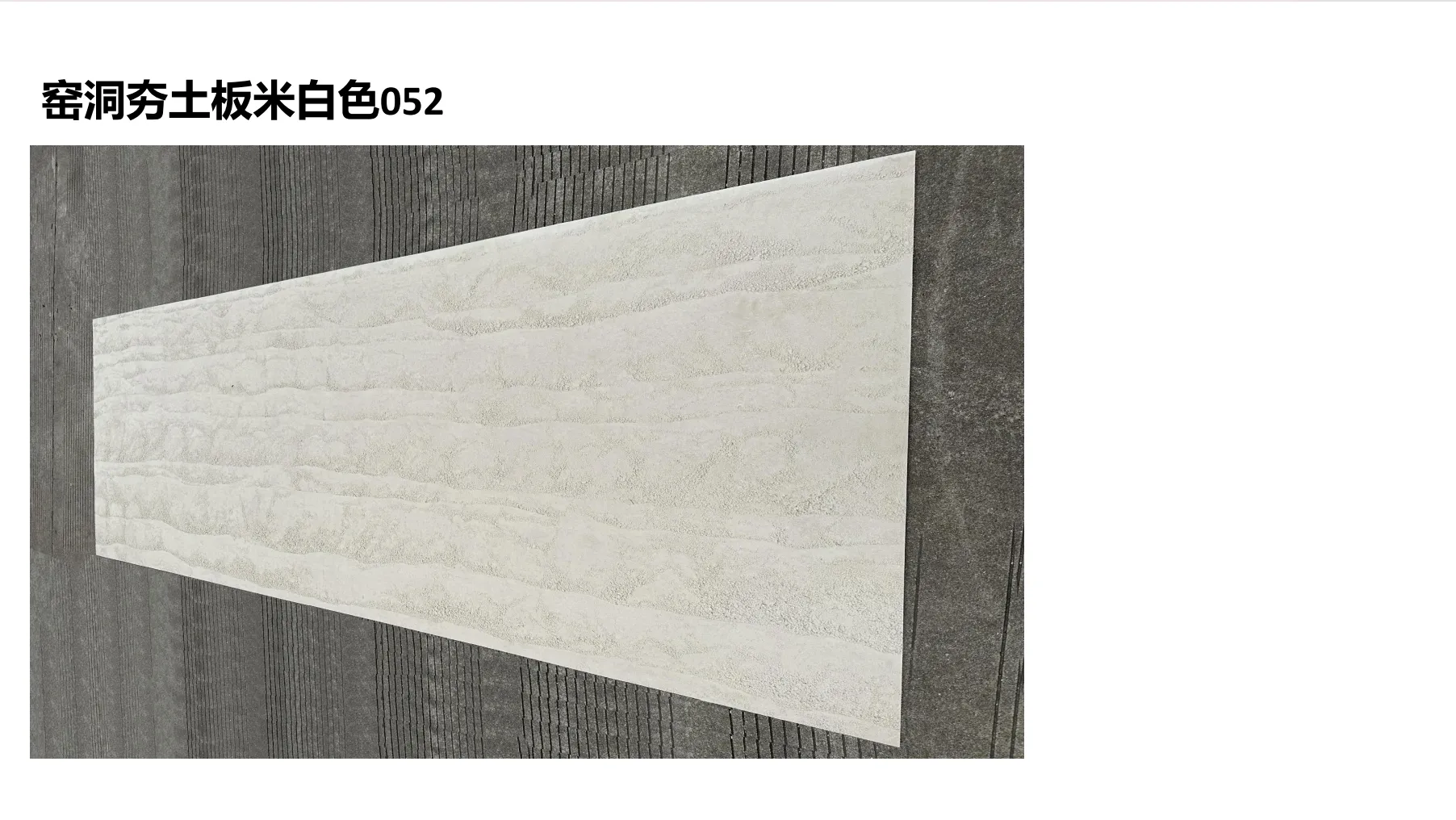
Imagine (oops—let's experience ) a wall that shifts from soft khaki at the base to warm terracotta at the top, or from muted matcha green to sunlit sand. That's the magic of gradient color rammed earth boards. Made by layering locally sourced soil, clay, natural pigments, and a touch of stabilizers, these boards are compressed under high pressure to form dense, durable panels. The result? A material that's 80% natural, requires minimal processing, and carries the earth's own fingerprint.
Beyond their beauty, they're workhorses of sustainability. Their thermal mass acts as a natural insulator, regulating indoor temperatures by absorbing heat during the day and releasing it at night—reducing reliance on heating and cooling systems. They're breathable, too, wicking away moisture to prevent mold and improve indoor air quality. And unlike synthetic materials, they age with grace: over time, their colors mellow, their texture deepens, and they become a living part of the space.
Take, for example, the gradient color rammed earth board (gradient C) with its soft blend of beige and warm gray, or gradient B, which shifts from earthy brown to terracotta. These aren't just colors—they're moods. A home clad in gradient rammed earth feels like a hug from nature; a office with these walls becomes a retreat from the chaos of modern life. They remind us that sustainability doesn't mean sacrificing beauty—it means redefining it.
Gradient rammed earth may be the star, but it doesn't perform alone. The sustainable architecture toolkit is rich with materials that each bring unique strengths to the table. Let's meet a few standout players, each with a role to play in building a greener future.
MCM (Modified Composite Material) flexible stone is a chameleon of the building world. It mimics the look of natural stone—think travertine, granite, or marble—but with a fraction of the weight and environmental impact. Made from recycled stone powder, fiberglass, and non-toxic resins, it's flexible enough to wrap around curves, lightweight enough to reduce structural load, and durable enough to withstand harsh weather. The MCM flexible stone and MCM project board series are favorites for facades and interiors alike, offering the elegance of stone without the heavy carbon footprint of quarried materials.
Travertine has long been prized for its creamy tones and unique veining, but the starry blue variant adds a celestial twist. Quarried from sustainable sites, this natural stone features subtle, star-like mineral deposits that catch the light, turning walls and floors into canvases of quiet wonder. Its low embodied carbon and long lifespan (centuries, with proper care) make it a staple of eco-conscious design. Whether used as flooring in a lobby or an accent wall in a home, travertine (starry blue) proves that luxury and sustainability aren't opposites—they're old friends.
For projects that crave industrial chic with an eco-edge, foamed aluminium alloy board (vintage silver) delivers. Made by expanding recycled aluminum into a lightweight, porous structure, it's 100% recyclable, corrosion-resistant, and offers excellent thermal and acoustic insulation. The "vintage silver" finish adds a touch of retro cool, making it perfect for commercial spaces, facades, or even furniture. Unlike traditional aluminum, its production uses 95% less energy than mining new ore—proof that modern aesthetics can go hand-in-hand with circularity.
| Material | Key Features | Sustainability Highlights | Best For |
|---|---|---|---|
| Gradient Color Rammed Earth Board | Layered natural pigments, earthy texture, thermal mass | 80% natural materials, low embodied carbon, local sourcing | Residential walls, community centers, eco-resorts |
| MCM Flexible Stone | Lightweight, flexible, mimics natural stone (travertine, granite) | Recycled stone powder, low transportation emissions, durable | Facades, curved walls, interior accent panels |
| Travertine (Starry Blue) | Natural veining, star-like mineral deposits, timeless elegance | Responsibly quarried, long lifespan, recyclable at end-of-life | Flooring, accent walls, luxury interiors |
| Foamed Aluminium Alloy Board (Vintage Silver) | Lightweight, corrosion-resistant, industrial vintage finish | 100% recyclable, 95% less energy than virgin aluminum | Commercial facades, acoustic panels, modern interiors |
Sustainable materials don't exist in a vacuum—they thrive when measured against global green building standards. Certifications like LEED (Leadership in Energy and Environmental Design), BREEAM (Building Research Establishment Environmental Assessment Method), and WELL (focused on human health) set benchmarks for what "sustainable" truly means. Gradient color rammed earth boards and their peers don't just meet these standards—they exceed them.
Take LEED, for example. A project using gradient rammed earth can earn points for "Materials and Resources" (recycled content, local sourcing), "Energy and Atmosphere" (thermal mass reducing HVAC use), and "Indoor Environmental Quality" (breathable materials improving air quality). MCM flexible stone adds points for reducing construction waste (its lightweight nature cuts transportation emissions), while foamed aluminium alloy board checks the box for "Innovation in Design" with its recycled content.
In Portland, Oregon, the Evergreen Community Center stands as a testament to what happens when sustainable materials meet green standards. Its exterior features gradient color rammed earth boards (gradient B) in warm terracotta and beige, complemented by MCM flexible stone cladding that mimics travertine. Inside, travertine (starry blue) floors flow through the lobby, while foamed aluminium alloy board (vintage silver) lines the auditorium walls for acoustic control.
The result? A LEED Platinum certification, 35% reduced energy use compared to conventional buildings, and a space that locals describe as "welcoming, like being in a forest clearing." Parents note how the rammed earth walls keep the play area cool in summer, while seniors love the natural light bouncing off the starry blue travertine. It's proof that sustainability isn't just about the planet—it's about people, too.
For all their promise, sustainable materials face hurdles. Upfront costs can be higher than traditional options—gradient rammed earth, for example, requires skilled labor and specialized equipment. Availability is another issue: sourcing local soil for rammed earth or responsibly quarried travertine isn't always easy in urban areas. And old habits die hard—some architects and developers still default to what they know, wary of "unproven" alternatives.
But the tide is turning. Governments are offering tax incentives for green building, while manufacturers are scaling production to lower costs. Training programs are teaching contractors to work with rammed earth and MCM, and clients are demanding sustainability as a non-negotiable. As more projects like the Evergreen Community Center showcase the benefits—lower utility bills, happier occupants, positive PR—skepticism fades.
The future of sustainable architecture isn't just about more materials—it's about better stories. It's about homes that remember the earth they came from, offices that feel like gardens, and cities that breathe in harmony with nature. Gradient color rammed earth boards, MCM flexible stone, travertine (starry blue), and foamed aluminium alloy board are more than tools—they're the vocabulary of this new story.
As technology advances, we'll see even more innovation: gradient rammed earth with embedded sensors to monitor air quality, MCM stone printed in custom patterns, travertine treated to enhance its natural "starry" glow. But the core will remain the same: respect for the planet, care for people, and a belief that buildings should lift our spirits, not just our roofs.
So the next time you walk into a space and feel an warmth—a sense that the walls around you are alive—pause. It might just be gradient rammed earth whispering the earth's story, or travertine (starry blue) winking like a distant sky. In that moment, you're not just in a building. You're in a promise: that we can build better, live better, and leave the planet better than we found it. And that, perhaps, is the most sustainable idea of all.
Recommend Products












