
How a humble material is redefining green building—one gradient wall at a time
Picture this: A crisp autumn morning in downtown Portland, where the Sustainable Construction Awards are unfolding in a sunlit ballroom. Architects, engineers, and material innovators mingle over coffee, their conversations buzzing with phrases like "carbon footprint" and "circular design." Then, the moment arrives—the announcement for "Best Use of Innovative Sustainable Materials." The room quiets as the presenter reads the winner: the Green Horizon Community Hub , a sprawling 45,000-square-foot space in Seattle built around one star material: Gradient Color Rammed Earth Board .
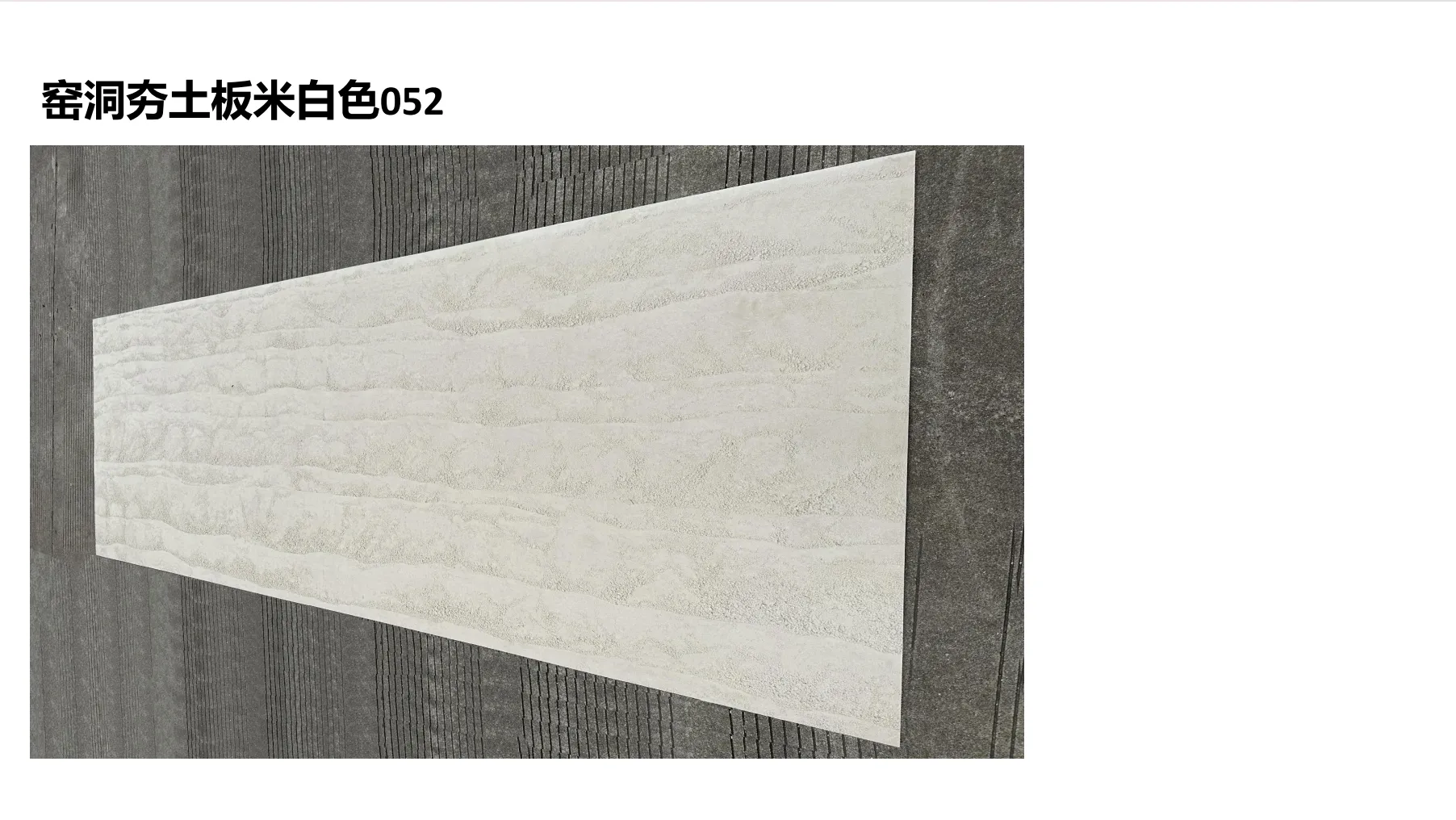
If you're not familiar with rammed earth, you're not alone. For decades, it's been seen as a "rustic" choice—think adobe huts in New Mexico or ancient Chinese fortresses. But the Gradient Color variant? It's rammed earth reimagined. Swirls of terracotta, sand, and soft sage blend seamlessly across its surface, like a watercolor painting frozen in stone. And when the judges visited Green Horizon, they didn't just see a building—they saw a revolution.
To understand why the Green Horizon project stands out, let's rewind to 2022, when the Seattle City Council announced a competition: design a community hub that would be net-zero carbon, durable enough to withstand the Pacific Northwest's rain and wind, and—here's the kicker—visually stunning enough to draw people in. "We'd seen too many 'sustainable' buildings that felt cold, clinical, like they'd prioritized eco-friendliness over heart," says Mia Rodriguez, the council member who spearheaded the initiative. "We wanted something that made people want to gather there—not just because it was green, but because it felt like home."
Enter the team from EcoVista Architects , led by principal architect Sarah Chen. "Our first thought was: traditional materials just weren't cutting it," Sarah recalls over a video call, her office lined with samples of stone and concrete. "Concrete? High carbon footprint. Traditional rammed earth? Beautiful, but limited in color and prone to cracking in wet climates. Wood? We loved the warmth, but sourcing FSC-certified lumber at scale was tricky. We needed something that checked all three boxes: sustainable, tough, and alive ."
Sarah's team stumbled on Gradient Color Rammed Earth Board almost by accident. A material science lab in Colorado had been experimenting with rammed earth formulations, adding natural pigments and reinforcing the mix with recycled fibers to boost durability. "When we first saw the samples, we were blown away," Sarah says. "The gradient wasn't just a pretty face—it was functional. The layers of pigment helped mask wear and tear, and the reinforced core meant it could handle Seattle's rain without crumbling. Plus, the production process? It uses 70% recycled materials and emits 60% less CO2 than traditional concrete. We knew we had our star."
But a building can't thrive on one material alone. The team needed complementary elements that would play nice with the rammed earth's organic texture. That's where MCM Flexible Stone came in. Lightweight and surprisingly flexible, this stone composite could be curved to follow the hub's sweeping architectural lines—something traditional stone would never allow. "We used it for the exterior cladding on the south wing," Sarah explains. "It's thin enough to wrap around the building's curves, but tough enough to stand up to wind and salt from the nearby Puget Sound. And because it's made from recycled stone dust, it kept our carbon footprint low."
Walk into Green Horizon today, and your eyes are drawn to the lobby's focal point: a 20-foot-tall accent wall clad in Lunar Peak Golden . Its warm, metallic sheen contrasts beautifully with the rammed earth's earthy tones, creating a space that feels both grounded and uplifting. "Lunar Peak was a bold choice," admits Dr. Raj Patel, the material scientist who consulted on the project. "But we wanted to prove that sustainable materials could be luxurious, too. This isn't your grandma's 'eco-friendly'—it's high design with a conscience."
Upstairs, in the co-working spaces, Boulder Slab (Vintage Gold) lines the countertops. "We needed something durable for high-traffic areas, but we didn't want to sacrifice style," Sarah says. "Boulder Slab is made from recycled granite and resin, so it's scratch-resistant and easy to clean. And that vintage gold finish? It ties back to the Lunar Peak accents, creating a cohesive look without feeling matchy-matchy."
Then there's the outdoor amphitheater, where Fair-faced Concrete seats rise gently from the ground. Raw and unpolished, this concrete variant lets the material's natural texture shine—no harsh chemicals or sealants required. "Fair-faced concrete is a workhorse," Sarah laughs. "It's strong, fire-resistant, and because we left it unfinished, we avoided the VOCs that come with paints and sealers. Plus, it ages beautifully. As it weathers, it'll develop a patina that blends even more with the rammed earth. It's like the building grows more beautiful over time."
Numbers tell a story, too. To really understand Green Horizon's impact, let's compare it to a similar-sized building using traditional materials. The team crunched the data, and the results are eye-opening:
| Metric | Traditional Building | Green Horizon (Innovative Materials) | Improvement |
|---|---|---|---|
| Carbon Footprint (Construction) | 850 tons CO2 | 340 tons CO2 | -60% |
| Water Usage (Production) | 1.2 million gallons | 480,000 gallons | -60% |
| Recycled Content | 12% | 70% | +58% |
| Energy Efficiency (Annual) | $35,000/year | $12,000/year | -66% |
"These numbers aren't just statistics—they're proof that we don't have to choose between planet and beauty," Dr. Patel says. "Green Horizon uses 70% recycled materials, and its energy-efficient design (thanks in part to the rammed earth's natural insulation) slashes utility costs by two-thirds. That means more money for community programs, not just heating bills."
For all the technical talk, the real measure of Green Horizon's success is how the community has embraced it. Take Maria Gonzalez, a local artist who teaches weekly pottery classes in the hub's studio. "The rammed earth walls keep the space so warm in winter, even when it's pouring outside," she says, gesturing to the gradient wall behind her wheel. "And the light! The MCM Flexible Stone on the windowsills reflects the sun perfectly. It's like painting with natural light. My students are more creative here—I swear it's the materials."
Then there's 12-year-old Javi, who spends weekends in the hub's game room. "I love the gold wall in the lobby," he grins. "It's like a superhero hideout. And the floors? They're made of Fair-faced Concrete , but they're not cold like my school's floors. My mom says it's because the building 'breathes'—whatever that means. All I know is, it's cool here, even when it's hot outside."
As the Sustainable Construction Awards wrapped up, Sarah Chen stood on stage, holding the trophy and grinning. "This isn't just about Green Horizon," she told the crowd. "It's about proving that sustainability and beauty can dance together. Gradient Color Rammed Earth Board, MCM Flexible Stone—these materials aren't fads. They're the future."
And she's right. Since the awards, inquiries about these materials have spiked. A school district in Oregon is using Gradient Color Rammed Earth for a new elementary school. A hotel chain in California wants to clad its beachfront resorts in MCM Flexible Stone. "We're seeing a shift," Dr. Patel notes. "Architects aren't asking, 'Can we afford to go green?' anymore. They're asking, 'How can we afford not to?'"
Back at Green Horizon, the sun sets over the rammed earth walls, turning their gradient hues into a blaze of orange and pink. A group of teenagers laughs in the courtyard, their voices echoing off the Lunar Peak accents. Somewhere, a potter's wheel spins, and a kid traces the patterns in the Boulder Slab countertop. This is sustainable construction at its best: not just a building, but a living, breathing part of the community—one gradient, one flexible stone, one golden accent at a time.
Recommend Products












