
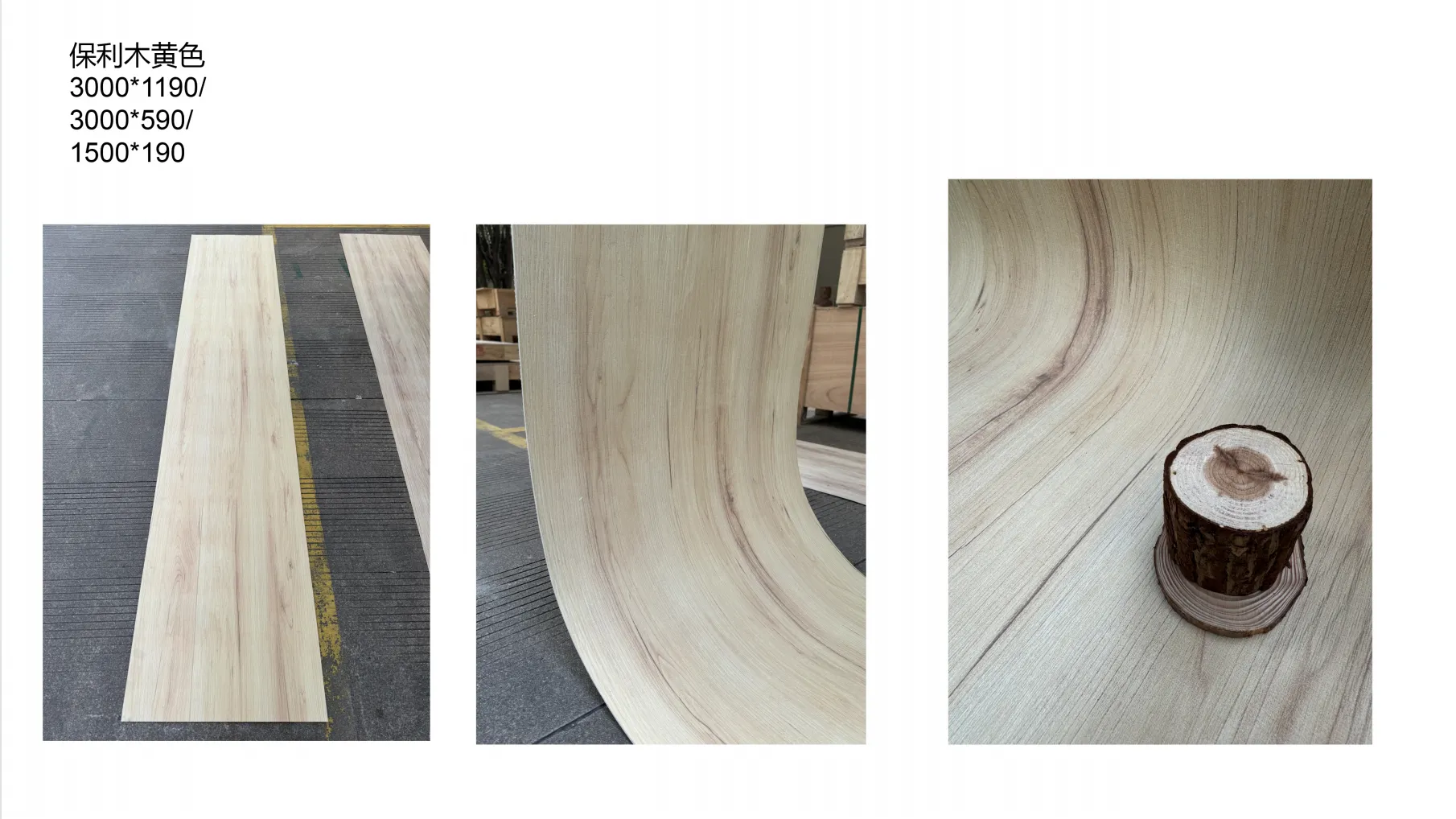
In a world where every choice feels weighted by its impact on the planet, the construction industry has quietly become a stage for change. We've all walked into a building and felt it—the cold sterility of concrete, the warmth of natural wood, the way materials shape not just spaces, but moods. But what if the materials we build with could do more than just look good? What if they could heal the planet, one panel at a time? That's where Poly Wood Board steps in—not as a replacement for nature, but as a bridge between human ingenuity and environmental care.
Let's start with the basics: Poly Wood Board isn't your grandfather's composite decking. It's a blend of recycled plastics, wood fibers, and eco-friendly binders, born from a simple question: How do we keep the beauty of wood without cutting down forests? For decades, architects and builders have grappled with this dilemma. Solid wood warms a room like nothing else, but it comes with a heavy cost—deforestation, vulnerability to rot, and a lifecycle that's often too short for modern buildings.
Enter Poly Wood Board. Developed in the early 2000s by a team of materials scientists in the Pacific Northwest, it was initially dismissed as a "novelty." Today, it's hard to ignore. Walk through any sustainable housing development or LEED-certified office, and you'll likely spot it: on accent walls in cafes, as cladding on community centers, even as outdoor decking in parks. What changed? People started to see it not as a compromise, but as an upgrade.
Let's talk numbers, but gently. Every year, the construction industry uses over 10 billion cubic feet of lumber globally. That's enough to cover the entire state of Rhode Island in a forest of 100-foot trees—annually. Poly Wood Board cuts into that demand by using recycled wood fibers (think sawdust and wood scraps that would otherwise end up in landfills) and plastic waste (bottles, bags, and packaging that might have choked oceans). For every ton of Poly Wood Board produced, approximately 1,200 plastic bottles are diverted from landfills, and 17 trees are saved from logging. That's not just a statistic; that's a forest given a second chance.
Durability is another quiet hero here. Traditional wood needs staining, sealing, or painting every 2-3 years to fight rot, pests, and weathering. Poly Wood Board? It laughs at the elements. UV-resistant, moisture-proof, and impervious to termites, it lasts 25-30 years with minimal maintenance. "I installed Poly Wood siding on my cabin in Vermont 15 years ago," says Tom, a retired contractor. "It's seen blizzards, humidity, and a few curious bears. Still looks like the day it went up. I haven't touched a paintbrush since." Less maintenance means fewer chemicals (like toxic stains) seeping into soil and water, and less time, energy, and money spent on upkeep.
Curious how Poly Wood Board compares to other common building materials? Let's break it down:
| Material | Environmental Impact | Durability (Avg. Lifespan) | Aesthetic Appeal | Maintenance Needs |
|---|---|---|---|---|
| Poly Wood Board | Low (recycles waste, reduces deforestation) | 25-30 years | Warm, wood-like texture; customizable colors | Minimal (occasional cleaning) |
| Solid Hardwood | High (requires logging; slow regrowth) | 15-20 years (with regular upkeep) | Natural grain; classic beauty | High (stain/seal every 2-3 years; prone to rot/pests) |
| Concrete | Very high (high carbon emissions in production) | 50+ years | Industrial, cold; limited warmth | Low (but prone to cracking; hard to repair) |
| Foamed Aluminium Alloy Board (Vintage Silver) | Moderate (recyclable but energy-intensive to produce) | 30-40 years | Sleek, metallic; modern aesthetic | Low (resistant to corrosion) |
Notice Foamed Aluminium Alloy Board in there? It's another player in the sustainable materials game, prized for its lightweight strength and recyclability. Like Poly Wood Board, it's part of a broader shift toward green building materials that prioritize both function and planet. But where Foamed Aluminium Alloy Board shines in modern, industrial designs, Poly Wood Board brings that timeless, organic feel—proving sustainability isn't a one-style-fits-all solution.
Numbers tell part of the story, but people tell the rest. Take the Riverbank Community Center in Boise, Idaho. Built in 2018, it was designed to be a hub for the neighborhood—after-school programs, senior yoga, weekend farmers' markets. The design team, led by architect Mia Chen, wanted the space to feel "like a big, welcoming porch." They chose Poly Wood Board for the interior walls and outdoor decking.
"The community was skeptical at first," Mia recalls. "They said, 'If it's not real wood, will it feel like home?' But when we finished the lobby—warm, golden panels that caught the afternoon light—you could see the change. Kids started leaning against the walls to read, seniors sat on the deck longer. It wasn't just a building anymore; it was theirs." Today, the center uses 30% less energy for maintenance than similar facilities, and the outdoor deck has become a favorite spot for summer concerts—no splinters, no warping, just good times.
Or consider the tiny home movement. Sarah and James, a couple in Colorado, built their 350-square-foot home using Poly Wood Board for flooring and cabinetry. "We wanted to live simply, but we also wanted to leave a small footprint," Sarah explains. "Our Poly Wood floors have handled everything—our dog's muddy paws, spilled coffee, even a rogue potted plant that leaked. And when we eventually sell this place? The next owners won't have to replace a thing. That's sustainability that lasts."
No material is perfect, and Poly Wood Board has its critics. Some argue it lacks the "authenticity" of real wood, though that's a matter of taste. Others point out that while it uses recycled plastics, those plastics are still derived from fossil fuels. The industry is listening. New formulations are emerging, blending hemp fibers or bamboo (fast-growing, renewable resources) with plant-based binders to reduce reliance on petroleum. Companies are also experimenting with 3D printing techniques to create custom Poly Wood shapes, cutting down on waste during production.
Cost is another hurdle. Poly Wood Board can be 10-15% pricier upfront than pressure-treated lumber. But as demand grows, prices are dropping. And when you factor in long-term savings—no need for replacement, minimal maintenance—the investment pays off. "I tell clients: Think of it as buying 30 years of peace of mind," says Tom, the Vermont contractor. "That's a deal."
Sustainable construction isn't a trend; it's a necessity. As cities grow, and climate change looms, the materials we choose will shape the health of our planet and the quality of our lives. Poly Wood Board is just one piece of the puzzle, but it's a powerful one. It reminds us that we don't have to choose between beauty and responsibility—that a building can be both stunning and kind to the Earth.
So the next time you walk into a space and feel that warmth, that sense of home, take a closer look. Maybe it's Poly Wood Board, quietly doing its job—saving trees, diverting waste, and making the world a little greener. And maybe, just maybe, it's a sign that we're getting better at building not just for today, but for all the tomorrows.
At the end of the day, construction is about more than bricks and boards. It's about creating spaces where people thrive—where families grow, communities connect, and memories are made. Poly Wood Board doesn't just build structures; it builds hope. Hope that we can live in harmony with nature, that progress and preservation can go hand in hand. So whether you're building a skyscraper or a bookshelf, remember: the materials you choose matter. Choose wisely. Choose kindly. Choose Poly Wood Board.
Recommend Products












