


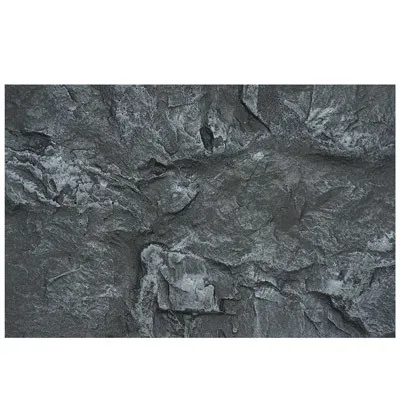
In the world of architecture and design, a quiet but powerful revolution is underway. The focus is shifting from pure aesthetics to a more holistic vision—one where beauty and responsibility walk hand in hand. We're no longer just asking "How does it look?" but "What is its impact?". This is the dawn of sustainable design, an era where every material choice carries weight, not just on the structure of a building, but on the future of our planet. For too long, the industry has relied on materials that are energy-intensive to extract and process, leaving a significant carbon footprint. Think of the monumental energy required to quarry and transport massive blocks of marble or granite. Now, imagine achieving that same timeless, powerful look with a fraction of the environmental cost. This is not a futuristic dream; it's a present-day reality, masterfully embodied in the Boulder Slab (Vintage Silver), a flagship product from COLORIA GROUP's innovative MCM line. This article will take you on a journey into how this remarkable material is redefining what's possible in low-carbon, high-impact design.
Chapter 1: The Necessary Pivot to Green Building
Why has "sustainability" become the defining word of 21st-century construction? The reasons are as solid as the foundations we build upon. Our planet is sending clear signals: climate patterns are shifting, natural resources are dwindling, and the environmental cost of "business as usual" is becoming unteniable. The building and construction sector is a major contributor to global energy consumption and greenhouse gas emissions. This has placed a profound responsibility on the shoulders of architects, designers, builders, and developers. They are the gatekeepers of our built environment, and their choices have a ripple effect that extends for generations.
This isn't just about environmental altruism; it's also about smart business and meeting evolving market demands. Today's clients—whether homeowners or corporate entities—are more informed and environmentally conscious than ever before. They seek spaces that reflect their values, spaces that are not only beautiful but also healthy, efficient, and sustainable. This has fueled a massive demand for green building materials that can deliver both performance and a clean conscience.
To understand the value of innovation, we first need to look critically at the old ways. Traditional building materials, while beautiful and historically significant, come with a heavy environmental price tag:
- Natural Stone (Granite, Marble, Slate): The process begins with quarrying, which often involves blasting mountainsides, leading to irreversible landscape damage, habitat destruction, and significant dust and noise pollution. The sheer weight of stone makes transportation an incredibly carbon-intensive process, burning immense amounts of fossil fuels to move it from the quarry to the processing plant, and finally to the job site.
- Ceramic and Porcelain Tiles: The elegance of these materials belies a fiery and energy-hungry creation process. They are fired in kilns at temperatures exceeding 1200°C (2200°F) for extended periods. This requires vast amounts of energy, typically from natural gas, releasing significant CO2 into the atmosphere. The process is also water-intensive, further straining local resources.
- Traditional Concrete & Cement: Cement production alone is estimated to be responsible for about 8% of global CO2 emissions. It's a cornerstone of modern construction, but its environmental footprint is a major challenge that the industry is actively trying to address through innovative alternatives.
This is where the concept of a material's Life Cycle Assessment (LCA) becomes crucial. An LCA analyzes the entire environmental impact of a product, from "cradle to grave"—from raw material extraction, through manufacturing and transportation, to its use and eventual disposal or recycling. Materials with a positive LCA are those that minimize harm at every stage. The urgent need for such materials has paved the way for a new generation of composites and engineered solutions, with Modified Cementitious Material (MCM) standing at the forefront of this movement.
Chapter 2: The Science of Style: Unpacking COLORIA's MCM Technology
So, what exactly is this game-changing material? MCM, or Modified Cementitious Material, is the brilliant result of asking, "How can we replicate the beauty of nature without harming it?" At its core, MCM is an advanced composite material crafted from a thoughtful blend of natural, earthly components. Think of its primary ingredients: common soil, sand, stone powder, and other mineral fragments. These are the very building blocks of our planet, abundant and readily available. The magic happens when these raw materials are combined with a small amount of a proprietary modifying agent and then processed through a revolutionary, low-energy manufacturing technique.
Instead of the brute force of high-temperature kilns, COLORIA's MCM is formed through a low-temperature curing process. This technology utilizes photochemical isomerization, where light and a controlled temperature (typically below 150°C) trigger a reaction that bonds the materials at a molecular level. The result is a product that is incredibly strong and durable, yet produced with a fraction of the energy and emissions of traditional ceramics or cement.
The advantages of this innovative process are profound and touch upon every aspect of a building project:
- Fundamentally Eco-Friendly: With its low-energy production, use of recycled and abundant raw materials, and zero hazardous emissions, MCM boasts an outstandingly low carbon footprint. At the end of its long life, the material can be recycled and returned to the earth, truly completing the cradle-to-cradle cycle.
- Incredibly Lightweight: MCM products are typically 4-6 times lighter than traditional stone or ceramic tiles of the same size. This is a massive advantage. It drastically reduces transportation costs and emissions. On-site, it means easier, faster, and safer installation, often without the need for heavy machinery. For building structures, it means a significantly lower dead load, which can lead to cost savings in the structural framework itself, especially in high-rise constructions.
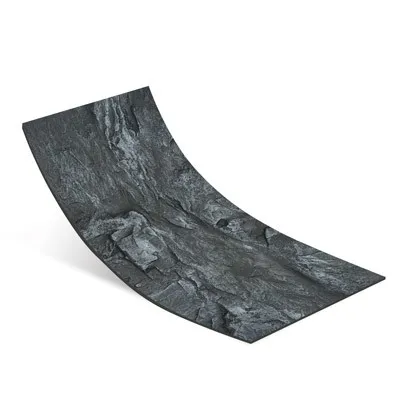
- Remarkably Flexible: This is where MCM truly defies convention. Unlike rigid stone or tile, many MCM products, especially the MCM Flexible Stone series, can be bent to conform to curved walls, columns, and arches. This design freedom is a dream for architects, allowing for fluid, organic shapes that were once difficult or impossibly expensive to achieve.
- Exceptionally Durable and Safe: Despite its light weight and flexibility, MCM is tough. It is rated Class A for fire resistance, making it one of the safest materials for both interior and exterior cladding. It's also highly resistant to weathering, UV radiation (meaning its color won't fade), freezing and thawing cycles, and moisture. Its breathable nature allows water vapor to escape from within walls, preventing mold and mildew issues.
In essence, MCM technology synthesizes the best qualities of multiple materials. It has the aesthetic depth of natural stone, the durability of high-end porcelain, and a unique flexibility all its own—all while maintaining an environmental profile that sets a new industry standard. This is the solid foundation upon which COLORIA has built its stunning portfolio of architectural finishes.
Chapter 3: In the Spotlight: The Boulder Slab (Vintage Silver)
Within COLORIA's diverse product range, the Boulder Slab (Vintage Silver) from the MCM Big Slab Board Series stands out as a true masterpiece of material engineering and aesthetic design. The "Big Slab Board" series is all about creating grand, sweeping surfaces with minimal seams, delivering a monolithic and sophisticated appearance that is highly sought after in contemporary architecture. The Boulder Slab pushes this concept to its zenith.
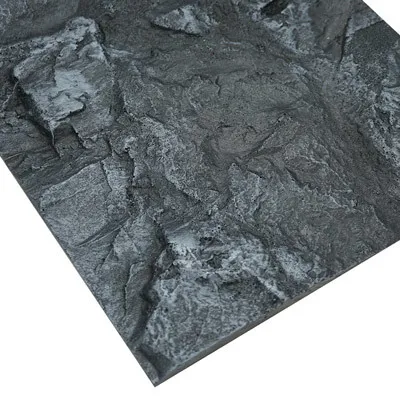
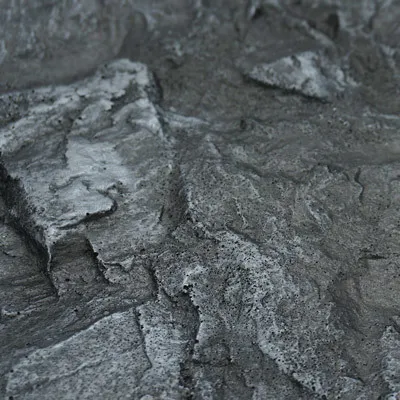
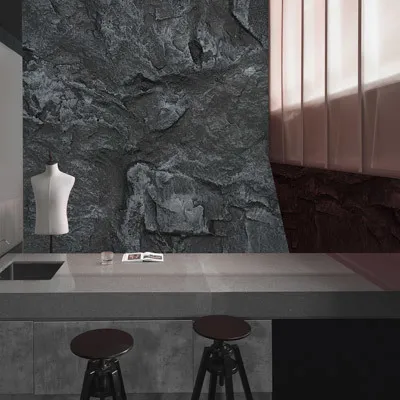
Let's talk about its appearance. The name "Vintage Silver" perfectly captures its essence. It's not a flat, uniform gray. Instead, it's a dynamic surface that tells a story. Imagine a slab of weathered rock, polished over centuries by the elements, revealing subtle veins of metallic silver that catch the light. It has the raw, tactile texture of natural stone, yet it possesses a soft, almost lustrous sheen. In different lighting conditions, it transforms—glowing with a cool, industrial chic under bright gallery lights, while exuding a warm, grounded earthiness in the soft morning sun. This duality makes it incredibly versatile, equally at home in a minimalist urban loft, a luxurious hotel lobby, or as the commanding facade of a corporate headquarters. It's a surface that invites you to touch it, to feel its subtle undulations and cool, solid presence. This is the pinnacle of customizable wall decoration , offering a look that feels both ancient and utterly modern.
But its beauty is more than skin deep. To truly appreciate the advantages of the Boulder Slab, a direct comparison with its traditional counterpart—natural stone—is revealing.
| Feature | COLORIA Boulder Slab (Vintage Silver) | Traditional Natural Stone Slab (e.g., Slate/Granite) |
|---|---|---|
| Average Weight | ~8-10 kg/m² | ~50-80 kg/m² |
| Average Thickness | ~5-8 mm | ~20-30 mm |
| Flexibility | Can conform to curved surfaces | Completely rigid; requires cutting for corners |
| Installation | Fast and easy; uses adhesive, less labor-intensive | Slow and complex; requires heavy lifting equipment, mechanical fixing, specialized labor |
| Environmental Impact | Low-energy production, low transport emissions, recyclable | High-energy quarrying and transport, landscape damage |
| Safety | Lightweight, reduces risk of falling facade pieces in seismic events. Class A fire rated. | Heavy, poses significant risk and requires robust anchoring systems. Fire resistant but can crack under extreme heat. |
| Breakage Rate | Extremely low due to flexibility | Higher rate of breakage during transport and installation |
| Customization | High degree of control over texture, color, and size | Limited by what can be extracted from the quarry |
The table clearly illustrates a story of efficiency, safety, and sustainability. Let's consider the practical applications. For an exterior facade on a new skyscraper, using the Boulder Slab means the building's entire structural frame can be engineered to be lighter, saving tons of steel and concrete. The installation process is dramatically faster, shrinking project timelines and labor costs. In a renovation project, it can often be installed directly over the existing substrate, minimizing demolition waste and disruption.
Inside a home, imagine a floor-to-ceiling feature wall in a living room clad in Vintage Silver. It provides a dramatic, gallery-like backdrop for art and furniture, without the immense cost and structural reinforcement that a real stone wall would require. In a master bathroom, its large format creates a seamless, grout-free shower surround that is both stunning and incredibly easy to clean, as its non-porous surface resists mold and mildew. In a high-end restaurant, it can be used to create an unforgettable ambiance, wrapping around a bar or creating a sophisticated backdrop in the dining area. The possibilities are limited only by the designer's imagination.
Chapter 4: COLORIA GROUP - Your Partner in Visionary Construction
A revolutionary product is only as good as the company that stands behind it. COLORIA GROUP has built its global reputation not just by manufacturing exceptional building materials , but by positioning itself as a comprehensive one-stop solution provider for the architectural community. This philosophy is about partnership, not just sales. It's a commitment to being involved in a project's success from the initial spark of an idea to the final, beautiful reality.
What does this mean for a client? Let's walk through a typical journey with COLORIA. It begins with a consultation. An architect might come to them with a concept—a desire for a facade that looks like weathered Corten steel but without the weight and rust-staining issues. The COLORIA team doesn't just point to a catalog. They engage in a dialogue, using their decades of industry experience to understand the project's aesthetic goals, performance requirements, budget constraints, and geographical location.
This is where their vast product portfolio comes into play. They can present options from the MCM Big Slab Board Series for a grand statement, or the MCM Flexible Stone for a project with complex curves. Perhaps the client has a completely unique texture in mind. This is where the MCM 3D Printing Series becomes a powerful tool, allowing for the creation of bespoke surfaces that are truly one-of-a-kind. COLORIA can digitally scan a real-world texture—a piece of driftwood, a specific rock formation, a sample of fabric—and replicate it with astonishing fidelity in MCM.
Once the material and finish are selected, the partnership continues. The team provides detailed technical support, helping with specification writing, installation guidelines, and logistical planning. With a robust global network, including dedicated agencies in key markets like Saudi Arabia, they have the infrastructure to manage complex international supply chains, ensuring that materials arrive on-site, on time, anywhere in the world. This comprehensive support system de-risks the process for clients, allowing them to confidently specify innovative materials without worrying about the practical hurdles of implementation.
This holistic approach is the core of COLORIA's identity. They understand that creating great architecture is a collaborative effort. By providing end-to-end support—from creative exploration and customization to technical problem-solving and reliable logistics—they empower architects and designers to push boundaries, innovate responsibly, and build the landmarks of tomorrow.
Conclusion: Building a Beautiful, Sustainable Future
The path forward for architecture and construction is clear: it must be sustainable. This doesn't mean compromising on beauty, performance, or ambition. On the contrary, it means embracing innovation to achieve all three in a more intelligent and responsible way. Materials are at the very heart of this transformation.
COLORIA's MCM technology, and specifically the Boulder Slab (Vintage Silver), is a powerful testament to this new paradigm. It proves that we can have the visual impact of massive stone slabs without the environmental toll of quarrying. It shows that we can achieve unparalleled design freedom with materials that are lightweight, safe, and durable. It demonstrates that style and sustainability are not mutually exclusive goals, but are, in fact, two sides of the same coin. By choosing solutions like the Boulder Slab, designers and builders are not just making a material selection; they are making a statement—a commitment to quality, innovation, and a healthier planet for future generations.










