
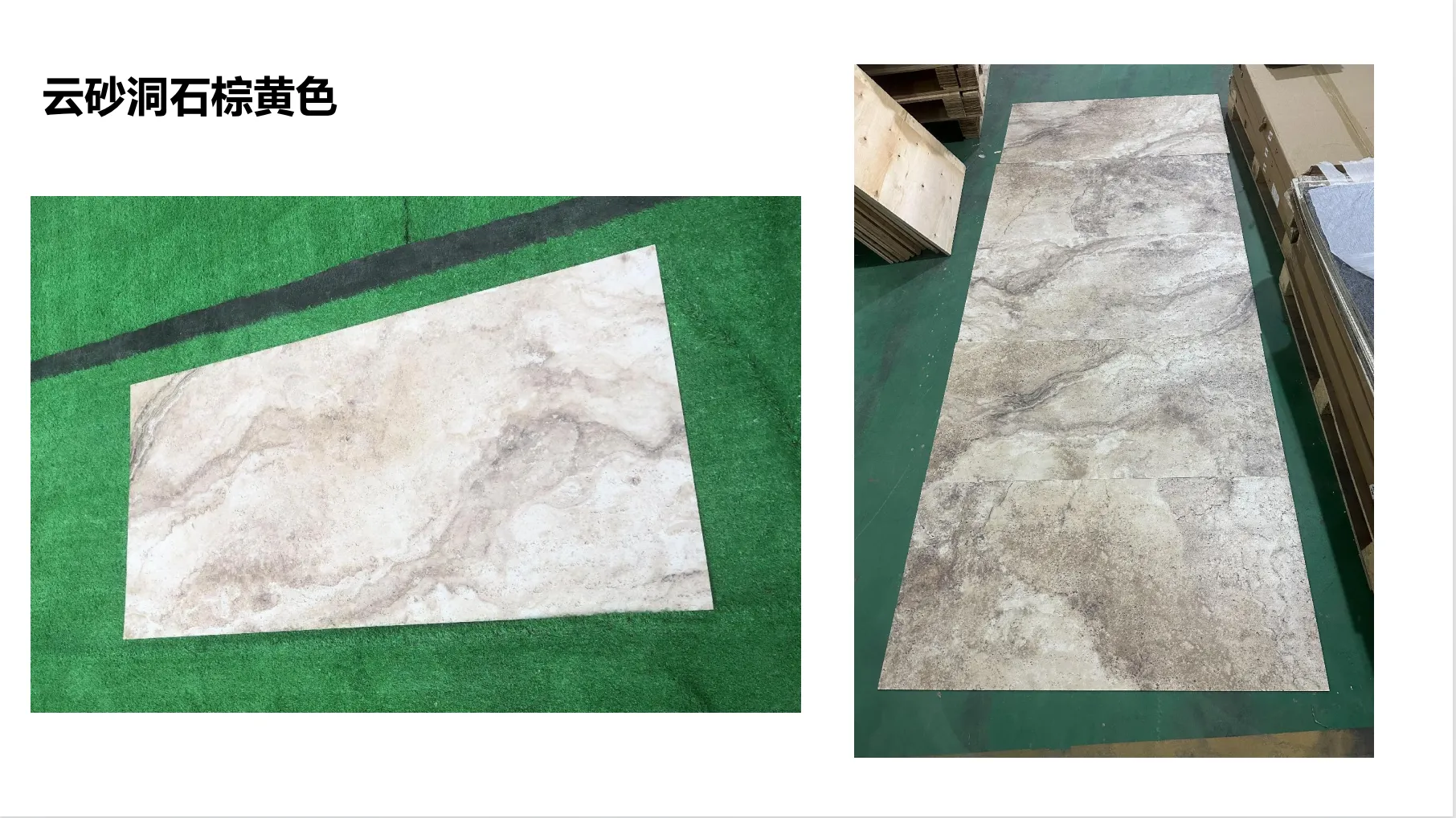
Walk into any thoughtfully designed space today—whether it's a boutique hotel lobby, a sleek office, or a cozy home—and you'll likely notice something beyond the furniture or lighting: the materials. They set the mood, tell a story, and increasingly, they carry a responsibility. In a world where "sustainability" has shifted from buzzword to necessity, the building materials we choose matter more than ever. Today, let's shine a light on one that's quietly making waves in green building circles: dolomitic travertine (claybank). It's not just a pretty face—this material brings together durability, earth-friendliness, and timeless beauty in a way that feels almost too good to be true.
Let's start with the basics. Travertine itself is a type of limestone formed by mineral-rich hot springs over centuries—think of the terraces at Pamukkale, Turkey, or the iconic Colosseum in Rome. It's known for its porous texture, warm tones, and natural elegance. But dolomitic travertine? That's travertine with a twist. It contains dolomite, a mineral that adds extra (hardness) and density, making it more resistant to wear and tear than standard travertine. And the "claybank" descriptor? That's all about the color—a soft, earthy hue that sits somewhere between warm beige and gentle terracotta, like sunlight on a desert landscape. It's understated, versatile, and pairs effortlessly with everything from modern minimalism to rustic charm.
But here's the kicker: its beauty is just the beginning. What really sets dolomitic travertine (claybank) apart is how it aligns with the principles of green building materials. Let's break down why this natural stone is becoming a go-to for architects and builders who care about both performance and the planet.
Sustainability in construction isn't just about "being green"—it's about reducing environmental impact across a material's entire lifecycle: from extraction to manufacturing, use, and even disposal. Dolomitic travertine (claybank) excels at every stage, and here's how:
To really appreciate dolomitic travertine (claybank), it helps to see how it measures up against other common building materials. Let's take two popular options: fair-faced concrete and standard travertine. We'll focus on key sustainability metrics to keep it simple.
| Metric | Dolomitic Travertine (Claybank) | Fair-Faced Concrete | Standard Travertine |
|---|---|---|---|
| Embodied Energy (per m²) | 3-5 kWh | 8-12 kWh | 4-6 kWh |
| Expected Lifespan | 50+ years (indoor), 30+ years (outdoor) | 20-30 years (exposed to elements) | 40+ years (indoor), 25+ years (outdoor) |
| Recyclability | High (crushed for aggregate, landscaping) | Low (difficult to separate from reinforcement) | High (same as dolomitic) |
| Thermal Mass | Excellent (regulates indoor temp) | Good, but less natural texture | Good, but less dense than dolomitic |
The takeaway? Dolomitic travertine (claybank) outperforms fair-faced concrete in nearly every sustainability category, and it edges out standard travertine in durability and lifespan thanks to that dolomite boost. It's a material that doesn't force you to choose between "green" and "practical"—it delivers both.
Sustainability aside, dolomitic travertine (claybank) is also winning over builders because it fits seamlessly with today's design and construction needs. One trend it pairs particularly well with is the rise of MCM flexible stone. MCM, or Metal Composite Material, has revolutionized how we use stone in construction—by bonding thin layers of natural stone to flexible backing materials, it becomes lighter, easier to install, and more adaptable to curved or irregular surfaces. Dolomitic travertine (claybank) is a star here: its natural texture and density make it ideal for MCM panels, allowing architects to use it in ways that would've been impossible with traditional stone slabs. Imagine a curved feature wall in a museum, clad in thin, flexible dolomitic travertine (claybank) panels—lightweight, stunning, and still 100% natural.
And let's not forget about versatility. This stone works indoors and out: think kitchen backsplashes that age gracefully, exterior cladding that weathers beautifully, or flooring that gets more character with every scuff (yes, really—travertine's patina only adds to its charm). It even plays well with other materials: pair it with wood grain board for a warm, organic feel, or with fair-faced concrete for an industrial-meets-natural vibe. The possibilities are endless, and that flexibility means less waste in design—you're not limited to one "look," so you can create spaces that feel uniquely yours without over-ordering materials.
At the end of the day, dolomitic travertine (claybank) isn't just another building material—it's a statement. It says, "We care about the planet, but we also care about creating spaces that last, that feel good, and that tell a story." In a market flooded with synthetic alternatives that promise "green" credentials but fall short on durability (or vice versa), this natural stone is a breath of fresh air.
It aligns with global green building standards, too. Whether you're aiming for LEED certification, BREEAM, or just want to reduce your project's carbon footprint, dolomitic travertine (claybank) checks boxes: low embodied energy, long lifespan, recyclability, and local sourcing potential. It's a material that doesn't just meet sustainability goals—it exceeds them, all while adding value to your space (both aesthetic and monetary; natural stone tends to boost property values, by the way).
Sustainability in construction isn't about perfection—it's about progress. It's about choosing materials that do less harm, last longer, and bring beauty into the world without taking too much from it. Dolomitic travertine (claybank) does all that and more. It's a reminder that the best solutions often come from nature itself—patient, resilient, and quietly brilliant.
So the next time you're planning a project, big or small, take a moment to consider the materials. Ask: What story do they tell? What impact do they leave? And maybe—just maybe—give dolomitic travertine (claybank) a closer look. It's not just stone. It's a step toward buildings that don't just stand on the earth, but stand with it.
Recommend Products












