

Walk down any city street, and you'll notice it: buildings are the silent giants of our carbon footprint. From the concrete in their foundations to the stone on their facades, the construction industry is responsible for nearly 39% of global carbon emissions, according to the UN Environment Programme. But here's the good news: change is happening. Architects, builders, and developers are swapping traditional, carbon-heavy materials for innovative alternatives that don't compromise on style or strength. Enter Red Travertine MCM—a material that's redefining what it means to build sustainably without sacrificing beauty. Let's dive into how this flexible stone cladding panel is helping projects around the world shrink their environmental impact, one wall at a time.
First things first: if you're new to the term "MCM," you're not alone. MCM stands for Modified Composite Material, and it's exactly what it sounds like—a blend of natural materials and high-performance polymers designed to be stronger, lighter, and more eco-friendly than traditional building materials. Think of it as the "smart cousin" of natural stone: it retains the authentic look and feel of materials like travertine or granite but with a host of upgrades that make it ideal for modern construction.
At the heart of MCM lies flexibility—literally. Unlike rigid slabs of natural stone, MCM panels are thin (usually 3-5mm thick) and bendable, making them easy to install on curved surfaces, intricate facades, or even retrofitted buildings. But don't let their flexibility fool you: these panels are tough. Thanks to their composite structure, they're resistant to cracks, weathering, and even fire. And when it comes to sustainability? MCM flexible stone checks boxes traditional stone can't—starting with how it's made.
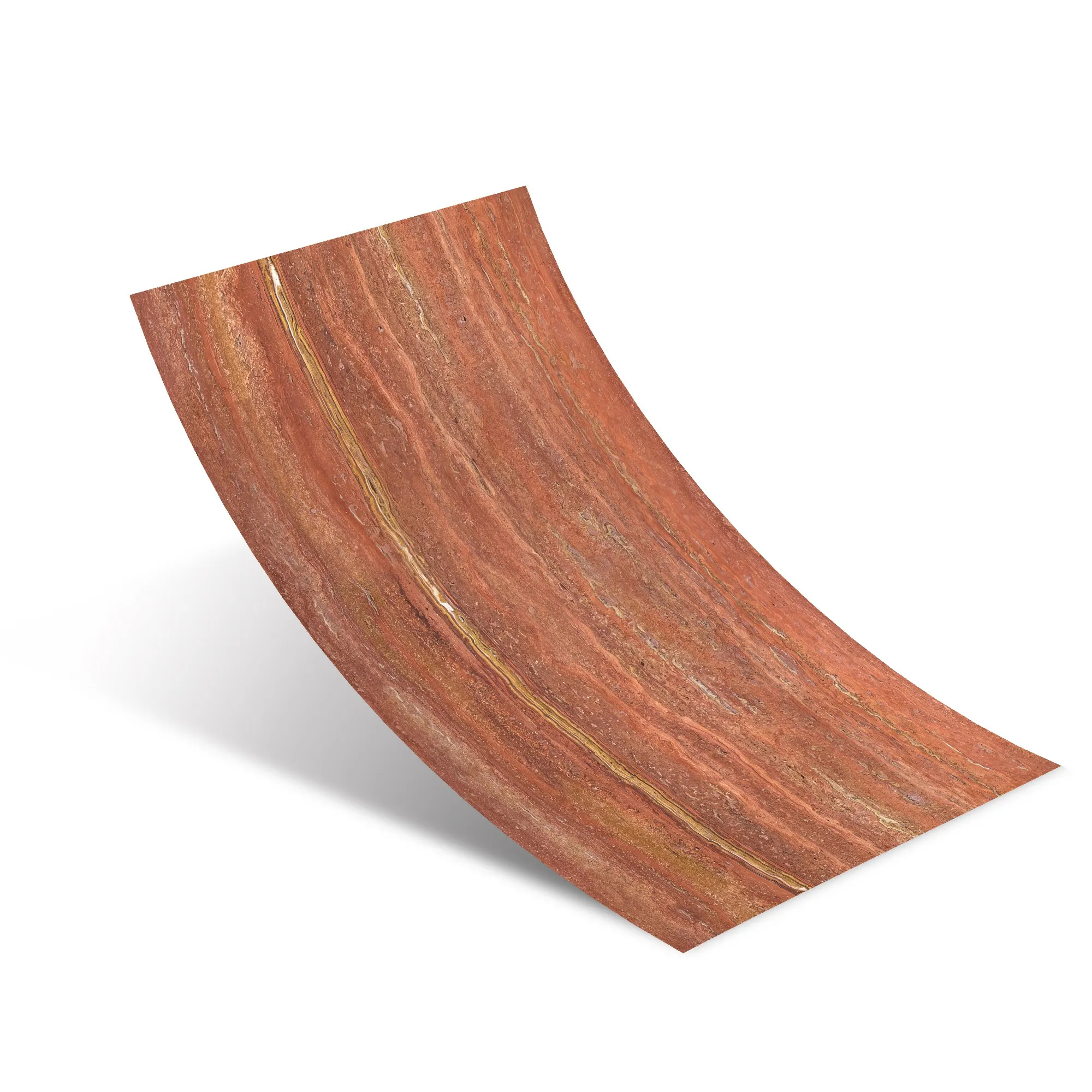
Now, let's talk about the star of this article: Red Travertine. Travertine itself is a classic—those porous, earthy stones you've seen in ancient Roman ruins or luxury spas. But Red Travertine? It's a showstopper. With its rich, rust-toned hues that range from deep terracotta to warm amber, it adds instant character to any space, whether it's a hotel lobby, a residential exterior, or a commercial plaza. But what makes Red Travertine MCM so special isn't just its looks—it's how it's reimagined through the MCM process.
Traditional Red Travertine extraction involves quarrying large blocks of stone, cutting them into slabs, and transporting them to job sites. The problem? This process is carbon-intensive: quarrying releases CO2, cutting requires energy-heavy machinery, and those heavy slabs mean more fuel burned during transportation. MCM changes the game by using just a fraction of the natural stone—typically 20-30% of what's needed for a traditional slab. The rest is made up of recycled polymers and minerals, reducing the demand for raw stone extraction and cutting down on waste.
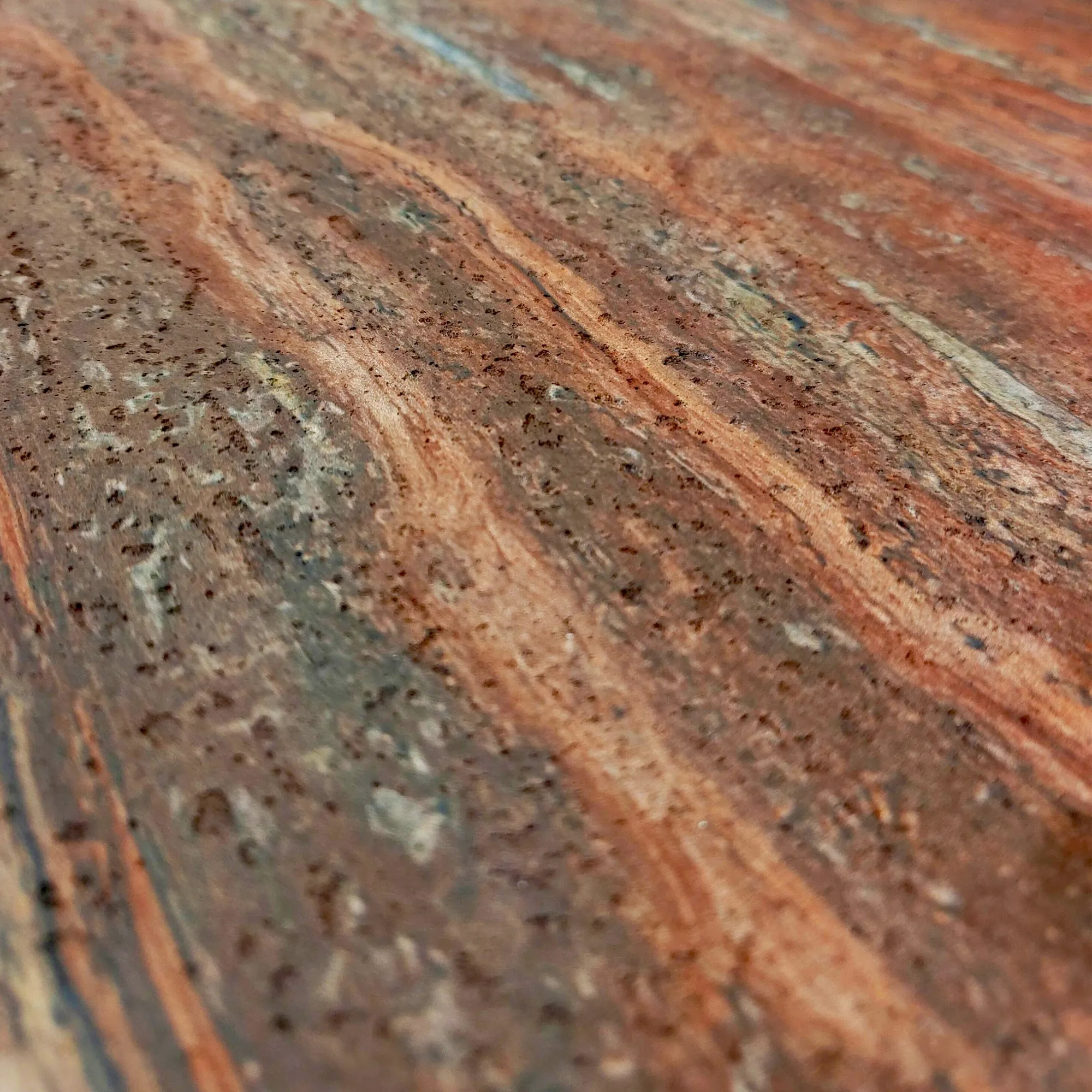
Let's start at the source: the quarry. Traditional stone mining is hard on the planet. Heavy equipment disturbs ecosystems, and extracting large blocks of travertine can lead to soil erosion and habitat loss. Red Travertine MCM flips the script by using "stone powder"—a byproduct of traditional quarrying that would otherwise end up in landfills. By repurposing this powder, MCM manufacturers reduce waste and minimize the need for new mining. It's a win-win: we get the authentic travertine look without depleting natural resources.
But it's not just about waste reduction. The stone powder is mixed with recycled polymers (think: plastic waste from bottles or industrial byproducts) and natural minerals to create a composite that's both strong and lightweight. This means fewer trucks on the road to transport raw materials, and less energy used in processing. For context, a single truck can carry up to 500 square meters of MCM panels, compared to just 50 square meters of traditional travertine slabs. That's a 90% reduction in transportation emissions per square meter—no small feat.
Traditional stone processing is energy-heavy. Cutting, polishing, and finishing natural travertine requires electricity and water, contributing to a higher carbon footprint. MCM production, on the other hand, uses a low-temperature curing process that consumes 60% less energy than traditional stone manufacturing. The panels are pressed into shape using heat and pressure, eliminating the need for water-intensive polishing or chemical treatments. Even better, many MCM factories run on renewable energy—solar, wind, or hydro—further reducing their carbon output.
Take a leading MCM manufacturer in Italy, for example. Their Red Travertine MCM line is produced in a facility powered by 100% solar energy, and their water usage is recycled and reused up to five times. The result? A carbon footprint of just 8kg CO2 per square meter of panel, compared to 35kg CO2 for traditional Red Travertine slabs. That's a 77% reduction—numbers that make green building certifications like LEED or BREEAM much easier to achieve.
Anyone who's worked on a construction site knows that time is money—and energy. Traditional stone slabs are heavy (20-30kg per square meter) and require cranes, scaffolding, and teams of workers to install. MCM panels? They weigh just 4-6kg per square meter. That means no need for heavy machinery: installers can carry them by hand, attach them with simple adhesives, and cut them on-site with basic tools. Faster installation equals less time spent on-site, which translates to lower energy use (no more running generators for extra days) and reduced labor emissions.
Waste is another big issue with traditional stone. Cutting slabs to fit specific dimensions often leads to offcuts that end up in landfills. MCM panels are customizable—manufacturers can pre-cut them to exact measurements before shipping, so there's minimal on-site waste. And if there are scraps? They're recyclable. Many MCM brands offer take-back programs, where old panels are ground down and reused in new products. It's a circular approach that keeps materials out of landfills and in the loop.
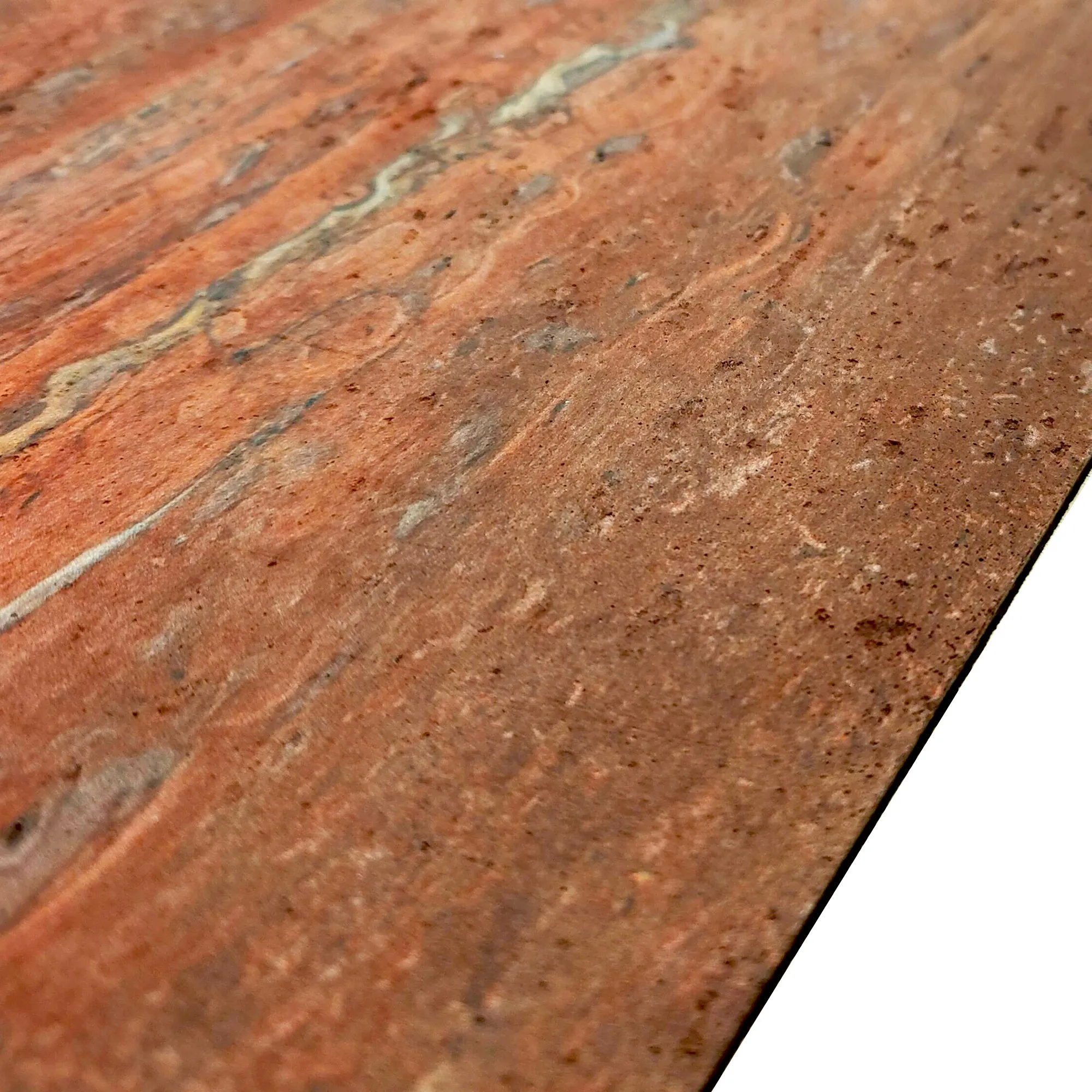
Sustainability is a big selling point, but let's be real: builders and architects need materials that perform. Red Travertine MCM doesn't just reduce carbon—it delivers on durability, design, and cost, too.
Traditional travertine is porous, which means it stains easily and can crack in freezing temperatures. Red Travertine MCM? Its composite structure makes it non-porous, so it resists water, mold, and stains. It's also UV-resistant, so those rich red hues won't fade in the sun, and fire-retardant, making it safe for high-rise buildings. In fact, most MCM panels come with a 25-year warranty—something traditional stone can't always match.
Want a curved facade that mimics the natural flow of a canyon? Or a restaurant wall with a 3D textured pattern? MCM's flexibility makes it possible. Unlike rigid stone slabs, Red Travertine MCM panels can bend to radii as small as 30cm, opening up endless design possibilities. And because they're lightweight, they can be used on interior walls, ceilings, or even furniture—adding a touch of luxury without the structural stress.
At first glance, MCM panels might seem pricier than traditional stone. But when you factor in transportation, installation, and maintenance costs, they often end up being cheaper. For example, installing traditional Red Travertine can cost $50-80 per square meter in labor alone, thanks to the heavy lifting required. MCM installation? As low as $15-25 per square meter. Plus, with lower maintenance needs (no sealing, no polishing), you'll save even more over time.
| Feature | Traditional Red Travertine | Red Travertine MCM |
|---|---|---|
| Carbon Footprint (per sqm) | 35-40 kg CO2 | 8-10 kg CO2 |
| Weight (per sqm) | 25-30 kg | 4-6 kg |
| Installation Time (per 100 sqm) | 3-4 days | 1 day |
| Maintenance Needs | Sealing every 1-2 years; prone to staining | No sealing; stain-resistant |
| Waste Generated (per project) | 15-20% of material | 2-3% of material |
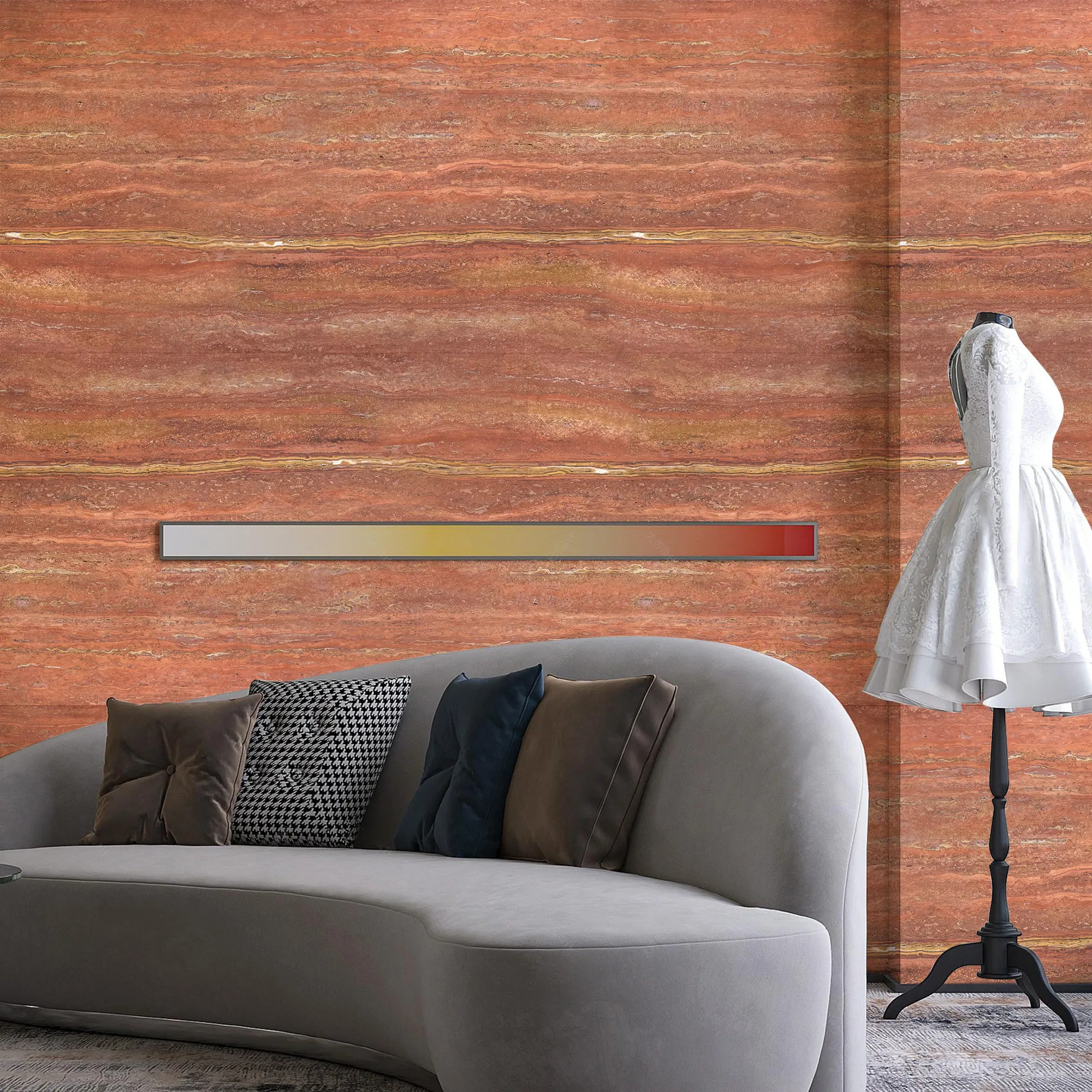
It's one thing to talk about sustainability in theory—what does it look like in practice? Let's take the "EcoVista Residences" in Barcelona, a 12-story apartment complex that aimed for LEED Platinum certification. The architects wanted a warm, natural exterior that reflected the city's Mediterranean vibe, but they needed to keep carbon emissions low. They chose Red Travertine MCM for the facade, and the results were impressive: the project's carbon footprint was reduced by 42% compared to using traditional stone, and the lightweight panels allowed for a simpler, more energy-efficient structural design. Residents love the building's unique look, and the developers saved 15% on installation costs.
Another example: the "Terra Hotel" in Dubai, a boutique property that prides itself on eco-luxury. The hotel's exterior features Red Travertine MCM panels alongside other green building materials like fair-faced concrete and foamed aluminium alloy boards. The result? A striking, desert-inspired design that uses 30% less energy for cooling (thanks to MCM's insulating properties) and earned the hotel a BREEAM Excellent rating. Guests often comment on the "organic feel" of the lobby walls, unaware that the material they're admiring is actually a sustainable composite.
The construction industry is at a crossroads. With governments around the world setting stricter carbon neutrality goals—like the EU's "Green Deal" or California's mandate for net-zero buildings by 2030—builders can't afford to stick with high-emission materials. Green building materials like Red Travertine MCM aren't just "nice to have" anymore; they're a necessity.
MCM flexible stone is leading the charge because it doesn't force builders to choose between sustainability and performance. It's proof that you can have a material that looks like natural stone, lasts for decades, and helps projects meet their green goals. And as technology improves, we're seeing even more innovations: MCM panels with integrated solar cells, self-cleaning coatings, and recycled content percentages that push 80% or higher.
At the end of the day, every building material we choose is a vote for the kind of planet we want to live on. Red Travertine MCM isn't just a product—it's a statement: that beauty and sustainability can go hand in hand, that innovation can honor tradition, and that even the smallest choices (like the panels on a wall) can add up to big change.
So the next time you walk past a building with a rich, red facade, take a closer look. It might just be Red Travertine MCM—and behind those warm tones lies a story of reduced carbon, less waste, and a step toward a greener future. And isn't that the kind of legacy we all want to build?
Recommend Products











