
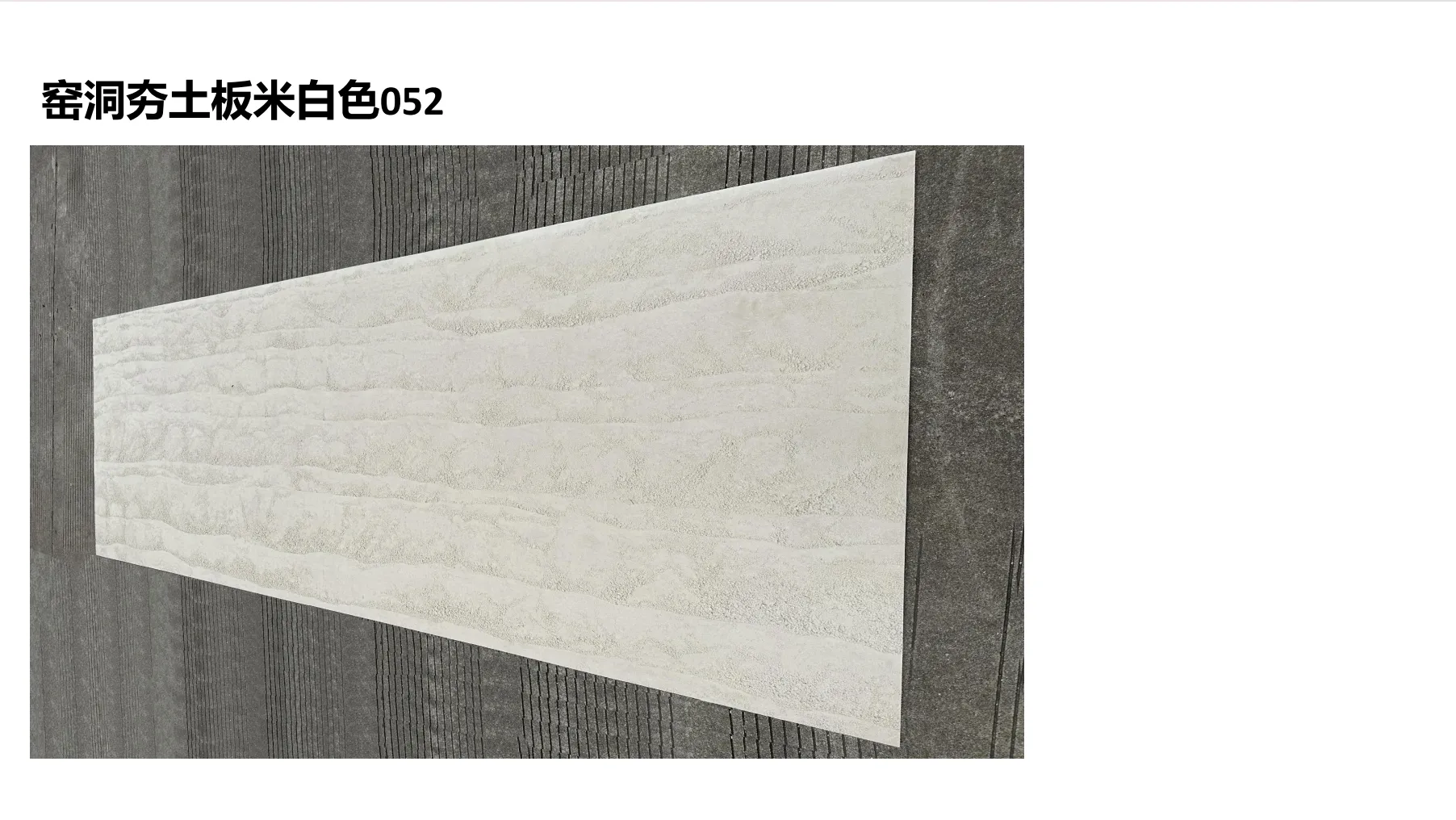
There's something almost poetic about gradient color rammed earth boards. They don't just cover walls—they tell a story of transition: the soft blush of dawn bleeding into midday gold, the deepening hues of a forest at dusk, or the quiet shift from desert sand to mountain stone. But beyond their visual allure lies a deeper narrative: one of careful sourcing, respect for the planet, and a commitment to craft that honors both nature and human ingenuity. Let's pull back the curtain on the sustainable materials that make these boards not just beautiful, but a testament to responsible design.
Sustainable sourcing here isn't a buzzword—it's a promise. It means choosing materials that leave the lightest possible footprint, supporting communities that harvest them, and ensuring every step from quarry to workshop respects the delicate balance of our ecosystems. For gradient rammed earth boards, this starts with asking: Where does this material come from? Who touches it along the way? And will the land it came from be healthier for having given it? These questions guide every choice, turning raw ingredients into something with soul.
At the core of every gradient board is the rammed earth itself—simple, ancient, and profoundly sustainable. The soil used isn't taken from fertile farmlands or fragile ecosystems; instead, it's sourced from local, non-arable lands: old quarries being restored, or areas where soil quality is too poor for crops. In regions like the Gobi Desert, where the earth is naturally rich in iron oxides and minerals, this soil carries the desert's warm, terracotta hues, while mountainous areas might yield cooler, slate-like tones. Harvesters work with local communities to ensure only excess soil is taken, leaving the land able to regenerate. When mixed with natural binders like lime (sourced from lime stone (beige) deposits that have been sustainably mined for generations), the result is a base that breathes—literally. Rammed earth regulates moisture and temperature, making spaces feel alive, as if the walls themselves are in conversation with the air around them.
If the rammed earth base is the board's heart, MCM flexible stone is its backbone—strong, versatile, and surprisingly eco-friendly. Unlike traditional stone slabs, which require heavy quarrying and often result in waste, MCM flexible stone starts with recycled stone dust and fragments from other projects. These "leftovers" are collected from quarries across Italy and Turkey, where strict regulations ensure no usable stone goes to waste. Mixed with plant-based resins and pressed into thin, flexible sheets, the material retains the natural texture of stone but uses a fraction of the resources. For gradient boards, it adds depth: imagine a base of soft, gradient beige rammed earth, layered with flexible stone in travertine (starry green) —speckled with tiny, iridescent flecks that catch the light like moss on a forest floor. It's sustainability with a artistic punch.
Some materials carry history in their very fibers, and epoch stone and century stone are perfect examples. Sourced from ancient riverbeds in France and Spain, these stones form over millennia as sediment layers compress into solid rock. Quarriers here don't blast or bulldoze; instead, they use traditional hand tools to split slabs along natural fault lines, minimizing damage to the surrounding landscape. The result? Each piece of epoch stone has unique, wavy patterns—like frozen ripples—while century stone bears the marks of prehistoric seas, with fossilized shells adding subtle texture. When integrated into gradient boards, they act as "anchors," grounding the soft transitions of color with their timeless, weathered look. It's as if the board itself is a timeline: the gradient representing the present, and these stones whispering of the past.
The lunar peak series— silvery , golden , and black —sounds like it belongs in the night sky, but its roots are firmly in the earth. These materials are quarried from high-altitude mountain ranges in Nepal and Chile, where mineral-rich veins run through granite, giving the stone its metallic sheen. What makes their sourcing sustainable? Quarries here operate only during the dry season, allowing the land to recover during monsoons, and a portion of profits funds local reforestation efforts. Miners, many of whom are indigenous, use low-impact methods to extract small batches, ensuring no large-scale disruption to fragile alpine ecosystems. In gradient boards, lunar peak silvery adds a cool, moonlit glow to transitions from day to night, while golden warms up amber gradients like sunlight on wheat fields. It's a reminder that even the most "celestial" beauty comes from careful stewardship of our planet.
No discussion of gradient boards is complete without travertine —especially variants like starry green , starry red , and starry blue . These stones get their "starry" nickname from tiny, crystalline deposits that sparkle when light hits them, mimicking a night sky. Sourced primarily from Turkey's Denizli region, a hub of travertine mining for over 2,000 years, modern quarries here have rewritten the rulebook for sustainability. Instead of clear-cutting, they work in phases, leaving buffer zones of native vegetation to protect wildlife. Water used in processing is recycled, and after a quarry is exhausted, it's transformed into wetlands or hiking trails. The starry travertine's vibrant hues—from deep reds (reminiscent of desert sunsets) to cool blues (echoing mountain lakes)—add drama to gradients, turning walls into canvases where earth and sky meet.
| Material | Sourcing Region | Sustainability Feature | Aesthetic Role in Gradients |
|---|---|---|---|
| Gradient Rammed Earth Base | Gobi Desert, Mountainous Regions | Sourced from non-arable land; supports local soil regeneration | Provides the foundational color transition (e.g., sand to terracotta) |
| MCM Flexible Stone | Italy, Turkey | Made from recycled stone dust; reduces quarry waste | Adds texture and durability (e.g., travertine (starry green) speckles) |
| Lunar Peak Silvery | Nepal, Chile | Seasonal mining; funds reforestation projects | Creates cool, moonlit transitions in blue/grey gradients |
| Epoch Stone | France, Spain | Hand-split along natural fault lines; minimal landscape disruption | Adds historical depth (e.g., fossilized patterns in earthy gradients) |
| Travertine (Starry Red) | Turkey (Denizli) | Recycled water use; post-quarry land restoration | Infuses gradients with warm, sparkling red tones (sunset-like transitions) |
Sustainable materials are only as good as the hands that shape them. In workshops across Portugal and Japan, artisans blend these ingredients not with machines, but with a mix of tradition and innovation. Take the gradient layering process: instead of using synthetic dyes, they rely on the natural pigments of the sourced materials. A layer of century stone might add deep brown undertones, while lime stone (beige) lightens the mix, creating a seamless fade from dark to light. The boards are cured slowly, sometimes for weeks, in shaded, ventilated spaces—no quick-drying chemicals here. This patience pays off: the final product isn't just a wall covering, but a piece of living history, where every color shift tells a story of land, people, and purpose.
Choosing gradient rammed earth boards with sustainably sourced materials isn't just about aesthetics—it's about voting for a better future. Each board reduces reliance on virgin resources, supports fair labor practices, and cuts down on carbon emissions (since many materials are sourced locally, reducing transport miles). Over time, these small choices add up: a hotel using lunar peak golden gradient boards might save hundreds of trees through reforestation partnerships; a home with travertine (starry blue) walls could lower energy bills thanks to the material's natural insulation. It's proof that beauty and responsibility don't have to be trade-offs—they can dance together, in gradients as smooth as the transition from day to night.
Gradient color rammed earth boards are more than building materials. They're bridges—between nature and design, between past and present, between the hands that sourced them and the hands that will live with them. The next time you run your fingers over one, pause. Notice the subtle shift from epoch stone 's earthy brown to lunar peak silvery 's cool shimmer. Think of the Nepalese miner who carefully extracted that lunar stone, the Turkish family tending to a restored travertine quarry, the artisan in Portugal who layered colors like a painter. In those moments, the board becomes more than a wall—it becomes a story. And isn't that what makes a space truly feel like home? Not just the way it looks, but the life, love, and respect woven into every inch.
Recommend Products












