
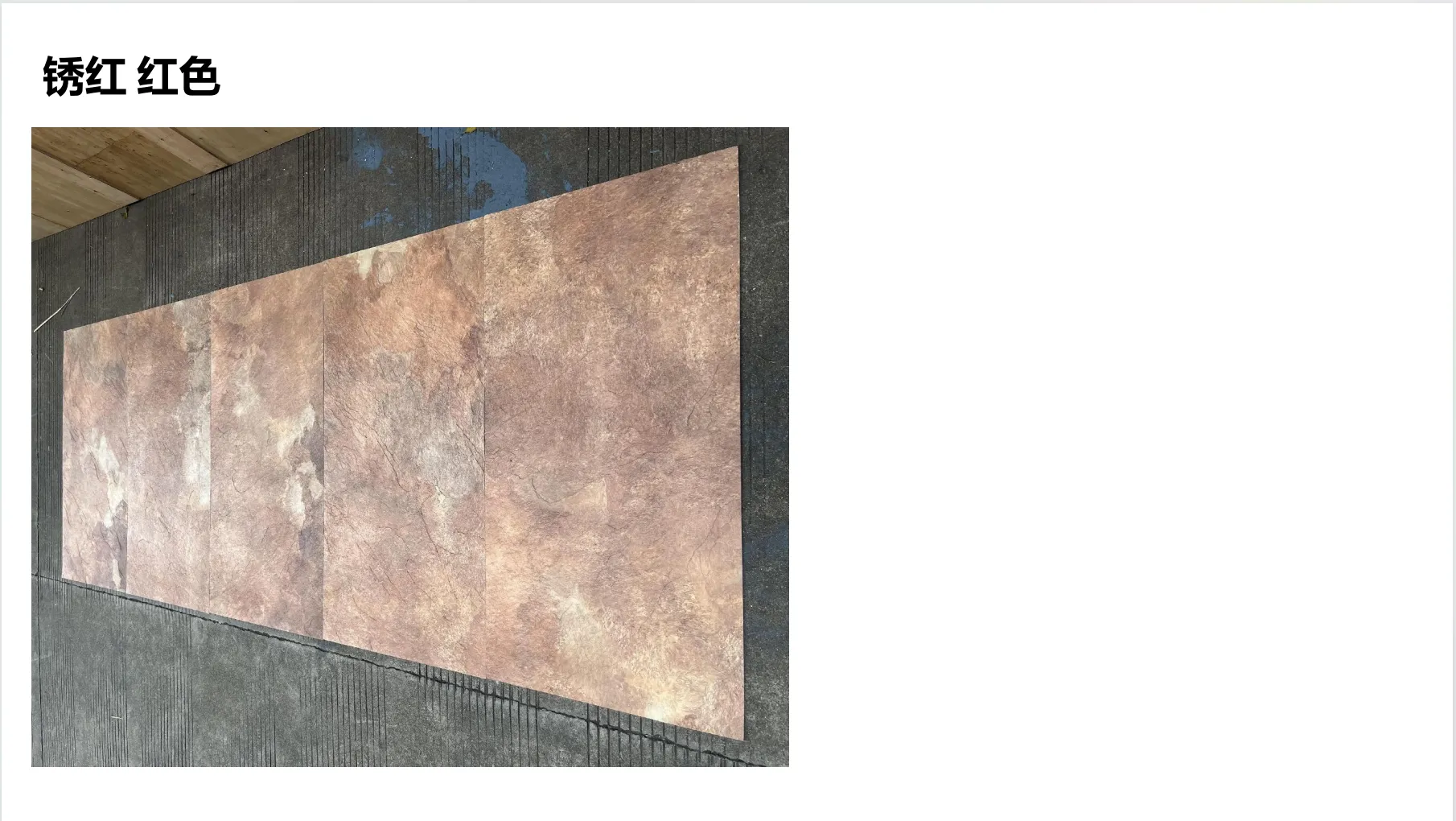
How a single hue is redefining modern architecture—one facade at a time
Walk down any city street, and you'll notice them—the silent storytellers of our urban landscape. Building facades don't just enclose space; they set the mood of a neighborhood, reflect the identity of a brand, and even shape how we feel as we pass by. A sleek glass tower might whisper of innovation, while a brick-clad storefront feels like a warm invitation. But in recent years, a new protagonist has stepped into the spotlight: Rusty Red MCM. It's not just a color or a material—it's a feeling.
Picture this: You're strolling through a bustling downtown district, sunlight slanting between skyscrapers. Among the sea of neutrals—grays, beiges, whites—something stops you. A building with a facade that glows like aged copper, its surface rippling with texture, shifting from deep terracotta to soft amber as the light changes. It's not loud or garish; it's alive . That's the magic of Rusty Red MCM. It doesn't just catch the eye—it holds it, making you pause, wonder, and maybe even snap a photo. In a world where buildings often feel cold and impersonal, this hue brings warmth, character, and a touch of the organic.
Before we dive into the allure of Rusty Red, let's talk about the star of the show: MCM, or Modified Composite Material. If traditional building materials were actors in a period drama, MCM is the indie breakout star—versatile, sustainable, and unapologetically modern. Born from a desire to merge durability with design freedom, MCM has quickly become the go-to choice for architects and designers who refuse to compromise.
What makes MCM special? Unlike heavy stone or fragile brick, MCM is lightweight, flexible, and surprisingly tough. It's crafted by layering natural minerals, resins, and fibers, resulting in panels that mimic the look of natural materials—travertine, rammed earth, even aged metal—without the drawbacks. Think of it as nature's beauty, reimagined for the demands of modern construction. And within the MCM family, Rusty Red has emerged as a fan favorite, blending the raw, earthy charm of rust with the precision of modern engineering.
Rusty Red isn't a one-note color. It's a spectrum—a conversation between red and brown, warmth and edge, nostalgia and modernity. Close up, it reveals layers: hints of burnt sienna, flecks of amber, undertones of chestnut. It's the color of autumn leaves after the first frost, of a vintage leather satchel that's been loved for decades, of the desert at sunset when the sky bleeds into the earth. In architecture, this complexity is a superpower. It allows a building to shift with the light: soft and inviting at dawn, bold and dramatic at dusk, and quietly elegant under streetlights.
But why does this color resonate so deeply? Psychologists have long studied the impact of color on mood, and Rusty Red hits a sweet spot. Red, of course, is associated with energy and passion, but paired with earthy browns, it becomes grounded—less "stop sign" and more "home." It feels both timeless and contemporary, making it perfect for brands that want to honor tradition while pushing boundaries. A coffee roaster might use it to evoke craftsmanship and warmth; a tech startup could adopt it to stand out from the sterile "innovation gray" of competitors. Rusty Red says, "We're here, we're authentic, and we care about how you feel."
What makes Rusty Red MCM so versatile? It's all in the details—the textures, finishes, and formulations that turn a simple color into a design tool. Let's explore some of the standout products that are making waves in commercial architecture:
Imagine a material that bends without breaking, clings to curves as easily as flat surfaces, and looks like it was quarried from the side of a mountain. That's MCM flexible stone. In Rusty Red, it's a game-changer for architects who crave organic shapes. Whether wrapping around a rounded entrance or creating undulating patterns across a facade, this stone feels alive—like the earth itself, sculpted into something new. Run your hand over it, and you'll feel the granular texture, a reminder of its natural origins, but with the durability to withstand rain, wind, and time. It's no wonder it's a favorite for boutique hotels and art galleries—spaces that want to feel both refined and rooted in nature.
Rammed earth has been around for centuries—used in everything from ancient Chinese fortresses to African mud-brick homes. It's a material with soul, born from the simple act of compressing soil, clay, and straw. Today, MCM has reimagined it as rammed earth board, and in Rusty Red, it's a love letter to tradition. The texture here is rich and tactile, with visible layers that mimic the hand-packed process of old. It's warm, earthy, and slightly rough—like the walls of a desert adobe, but built to last in modern cities. For brands that value sustainability and heritage, this is the perfect choice. Imagine a farm-to-table restaurant with a Rusty Red rammed earth facade; it doesn't just tell customers "we care about food"—it says "we care about roots."
Travertine is known for its classic elegance, but Travertine (Starry Red) takes it to a new level. This variant blends the warm, porous texture of traditional travertine with tiny, iridescent flecks that catch the light—like stars scattered across a rusty horizon. It's subtle, not glittery; the "stars" are mineral deposits that add depth without overwhelming. In commercial spaces, it's a conversation starter. A boutique clothing store with a Starry Red travertine facade feels both luxurious and whimsical, while a corporate office might use it to soften a modernist design. It's proof that Rusty Red can be both bold and delicate, depending on how you use it.
For brands that lean into industrial-chic—think breweries, tech hubs, or co-working spaces—Boulder Slab in Vintage Rust is a dream. This MCM product mimics the look of weathered steel, with a matte finish that's rough to the touch and edges that seem to have been shaped by time. It's the color of a rusted metal barn roof, but with none of the maintenance headaches (no flaking, no corrosion, just that perfect patina forever). Paired with large windows or black metal accents, it creates a facade that feels rugged yet refined—like a warehouse that grew up, but never lost its soul.
| Product Name | Core Texture | Ideal Application | Standout Feature |
|---|---|---|---|
| MCM Flexible Stone (Rusty Red) | Granular, slightly rough | Curved facades, artistic installations | Bends to fit complex shapes |
| Rammed Earth Board (Rusty Red) | Layered, hand-packed appearance | Heritage-inspired buildings, eco-boutiques | Echoes ancient construction techniques |
| Travertine (Starry Red) | Porous with iridescent flecks | High-end retail, boutique hotels | Sparkles subtly in changing light |
| Boulder Slab (Vintage Rust) | Weathered, industrial matte | Breweries, tech offices, lofts | Mimics aged steel without corrosion |
Color is only half the story. What truly makes Rusty Red MCM unforgettable is its texture—the way it catches the light, invites touch, and adds depth to flat surfaces. In a world of smooth, shiny facades, texture is rebellion. It's what makes a building feel human, not machine-made.
Take MCM flexible stone, for example. Its surface is pitted and uneven, like a stone that's been polished by a river but still holds onto its rough edges. When the sun hits it, shadows dance in the crevices, making the facade look like it's breathing. Then there's rammed earth board, with its visible layers of compressed material. It's not perfect—and that's the point. Those tiny imperfections, the slight variations in color and density, make it feel authentic, like it was crafted by hand rather than stamped out by a machine.
Even the "starry" variants, like Travertine (Starry Red), play with texture. The iridescent flecks aren't just about sparkle; they create a sense of movement. Stand in front of a Starry Red facade at noon, and the flecks are subtle, almost hidden. Come back at golden hour, and suddenly they're everywhere—like someone scattered stardust across the stone. It's a reminder that great architecture isn't static; it changes with the day, keeping the building feeling fresh and alive.
In today's world, beauty can't exist in a vacuum. Businesses and architects alike are demanding materials that look good and do good. Luckily, Rusty Red MCM delivers on both fronts. MCM itself is a sustainable choice: it's lightweight, reducing transportation emissions; it's often made with recycled or natural materials; and its durability means less frequent replacement (and less waste).
But the Rusty Red finish adds another layer of eco-friendliness. Unlike synthetic dyes that leach chemicals, many Rusty Red MCM products use natural iron oxides to achieve their hue—minerals that come straight from the earth, without harmful additives. And because MCM is low-maintenance, it requires fewer harsh cleaning chemicals over its lifetime. For brands that want to shout their commitment to sustainability from the rooftops (or facades), Rusty Red MCM is more than a design choice—it's a statement.
Talk is cheap—let's look at how Rusty Red MCM is transforming real buildings, real communities, and real brands.
Nestled in Portland's historic Pearl District, the Iron & Grain Hotel wanted to honor the neighborhood's industrial past while feeling fresh and welcoming. Their solution? A facade clad in Boulder Slab (Vintage Rust) MCM. The weathered steel-look panels complement the area's brick warehouses, but the Rusty Red hue adds warmth that traditional gray steel lacks. Guests often comment on how the building feels "both old and new," like a relic that's been gently updated for the modern traveler. Even better? The lightweight MCM panels reduced construction time by 30%, letting the hotel open its doors months ahead of schedule.
Terra & Co., a sustainable fashion brand, needed a flagship store that screamed "eco-luxury." Enter Rammed Earth Board (Rusty Red) MCM. The layered, earthy texture of the facade immediately communicates the brand's commitment to natural materials, while the Rusty Red color feels rich and premium—no "crunchy granola" vibes here. The store's curved entrance, wrapped in MCM flexible stone, adds a modern twist, proving that sustainability and style can go hand in hand. Since opening, Terra & Co. has seen a 25% increase in foot traffic, with many customers citing the "striking, warm exterior" as their reason for stopping in.
As architects and designers continue to push boundaries, Rusty Red MCM is evolving right alongside them. One exciting trend? Customization . Brands are no longer satisfied with off-the-shelf hues; they want Rusty Red with a twist—deeper, brighter, or blended with other earth tones like olive green or mustard. MCM manufacturers are responding with custom color-matching, letting businesses create a facade that's as unique as their brand.
Another frontier is technology integration . Imagine a Rusty Red MCM facade that's not just beautiful, but smart—embedded with sensors that monitor temperature or air quality, or even LED strips that highlight the texture at night without washing out the color. It's a marriage of old and new, where the warmth of Rusty Red meets the innovation of the digital age.
And let's not forget scale . While Rusty Red MCM has made a name for itself in boutique projects, it's now stepping into larger commercial spaces—airports, convention centers, even stadiums. Imagine a sports arena wrapped in Rusty Red MCM, its texture rippling like a flag in the wind, uniting fans under a single, bold identity. The possibilities are endless, and that's the most exciting part: Rusty Red MCM isn't just a trend. It's a movement.
At the end of the day, architecture is about connection. It connects us to our environment, to our history, and to each other. Rusty Red MCM excels at this connection because it's rooted in emotion. It doesn't just look good—it feels good. It makes us feel grounded, inspired, and part of something bigger than ourselves.
Whether it's a cozy cafe in a small town or a soaring skyscraper in a metropolis, a Rusty Red MCM facade tells a story. It says, "We care about beauty. We care about craft. We care about you." In a world that's often rushed and disconnected, that's a powerful message. So the next time you pass a building with that warm, earthy glow, take a moment to appreciate it. It's not just a wall—it's a story, written in rust and red, waiting to be told.
Recommend Products












