
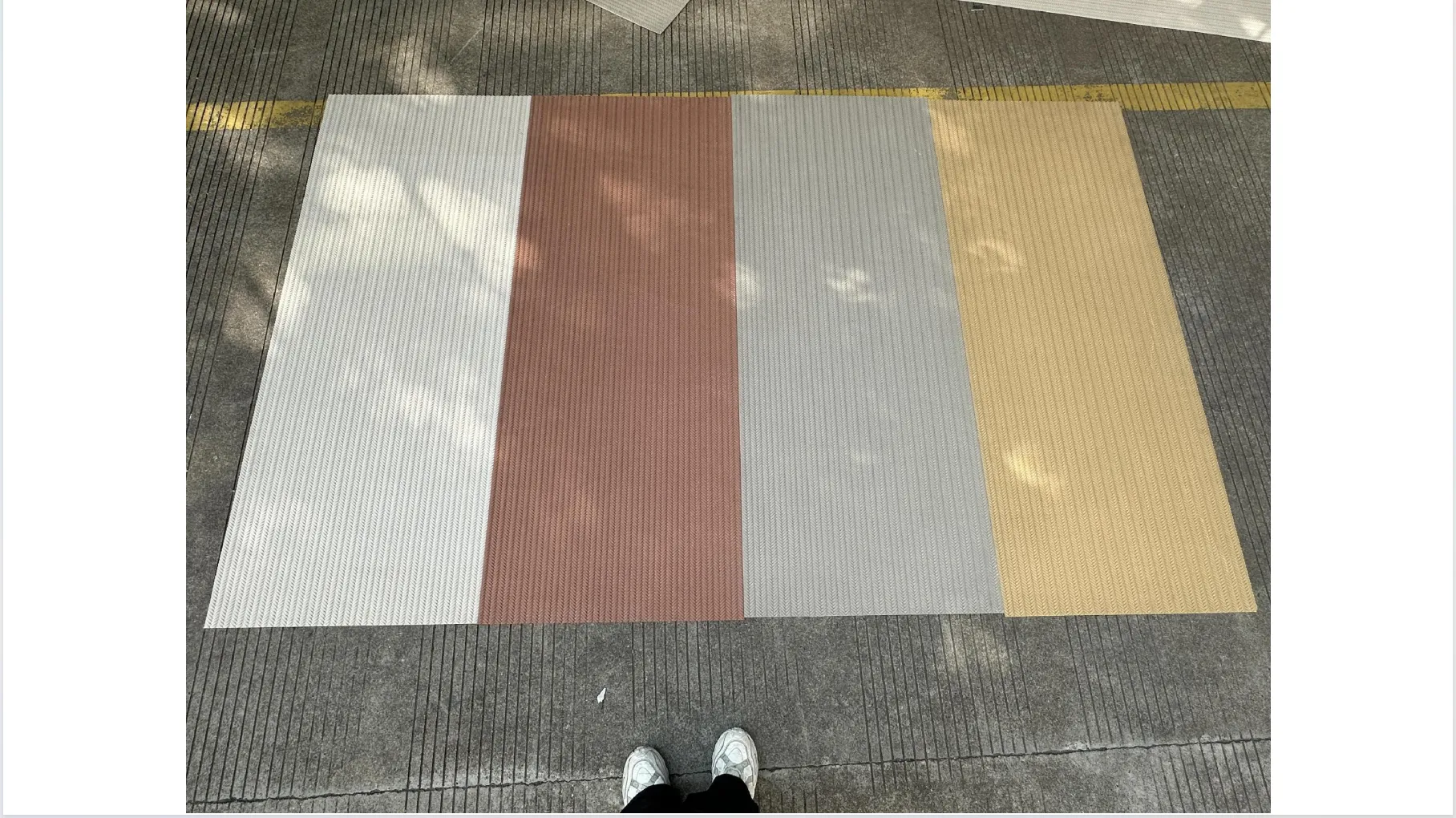
There's something inherently comforting about the feel of woven textures—whether it's the soft cradle of a knit blanket, the rustic charm of a wicker basket, or the intricate pattern of a handwoven rug. These textures tell stories of craftsmanship, warmth, and organic beauty, grounding spaces in a sense of tactile connection. Now, imagine bringing that same depth and narrative into architectural design, but with a material that's as durable as it is versatile. Enter Modified Cementitious Material (MCM), a revolutionary innovation that merges the best of concrete's strength with the flexibility of modern engineering. And when paired with woven real photos —digitally captured, hyper-realistic depictions of woven patterns—MCM transforms walls, facades, and surfaces into immersive works of art. Let's explore how this fusion of texture, technology, and material science is redefining design possibilities.
First, let's demystify the star of the show: Modified Cementitious Material, or MCM. At its core, MCM is a blend of cement, fibers, and polymers, engineered to be lightweight, flexible, and incredibly strong. Unlike traditional concrete, which is heavy and rigid, MCM bends without breaking, making it ideal for curved surfaces, vertical installations, and even retrofits. It's also eco-friendly, often incorporating recycled materials, and resistant to weather, fire, and wear—qualities that make it a favorite among architects and designers seeking both beauty and practicality.
But MCM's true magic lies in its versatility as a canvas. Its surface can be imprinted, textured, or printed with high-definition images, allowing for endless design expressions. This is where woven real photos come in: by capturing the intricate details of real woven fabrics, ropes, or fibers—down to the twist of a thread or the play of light on a knot—designers can transfer these visuals onto MCM panels, creating surfaces that look and feel almost indistinguishable from the real thing. It's a marriage of nature's randomness and human precision, and it's changing how we think about interior and exterior cladding.
Woven patterns have long been celebrated in design for their ability to add warmth and dimension. From the earthy tones of weaving (khaki) to the soft neutrality of weaving (beige) , these hues and textures evoke a sense of calm and connection to nature. But translating these patterns into architectural materials has historically been challenging. Natural woven materials like jute or rattan are fragile and moisture-sensitive, while traditional stone or concrete can't replicate the organic, fibrous look of true weaving.
MCM solves this dilemma. Here's how the process works: first, a designer or photographer captures high-resolution images of real woven textures. These could be handwoven textiles, macramé pieces, or even industrial-grade woven fibers—each with its own unique story. The images are then digitized, refined for clarity, and printed onto MCM panels using advanced UV-curing inks that lock in color and detail. The result? A surface that boasts the visual depth of woven fabric but with the durability of cement. Run your hand over it, and you'll feel the subtle ridges and grooves mimicking the original texture—a tactile experience that engages more than just the eyes.
Take weaving (khaki) as an example. This warm, earthy shade, paired with a loose, overhand weave pattern, brings a touch of bohemian charm to a restaurant wall, making diners feel as if they've stepped into a cozy, sunlit studio. Or consider weaving (beige) with a tight, herringbone weave: its clean lines and soft tone add sophistication to a hotel lobby, balancing modern minimalism with organic warmth. These aren't just "prints"—they're experiences , designed to make spaces feel lived-in and alive.
So, why choose MCM over other materials for woven designs? Let's break down the benefits:
| Feature | MCM with Woven Real Photos | Traditional Masonry Stone | Natural Woven Fabrics |
|---|---|---|---|
| Weight | Lightweight (5-8 kg/m²) | Heavy (20-30 kg/m²) | Light but fragile |
| Flexibility | Highly flexible (bends up to 30°) | Rigid (no flexibility) | Flexible but prone to stretching |
| Durability | Weather, fire, and wear-resistant | Durable but prone to cracking | Moisture-sensitive, prone to fraying |
| Design Versatility | Customizable patterns, colors, and textures | Limited to natural stone patterns | Limited to fabric types and weaves |
| Eco Impact | Often uses recycled materials; low transport emissions | High extraction and transport emissions | May require water-intensive production (e.g., cotton) |
The beauty of woven real photos on MCM lies in their versatility—they work in almost any space, from residential to commercial, and from intimate interiors to bold exteriors. Here are a few standout applications:
Residential Interiors: Imagine walking into a living room where one wall is clad in weaving (beige) MCM panels, their soft texture complementing a wooden coffee table and linen sofas. Or a kitchen backsplash in weaving (khaki) , adding warmth to sleek countertops and stainless steel appliances. Even bedrooms benefit—an accent wall behind the bed can become a focal point, turning a simple room into a sanctuary.
Commercial Spaces: Restaurants and cafes often use woven textures to create cozy, inviting atmospheres. With MCM, a bistro can line its walls with woven real photos in rich, earthy tones, evoking the feel of a countryside cottage without worrying about spills or moisture damage. Hotels, too, are embracing this trend—lobby walls in weaving (khaki) or weaving (beige) MCM panels welcome guests with a sense of warmth, while outdoor patios use the same material to blur the line between indoor comfort and outdoor durability.
Exterior Facades: For buildings, MCM's weather resistance makes it a star. Imagine a boutique store with a facade clad in woven real photos, its textured surface catching the light and drawing pedestrians in. Or a community center where weaving (beige) MCM panels blend with surrounding greenery, creating a harmonious connection to nature. Even public art installations benefit—sculptural forms wrapped in woven patterns become interactive, tactile landmarks.
To truly elevate a space with woven real photos on MCM, consider these design principles:
As design trends lean into biophilia—the human connection to nature—and tactile experiences, woven real photos on MCM are poised to become even more popular. With advancements in printing technology, the level of detail will only get better, blurring the line between digital and physical texture. We might soon see MCM panels that mimic not just woven fabrics, but also other natural textures like masonry stone or even tree bark, all while retaining MCM's practical benefits.
For homeowners, designers, and architects, this means endless possibilities to create spaces that feel both innovative and grounded. Woven real photos on MCM aren't just a material choice—they're a way to tell stories, evoke emotions, and turn ordinary surfaces into extraordinary experiences.
In a world dominated by smooth, sterile surfaces, woven real photos on MCM remind us of the beauty in imperfection—the slight irregularities of a handwoven pattern, the way light dances on a twisted thread, the comfort of a texture that feels like home. It's a celebration of craft, technology, and the enduring appeal of tactile design. Whether you're renovating a kitchen, designing a commercial space, or dreaming up a public art project, MCM offers a canvas to weave your own story—one that's as durable as it is delightful.
So, the next time you walk into a room and feel an inexplicable urge to reach out and touch the wall, chances are it's MCM—working its magic, one woven thread at a time.
Recommend Products












