
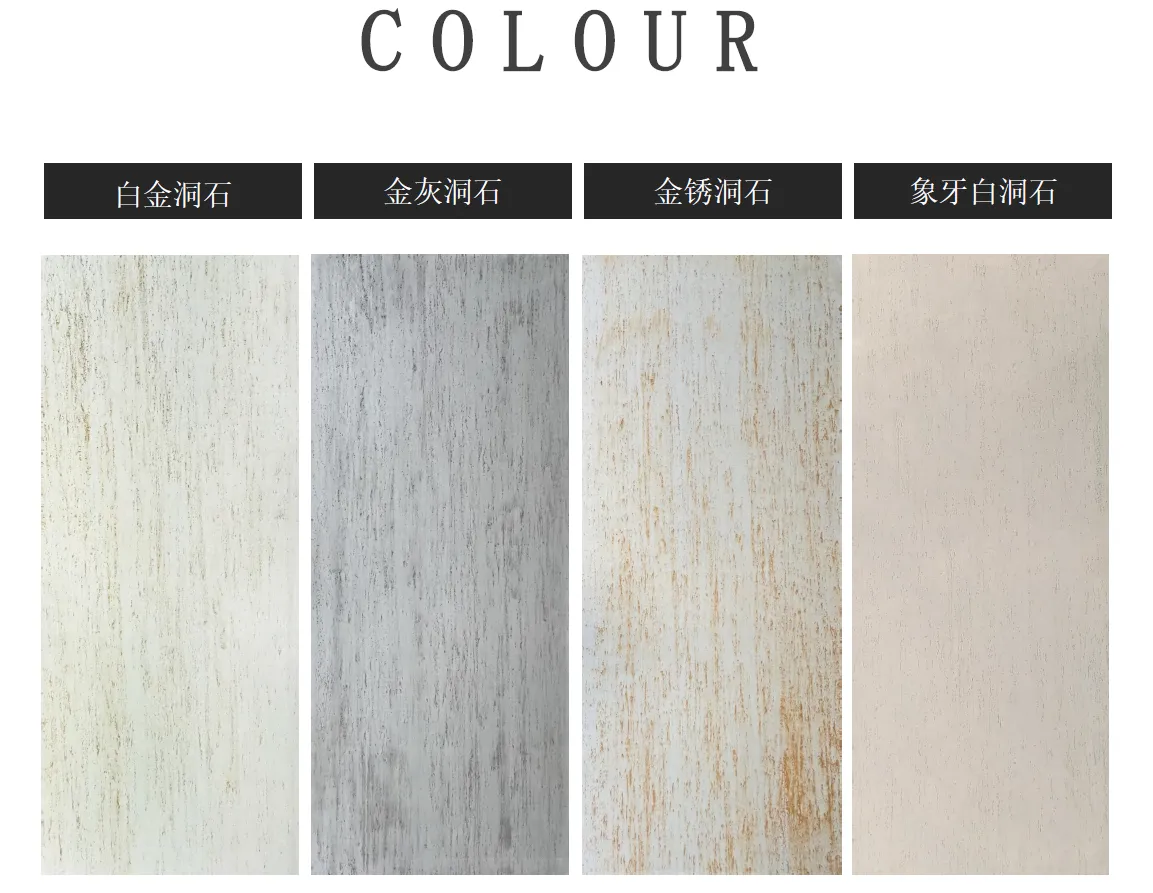
Choosing the right material for a building project isn't just about picking something that looks good—it's about balancing dreams with dollars. Whether you're revamping a restaurant facade, designing a luxury home, or overseeing a commercial development, the materials you select will shape not only the space's personality but also your budget for years to come. Today, we're diving into two heavyweights in the design world: the timeless Roman Huge Travertine and the innovative MCM Panels. Let's break down their costs, from the moment they're sourced to the day you're enjoying the finished space (and beyond).
If natural stone had a resume, Roman Huge Travertine would list "iconic structures since 200 BCE" under experience. Quarried primarily in regions like Tivoli, Italy—where ancient Romans mined it to build the Colosseum and Pantheon—this stone is a living relic. Its warm, porous surface, dotted with honeycomb-like pores and swirled with earthy veins of beige, gold, and cream, carries the weight of history. When you choose Roman Huge Travertine, you're not just buying a material; you're bringing a piece of the planet's story into your space. But that legacy comes with a price tag—one that starts long before the first slab arrives on-site.
MCM Panels, short for Modified Composite Material, are the new kids on the block—but they've quickly made a name for themselves. Think of them as nature's beauty meets human ingenuity. Made from a blend of minerals, polymers, and reinforcing fibers, MCM Panels (like the MCM flexible stone and MCM 3D printing series) are engineered to mimic the look of natural stone, wood, or even metal—without the heft or hassle. Lightweight, bendable, and customizable, they're designed for modern projects that crave both durability and creativity. Need a 3D-printed wave panel for a hotel lobby? Or a flexible stone facade that wraps around curved walls? MCM Panels deliver—often at a fraction of the logistical headache of natural stone.
Let's get granular. To truly understand the cost difference, we need to follow each material's journey: how it's made, how it gets to your site, how it's installed, and how much it'll cost to keep it looking great over time. Let's start with the heavyweight.
Natural stone's allure lies in its uniqueness—but that uniqueness is also what drives up costs. Here's where your money goes:
Travertine forms in mineral-rich hot springs over thousands of years, so quarries are often in remote, mountainous areas. Extracting huge slabs (we're talking 4x8ft or larger) requires heavy machinery—drills, cranes, explosives (yes, sometimes they use controlled blasts to loosen the stone). Labor costs here are steep: skilled quarry workers in Italy or Turkey (major travertine sources) earn upwards of $25–$35 per hour, and a single slab can take days to extract without cracking. Add in the cost of permits, land leases, and environmental compliance (quarrying isn't exactly eco-friendly), and raw extraction alone can run $50–$80 per square foot before the stone even leaves the quarry.
Once extracted, the rough blocks need to be cut, polished, and finished. Travertine's porous nature means it's prone to chipping, so cutting requires precision saws with diamond blades—equipment that costs hundreds of thousands of dollars. Then there's honing (for a matte finish) or polishing (for shine), which adds another $10–$15 per square foot. If you want custom edges (like bullnoses or bevels) or unique cuts (arches, curves), that's extra labor—easily $20–$30 per linear foot. By the time a slab is ready to ship, you're looking at $80–$120 per square foot, and that's before it hits the road.
A single 4x8ft travertine slab weighs 500–600 pounds. Shipping one from Italy to, say, New York means hiring a specialized freight company that handles oversized, fragile cargo. You'll pay for crating (to prevent cracks), insurance (because a broken slab is a total loss), and fuel for a truck that can barely hit 50 mph with that load. Cross-ocean shipping adds another layer: container fees, port taxes, and customs. All told, transportation can add $15–$25 per square foot. And if your project is in a remote area? Add another $5–$10 per square foot for "last-mile" delivery (think: navigating mountain roads with a flatbed). Ouch.
Installing travertine isn't a DIY job. Those heavy slabs need to be lifted with cranes or hoists, and they require a perfectly level, reinforced substrate (concrete or steel) to support the weight. Masons trained in natural stone installation charge $30–$50 per square foot—more if the design is complex (like a herringbone pattern or vertical cladding). Plus, you'll need mortar, grout, and sealant (travertine's pores absorb stains, so sealing is non-negotiable). For a 1,000 sq ft project, installation alone could hit $30,000–$50,000. And if a slab cracks during installation? You're back to square one—ordering a new slab, paying for shipping again, and delaying the project.
Travertine is durable, but it's not invincible. Spills (wine, oil, even coffee) stain quickly, so you'll need to seal it every 1–2 years ($0.50–$1 per square foot per seal, plus labor). Scratches? They're tough to fix—you might need to re-polish the entire slab. And if water seeps into those pores and freezes? It can crack the stone. Over 10 years, maintenance costs could add up to $5–$10 per square foot annually. For a 1,000 sq ft space, that's $50,000–$100,000 over a decade. Suddenly, that "timeless" beauty feels a lot more like a long-term commitment.
MCM Panels, like MCM flexible stone or the 3D printing series, are engineered to solve many of travertine's pain points. They're made in factories, not quarries, and their composite makeup (think: minerals, resins, and recycled materials) makes them lighter, stronger, and more predictable. Here's how their cost breaks down:
MCM Panels start as a blend of raw materials: ground stone (like marble dust or limestone), polymers (for flexibility), and fibers (for strength). These are mixed in a factory, then pressed or 3D-printed into sheets—some as thin as 3mm, others designed to mimic the depth of natural stone. 3D printing technology lets manufacturers create intricate patterns (like wave panels or star gravel textures) without extra labor. The result? A panel that looks like travertine, marble, or even rusted metal—but costs a fraction to make. Raw materials and manufacturing run $20–$40 per square foot, depending on the design complexity (fancy 3D patterns cost a bit more than basic stone looks).
Here's where MCM Panels shine: they're light . A 4x8ft MCM Panel weighs just 15–20 pounds—about the same as a large dog. That means you can stack 50 panels on a standard pallet, and a single truck can carry enough to cover 5,000 sq ft (compared to 1,000 sq ft for travertine). No specialized cranes, no fragile cargo insurance, no slow-moving trucks. Transportation costs? A mere $3–$5 per square foot, even for cross-country shipping. For a remote project, that's a game-changer.
Installing MCM Panels is like putting together a giant puzzle—no heavy lifting required. Most panels click into a lightweight aluminum frame that's pre-mounted to the wall, so a two-person crew can install 800–1,000 sq ft in a day (compared to 200–300 sq ft for travertine). Since they're flexible, they can wrap around curves or 3D surfaces without cracking. Labor costs? $10–$15 per square foot. No need for reinforced substrates, no mortar, no sealant (MCM is naturally stain-resistant). For a 1,000 sq ft project, installation is $10,000–$15,000—less than half the cost of travertine.
MCM Panels are designed for low upkeep. They're water-resistant (no pores to soak up spills), scratch-resistant (thanks to their polymer coating), and fade-resistant (UV-stabilized pigments). Cleaning? Just hose them down or wipe with soap and water. No sealing, no re-polishing, no expensive repairs. Over 10 years, maintenance costs are negligible—maybe $0.50–$1 per square foot annually. For 1,000 sq ft, that's $5,000–$10,000 over a decade—compared to travertine's $50,000–$100,000. That's a lot of money you can spend on other things, like upgrading your lighting or adding landscaping.
Let's put this all together. For a 1,000 sq ft project, here's how the costs stack up (estimates based on industry averages):
| Cost Category | Roman Huge Travertine | MCM Panels |
|---|---|---|
| Raw Materials/Extraction | $50,000–$80,000 | $20,000–$40,000 |
| Manufacturing/Processing | $30,000–$40,000 | Included in raw materials |
| Transportation | $15,000–$25,000 | $3,000–$5,000 |
| Installation | $30,000–$50,000 | $10,000–$15,000 |
| 10-Year Maintenance | $50,000–$100,000 | $5,000–$10,000 |
| Total 10-Year Cost | $175,000–$295,000 | $38,000–$70,000 |
At the end of the day, the choice depends on your priorities. If you're building a luxury villa in Tuscany and want the authentic, one-of-a-kind beauty of natural stone— and you have the budget for long-term maintenance—Roman Huge Travertine is worth every penny. There's something irreplaceable about standing in a space and knowing the stone beneath your feet has been around for millennia.
But if you're working with a tight budget, need a fast installation, or want a material that can handle modern designs (3D shapes, bold colors, lightweight applications), MCM Panels are the smarter bet. They offer the look of natural stone (or wood, or metal) without the headaches—or the price tag. And with MCM's 3D printing series, you can even create custom textures that would be impossible with natural stone.
Remember: cost isn't just about the upfront check you write. It's about how much time, stress, and money you'll spend over the years. Travertine asks for commitment; MCM asks for confidence. Both have their place—but now you have the numbers to decide which one fits your story.
Whether you choose history or innovation, the best material is the one that turns your vision into reality—without breaking the bank.
Recommend Products












