
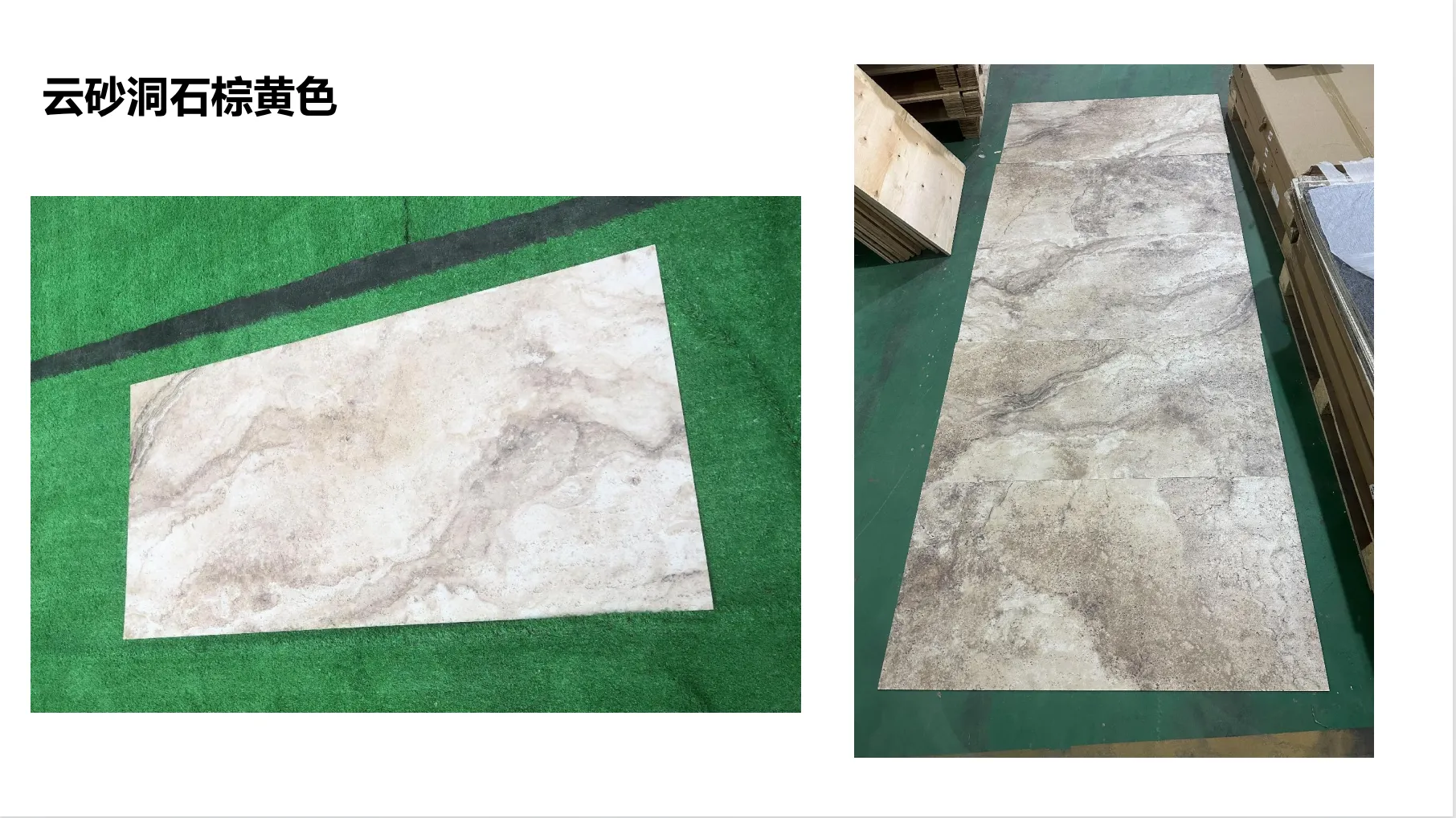
There's something almost poetic about natural stone. It carries the weight of time—layers of sediment pressed by the earth, veins of color forged by minerals, textures that tell stories of rivers, volcanoes, and ancient seas. For anyone embarking on a renovation or new build, choosing the right stone isn't just a design decision; it's about finding a material that feels like it belongs, that elevates a space from "nice" to "unforgettable." Dolomitic travertine, with its warm, earthy tones and unique veining, has become a favorite for those seeking that perfect blend of durability and character. But before you fall too hard for its charm, let's talk numbers. What does dolomitic travertine really cost? Let's break it down—from the quarry to your floor—in a way that feels less like a spreadsheet and more like a conversation.
Let's start with the basics: where does dolomitic travertine even come from? Unlike synthetic options like cement board , which is mass-produced in factories, dolomitic travertine is a natural stone formed by mineral-rich hot springs. It's quarried in select regions—Italy, Turkey, Iran, and parts of the U.S. are known for producing high-quality deposits. And where it's quarried plays a huge role in its price tag.
Take Italian dolomitic travertine, for example. Quarries in Tuscany or Lazio have been extracting stone for centuries, and their reputation for quality (think uniform color, minimal cracks, and striking veining) makes their slabs some of the most sought-after. But that prestige comes with a cost: shipping heavy slabs across the Atlantic adds $3–$8 per square foot to the base price. Compare that to stone quarried domestically, say in Arizona, where transportation costs might drop to $1–$3 per square foot. Suddenly, "local" becomes a budget-friendly buzzword.
Quality grading also impacts sourcing costs. Quarries categorize stone into tiers: "Premium" (few flaws, consistent color), "Standard" (minor imperfections, slight color variations), and "Commercial" (more visible veins, pits, or cracks). A premium grade dolomitic travertine might start at $15 per square foot at the quarry, while commercial grade could be as low as $5–$8. But here's the catch: lower grades often require more fabrication work (like filling pits or hiding cracks), which can eat into those initial savings later.
Then there's the rise of modern alternatives, like mcm flexible stone . These engineered composites mimic the look of natural stone but are lighter, more durable, and often cheaper to source. A 4x8 sheet of mcm flexible stone might cost $30–$50, compared to $60–$100 for a similar-sized dolomitic travertine slab. But for many, nothing replaces the authenticity of natural stone—the way light catches its unique veining, the subtle texture that feels "lived-in" from day one. It's a trade-off only you can make: budget vs. that irreplaceable "wow" factor.
Once your dolomitic travertine slabs arrive from the quarry, they're still rough blocks—far from ready for your kitchen backsplash or bathroom floor. Fabrication is where raw stone becomes a finished product, and it's where customization meets cost. Let's break down the key factors here.
Cutting and Sizing : Most projects don't use slabs straight from the quarry. They need to be cut to fit specific dimensions—say, 12x24-inch tiles for a shower or a 10-foot slab for a kitchen island. The complexity of the cut matters. Straight cuts are quick and cheap ($2–$4 per linear foot), but curves, angles, or intricate shapes (like a custom mosaic pattern) require water-jet cutting, which can jump to $10–$20 per linear foot. Thickness plays a role too: a 3cm slab (common for countertops) is harder to cut than a 1cm slab (used for walls), adding $1–$3 per square foot to fabrication costs.
Surface Finishes : The way your dolomitic travertine feels and looks depends largely on its finish. Each option requires different tools, labor, and time—all of which add to the price tag. Here's a closer look at popular finishes and their average costs:
| Finish Type | Description | Average Cost (per sq ft) |
|---|---|---|
| Polished | High-shine surface that enhances veining; reflective and smooth. | $12–$18 |
| Honed | Matte finish with a soft sheen; hides fingerprints and scratches well. | $10–$15 |
| Tumbled | Rustic, weathered texture with rounded edges; ideal for outdoor or farmhouse-style spaces. | $14–$20 |
| Brushed | Soft, sandblasted texture with a slight grip; popular for bathrooms and pools. | $11–$16 |
Edge Treatments : If you're using dolomitic travertine for countertops or a fireplace surround, edge details matter. A simple "straight" edge is included in basic fabrication, but fancier options—like bullnose (rounded), beveled (angled), or ogee (curved with a lip)—add $50–$150 per linear foot. A kitchen island with a 20-foot perimeter and a bullnose edge? That's an extra $1,000–$3,000 right there.
Waste Factor : No fabrication process is perfect. Slabs crack, cuts go wrong, or a section might have an unsightly vein you didn't notice at the quarry. Fabricators typically recommend ordering 10–15% extra material to account for waste. For a 200 sq ft project, that's 20–30 extra square feet—adding $100–$450 to your bill, depending on the stone grade.
You've sourced the slabs, had them cut and finished—now it's time to install. This is where many homeowners get caught off guard: installation isn't just about gluing stone to a wall. It's about ensuring your investment lasts, and that requires careful prep, skilled labor, and attention to detail.
Subfloor/Substrate Prep : Dolomitic travertine is heavy—especially thick slabs from the mcm big slab board series , which can weigh 15–20 pounds per square foot. If your subfloor is weak, uneven, or damp, it won't support that weight. Repairs might include reinforcing floor joists ($2–$4 per sq ft), leveling with self-leveling compound ($1–$3 per sq ft), or installing a moisture barrier ($0.50–$1 per sq ft). For a 500 sq ft basement renovation, that's $1,500–$4,000 in prep work alone.
Labor Costs : Experienced installers charge by the square foot, and rates vary by region. In urban areas like New York or Los Angeles, expect $12–$18 per sq ft for basic tile installation; in smaller cities, it might be $8–$12. But for large slabs (think 3x5 feet or bigger), rates jump to $15–$25 per sq ft. Why? Maneuvering heavy slabs requires teamwork, specialized tools (like suction cup lifters), and precision to avoid cracking. A 10x10 kitchen with 24x24-inch dolomitic travertine tiles could cost $1,200–$2,500 in labor alone.
Adhesives and Grout : Not all adhesives are created equal. Standard thinset mortar works for dry, indoor areas, but for wet spaces (showers, pools) or large slabs, you'll need a high-performance adhesive with polymer additives ($30–$50 per bucket, vs. $15–$25 for basic thinset). Grout choice matters too: sanded grout (for wider joints) is $10–$15 per bag, while unsanded (for narrow joints) is $12–$20. Stain-resistant grout adds another $5–$10 per bag but saves you from scrubbing red wine stains later.
Sealing : Dolomitic travertine is porous—think of it like a sponge with tiny holes. Without sealing, spills (coffee, juice, even water) can seep in and leave permanent stains. A good quality sealer costs $0.50–$2 per sq ft, plus $1–$3 per sq ft for labor to apply it. Sealing needs to be redone every 1–3 years, but it's a small price to keep your stone looking new.
Let's add it all up. For a 300 sq ft kitchen backsplash using premium dolomitic travertine:
That's a significant investment—but compare it to other luxury materials: marble might cost $20–$30 per sq ft at the quarry, and granite $15–$25. Dolomitic travertine sits comfortably in the mid-to-high range, offering a balance of beauty and durability.
And remember: natural stone adds value. A home with a dolomitic travertine kitchen or bathroom often sells faster and for more money than one with ceramic tile or cement board . It's a luxury feature that appeals to buyers who appreciate craftsmanship and timeless design.
At the end of the day, dolomitic travertine isn't just a cost on a spreadsheet. It's the texture under your feet when you step out of the shower, the way sunlight plays on its veins during breakfast, the story you'll tell guests about "the stone that took forever to source but was worth every penny."
Yes, it's an investment. But for those who value authenticity, durability, and beauty that ages gracefully, dolomitic travertine is more than a material—it's a legacy. And isn't that what we want for our homes? Something that lasts, that matters, that feels like us ?
So as you crunch the numbers, remember: this stone isn't just for today. It's for all the tomorrows that will make your house a home.
Recommend Products












