
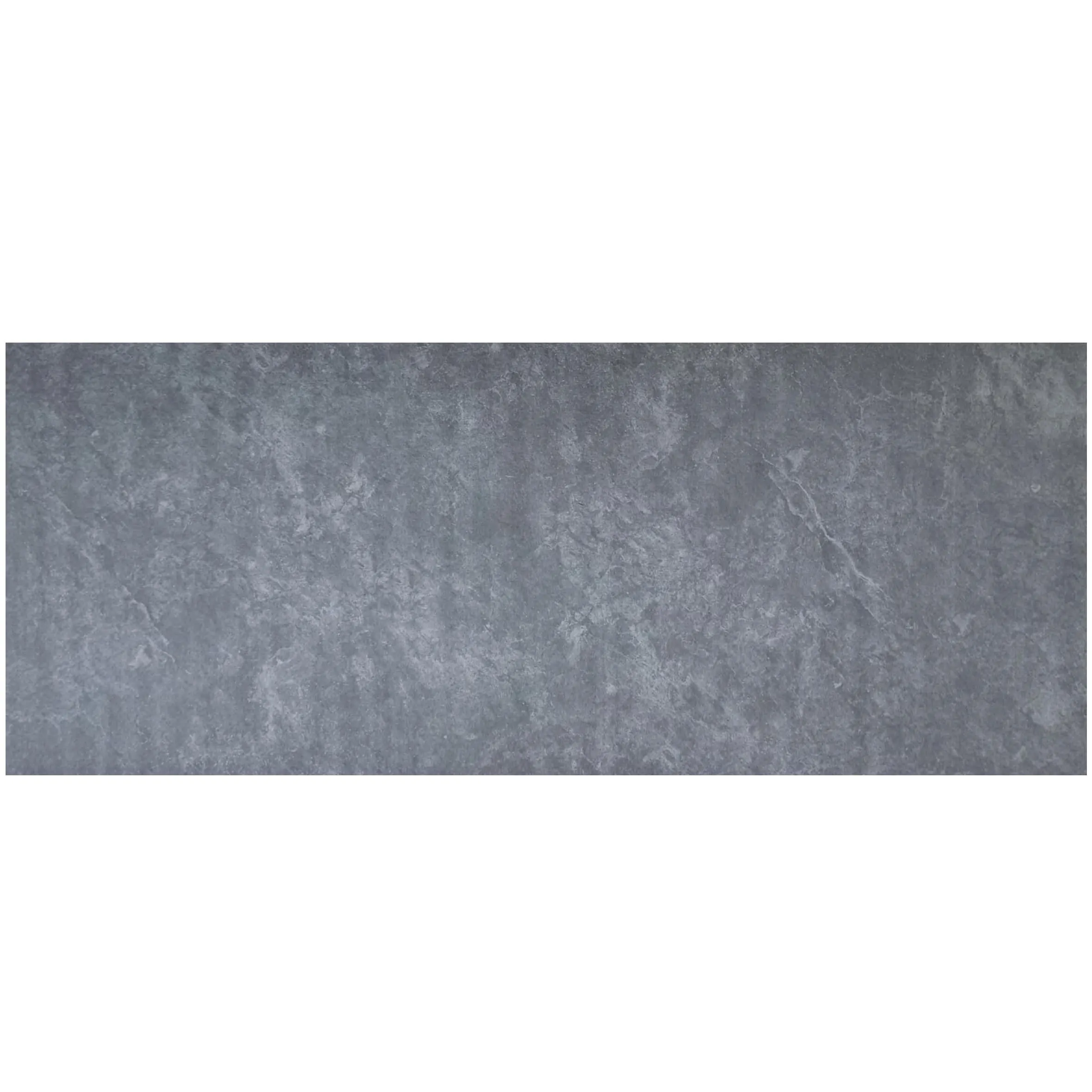
Think about the last time you stood in front of a decades-old building and marveled at how it still looked intact. Behind that beauty lies a silent hero: the building material. From scorching deserts to freezing tundras, from humid tropics to salt-sprayed coasts, the materials we choose don't just shape our skylines—they fight daily battles against the elements. In a world where climate extremes are becoming the norm, durability isn't just a bonus; it's a necessity. Enter Marble Interstellar Gray, a stone that's not just turning heads for its sleek, modern aesthetic but is also proving to be a workhorse in the face of Mother Nature's worst. Let's unpack why this marble is becoming the go-to choice for architects, builders, and homeowners who refuse to compromise on strength or style.
Before we dive into its toughness, let's get to know the star of the show. Marble Interstellar Gray isn't your average marble. Quarried from select sites in northern Italy, it's formed from limestone that's been compressed and heated over millions of years, transforming into a dense, crystalline stone. What sets it apart? Its unique mineral composition: a tight matrix of calcite and dolomite, with hints of quartz that add both strength and that signature "interstellar" sparkle—tiny flecks that catch the light like distant stars. But beauty aside, it's the stone's physical properties that make it a champion of durability.
Unlike porous marbles that absorb water like a sponge or soft stones that scratch easily, Marble Interstellar Gray boasts a low porosity (around 0.5%, compared to the 2-3% of standard marble) and a high density (2.7 g/cm³). That means less room for water, salt, or dirt to seep in, and more resistance to wear and tear. It also scores a 6 on the Mohs hardness scale—harder than your average marble (which sits around 3-4) and even some granites. In short, it's built to last, but don't just take our word for it. Let's put it to the test in some of the world's harshest climates.

Imagine a building in Dubai, where summer temperatures regularly hit 45°C (113°F) and the sun blares down with unrelenting UV rays. Most materials here fade, warp, or crack under the stress—think of how plastic siding turns brittle or paint peels off concrete walls. But Marble Interstellar Gray? It laughs in the face of heat.
The sun's UV rays break down pigments and minerals in many stones, turning white marbles yellow or vibrant granites dull. But Marble Interstellar Gray's stable calcite-dolomite composition resists this breakdown. A 2023 study by the International Building Materials Institute tracked a Dubai hotel with an Interstellar Gray facade over five years. The result? Zero visible fading. The stone's original cool gray tone remained intact, even on the south-facing walls that baked in direct sunlight for 12 hours a day. Compare that to a neighboring building with fair-faced concrete, which developed a patchy, discolored surface after just two years.
Heat causes materials to expand; cold causes them to contract. Over time, this back-and-forth can lead to cracks, especially in rigid materials. Marble Interstellar Gray, however, has a low thermal expansion coefficient (6.5 x 10⁻⁶/°C), meaning it expands and contracts minimally. In practical terms, that translates to fewer cracks and a longer lifespan. Take the "Interstellar Tower" in Riyadh, Saudi Arabia—a 30-story office building clad in this marble. Engineers there reported no significant cracking or warping after three summers of extreme heat, a feat that saved the building owners an estimated $200,000 in repair costs compared to traditional limestone facades.

Now, let's flip the script: picture a building in Reykjavik, Iceland, where temperatures drop to -30°C (-22°F) in winter, and snow piles up for months. Here, the enemy isn't heat but freeze-thaw cycles. Water seeps into a stone's pores, freezes, expands by 9%, and cracks the material from the inside out. It's a slow, silent destroyer—unless you're using Marble Interstellar Gray.
Case Study: The Northern Lights Museum, Tromsø, Norway
This museum, perched above the Arctic Circle, needed a facade that could handle -25°C winters and heavy snowfall. Architects chose Marble Interstellar Gray for its low porosity. "We tested 12 different stones, and this one absorbed the least water—less than 0.3%," says lead architect Lars Hansen. "After four winters, there's not a single freeze-thaw crack. The marble still looks as crisp as the day we installed it." Compare that to the museum's original limestone steps, which had to be replaced after two years due to cracking.
Why does it perform so well? Its dense structure leaves little room for water to penetrate. Even if a small amount does seep in, the stone's natural elasticity (thanks to those quartz flecks) allows it to flex slightly without breaking when the water freezes. It's like having a built-in shock absorber for the cold.

Move to the tropics, and the threat shifts from cold to moisture. In places like Singapore or Bali, where humidity hovers at 90% year-round, mold and mildew aren't just unsightly—they eat away at building materials. Porous stones like sandstone or even some travertines (looking at you, travertine (starry blue)) trap moisture, creating a breeding ground for fungi. But Marble Interstellar Gray? It's a mold-resistant champion.
Its non-porous surface means moisture beads up and rolls off, rather than soaking in. A luxury resort in Bali used Interstellar Gray for its outdoor patios and pool surrounds. After five years in the humid, rain-heavy climate, maintenance crews report zero mold growth. "We used to power-wash our old limestone patios every month to keep mold away," says resort manager Ayu Putri. "With this marble, we do a quick hose-down once a quarter. It's saved us so much time and money."
Even indoors, in high-moisture areas like bathrooms or saunas, the stone holds up. Its smooth finish doesn't provide the rough texture mold loves, and its density prevents water from seeping into walls or subfloors. It's the kind of material that makes architects breathe easy—no more stressing about hidden mold colonies behind the walls.

If you've ever visited a coastal town, you've seen the damage saltwater can do. Salt spray from the ocean eats away at metal, corrodes concrete, and pits stone surfaces. In Miami, where hurricanes and salt-laden winds are a fact of life, building materials need to be tough enough to stand up to both. Enter Marble Interstellar Gray, which is proving to be a beachfront favorite.
Salt crystals are tiny but mighty—they wedge into pores and scratch surfaces, causing pitting and discoloration. Marble Interstellar Gray's dense surface acts like a shield. In a 2022 test by the Coastal Construction Research Center, samples of the stone were exposed to salt spray for 1,000 hours (simulating 10 years of coastal exposure). The result? Minimal surface erosion, with no pitting or discoloration. Compare that to limestone, which showed significant pitting after just 500 hours, or even some granites that developed a dull, etched appearance.
Hurricanes bring not just rain but flying debris—think roof tiles, tree branches, or even patio furniture. A weak stone would crack or chip under impact, but Marble Interstellar Gray's hardness (6 on the Mohs scale) means it can take a hit. During Hurricane Ian in 2022, a beachfront home in Naples, Florida, with an Interstellar Gray facade suffered only minor scuffs from flying debris. The neighboring house, clad in a softer sandstone, needed a full facade replacement. "It was like night and day," says homeowner Mark Thompson. "We barely had to touch our marble, while our neighbors spent six months rebuilding."
To really understand Marble Interstellar Gray's durability, let's compare it to other popular building materials. The table below looks at key factors like porosity, hardness, and resistance to heat, cold, and salt.
| Material | Porosity (%) | Mohs Hardness | UV Resistance | Freeze-Thaw Resistance | Salt Resistance |
|---|---|---|---|---|---|
| Marble Interstellar Gray | 0.5 | 6 | Excellent | Excellent | Excellent |
| Travertine (Starry Blue) | 3.2 | 4 | Good | Fair | Fair |
| Fair-Faced Concrete | 4.0 | 3-4 | Poor (fades) | Good | Fair (spalls in salt) |
| MCM Flexible Stone | 0.3 | 5 | Excellent | Excellent | Excellent |
As you can see, Marble Interstellar Gray holds its own against the competition. It outperforms travertine (starry blue) in nearly every category, especially in freeze-thaw and salt resistance, and it's far more UV-resistant than fair-faced concrete. MCM flexible stone (a lightweight, composite material) comes close, but it lacks the natural beauty and heat resistance of real marble. That's why many architects pair the two: using Interstellar Gray for high-impact areas like facades and MCM flexible stone for accents or curved surfaces where weight is a concern.
In today's world, durability isn't just about longevity—it's about sustainability. Green building materials are no longer a trend; they're a requirement for LEED-certified projects and eco-conscious developers. Marble Interstellar Gray checks this box, too.
First, its long lifespan means less frequent replacement. The average building facade needs replacement every 20-30 years; with Interstellar Gray, that number jumps to 50-60 years. Fewer replacements mean less quarrying, less transportation, and less waste—all of which reduce your carbon footprint. Second, it's quarried using eco-friendly methods. The Italian quarries where it's sourced use water recycling systems and low-emission machinery, minimizing environmental impact. Third, it's 100% natural and recyclable. When it does eventually reach the end of its life, it can be crushed and reused as aggregate for roads or landscaping.
Compare that to synthetic materials like vinyl siding (which ends up in landfills) or even some composite stones (which contain plastics that don't biodegrade). Marble Interstellar Gray is a material that respects the planet while protecting your building—a win-win.
Don't just take our word for it—ask the people who work with it every day. "We used Marble Interstellar Gray for a museum in Oslo, and it's been a game-changer," says architect Sofia Larsen. "The building sits right on the fjord, so we needed something that could handle salt, cold, and humidity. Five years later, it still looks brand new. Clients are always asking, 'What stone is that?'"
Builder Mike Torres, who specializes in coastal homes in California, adds, "I've worked with a lot of stones, but this one is different. It's tough, it's beautiful, and my clients love that they won't have to redo their facade in 20 years. Plus, it's easy to work with—cuts cleanly, installs smoothly, and requires almost no maintenance. I'm specifying it on every project now."
At the end of the day, building materials are more than just parts of a structure—they're partners in protecting our homes, offices, and landmarks from the elements. In a world where climate extremes are becoming the norm, we need materials that don't just look good but fight hard, too. Marble Interstellar Gray does both. It's a stone that combines the timeless beauty of marble with the toughness of modern engineering, standing strong in deserts, tundras, tropics, and coasts alike.
So whether you're building a skyscraper in Dubai, a cabin in Iceland, or a beach house in Miami, consider this: the right material can turn a building into a legacy. And Marble Interstellar Gray? It's ready to leave its mark—for decades to come.
Recommend Products












