
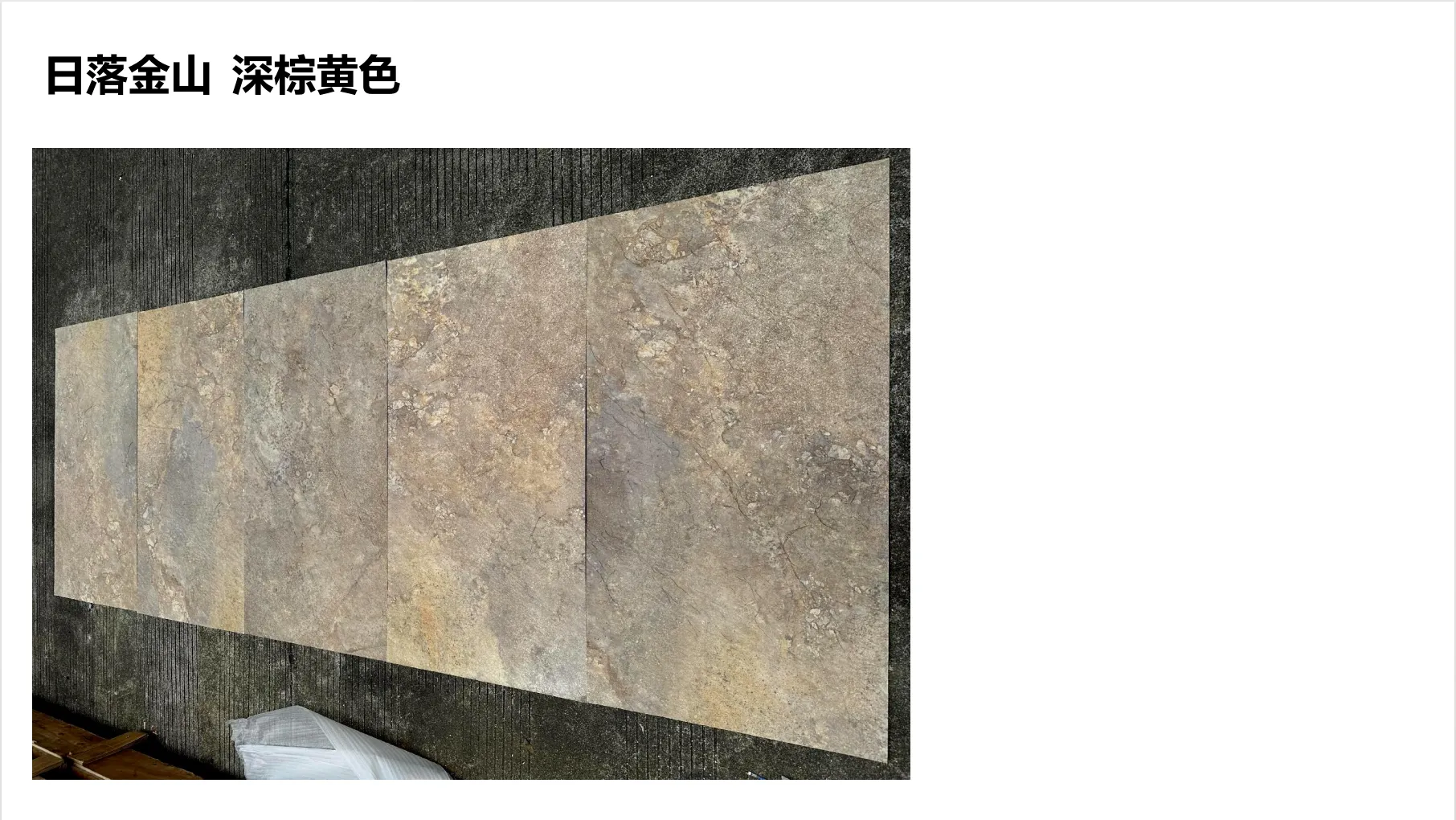
When we walk through a city, the buildings around us tell stories—not just of design, but of time. A facade that fades after a few years, or crumbles under rain and sun, doesn't just lose its beauty; it loses the ability to be part of that story. That's where MCM (Modified Composite Material) products come in. More than just materials, they're partners in creating spaces that grow more characterful with age. Today, we're diving into what makes MCM products so durable, with a special focus on how their resilience shines through in real-world settings—like the warm, enduring glow captured in Golden Sunset Real Photos .
Durability isn't just about "lasting long." It's about consistency. It's about a wall that still looks intentional after a decade of storms, a lobby that feels just as welcoming on a rainy day as it did on the day it opened, and surfaces that don't just survive, but evolve—gaining a subtle patina that adds depth, not damage. For architects, designers, and even homeowners, this means peace of mind: choosing materials that won't require constant replacement, that won't let a project's vision fade.
MCM products are engineered with this philosophy at their core. Let's start by understanding what sets them apart. Unlike traditional stone or metal, MCM combines natural minerals with advanced polymers, creating a material that's lightweight (so it puts less stress on structures) but incredibly tough. Think of it as the best of both worlds: the organic look of natural materials, with the resilience of modern engineering.
To truly trust a material, you need to see it pushed to its limits. MCM products undergo rigorous testing—from extreme temperature swings (think -40°C to 70°C) to UV radiation tests that simulate decades of sunlight, to freeze-thaw cycles that mimic harsh winters. What's impressive? Even after these trials, the materials retain their color, texture, and structural integrity. No cracking, no peeling, no fading to a shadow of their former selves.
Take MCM flexible stone , for example. Its flexibility means it can expand and contract with temperature changes without breaking—a common issue with rigid natural stone. Then there's foamed aluminium alloy board (vintage gold) , which resists corrosion even in coastal areas where saltwater air eats away at lesser metals. These aren't just lab results; they're promises backed by years of real-world performance.
Let's zoom in on a few standout MCM products, and how their durability features make them stars in both commercial and residential projects. The table below breaks down key details, but we'll dig deeper into what makes each one special.
| Product Name | Core Material | Expected Lifespan | Weather Resistance | Key Durability Feature |
|---|---|---|---|---|
| MCM Flexible Stone | Natural stone particles + polymer matrix | 20+ years | Resists UV, moisture, and temperature fluctuations | Flexibility prevents cracking under stress |
| Travertine (Starry Orange) | Travertine mineral composite | 15+ years | Highly resistant to staining and fading | Non-porous surface (unlike natural travertine) repels water |
| Foamed Aluminium Alloy Board (Vintage Gold) | Aluminium alloy with foam core | 25+ years | Corrosion-resistant, fire-retardant | Lightweight yet impact-resistant; won't dent easily |
| Rammed Earth Board (Gradient) | Natural earth particles + binding agents | 20+ years | Resists mold, mildew, and erosion | Stabilized composition prevents crumbling (unlike traditional rammed earth) |
Natural travertine is beloved for its unique pores and warm tones, but those pores can be a problem—absorbing water, dirt, and stains over time. MCM's version? It replicates that same organic, starry texture but with a sealed surface that repels liquids. Imagine a café wall clad in travertine (starry orange) ; even after years of rain, coffee spills, and foot traffic, it still glows like a sunset, no unsightly stains to distract from its charm.
Traditional rammed earth is stunning, but it's prone to erosion in wet climates. MCM's take? A gradient-hued board that captures the earthy beauty of rammed earth, but with a stabilized core that stands up to heavy rain and humidity. In a residential project in the Pacific Northwest, a home used rammed earth board (gradient) for its exterior. After five years of rain and snow, the gradient—swirling from soft terracotta to warm beige—still looks as vivid as the day it was installed. No cracks, no fading, just a wall that feels like it's been part of the landscape for centuries.
There's no better proof of durability than real photos—especially those taken at golden hour, when the sun dips low and bathes surfaces in a soft, revealing light. Golden Sunset Real Photos of MCM-clad buildings tell a clear story: these materials don't just last; they age gracefully .
Consider a hotel in Arizona, where the exterior is clad in foamed aluminium alloy board (vintage gold) . The desert sun is brutal—scorching hot by day, freezing cold by night, with intense UV rays year-round. Yet, in photos taken seven years apart, the difference is barely noticeable. The vintage gold hue has mellowed slightly, taking on a richer, more inviting tone, like a well-loved piece of jewelry. There are no patches of faded metal, no peeling layers—just a facade that looks like it was designed to thrive in that harsh, beautiful environment.
Another example: a community center in Florida, where the interior features MCM flexible stone in a warm beige. Florida's humidity and frequent rain could easily warp or discolor lesser materials, but in Golden Sunset Real Photos taken three years apart, the stone still has that same smooth, consistent texture. The way the sunset light plays off its surface—highlighting its subtle veining—feels just as fresh as the day the center opened. It's a space that feels "lived-in" in the best way, not worn out.
Durable materials don't just save money on maintenance; they give designers freedom. When you know a material will last, you can take bolder risks with color, texture, and application. Want to use a vibrant travertine (starry orange) on an outdoor patio? Go for it—you won't have to worry about it fading to a dull peach in a few years. Dream of a building wrapped in foamed aluminium alloy board (vintage gold) in a coastal city? The corrosion resistance means it will stand up to salt air, letting that golden glow stay bright for decades.
This freedom leads to more memorable spaces—spaces that become landmarks, that people point to and say, "Look how well that's held up." They become part of a community's identity, not just a passing trend.
At the end of the day, durability is about legacy. It's about choosing materials that will still be telling your project's story 20 years from now, that will be in the background of family photos, community gatherings, and everyday moments. MCM products—from MCM flexible stone to travertine (starry orange) to foamed aluminium alloy board (vintage gold) —are built for that legacy.
And when you see them in Golden Sunset Real Photos , that legacy becomes visible. It's in the way the light catches a wall that's seen a thousand sunsets and still shines, in the texture that feels intentional, not worn. MCM doesn't just build surfaces; it builds spaces that grow more meaningful with time. And in a world that's always rushing to replace, that's a kind of durability that truly matters.
Recommend Products












