


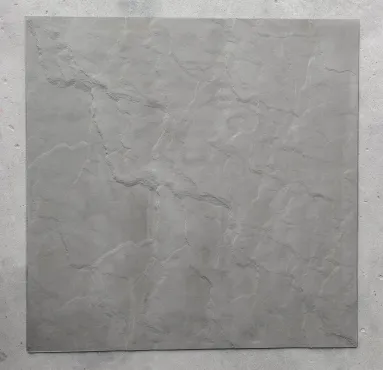
For centuries, the cornerstones of architecture have been materials pulled directly from the earth: magnificent marble, rugged granite, and timeless terracotta. While their beauty is undeniable, their environmental price tag is becoming increasingly difficult to ignore. The search for alternatives has led us to a new frontier of material science, one that prioritizes ecological harmony without compromising on design integrity.
Enter Epoch Stone, the flagship Modified Cementitious Material (MCM) from COLORIA GROUP. This isn't just another building product; it's a holistic response to the environmental challenges posed by traditional materials. It represents a leap forward, combining the elegance of nature with the intelligence of modern science. In this article, we'll take a deep dive into the multifaceted environmental advantages of choosing Epoch Stone, exploring how this remarkable material contributes to a greener, healthier planet from its creation to its application.
What Exactly is Epoch Stone? A Glimpse into the Future of Materials
Before we unpack its green credentials, let's clarify what we're talking about. The term "Modified Cementitious Material," or MCM, might sound technical, but the concept is beautifully simple. Think of it as taking the fundamental components of our natural world—like common soil, mineral powders, and sand—and using innovative, low-energy technology to re-form them into a new, high-performance material. COLORIA GROUP has perfected this process with its Epoch Stone line.
Unlike natural stone, which must be quarried, or ceramic tiles, which must be fired at scorching temperatures, Epoch Stone is created through a low-temperature curing process. This patented technology transforms a paste-like mixture of natural ingredients into durable, flexible, and lightweight sheets that can mimic virtually any natural texture, from stone and wood to leather and brick. It's this foundational difference in its creation that sets the stage for its incredible environmental benefits.
Pillar 1: The Earth-Friendly Sourcing of Raw Materials
The story of any material's environmental impact begins at its source. For traditional materials, this story is often a destructive one.
Natural stone quarries are, by their very nature, subtractive. They involve blasting mountainsides, carving massive pits into the landscape, and permanently altering ecosystems. This process not only creates visual scars but also generates enormous amounts of dust, pollutes nearby water sources with sediment runoff, and destroys habitats for local wildlife. Furthermore, for every usable slab of marble or granite, tons of "waste" rock are discarded, creating colossal piles of rubble that serve no purpose. It's an inefficient and invasive process.
Epoch Stone flips this script entirely. Its primary ingredients are modified mineral powder, cement, sand, and plant fibers —materials that are abundant and can be sourced responsibly without large-scale landscape destruction. There is no need for explosives, no blasting of pristine mountains. Instead of taking away, it intelligently combines.
This approach dramatically reduces the pressure on finite resources. We are no longer limited to the specific locations where a certain type of marble or slate can be found. The base materials for Epoch Stone are widely available, reducing the logistical and environmental costs associated with transporting raw materials from remote, exotic quarries across the globe. By utilizing common earth elements, Epoch Stone champions a more democratic and less destructive approach to creating beautiful building facades and interiors.
Pillar 2: A Revolution in Low-Energy Production
If sourcing is the first chapter, manufacturing is the second. This is where Epoch Stone's environmental advantages become even more pronounced, especially when compared to energy-intensive products like ceramic and porcelain tiles.
To create a ceramic or porcelain tile, raw clay and other materials are fired in massive industrial kilns at temperatures exceeding 1,200 degrees Celsius (2,200 degrees Fahrenheit) . Maintaining these extreme temperatures for extended periods consumes a colossal amount of energy, typically from burning natural gas or other fossil fuels. This process is a major contributor to industrial carbon dioxide (CO2) emissions, the primary greenhouse gas driving climate change. The carbon footprint of a single square meter of ceramic tile is substantial, built on a foundation of intense heat and fuel consumption.
Epoch Stone is born not of fire, but of gentle warmth. Its unique manufacturing process involves a photocatalytic reaction and curing at temperatures of only around 100 to 150 degrees Celsius . This is a staggering difference. Think of it this way: the energy required is more comparable to baking bread than to forging steel.
The implications of this low-temperature process are profound:
- Drastically Reduced Energy Consumption: The energy needed to produce Epoch Stone is a fraction of that required for ceramics. COLORIA GROUP's production lines are estimated to consume up to 80% less energy compared to a traditional tile factory.
- Minimal Carbon Emissions: Less energy consumed means dramatically lower CO2 emissions per square meter of product. Choosing Epoch Stone is a direct action to lower the embodied carbon of a building project.
- Zero Harmful Byproducts: The high-temperature firing of ceramics can release harmful pollutants like nitrogen oxides (NOx) and sulfur oxides (SOx). The low-temperature curing of Epoch Stone is a clean process, emitting mainly water vapor. It produces no wastewater and allows for the recycling of any production off-cuts back into the manufacturing stream, creating a near-zero-waste cycle.
This clean, low-energy production is not just a feature; it is the very heart of Epoch Stone's environmental promise.
Pillar 3: The Ripple Effect of a Lightweight Design
One of the most overlooked, yet most significant, environmental benefits of a building material is its weight. Here, Epoch Stone offers a cascade of advantages that ripple through the entire construction lifecycle. On average, Epoch Stone is 3 to 5 times lighter than traditional stone or ceramic tiles of the same size. This seemingly simple fact has massive implications.
Let's start with transportation. Moving heavy materials like natural stone or concrete panels from the factory to the construction site requires a lot of fuel. Heavier loads mean more trucks, or fewer square meters per truck, resulting in more trips, higher fuel consumption, and greater CO2 emissions. Because Epoch Stone is so much lighter, a single truck can carry a significantly larger surface area of material. This translates directly into fewer truck journeys, less fuel burned, reduced road congestion, and a smaller transportation carbon footprint for the project.
This is where the benefits get really exciting. The exterior and interior cladding of a building adds a significant amount of "dead load" to the building's structural frame. To support heavy materials like thick stone panels, engineers must design stronger, bulkier structures, which means using more concrete and more steel.
The production of cement (the key ingredient in concrete) and steel are two of the most carbon-intensive industrial processes on the planet. By choosing a lightweight cladding like Epoch Stone, architects and engineers can reduce the dead load on the building. This allows for a more optimized, lighter structural frame. Less concrete and less steel are required to achieve the same structural integrity. Therefore, the choice of a lightweight facade material directly helps to reduce the building's overall embodied carbon —the total greenhouse gas emissions associated with manufacturing the materials for its construction. This is a massive, often hidden, environmental win.
Finally, the lightweight nature of Epoch Stone simplifies the installation process. Heavy stone slabs require cranes, heavy lifting equipment, and more labor-intensive mounting systems. All of this consumes energy and increases on-site disruption. Epoch Stone panels, by contrast, can often be carried and installed by just one or two workers with simple adhesives. This makes installation faster, safer, and less energy-intensive. This is particularly true for products like MCM flexible stone , which can be easily bent around corners and curves, further simplifying the process and reducing the need for complex cutting and fitting on-site.
| Feature | Epoch Stone (MCM) | Natural Stone (e.g., Marble) | Ceramic / Porcelain Tile |
|---|---|---|---|
| Raw Materials | Abundant mineral powders, sand, etc. Low-impact sourcing. | Finite resource. Destructive quarrying, habitat loss. | Clay quarrying, though less invasive than stone, still impacts land. |
| Production Energy | Very Low. Curing at ~100°C. Up to 80% less energy. | High. Energy for blasting, cutting, polishing massive blocks. | Extremely High. Firing in kilns at 1200°C+. |
| Carbon Footprint | Very Low, due to low energy use and lightweight nature. | High, from quarrying, processing, and long-distance transport. | Very High, dominated by fossil fuel combustion for kilns. |
| Average Weight | Very Light (e.g., 4-8 kg/m²). | Very Heavy (e.g., 50-80 kg/m² for a 2cm slab). | Moderate to Heavy (e.g., 15-25 kg/m²). |
| Transportation & Logistics | Highly efficient. More m² per truck, lower fuel consumption. | Very inefficient. High fuel use due to extreme weight. | Moderately efficient. Heavier than MCM. |
| On-site Waste | Minimal. Flexible and customizable, reducing off-cuts. | High. Breakage and cutting of rigid slabs creates significant waste. | Moderate. Cutting rigid tiles always generates off-cut waste. |
Pillar 4: Durability and Longevity for a Waste-Free Future
True sustainability isn't just about how a product is made; it's about how long it lasts. A product that needs frequent replacement, no matter how "green" its manufacturing process, ultimately contributes to a cycle of consumption and waste. Epoch Stone is engineered for longevity.
Its unique composition gives it remarkable properties. It is resistant to freezing and thawing cycles, which can cause other materials to crack and spall. Its colors, which are derived from the natural tones of the mineral powders themselves, are integral to the material and highly resistant to fading from UV exposure. Furthermore, its inherent flexibility, especially in the MCM flexible stone series, allows it to absorb minor building movements and impacts without cracking—a common failure point for rigid materials like tile and stucco.
This durability means a building clad in Epoch Stone will maintain its beauty and integrity for decades, drastically reducing the need for costly and wasteful repairs, renovations, and replacements. By extending the lifespan of the building's facade, we are directly reducing future consumption of materials, energy, and labor, and preventing tons of old material from ending up in landfills. It embodies the most effective environmental principle: "reduce" by making things that last .
Pillar 5: Design Freedom that Eliminates Waste
Finally, we arrive at an innovative form of sustainability: waste reduction through design freedom. Traditional manufacturing models are often based on producing standardized sizes and shapes. This inevitably leads to significant waste on the construction site, where workers must cut and trim materials to fit, discarding the off-cuts. Epoch Stone, powered by COLORIA GROUP's one-stop solution approach, shatters this wasteful paradigm.
The versatility of the MCM technology allows for an unprecedented level of customization. This is most powerfully expressed in two of COLORIA GROUP's product lines:
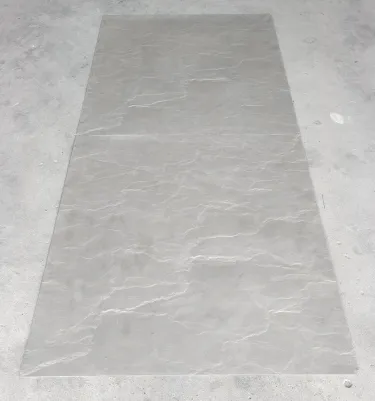
- MCM Big Slab Board Series: These large-format panels can be produced in custom sizes tailored to a project's specific dimensions. By providing panels that precisely fit a wall section, the MCM big slab board series minimizes the need for on-site cutting and virtually eliminates off-cut waste. It allows architects to achieve grand, seamless aesthetics without the logistical nightmare and waste associated with enormous, heavy slabs of natural stone.
- MCM 3D Printing Series: This is where sustainability meets the cutting edge of design. The MCM 3D printing technology allows for the creation of intricate, bespoke textures and patterns on the surface of the material. Instead of being limited to what nature provides or what a standard mold can produce, architects can design their own unique surfaces. This additive manufacturing process is inherently waste-free, as material is only placed exactly where it's needed to create the design. It opens up a world of creative possibilities while being one of the most resource-efficient manufacturing methods available.
This ability to "make to order" rather than "cut to fit" represents a fundamental shift in thinking. It's a smart sustainability that respects both creative vision and precious resources, ensuring that materials are used with maximum efficiency and minimal waste.
Conclusion: A Conscious Choice for a Better Built Environment
The choice of building materials is no longer a simple matter of aesthetics or budget. It is a statement of our values and a commitment to the future of our planet. As we've explored, Epoch Stone by COLORIA GROUP offers a compelling case as a truly sustainable alternative to conventional materials.
From its responsible sourcing of abundant raw materials to its revolutionary low-energy production process, its impact is minimal from the very beginning. Its lightweight nature creates a positive chain reaction, reducing transportation emissions and decreasing the embodied carbon of the entire building structure. Its superior durability ensures a long service life, combating the wasteful culture of replacement. And its incredible design flexibility, through innovations like the MCM 3D printing and MCM big slab board series , champions a future where waste is designed out of the system from the start.
Choosing Epoch Stone is more than just selecting a wall covering. It is an investment in a healthier building, a cleaner industry, and a more sustainable world. It proves that we do not have to choose between beautiful design and environmental responsibility. With materials like this, we can, and must, have both.










