
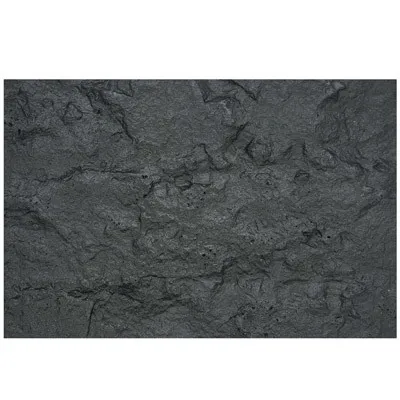
In the world of architecture and design, few materials command the same level of reverence as natural stone. For centuries, it has been the go-to choice for creating statements of permanence, luxury, and connection to the earth. Names like Carrara marble, Brazilian slate, and the deep, enigmatic "Lunar Peak Black" evoke images of opulent lobbies, sophisticated kitchens, and majestic building facades. Lunar Peak Black, a hypothetical but representative example of a premium dark granite or basalt, is particularly prized for its uniform, profound darkness, punctuated by subtle crystalline flecks that mimic a clear night sky. It's a material that speaks of timeless elegance and unyielding strength.
But behind this facade of natural beauty lies a complex and often-overlooked story—a story of immense environmental consequence. As our global consciousness shifts towards sustainability, it's no longer enough to judge a material solely on its aesthetic appeal or physical durability. We are compelled to ask tougher questions: What is the true cost of extracting this stone from the earth? What is its lifecycle impact, from the quarry to the construction site and beyond? This article embarks on an environmental impact assessment of producing a material like Lunar Peak Black, peeling back the layers of its production process to reveal the hidden ecological and energy expenditures. More importantly, it explores the rise of revolutionary alternatives that promise to deliver the same aesthetic grandeur without imposing such a heavy burden on our planet.
The journey of a slab of Lunar Peak Black from a mountain deep within the earth to a polished countertop in a high-end apartment is a long, arduous, and resource-intensive one. A comprehensive environmental impact assessment (EIA) requires us to analyze each stage of its lifecycle: extraction, processing, transportation, and waste disposal.
It all begins at the quarry. To get to the pristine, unweathered stone, massive amounts of "overburden"—the soil, vegetation, and rock layers sitting on top—must be removed. This process often involves deforestation, leading to habitat destruction, loss of biodiversity, and increased soil erosion. The local landscape is irrevocably altered, leaving behind a vast, sterile pit that can take centuries, if ever, to recover.
The extraction itself is an act of brute force. It involves drilling and blasting with explosives or using high-powered diamond wire saws to carve colossal blocks, often weighing tens of tons, from the rock face. This is an incredibly energy-intensive process, relying heavily on diesel-powered machinery that generates significant greenhouse gas emissions and air pollutants (particulate matter, NOx, SOx). Furthermore, the noise and vibrations from blasting can disrupt local wildlife and communities, while the dust generated poses a serious health risk (silicosis) to workers and can blanket the surrounding vegetation.
Once a raw block is hewn from the mountain, its transformation into a finished product begins. It is transported to a processing plant, where it is sliced into slabs of varying thicknesses by gang saws. This step alone consumes enormous amounts of electricity and water. Water is used constantly as a coolant for the cutting blades and to suppress dust. A single plant can consume millions of gallons of water per year.
After cutting, the slabs undergo a series of grinding, honing, and polishing stages to achieve the desired finish, from a matte texture to the mirror-like sheen that makes Lunar Peak Black so desirable. Each stage uses progressively finer abrasive heads, again, all lubricated and cooled with water. The resulting wastewater is a thick, chemical-laden slurry containing rock dust and polishing compounds, which, if not managed properly in closed-loop systems, can contaminate local water sources. The energy required to power these massive cutting and polishing machines is immense, contributing significantly to the material's overall carbon footprint.
One of the most staggering aspects of natural stone production is the sheer amount of waste. It is estimated that for every ton of finished stone slab, another one to two tons of waste are generated. This includes the overburden from the quarry, imperfect blocks that are discarded, and the significant material lost during the cutting and shaping process (the kerf loss). This mountain of mineral waste is often just piled up near quarries, creating unstable and unsightly slag heaps that can leach minerals into the soil and groundwater.
Finally, there's the issue of weight. Natural stone is incredibly dense and heavy. A single square meter of 3cm thick granite can weigh over 80 kilograms. Transporting these heavy slabs from quarries—which are often in remote locations in countries like Brazil, India, or China—to processing plants, and then shipping them across oceans to distributors and project sites worldwide, requires a colossal amount of fuel. The carbon emissions associated with this global logistics chain are a major, and often underestimated, component of the material's total environmental impact.
In essence, the production of a premium natural stone like Lunar Peak Black is a subtractive process—taking a massive piece of the planet and whittling it down, with huge losses in energy, water, and raw material at every step. This reality has catalyzed a profound shift in the architectural materials industry, prompting a search for a better way.
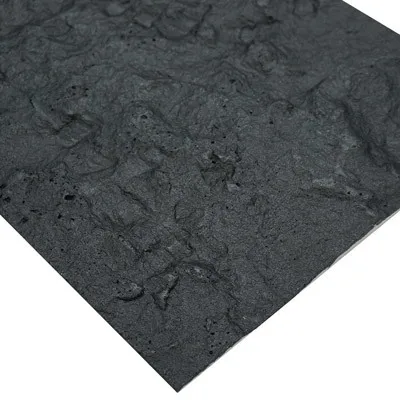
The challenges posed by natural stone production have not gone unnoticed. For years, visionary engineers and material scientists have been working to answer a critical question: Can we replicate the beauty and performance of natural materials without the destructive environmental footprint? The answer, it turns out, is a resounding yes. This has given rise to a new generation of engineered materials that are not just imitations, but in many ways, improvements upon the original.
At the forefront of this movement is COLORIA GROUP, a one-stop solutions provider that has championed a groundbreaking technology known as MCM, or Modified Cementitious Material. This innovative material redefines what's possible in architectural finishes, offering a sustainable, versatile, and beautiful alternative to traditional quarried stone. Rather than being a subtractive process, MCM is an additive one—intelligently combining natural elements to create something extraordinary.
MCM is a composite material primarily made from natural mineral powders, clay, and sand—the very constituents of earth itself—bound together with a water-soluble polymer. Through a unique, low-temperature curing process (typically under 120°C), these raw ingredients are transformed into a material that is pliable, lightweight, and incredibly versatile. Unlike the energy-intensive firing of ceramics (over 1200°C) or the brute force of stone processing, the MCM production process is remarkably gentle on the environment.
This technology allows COLORIA GROUP to create materials that can perfectly mimic the appearance and texture of not just Lunar Peak Black, but countless other natural stones, woods, bricks, and even leather. The level of detail is astonishing, capturing the subtle veining, color variations, and tactile feel of the original. But the true beauty of MCM lies in its vastly superior environmental profile.
| Impact Factor | Natural Stone (e.g., Lunar Peak Black) | COLORIA GROUP's MCM Alternative |
|---|---|---|
| Raw Materials | Destructive quarrying, finite resource | Abundant natural minerals, recycled content |
| Manufacturing Energy | Very High (blasting, cutting, polishing) | Very Low (low-temperature curing) |
| Water Consumption | Extremely High (cooling, slurry control) | Minimal, often in closed-loop systems |
| Waste Generation | High (50-70% of quarried material) | Near-Zero (additive process, scraps are recyclable) |
| Weight (per m²) | Heavy (e.g., 60-90 kg for 3cm slab) | Lightweight (e.g., 4-8 kg) |
| Transportation Footprint | Massive carbon emissions due to weight | Dramatically reduced emissions |
| Design Flexibility | Limited to what can be cut; brittle | Highly flexible, can be bent, custom textures |
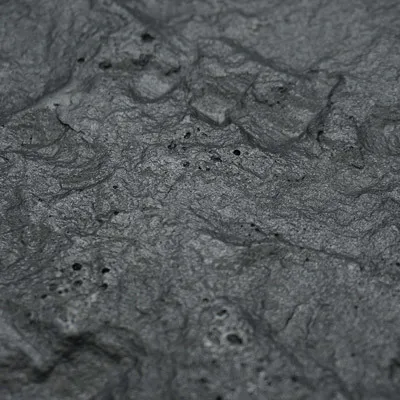
COLORIA GROUP has leveraged MCM technology to develop a diverse portfolio of products that directly address the shortcomings of conventional materials. Each series offers unique advantages for both designers and the planet.
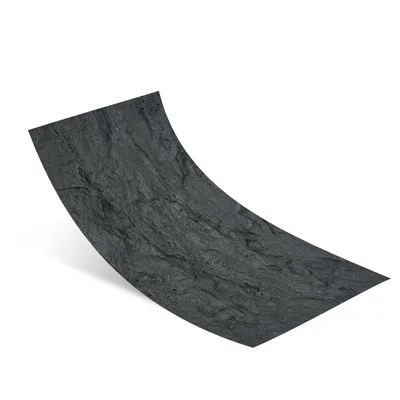
This is where the dream of a sustainable "Lunar Peak Black" becomes a reality. The MCM Flexible Stone series can replicate the deep, rich tones and subtle textures of the most sought-after natural stones with uncanny accuracy. However, unlike its quarried counterpart, it is incredibly thin (typically 2-4mm) and lightweight. Its most revolutionary characteristic is its flexibility. It can be easily wrapped around curved columns, undulating walls, and complex architectural features—applications that would be prohibitively expensive or physically impossible with rigid stone slabs. This flexibility not only unleashes creative freedom for architects but also dramatically simplifies installation, reducing labor time and on-site cutting waste. Imagine cladding a towering, curved atrium wall with a material that looks exactly like solid granite but weighs a fraction of the amount and was produced with minimal environmental impact. That is the power of this product line.
Modern architecture often calls for large, seamless surfaces to create a sense of scale and minimalist elegance. Achieving this with natural stone means sourcing, transporting, and installing colossal, incredibly heavy slabs, a process fraught with risk, cost, and a huge carbon footprint. The MCM Big Slab Board Series from COLORIA GROUP offers the perfect solution. These large-format boards provide the monolithic, high-impact look of a giant stone slab but in a form that is significantly lighter and easier to handle. This not only reduces the structural load on the building (potentially saving steel and concrete in the building's frame) but also drastically cuts down on transportation emissions and installation complexity. The consistency of the product from batch to batch also eliminates the problem of mismatched slabs, a common headache in natural stone projects, thereby reducing waste even further.
Perhaps the most forward-looking application of the technology is the MCM 3D Printing Series . This series moves beyond mere replication and into the realm of bespoke creation. By combining MCM's pliable nature with digital fabrication, architects and designers can create entirely unique, three-dimensional textures and patterns for wall claddings. Want a facade that mimics wind-swept sand dunes, intricate geometric patterns, or a custom corporate logo integrated directly into the material's texture? The 3D printing series makes it possible. This level of customization allows for truly one-of-a-kind designs while still retaining all the environmental benefits of the MCM process. It represents a shift from consuming what the earth offers to creating precisely what a project needs, which is the very essence of sustainable design.
The majestic allure of materials like Lunar Peak Black is undeniable, but a thorough environmental impact assessment reveals a story of significant ecological cost. The quarrying, processing, and transportation of natural stone represent an old-world model of resource consumption that is increasingly at odds with the needs of our planet.
The future of building materials does not require us to sacrifice beauty for the sake of responsibility. Instead, it calls for innovation and a conscious shift in perspective. Companies like COLORIA GROUP are leading this charge with technologies like MCM. By harnessing the power of material science, they have created a solution that delivers on all fronts: aesthetics, performance, and, most critically, sustainability.
From the versatile MCM Flexible Stone that wraps our spaces in beauty to the grand-scale impact of the MCM Big Slab Board Series , these materials are not just alternatives; they are advancements. They prove that we can build magnificent, durable, and inspiring environments without leaving an indelible scar on the earth. The choice to use a material is no longer just a design decision; it's an environmental statement. By embracing these innovative solutions, we choose a future where architectural brilliance and ecological stewardship go hand in hand.
Recommend Products












