

Walk through the lobby of a boutique hotel in Bali, or the facade of a modern home in Milan, and you might find yourself pausing to admire a wall cladding that feels both timeless and alive. Its warm, earthy tones—think soft beiges, weathered greys, and hints of golden patina—blend seamlessly with natural light, creating a space that feels rooted in nature yet polished for contemporary life. Chances are, that material is Bali Stone. Revered for its unique texture, durability, and organic beauty, Bali Stone has become a staple in global architecture, loved by designers and homeowners alike for its ability to turn ordinary spaces into something extraordinary.
But behind that beauty lies a complex story—one of resource extraction, energy use, and environmental trade-offs. As demand for Bali Stone has surged, so too have questions about its production: How do we balance our love for natural materials with the need to protect the planet? Can the stone industry evolve to meet the demands of sustainability without losing the qualities that make Bali Stone so special? Let's dive in.
To understand the environmental impact of Bali Stone, we first need to follow its journey from quarry to construction site. It starts with extraction: massive blocks of stone are mined from quarries, often in regions where the rock formations have taken millions of years to form. While this process has been around for centuries, modern demand has amplified its scale—and its consequences.
Quarrying Bali Stone isn't just about removing rock; it's about altering landscapes. Quarries can disrupt local ecosystems, clearing forests, displacing wildlife, and eroding soil. In some regions, unsustainable mining practices have led to deforestation, leaving behind barren land that struggles to regenerate. Even when quarries are "restored," the damage to biodiversity can be long-lasting. Water sources, too, are at risk: quarrying can contaminate nearby rivers and groundwater with sediment, chemicals from cutting fluids, or heavy metals leached from exposed rock.
Once extracted, raw Bali Stone blocks are transported to processing facilities, where they're cut, polished, and shaped into usable slabs. This step is energy-intensive. Cutting through hard stone requires powerful machinery—think diamond-tipped saws and grinders—that runs on fossil fuels, from diesel generators at remote quarries to electricity from coal-powered grids. Polishing, too, demands energy: rotating abrasive pads grind the stone's surface to a smooth finish, a process that can take hours per slab. By the time the stone reaches a construction site, its carbon footprint from energy use alone is significant.
Waste is another hidden cost. For every usable slab of Bali Stone, a surprising amount of material is left behind. Quarry waste—broken rock, dust, and off-cuts—can account for up to 30% of the extracted stone, according to industry estimates. Much of this waste ends up in landfills or is dumped in nearby areas, contributing to soil and water pollution. Even during processing, perfectly good stone is often discarded because it doesn't meet aesthetic standards (a crack here, an uneven color there), adding to the industry's waste problem.
Bali Stone's global popularity means it rarely stays close to home. A slab used in a New York apartment might have been quarried in Indonesia, processed in China, and shipped across oceans before reaching the job site. Each leg of that journey adds carbon emissions: cargo ships burning heavy fuel oil, trucks idling in traffic, and planes (for high-end, small-batch orders). For a material prized for its "natural" appeal, the global supply chain can leave a surprisingly large carbon footprint.
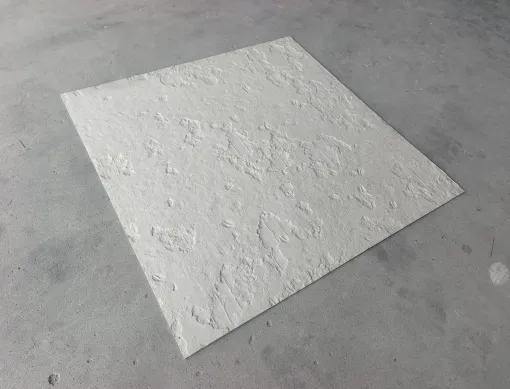
The good news? The stone industry isn't turning a blind eye to these challenges. In recent years, a wave of innovation has swept through the sector, driven by demand for green building materials and a growing recognition that "business as usual" isn't viable. From new materials to better practices, here's how Bali Stone production is getting a sustainable makeover.
One of the most exciting developments is the rise of MCM flexible stone. Short for "Modified Composite Material," MCM is a engineered stone that mimics the look and feel of natural Bali Stone but with a fraction of the environmental impact. How? Instead of mining massive blocks, MCM is made by combining natural stone particles (often recycled from quarry waste) with a lightweight, durable resin. The result is a thin, flexible sheet that's easy to transport, cut, and install—no heavy machinery required.
The benefits are clear: MCM uses up to 70% less raw stone than traditional slabs, reduces transportation emissions (it's lighter, so trucks carry more with less fuel), and generates minimal waste during production. Plus, it's just as durable as natural stone, resistant to scratches and weathering, making it a practical choice for both interior and exterior use. Designers love it, too—MCM can be printed with textures that replicate the unique veining of Bali Stone, travertine, or even marble, so you don't have to sacrifice aesthetics for sustainability.
For those who still prefer natural stone, the industry is finding ways to make extraction and processing more sustainable. Take travertine, a cousin of Bali Stone known for its porous, fossil-rich texture. Traditional travertine mining often involved blasting rock with dynamite, a method that's both dangerous and wasteful. Today, some quarries are switching to "controlled cutting," using precision saws to remove blocks with minimal damage to surrounding rock, reducing waste by up to 40%. Water recycling is another win: processing facilities now capture and filter water used in cutting and polishing, reusing it instead of dumping it into rivers. In Italy, a leading travertine producer recently installed solar panels at its quarry, powering 30% of its machinery with renewable energy—a small change that cuts carbon emissions significantly.
Consumers and builders are increasingly demanding proof of sustainability, and certifications are stepping in to meet that need. Programs like LEED (Leadership in Energy and Environmental Design) now reward projects that use green building materials, including sustainably sourced stone. For Bali Stone producers, earning LEED certification means meeting strict standards for resource use, waste reduction, and carbon footprint. It's not just good for the planet—it's good for business. Builders are willing to pay a premium for certified materials, knowing they'll appeal to eco-conscious clients.
Curious how these practices stack up? Let's compare traditional Bali Stone production with sustainable alternatives like MCM flexible stone and eco-friendly travertine methods. The differences might surprise you:
| Metric | Traditional Bali Stone | MCM Flexible Stone | Sustainable Travertine/Bali Stone |
|---|---|---|---|
| Raw Material Use | High (100% virgin stone) | Low (70% recycled stone particles) | Moderate (reduced via precision cutting) |
| Energy Consumption | High (fossil fuel-heavy machinery) | Low (lightweight production, minimal processing) | Moderate (renewable energy, efficient machinery) |
| Waste Generated | 30-40% of extracted stone | <5% (recycled waste streams) | 15-20% (via controlled cutting) |
| Carbon Footprint (per sq. meter) | ~50 kg CO₂e | ~15 kg CO₂e | ~30 kg CO₂e |
| Transport Emissions | High (heavy slabs) | Low (lightweight sheets) | Moderate (optimized shipping, local sourcing) |
So, what does the future hold for Bali Stone? It's clear that sustainability isn't just a trend—it's a necessity. As MCM flexible stone and eco-friendly travertine methods gain traction, we're moving toward a world where natural beauty and environmental responsibility coexist. But the industry still has work to do: scaling renewable energy use in quarries, improving recycling rates for stone waste, and making sustainable options more accessible (and affordable) for small-scale builders.
For consumers, the power is in choice. By asking questions about where our stone comes from, how it's made, and whether it meets green building standards, we can drive demand for better practices. And for designers? The future is exciting—imagine a home clad in MCM flexible stone that looks like Bali Stone, but with a carbon footprint a fraction of the size. Or a hotel lobby featuring sustainably mined travertine, its unique texture a testament to both nature's artistry and human ingenuity.
Bali Stone has always been more than a building material—it's a connection to the earth, a reminder of the planet's beauty. By reimagining how we produce it, we can keep that connection alive for generations to come. After all, the most sustainable spaces aren't just good for the environment—they're good for the soul, too.
Recommend Products












