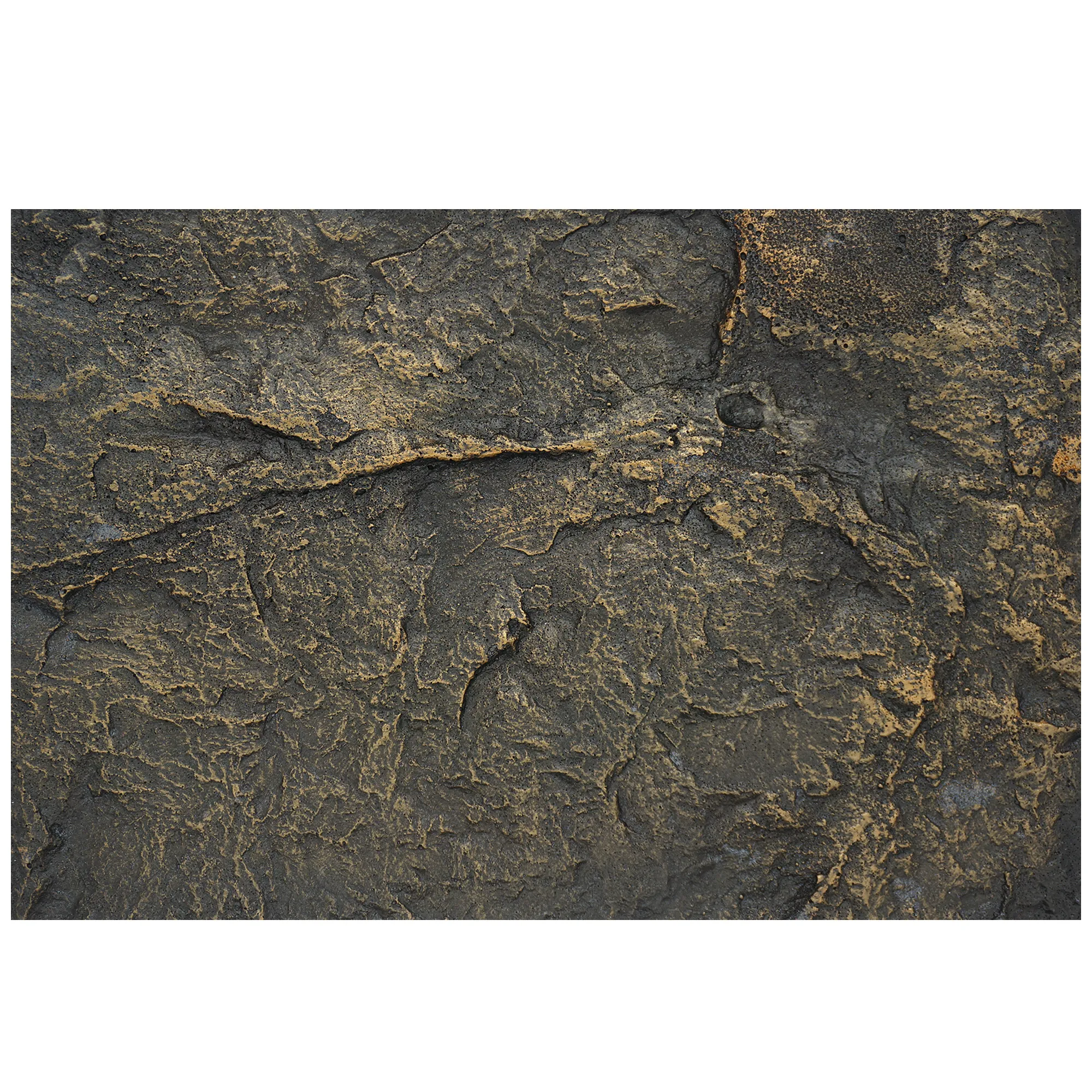
Hey there, ever stopped to think about the journey your building materials take before they become a part of your dream home or a bustling commercial space? It's a bigger deal than most of us realize, especially when we talk about stunning finishes like the Boulder Slab (Vintage Gold). We all want beautiful, durable, and unique aesthetics, but at what cost to our planet? At COLORIA GROUP, we're constantly asking ourselves this question and working tirelessly to ensure our answers contribute positively to a sustainable future.
The construction industry is a massive consumer of resources and a significant contributor to carbon emissions. From quarrying natural stone to firing ceramic tiles at high temperatures, traditional methods often leave a substantial environmental footprint. But what if there was a way to achieve that luxurious, natural look, like the rugged elegance of a Boulder Slab, without the heavy ecological burden? This is precisely where innovative materials and thoughtful manufacturing processes come into play, and it's the core of what we do as a leading **one-stop solution provider** in architectural materials.
Understanding the Traditional Challenge: Why Building Materials Matter
Let's get real for a moment about traditional building materials. Think about classic granite, marble, or even concrete. Their production cycles can be quite demanding on our environment.
-
Resource Depletion:
Quarrying natural stone, while yielding incredibly beautiful results, is a destructive process. It involves tearing down landscapes, removing topsoil, and using heavy machinery that consumes vast amounts of fossil fuels. These resources are finite, and their extraction disrupts ecosystems.
-
High Energy Consumption:
Manufacturing processes for many conventional materials, like ceramic tiles or certain types of cladding, require extremely high temperatures. This means burning a lot of natural gas or electricity, leading to significant greenhouse gas emissions.
-
Waste Generation:
A considerable amount of waste is generated during the cutting, shaping, and finishing of traditional slabs. This waste often ends up in landfills, contributing to pollution and taking up valuable land.
-
Transportation Impact:
Heavy, bulky materials mean more fuel burned during transportation from quarry or factory to construction site, often across continents. This adds further to the carbon footprint of a project.
-
Water Usage and Pollution:
Many manufacturing processes are water-intensive, and wastewater, if not treated properly, can pollute local environments.
When we consider a product designed to mimic natural aesthetics, like our Boulder Slab (Vintage Gold) texture, the goal isn't just about the look. It's about achieving that look sustainably. This requires a fundamental shift in material science and production, which is exactly what COLORIA GROUP has embraced through our advanced MCM technology.
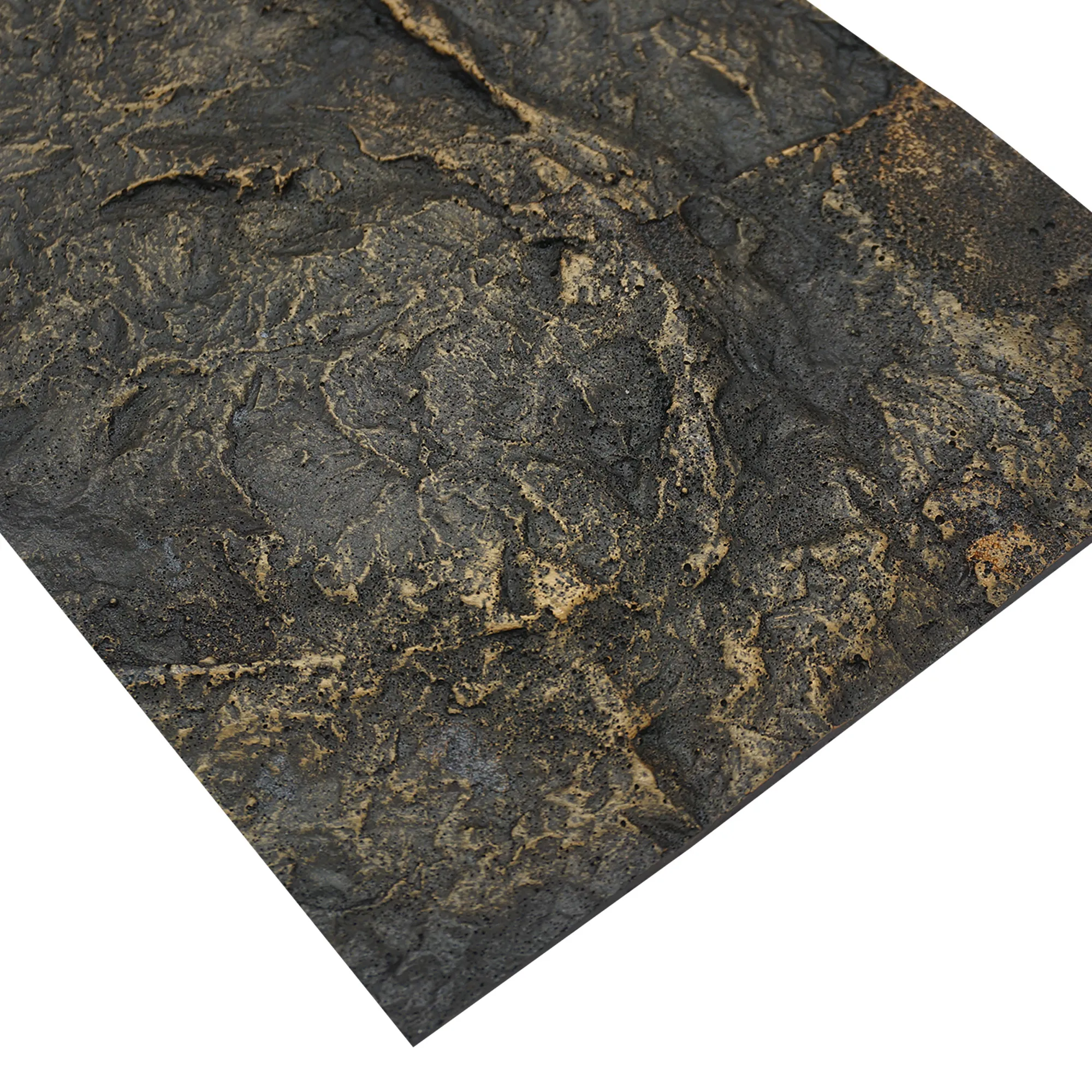
MCM to the Rescue: A Sustainable Revolution in Materials
So, what's the big deal about MCM (Modified Cementitious Material)? Imagine a material that can be shaped, textured, and colored to look like almost anything – stone, wood, brick, leather – but is incredibly thin, lightweight, flexible, and most importantly, kind to the Earth. That's MCM in a nutshell. It's not just a product; it's a technological leap that allows us to create stunning architectural finishes with a dramatically reduced environmental impact.
MCM is fundamentally different from traditional materials. Instead of mining and carving huge blocks of stone, or baking clay at extreme temperatures, MCM uses a blend of natural mineral powders, aggregate, and a small amount of polymer binder, all cured at much lower temperatures. This seemingly simple change brings about a cascade of environmental benefits.
The Eco-Friendly Edge of MCM:
-
Minimal Raw Material Consumption:
MCM production uses significantly less raw material compared to natural stone. We're not excavating mountains; we're using finely processed earth and mineral powders, often from abundant sources or even recycled industrial by-products. This means less disturbance to natural landscapes and slower depletion of finite resources.
-
Low Energy Manufacturing:
One of the biggest wins for MCM is its curing process. Unlike ceramics that need firing at over 1000°C, MCM is typically cured at temperatures below 100°C. This translates to a massive reduction in energy consumption and, consequently, a much smaller carbon footprint from the manufacturing stage. Imagine the difference in energy used to cook a meal versus just warming it up – that's the kind of scale we're talking about!
-
Reduced Water Usage:
MCM manufacturing processes are designed to be water-efficient, minimizing the demand on precious freshwater resources.
-
Lower Emissions:
With less energy consumed and fewer harsh chemical processes, MCM production releases fewer greenhouse gases and pollutants into the atmosphere. This contributes to cleaner air and a healthier planet.
-
Less Waste & Recyclability:
Due to its flexible nature and precise manufacturing, MCM production generates less waste. Furthermore, some MCM products are designed with end-of-life considerations in mind, potentially allowing for recycling or reuse, unlike many composite materials.
-
Durability and Longevity:
While often thin and flexible, MCM products are engineered for incredible durability, weather resistance, and color fastness. A long-lasting material means fewer replacements over time, further reducing the environmental impact associated with new production and waste disposal. It's about building things that last.
-
Lightweight Advantage:
This is a huge factor! MCM products are significantly lighter than natural stone, concrete, or ceramic tiles. This lightness has a ripple effect on sustainability:
-
Lower transportation costs and emissions because more material can be moved per trip.
-
Reduced structural load on buildings, potentially allowing for lighter, less resource-intensive foundations and structures.
-
Easier, faster, and safer installation, requiring less labor and heavy equipment on-site.
COLORIA GROUP's MCM Product Series: Tailored for Sustainability
At COLORIA GROUP, we don't just offer MCM; we've developed a range of specialized MCM products to meet diverse architectural needs, all while upholding our commitment to sustainability. Our product lines demonstrate how this innovative material can be adapted for various applications, each with its own set of environmental advantages.
Let's talk about our
MCM Big Slab Board Series
, which is where products like our Boulder Slab (Vintage Gold) truly shine. Traditional large format slabs, whether natural stone or porcelain, come with hefty environmental baggage – the quarrying, the energy-intensive firing, and the sheer weight during transport and installation. Our MCM Big Slabs offer a transformative alternative.
-
Mimicking Nature, Preserving Nature:
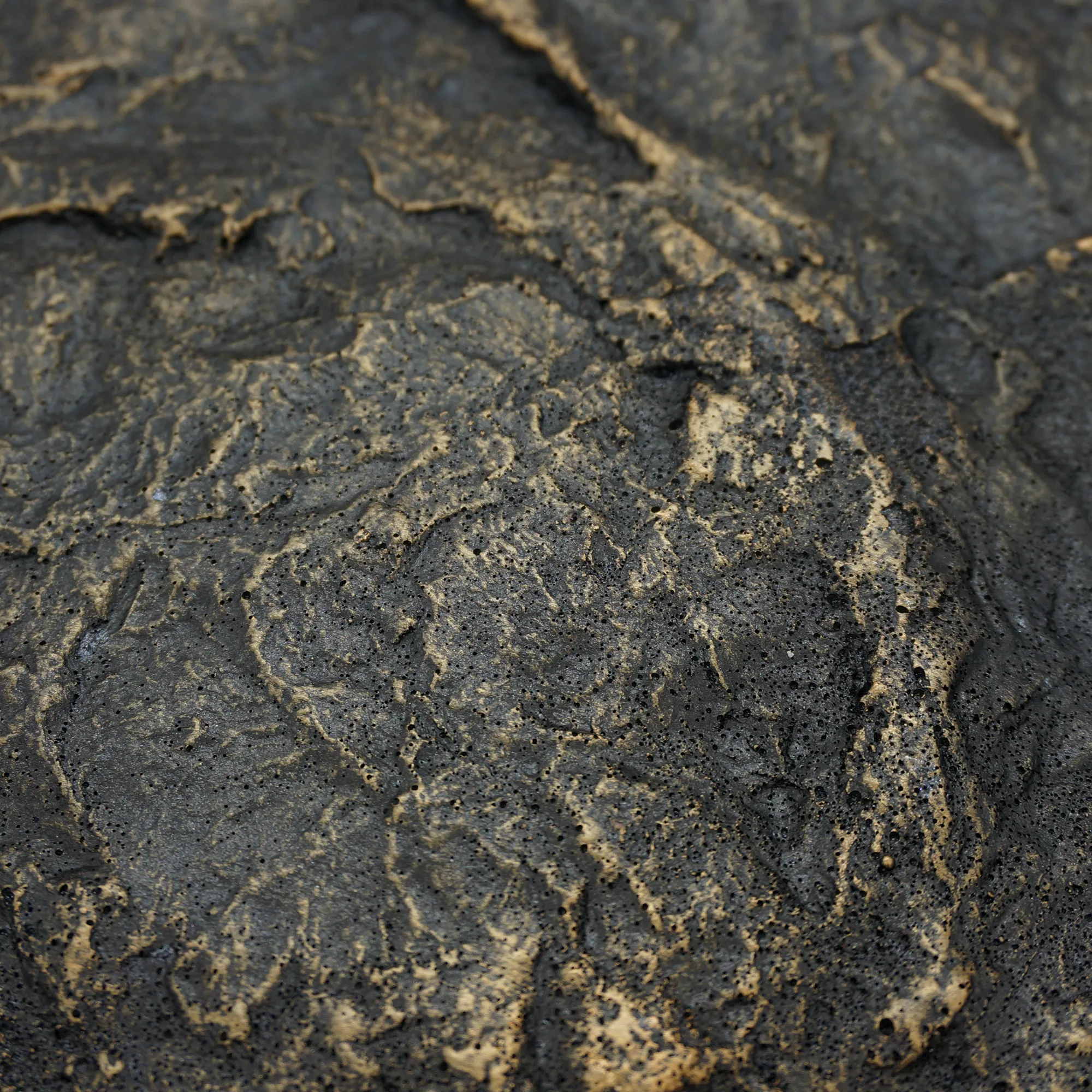
The Boulder Slab (Vintage Gold) is a perfect example. It captures the rugged texture and rich, warm tones of natural boulder, providing that sought-after aesthetic without the need for destructive quarrying. We recreate the beauty of nature using sustainable methods, leaving the actual boulders undisturbed.
-
Customization Reduces Waste:
Our big slabs can be precisely cut and customized to project specifications, minimizing on-site waste. This is crucial for large-scale architectural projects where every discarded piece adds up.
-
Lightweight, Large Format:
The combination of being lightweight and available in large formats means faster installation, fewer joints (reducing sealant use), and again, less fuel for shipping. Imagine cladding a high-rise building with traditional stone versus our MCM Big Slabs – the logistical and environmental savings are immense.
-
Energy Efficiency in Use:
Due to their thermal properties and tight installation, MCM slabs can contribute to better insulation for buildings, indirectly reducing energy consumption for heating and cooling over the building's lifespan.
When it comes to large-scale developments, efficiency and consistency are paramount. Our
MCM Project Board Series
is specifically designed for these demands. These boards offer the same environmental advantages of MCM but are optimized for rapid deployment and uniform application across vast areas.
-
Streamlined Construction:
By providing a reliable, standardized material that is easy to handle and install, we help construction teams work more efficiently. This means shorter project timelines, reduced labor, and less equipment usage on site – all contributing to a smaller overall carbon footprint for the entire building process.
-
Consistent Quality, Less Rework:
The consistent quality and performance of our project boards minimize the need for rework or replacement, saving materials, energy, and avoiding unnecessary waste.
-
Resource Optimization:
For big projects, material consumption can skyrocket. Our MCM Project Boards are designed to be resource-efficient from manufacturing to installation, ensuring that every square meter of material delivers maximum value with minimal environmental cost.
The concept of
MCM Flexible Stone
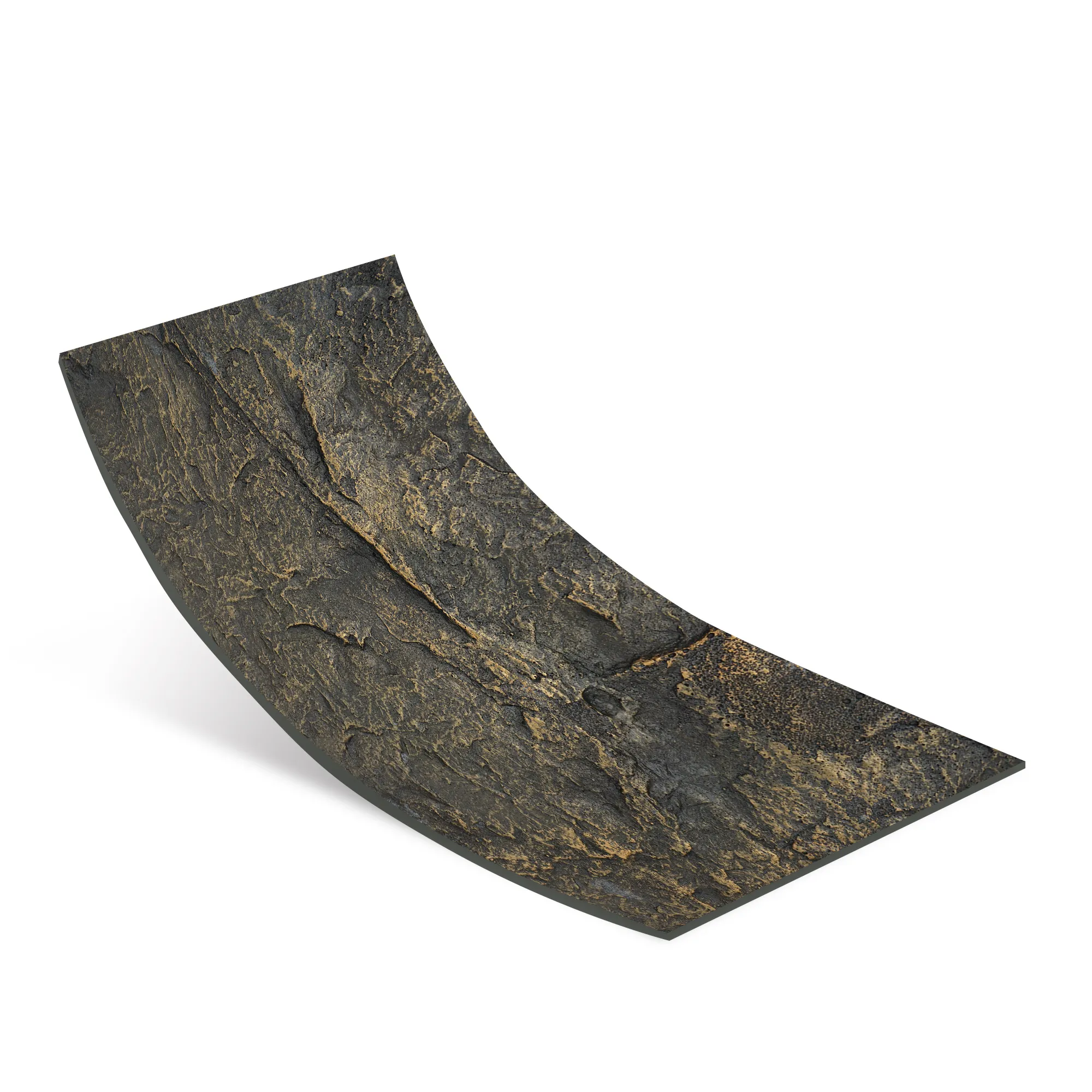
might sound like something out of a futuristic movie, but it's a reality at COLORIA GROUP. Imagine a material that looks and feels like natural stone – perhaps a textured slate or a smooth marble – but can be bent and applied to curved surfaces.
-
Ultimate Adaptability, Less Waste:
The flexibility of this material means it can conform to intricate designs and challenging architectural features without the need for complex cutting or special fabrication techniques that often generate significant waste with traditional rigid materials. It literally stretches the boundaries of design while reducing material off-cuts.
-
Reduced Transport Load:
Being incredibly thin and lightweight, MCM Flexible Stone further amplifies the transportation benefits. More square footage can be shipped per vehicle, directly translating to fewer trucks on the road and lower carbon emissions.
-
Ease of Installation:
Its light weight and flexibility simplify installation, requiring less heavy lifting equipment and potentially reducing installation time and associated energy consumption. It's easier on the installers and easier on the planet.
Our
MCM 3D Printing Series
represents the cutting edge of material innovation and customized design. While perhaps not as direct in its environmental impact as the raw material reduction of other MCM products, its potential for sustainability is significant.
-
On-Demand, Waste-Free Manufacturing:
3D printing fundamentally allows for "additive" manufacturing, meaning material is only added where needed. This drastically reduces material waste compared to traditional "subtractive" methods (like carving or cutting). We print exactly what's required, nothing more.
-
Complex Geometries, Resource Efficiency:
It enables the creation of highly complex and unique geometries that might be impossible or extremely wasteful with traditional methods. This means designers can achieve intricate aesthetic goals without compromising on resource efficiency.
-
Local Production Potential:
As 3D printing technology evolves, there's the potential for more localized production, further cutting down on transportation emissions. Imagine designing a bespoke facade element and having it printed regionally with MCM materials.
Through these diverse MCM product lines, COLORIA GROUP is not just selling materials; we're offering a comprehensive approach to sustainable design and construction. Each series is a testament to how advanced material science can meet aesthetic demands while safeguarding our environment.
Beyond the Product: COLORIA GROUP as Your One-Stop Solution Provider for a Greener Future
Our commitment to environmental responsibility extends far beyond just the materials themselves. As a **one-stop solution provider**, COLORIA GROUP takes a holistic view of every project, from concept to completion. This comprehensive approach inherently leads to more sustainable outcomes. It's not just about selling a great product; it's about optimizing the entire process.
-
Integrated Project Planning:
When we're involved from the outset, we can help architects and developers select the most suitable, and often most sustainable, materials for their specific needs. This early consultation prevents costly mistakes and material waste down the line. We provide expertise in material science, application techniques, and design integration.
-
Optimized Logistics and Supply Chain:
With a global reach and strong local presence (like our agency in Saudi Arabia), we can manage the supply chain efficiently. Our experience helps streamline delivery, reducing fuel consumption through better route planning and consolidated shipments. Minimizing delays also means fewer resources spent on idling equipment or emergency re-shipments.
-
Installation Guidance and Support:
Proper installation is key to material longevity. We provide comprehensive technical support and guidance to ensure our MCM products are installed correctly, maximizing their lifespan and performance. This reduces the need for repairs or premature replacement, saving resources.
-
Long-Term Performance and Maintenance:
By choosing high-quality, durable MCM materials, clients invest in buildings that require less maintenance over time. Less maintenance means fewer resources consumed for cleaning agents, repairs, or replacements – a long-term win for both the building owner and the environment.
-
Value Engineering for Sustainability:
Our team works with clients to identify opportunities for value engineering that prioritize environmental benefits without compromising quality or aesthetics. This could involve suggesting alternative MCM textures that achieve the same visual impact with even lower environmental cost, or optimizing panel sizes to reduce waste.
Think of it this way: a **one-stop solution provider** doesn't just sell you the "bricks"; they help you build the entire house efficiently, ensuring every component works together seamlessly and sustainably. This integrated approach, backed by decades of industry experience, makes COLORIA GROUP a true partner in green construction.
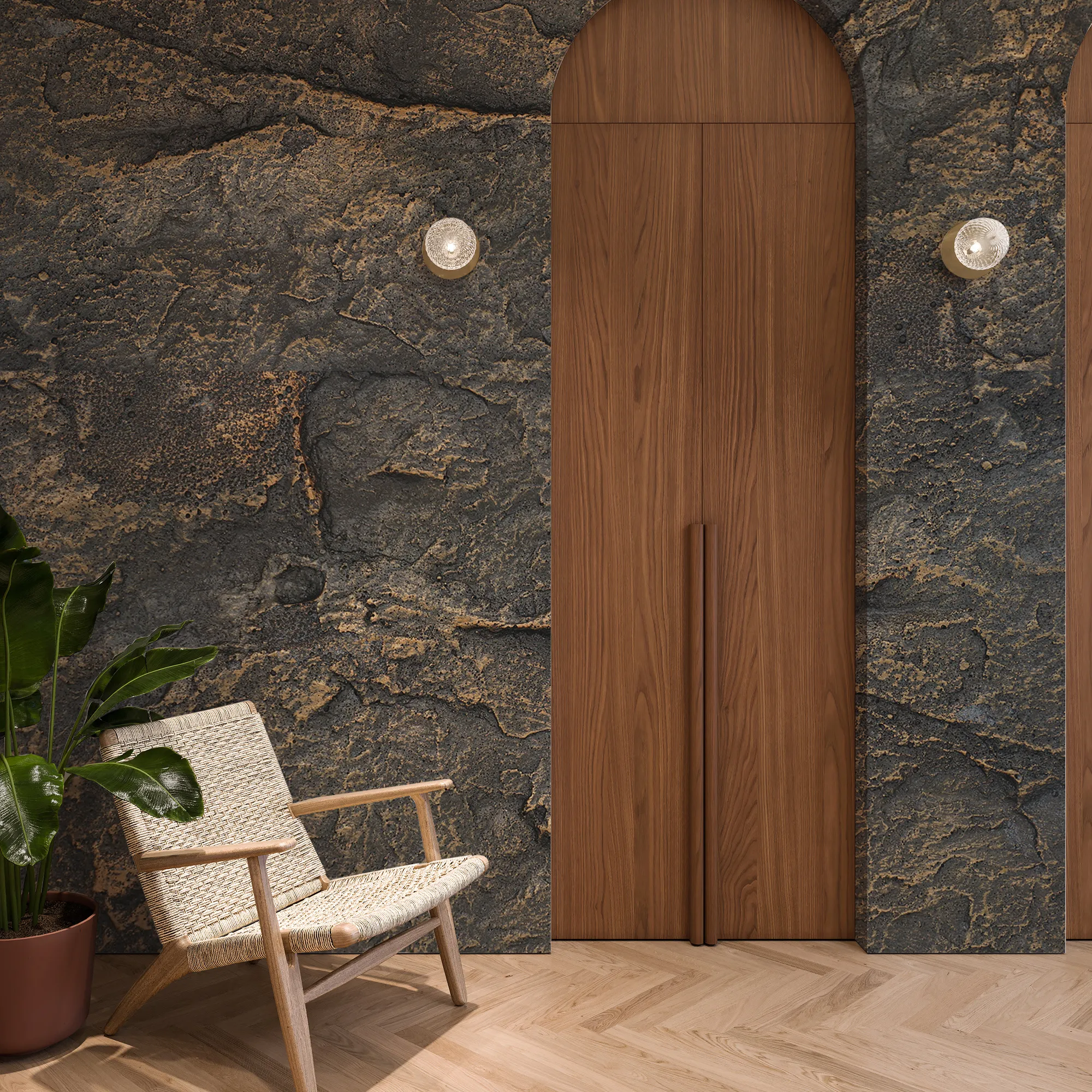
Comparative Analysis: MCM vs. Traditional Materials on Environmental Impact
To truly appreciate the environmental impact of MCM, it's helpful to see it in direct comparison with traditional materials. Let's take the example of a product like our Boulder Slab (Vintage Gold) and compare its lifecycle footprint to, say, a natural granite slab of similar aesthetic and size.
|
Environmental Factor
|
Traditional Stone (e.g., Granite Slab)
|
COLORIA GROUP's MCM (e.g., Boulder Slab (Vintage Gold))
|
|
Raw Material Acquisition
|
-
Extensive quarrying and mining operations.
-
Significant landscape disruption and habitat loss.
-
Consumption of finite natural resources.
-
High energy use for extraction machinery.
|
-
Utilizes abundant natural mineral powders and recycled aggregates.
-
Minimal landscape disruption.
-
Focus on renewable or plentiful raw materials.
-
Lower energy demand for material preparation.
|
|
Manufacturing Process Energy
|
-
Cutting and polishing slabs are energy-intensive processes.
-
High-temperature firing (for porcelain/ceramic alternatives).
-
Significant CO2 emissions from energy consumption.
|
-
Low-temperature curing (below 100°C).
-
Dramatically reduced energy consumption (up to 80% less).
-
Significantly lower CO2 emissions during production.
|
|
Water Usage
|
-
Often high water consumption for cutting, cooling, and washing.
-
Potential for wastewater pollution if not properly treated.
|
-
Water-efficient manufacturing processes.
-
Minimized wastewater generation.
|
|
Waste Generation
|
-
Considerable waste from quarrying, cutting, and shaping (often 20-50% waste).
-
Waste often ends up in landfills, contributing to environmental burden.
|
-
Less waste generated due to precise manufacturing and flexible formats.
-
Potential for waste material to be recycled back into production.
|
|
Transportation Footprint
|
-
Heavy and bulky materials require more fuel for transport.
-
Higher logistical costs and associated carbon emissions.
|
-
Significantly lighter weight (often 5-10 times lighter).
-
Reduced fuel consumption and emissions during transport.
-
More material can be shipped per vehicle.
|
|
Installation Impact
|
-
Requires heavy lifting equipment and extensive labor.
-
Slower installation, higher on-site energy consumption.
-
More cutting and waste generated on site.
|
-
Easier handling and faster installation due to lightweight and flexibility.
-
Reduced need for heavy machinery, lower on-site energy use.
-
Less on-site cutting and waste.
|
|
Longevity & Maintenance
|
-
Durable, but can be prone to cracking or staining if not properly sealed.
-
Requires specific cleaning agents and periodic sealing.
|
-
Engineered for high durability, weather resistance, and color stability.
-
Low maintenance requirements over its lifespan.
-
Longer lifespan means fewer replacements, saving resources.
|
This comparison clearly illustrates why embracing MCM technology, especially for products designed to replicate natural aesthetics like our Boulder Slab (Vintage Gold), isn't just a trend – it's a responsible and necessary evolution in the construction industry. The environmental gains are evident across the entire lifecycle of the material.
Realizing the Vision: Green Buildings with COLORIA GROUP
Imagine a bustling new commercial complex, a serene residential facade, or an innovative interior space. When these projects choose COLORIA GROUP's MCM materials, they are actively making a statement for sustainability. For instance, consider a high-rise in a rapidly developing city, perhaps like those found across the Middle East where our agency in Saudi Arabia operates.
-
The High-Rise Facade:
Instead of heavy, energy-intensive traditional cladding, our
MCM Big Slab Board Series
, featuring the Boulder Slab (Vintage Gold) aesthetic, could be used. This choice would mean:
-
Significantly less structural steel or concrete needed to support the facade, as the MCM is so much lighter. This immediately reduces the carbon footprint of the building's core structure.
-
Fewer trips by trucks to deliver the material to the site, meaning less traffic congestion and air pollution in the urban environment.
-
Faster installation, reducing construction time, labor costs, and overall project resource consumption.
-
A durable, weather-resistant facade that will maintain its stunning "Vintage Gold" appearance for decades, requiring minimal maintenance and reducing the need for future resource-intensive repairs or replacements.
-
Interior Feature Walls:
For interior designs, our
MCM Flexible Stone
can be applied to curved walls or intricate features. This means architects can achieve complex, artistic visions without resorting to wasteful carving or cutting of rigid materials. The lightweight nature also simplifies interior renovation, reducing dust and debris compared to traditional methods.
-
Large-Scale Public Projects:
For airports, hospitals, or educational institutions, the
MCM Project Board Series
offers a consistent, robust, and eco-friendly solution. The standardization and ease of installation ensure that large areas can be covered efficiently, minimizing on-site waste and construction impact. This contributes to healthier indoor environments and lower operational costs due to less energy for heating/cooling.
Every choice in material contributes to the overall environmental story of a building. By choosing COLORIA GROUP's MCM materials, particularly those that emulate natural beauty like the Boulder Slab (Vintage Gold), designers and developers are actively participating in a global movement towards greener, more sustainable architecture. They're not just building structures; they're building a more responsible future.
The Future is Green, and It's Built with COLORIA GROUP
The conversation about the environmental impact of building materials is no longer a niche topic; it's a mainstream imperative. As architects, developers, and homeowners, we all have a role to play in choosing materials that not only perform exceptionally and look fantastic but also protect our precious planet. The era of blindly consuming natural resources for construction is fading, making way for intelligent, sustainable alternatives.
At COLORIA GROUP, we are immensely proud to be at the forefront of this shift. Our dedication to MCM technology and our role as a **one-stop solution provider** are central to our mission. We believe that you shouldn't have to compromise on aesthetics or quality to be environmentally responsible. With products like our Boulder Slab (Vintage Gold) from the
MCM Big Slab Board Series
, you get the best of both worlds: the timeless beauty of natural textures combined with the cutting-edge sustainability of modern material science.
We are constantly innovating, refining our processes, and expanding our product lines – including our versatile
MCM Project Board Series
and the adaptive
MCM Flexible Stone
– to ensure that we continue to offer the most eco-friendly and high-performance solutions in the market. Our global footprint, supported by our strong presence in key regions like Saudi Arabia, means that sustainable options are accessible wherever your next project takes you.
So, as you plan your next residential masterpiece or commercial landmark, consider the profound environmental impact of your material choices. Opt for innovation, opt for sustainability, opt for beauty that doesn't cost the Earth. Choose COLORIA GROUP, and together, let's build a greener, more beautiful world, one Boulder Slab (Vintage Gold) at a time.