
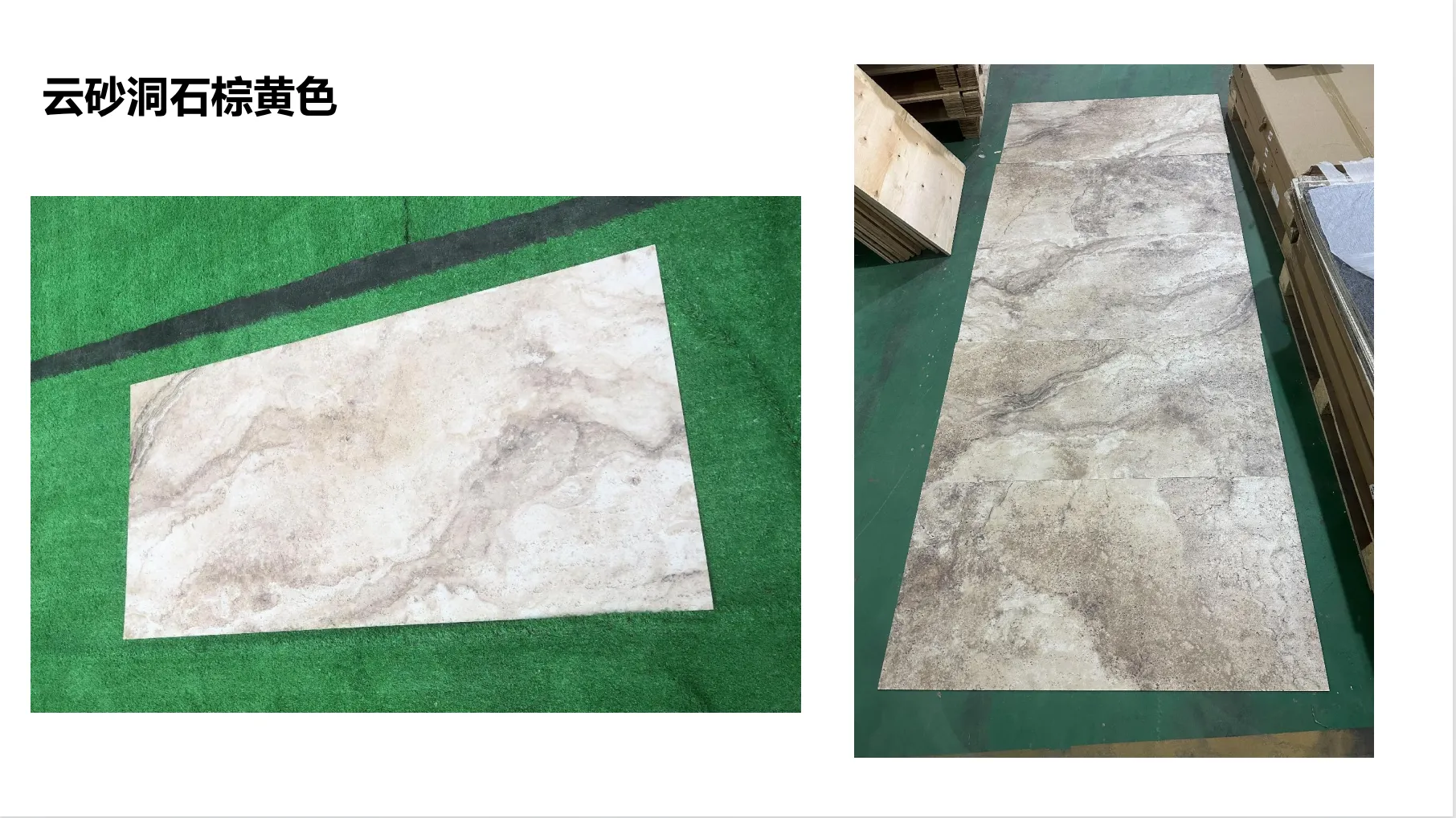
Walk into any high-end boutique hotel, trendy restaurant, or contemporary office space today, and you're likely to encounter it—the warm, earthy tones of dolomitic travertine (claybank) . Its soft, sandy hue, interspersed with subtle veins and fossil-like textures, has made it a darling of architects and interior designers worldwide. But behind its aesthetic appeal lies a complex story of extraction, production, and environmental trade-offs. As demand for natural and "authentic" building materials grows, so does the need to examine how our choices impact the planet. This article dives into the environmental footprint of dolomitic travertine (claybank), from the moment it's quarried from the earth to the final panels installed in our favorite spaces. We'll also explore innovative alternatives, like MCM flexible stone and MCM 3D printing series , that aim to bridge the gap between beauty and sustainability.
Dolomitic travertine is a type of sedimentary rock formed by the precipitation of calcium carbonate from mineral-rich water, often in hot springs or limestone caves. The "claybank" variant, with its warm, terracotta-tinged base, stands out for its versatility—equally at home in rustic villas and sleek urban lofts. But extracting this stone from the earth is no small feat. Quarries carve into landscapes, heavy machinery consumes fossil fuels, and processing plants generate waste. Meanwhile, the rise of eco-conscious design has spurred the development of materials like fair-faced concrete and MCM big slab board series , which mimic natural stone's look with a lower environmental cost. To understand the full picture, we'll start at the source: the quarries where dolomitic travertine (claybank) begins its journey.
Quarrying dolomitic travertine (claybank) is a labor-intensive process that leaves a visible mark on the landscape. Most deposits are found in regions with ancient limestone formations, such as parts of Italy, Turkey, and the American Southwest. Let's take a hypothetical quarry in Tuscany, Italy—a region renowned for its travertine reserves. Here, the process begins with clearing vegetation to expose the stone bed, a step that disrupts local ecosystems and displaces wildlife. Native plants, which hold soil in place and support pollinators, are uprooted, leaving the land vulnerable to erosion. In areas with fragile soil, this can lead to desertification over time, turning once-fertile land into barren patches.
Next comes drilling and blasting. Workers use pneumatic drills to create holes in the rock face, then fill them with explosives to break the stone into manageable blocks. While modern techniques aim to minimize vibration and noise, blasting still sends shockwaves through the ground, disturbing underground water tables and harming nearby aquatic life. The dust generated during this process is another concern: fine particulate matter can drift into nearby communities, exacerbating respiratory issues and coating vegetation, which inhibits photosynthesis. A 2019 study by the European Environmental Agency found that travertine quarries in Italy's Latium region contributed to air quality violations in 12% of nearby towns, with dust levels exceeding EU safety thresholds by up to 30% during peak extraction seasons.
Once the stone blocks are extracted, they're loaded onto trucks and transported to processing plants—often hundreds of miles away. This "hauling phase" adds significant carbon emissions to the stone's lifecycle. A single truck carrying 20 tons of travertine emits approximately 80 kg of CO2 per 100 km, according to data from the International Council on Clean Transportation. For quarries in remote areas, this can mean thousands of tons of emissions annually, just to get the stone to market. Compare this to MCM flexible stone , which is often produced locally using lightweight materials, reducing transportation needs by up to 60% in some cases. It's a stark reminder that the "natural" label doesn't always equate to "sustainable."
The environmental impact of dolomitic travertine (claybank) doesn't end at the quarry. Once the stone blocks arrive at processing facilities, they undergo a series of steps to transform them into slabs, tiles, or custom panels. These steps—cutting, polishing, and finishing—are energy-intensive and resource-heavy. Let's break down the process:
Cutting: Large diamond-tipped saws slice the stone blocks into slabs of desired thickness. This step generates significant waste: up to 30% of the original block is lost as "sludge," a mixture of stone dust and water. In traditional processing plants, this sludge is often dumped in landfills, where it can leach heavy metals into soil and groundwater. Some facilities have begun recycling the sludge into low-grade concrete or aggregate, but adoption is inconsistent, especially in regions with lax environmental regulations.
Polishing: To achieve that signature smooth finish, slabs are run through polishing machines with abrasive pads. This step requires vast amounts of water—up to 20,000 liters per day for a medium-sized plant—to cool the machinery and wash away dust. In water-scarce regions, like parts of Turkey or the American Southwest, this can strain local water supplies, diverting resources from agriculture and communities. Additionally, the polishing process consumes electricity, much of which still comes from fossil fuels in many countries. A 2022 report by the World Green Building Council found that stone polishing accounts for 15-20% of the total carbon footprint of natural stone production.
Finishing: Finally, slabs may be treated with sealants to enhance durability or resistance to stains. Many traditional sealants contain volatile organic compounds (VOCs), which off-gas into the air, contributing to indoor air pollution and smog formation. While low-VOC options exist, they're often more expensive, and cost-cutting measures lead some manufacturers to opt for cheaper, more harmful alternatives.
Contrast this with MCM 3D printing series , a technology that's revolutionizing the industry. MCM (Modified Composite Material) products are created by mixing natural stone aggregates with polymers and other binders, then 3D-printed into precise shapes. This additive manufacturing process reduces waste to less than 5%—a fraction of traditional cutting methods. The 3D printers themselves can be powered by renewable energy, and because the materials are lightweight, they require less energy to transport and install. For example, MCM's big slab board series uses 70% less raw stone than traditional slabs, while mimicking the look and texture of dolomitic travertine (claybank) almost identically. It's a prime example of how innovation can redefine what "luxury" looks like in construction.
| Environmental Aspect | Traditional Dolomitic Travertine Production | MCM 3D Printing Series Production |
|---|---|---|
| Waste Generated | 25-30% of raw stone (sludge, offcuts) | <5% (minimal material waste) |
| Energy Consumption | High (fossil fuel-dependent machinery) | 30-40% lower (electric 3D printers, renewable-ready) |
| Water Usage | 20,000+ liters/day (polishing, cooling) | 80% reduction (closed-loop water systems) |
| Carbon Footprint (per sqm) | 12-15 kg CO2e | 4-6 kg CO2e |
The table above illustrates the stark differences in environmental impact between traditional production and MCM's 3D printing approach. These numbers, based on industry data and case studies, highlight why more architects and developers are making the switch to sustainable alternatives. But it's not just about the numbers—it's about rethinking our relationship with natural resources. As the saying goes, "We don't inherit the earth from our ancestors; we borrow it from our children." Technologies like MCM's 3D printing series allow us to enjoy the beauty of natural stone without depleting the planet's finite reserves.
Beyond the metrics of carbon and waste, quarrying dolomitic travertine (claybank) has a profound impact on local ecosystems. Many travertine deposits are located in ecologically sensitive areas, such as near rivers, forests, or wildlife corridors. Clearing land for quarries displaces species, fragments habitats, and disrupts food chains. For example, in the Apennine Mountains of Italy, travertine quarries have been linked to declines in the population of the European otter, a protected species that relies on clean, undisturbed waterways. The noise and vibration from blasting also scare off birds and mammals, altering migration patterns and breeding behaviors.
Soil erosion is another critical issue. Quarrying removes the topsoil, which takes centuries to form, leaving the land vulnerable to wind and water erosion. Rainwater runoff from exposed quarry sites carries sediment into nearby streams and rivers, smothering aquatic habitats and reducing water quality. In some cases, this has led to the collapse of fish populations, affecting both wildlife and local fishing communities. A study in Turkey's Denizli region, a major travertine-producing area, found that quarry runoff increased sediment levels in rivers by 400% during the rainy season, leading to the closure of several local fisheries.
In contrast, fair-faced concrete —a material celebrated for its raw, industrial aesthetic—offers a lower-impact alternative. Fair-faced concrete (also known as architectural concrete) is poured into molds and left unfinished, eliminating the need for quarrying altogether. While concrete production does emit CO2 (from cement manufacturing), innovations like carbon-capture technology and the use of recycled aggregates are reducing its footprint. When compared to the habitat destruction caused by travertine quarries, fair-faced concrete emerges as a more ecologically responsible choice for projects where a "natural" look isn't a strict requirement.
The good news is that the stone and building materials industry is waking up to its environmental responsibilities. Governments, NGOs, and manufacturers are taking steps to mitigate the impact of extraction and production. For example, the EU's CE marking system now includes environmental criteria for construction products, pushing quarries to adopt cleaner practices. In the U.S., the LEED certification program rewards projects that use locally sourced, low-emission materials, incentivizing developers to choose alternatives like MCM products.
At the manufacturing level, companies are investing in renewable energy to power processing plants. Solar panels and wind turbines are becoming common sights at modern stone facilities, reducing reliance on fossil fuels. Water recycling systems are also gaining traction: some plants now reuse up to 90% of the water used in polishing, cutting down on freshwater consumption. Additionally, waste sludge is being repurposed into products like cement, road aggregate, or even decorative tiles, closing the loop on the production cycle.
But perhaps the most exciting developments are in material innovation. MCM flexible stone , for instance, is made by grinding down waste stone from traditional quarries into a fine powder, then mixing it with eco-friendly binders. The result is a lightweight, durable panel that can be bent, cut, or shaped to fit any design—all while using waste that would otherwise end up in landfills. MCM's 3D printing series takes this a step further, using computer-aided design to create intricate patterns with minimal material waste. Architects can now specify custom textures and shapes without the environmental cost of carving natural stone.
Another promising material is foamed aluminium alloy board (vintage silver) , which offers a metallic, industrial look with a fraction of the weight and carbon footprint of natural stone. Foamed aluminium is 70% lighter than traditional aluminium, reducing transportation emissions, and it's 100% recyclable. While it doesn't mimic travertine's texture, it provides a sustainable alternative for designers seeking a modern, edgy aesthetic. Similarly, wood grain board —made from recycled wood fibers and eco-resins—offers the warmth of wood without deforestation, making it a popular choice for projects aiming for biophilic design with minimal impact.
Dolomitic travertine (claybank) is undeniably beautiful—a product of millions of years of geological processes that connects us to the earth's history. But as we've explored, its extraction and production come with significant environmental costs: habitat destruction, carbon emissions, water pollution, and waste. The challenge for designers, builders, and consumers is to balance our love for natural materials with the urgent need to protect the planet.
The good news is that we don't have to choose between aesthetics and sustainability. Innovations like MCM flexible stone , 3D printing series , and fair-faced concrete offer compelling alternatives that reduce environmental impact without sacrificing style. By prioritizing these materials, supporting companies with strong sustainability commitments, and advocating for stricter regulations on traditional quarries, we can shape a built environment that's both beautiful and responsible.
As we move forward, let's remember that every choice we make as designers and consumers has a ripple effect. The next time you admire a travertine wall or floor, take a moment to consider its journey—and ask: Is there a way to achieve this look without costing the earth? With continued innovation and conscious decision-making, the answer is increasingly yes. The future of design isn't about sacrificing beauty for sustainability; it's about reimagining beauty through a sustainable lens.
Recommend Products












