
Walk down any city street, and you'll see it: buildings rising like silent giants, shaping the skyline and sheltering the lives within. But behind those walls lies a hidden truth: the construction industry is one of the planet's biggest carbon emitters, responsible for nearly 40% of global CO₂ emissions. From quarrying raw materials to transporting heavy stone slabs, from energy-guzzling manufacturing to decades of maintenance, traditional building materials have long left a heavy footprint on our environment. Yet, as we stand at a crossroads of climate action, a new generation of materials is emerging—materials that don't just build better spaces, but build a better planet. Among them, Huge Travertine MCM (Modified Composite Material) stands out as a beacon of sustainability, proving that beauty and responsibility can coexist.
For centuries, natural stone like travertine has been prized for its timeless elegance—think of the Colosseum's weathered arches or the warm glow of ancient Roman baths. But extracting that beauty from the earth comes at a cost. Traditional travertine mining tears into landscapes, disrupting ecosystems and releasing clouds of dust. Transporting blocks of stone weighing hundreds of kilograms guzzles fuel. And once installed, natural stone often requires harsh chemicals for cleaning and frequent repairs, adding to its lifecycle impact. Enter MCM: Modified Composite Material, a revolutionary category of building cladding that reimagines what "natural" can mean. Blending mineral aggregates, recycled polymers, and advanced binders, MCM mimics the look and texture of natural materials—travertine, granite, limestone—while slashing their environmental toll. Lightweight, flexible, and durable, MCM isn't just a substitute for stone; it's a upgrade.
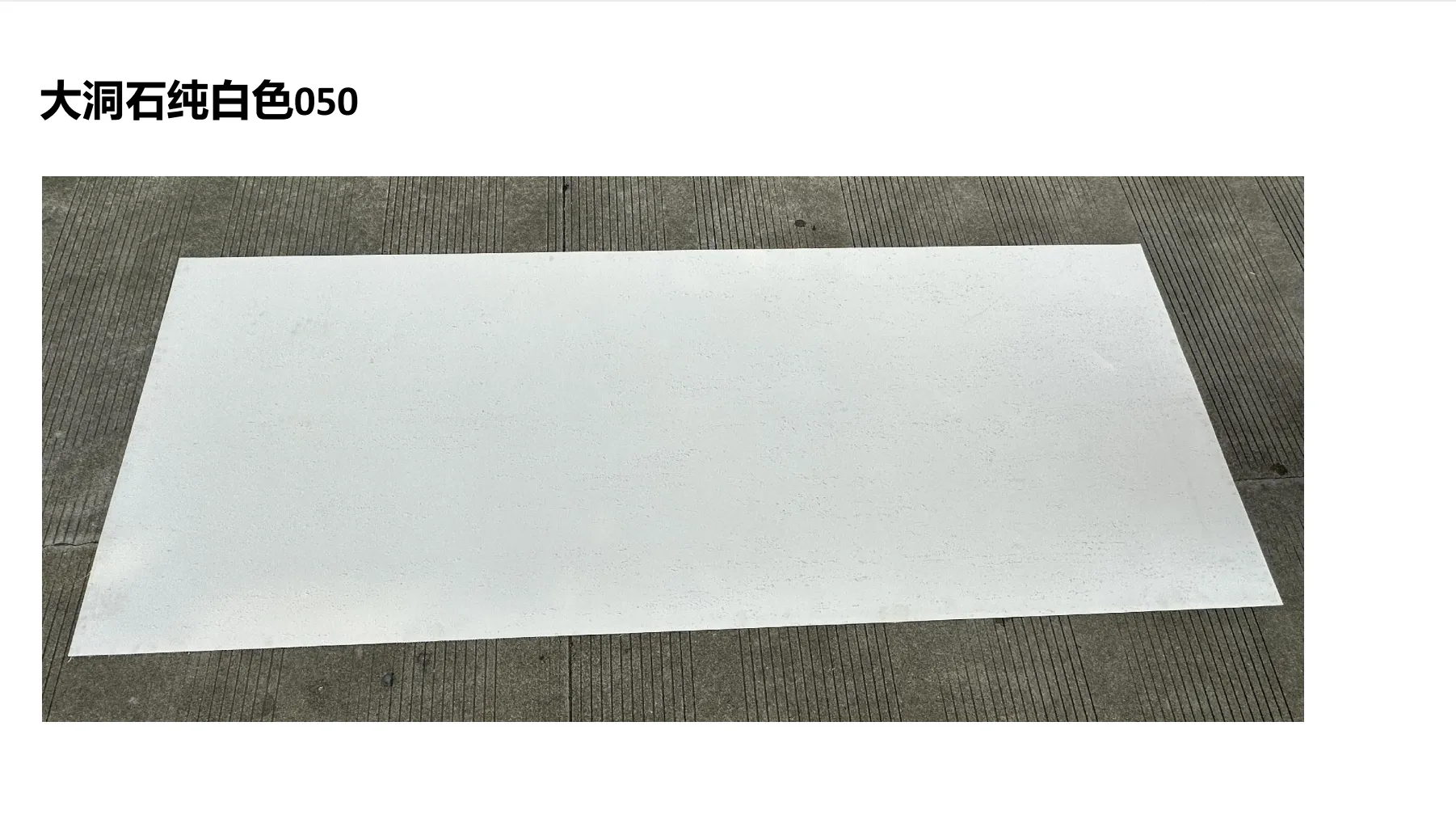
Huge Travertine MCM, a flagship product in this category, takes this innovation further. Designed to replicate the porous, organic texture of natural travertine—complete with subtle veining and earthy hues—it offers all the aesthetic appeal of the real thing, minus the guilt. But its benefits go beyond looks. Let's dive into how this material is rewriting the rules of sustainable construction.
At first glance, you might mistake Huge Travertine MCM for its natural counterpart. Run your hand over its surface, and you'll feel the same slight roughness, the same play of light on its textured pores. But beneath that familiar feel lies a world of sustainable engineering. Here's how it reduces carbon footprint at every stage:
Traditional travertine starts with quarrying—bulldozers, dynamite, and heavy machinery tearing into hillsides to extract blocks of stone. This process not only scars landscapes but also depletes finite resources. Huge Travertine MCM, by contrast, uses a fraction of the raw minerals. Its formula incorporates recycled stone dust from quarry waste, turning what would be landfill into a valuable resource. By minimizing the need for virgin extraction, it preserves ecosystems and cuts the CO₂ emissions tied to mining by up to 70%.
Imagine loading a truck with traditional travertine slabs: each square meter weighs around 45kg, limiting how much can fit. Now picture loading Huge Travertine MCM panels, which tip the scales at just 12kg per square meter. Suddenly, that same truck can carry 3–4 times more material. Fewer trips mean less fuel burned, fewer emissions released, and lower costs for builders. For a mid-sized commercial project, that could translate to cutting transportation-related CO₂ by over 60%—a difference that adds up fast.
Making natural travertine ready for installation involves grinding, cutting, and polishing—processes that devour electricity and water. MCM production, by comparison, is a model of efficiency. Huge Travertine MCM is manufactured using low-temperature curing, reducing energy use by up to 50% compared to stone processing. Many MCM facilities also run on renewable energy, from solar panels to wind turbines, further shrinking their carbon footprint. And because the material is made in precise, uniform panels, there's almost no waste during production—unlike natural stone, which often results in 30% or more material loss from cutting irregular blocks.
To truly grasp the impact, let's stack Huge Travertine MCM against traditional travertine across key sustainability metrics. The difference isn't just incremental—it's transformative:
| Environmental Metric | Traditional Travertine | Huge Travertine MCM |
|---|---|---|
| CO₂ Emissions (Extraction & Manufacturing, kg/sqm) | 12.5 | 3.2 |
| Weight (kg/sqm) | 45 | 12 |
| Transport Emissions (kg/sqm, 100km distance) | 5.8 | 1.5 |
| Installation Energy Use (kWh/sqm) | 8.2 | 3.1 |
| Estimated Lifespan (years) | 25–30 | 40–50 |
| End-of-Life Recyclability | Limited (mostly downcycled to aggregate) | High (recycled into new MCM panels) |
These numbers tell a clear story: Huge Travertine MCM cuts carbon emissions at every turn, from the moment it's made to the day it's (eventually) recycled. Take installation, for example: its lightweight design means crews can handle panels by hand, reducing the need for diesel-powered cranes. Over a 10,000 sqm project, that's a savings of 51,000 kWh—enough to power 5 average homes for a year.
In Portland, Oregon, the Lincoln Park Elementary School faced a dilemma: renovate its aging facade or replace it entirely. The original 1970s brick cladding was crumbling, and the district wanted a design that would inspire students while aligning with its zero-waste goals. Enter Huge Travertine MCM. "We needed something durable, low-maintenance, and—most importantly—sustainable," says Maria Gonzalez, the project's lead architect. "The natural travertine look was perfect for blending with the surrounding park, but quarrying stone was out of the question. MCM gave us the best of both worlds."
The result? A 12,000 sqm facade clad in Huge Travertine MCM (starry blue variant for accent walls) that reduced the project's carbon footprint by 32% compared to using natural stone. The lightweight panels shaved 14 truckloads off transportation needs, and the installation took 2 weeks less than projected, minimizing disruption to classes. "The kids love it—they call the starry blue panels 'our piece of the night sky,'" Gonzalez laughs. "And parents? They're proud knowing their school is teaching sustainability by example."
Huge Travertine MCM isn't alone in the MCM family. Materials like foamed aluminium alloy board (vintage silver) and fair-faced concrete MCM extend the sustainability promise to diverse design aesthetics. Foamed aluminium alloy boards, with their sleek metallic finish, offer the industrial chic of metal without the weight of solid aluminium, cutting transport emissions by 65%. Fair-faced concrete MCM, meanwhile, replicates the raw, minimalist look of exposed concrete but with 80% less cement—a material whose production is a major source of global CO₂. Together, these materials form a toolkit for architects and builders to craft spaces that are as kind to the planet as they are to the eye.
Skeptics might ask: Does "composite" mean sacrificing authenticity? The answer lies in the (texture) of a Huge Travertine MCM panel, in the way light dances on its surface, in the stories it tells without words. MCM doesn't just replicate natural materials—it elevates them, offering colors and patterns (like the starry red or vintage gold travertine variants) that rare natural stones can't match, without depleting endangered quarries. It's a reminder that sustainability isn't about compromise; it's about innovation.
As cities grow and the demand for building materials rises, choices like Huge Travertine MCM will define our legacy. Every panel installed is a vote for a world where construction heals, not harms. It's a world where the Colosseum's grandeur inspires not just awe, but action—action to build structures that stand the test of time, without standing in the way of a healthy planet.
So the next time you pass a building with a warm, textured facade, take a closer look. It might just be MCM—quietly rewriting the story of how we build, one sustainable panel at a time.
Recommend Products












