
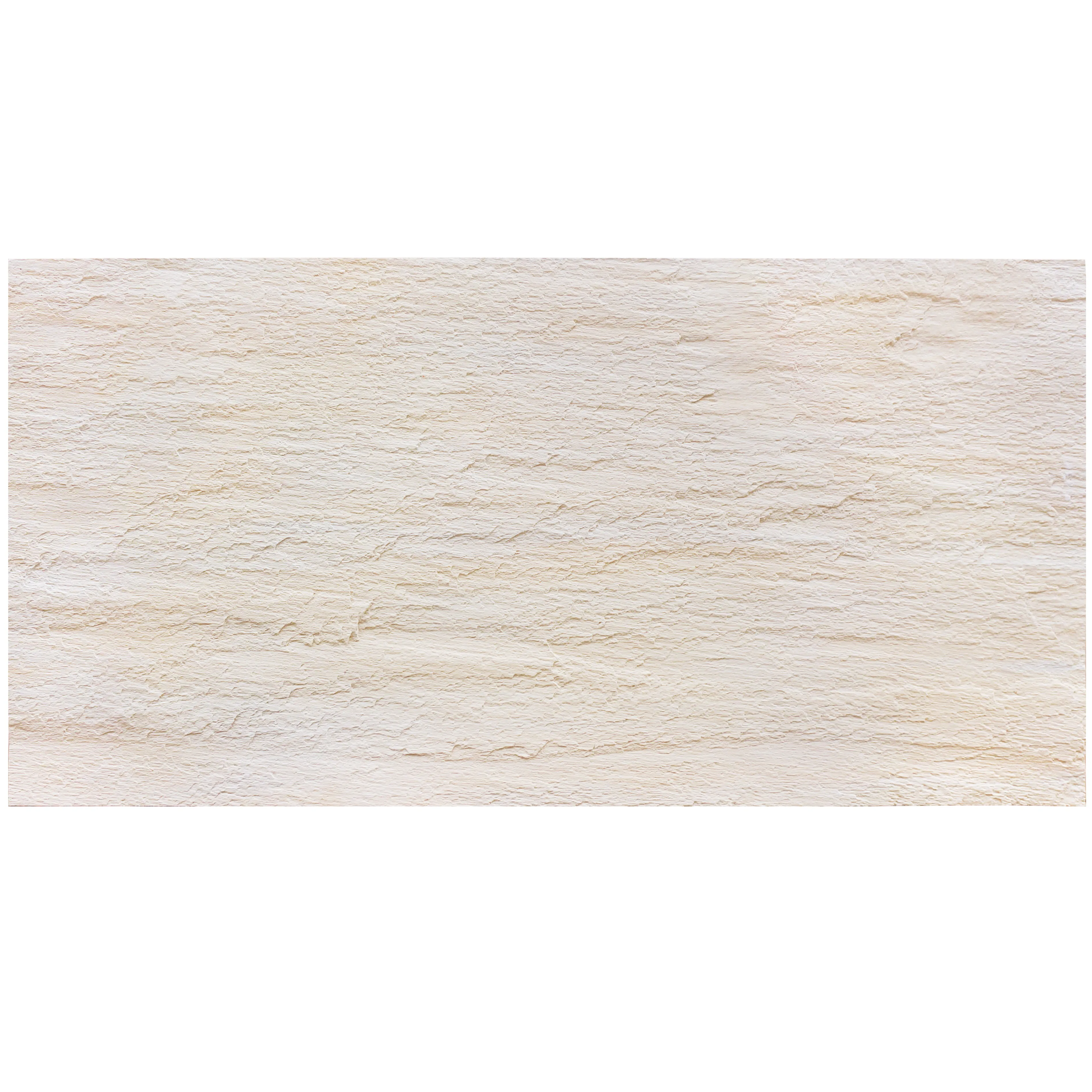
When Carlos, a third-generation builder in Lisbon, first held a sample of Oasis Stone Foge in his hands, he didn't just see a building material—he felt a shift. For decades, his family's business had relied on traditional concrete and natural stone, materials that left him with a quiet guilt: the quarries that supplied the limestone scarred the countryside; the cement trucks belched smoke into the sky; and leftover scraps from job sites piled up in landfills. But this sample—rough yet resilient, with swirls of beige and gray that mimicked wind-carved desert rock—seemed different. "It felt alive," he later told his daughter, who now runs the company. "Like it had been made with intention, not just industry." That moment, he says, marked the day his family stopped just building structures and started building legacies—ones that respected the planet as much as the people who would inhabit them.
In a world where construction accounts for nearly 39% of global carbon emissions (according to the UN Environment Programme), stories like Carlos's are becoming more than heartwarming—they're urgent. From the concrete jungles of Shanghai to the historic streets of Rome, the buildings we live and work in leave an indelible mark on the environment. But what if the materials we choose could rewrite that story? Enter Oasis Stone Foge, a material that's quietly revolutionizing sustainable construction by proving that strength and sustainability don't have to be rivals. Let's dive into its journey—from quarry to construction site, and beyond—to understand how it's redefining what it means to build with care.
At first glance, Oasis Stone Foge might look like any other natural stone panel. Run your fingers over its surface, though, and you'll notice subtle differences: a texture that's less uniform than polished marble, a weight that feels surprisingly light for its durability, and a warmth that seems to absorb, rather than repel, the world around it. That's because Oasis Stone Foge isn't mined from the earth in (dà kuài—large blocks); it's crafted. Think of it as a collaboration between human ingenuity and natural resilience.
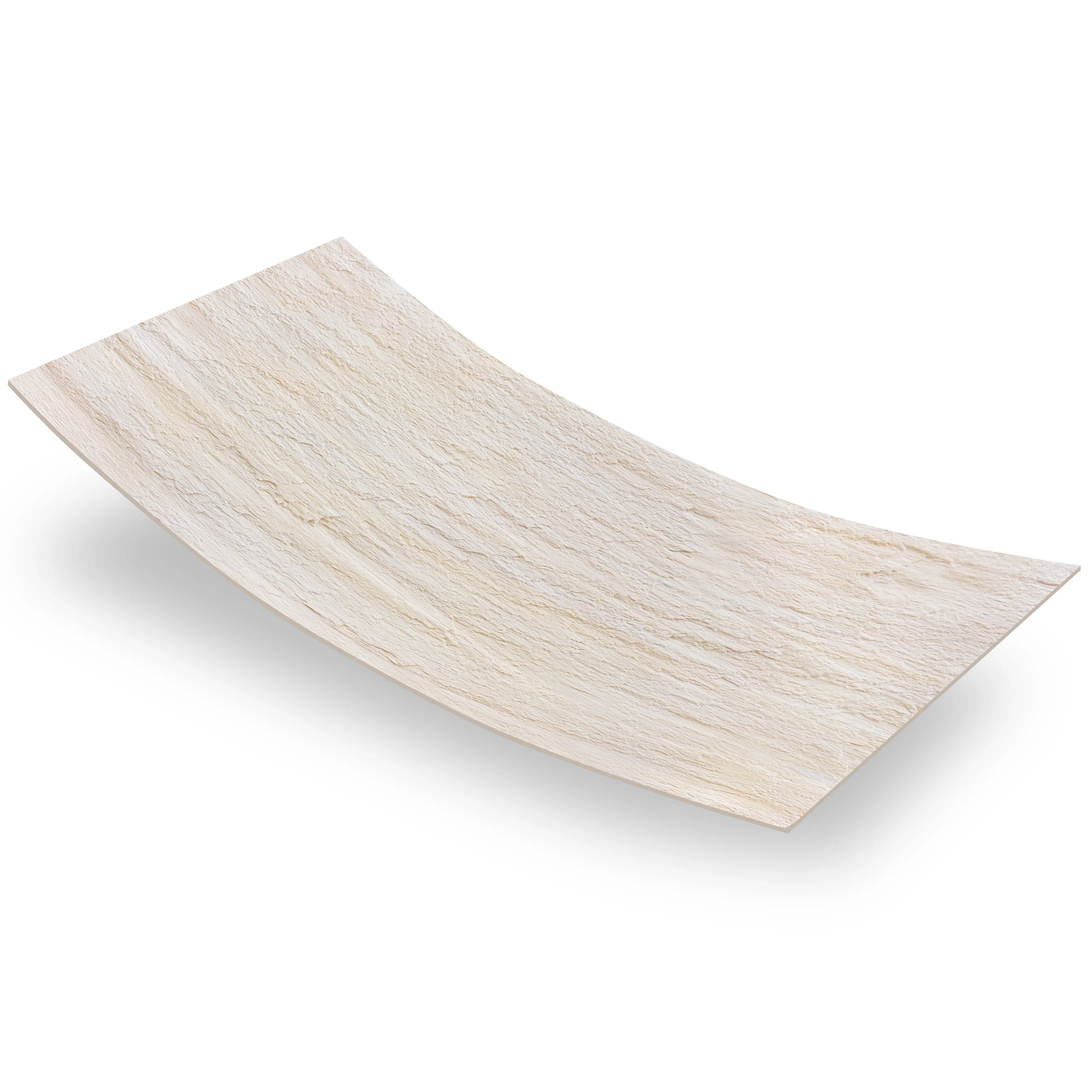
Developed in the early 2020s by a team of materials scientists in Morocco, Oasis Stone Foge is a composite material made from a blend of recycled aggregates (think crushed glass, reclaimed concrete, and even volcanic ash from dormant local volcanoes), natural binders, and a small percentage of MCM flexible stone fibers. The MCM (Modified Composite Material) component is key here—it's what gives the stone its flexibility, allowing it to bend slightly without cracking, and reducing the need for thick, heavy slabs that waste material and energy during transport.
"We wanted to create something that worked with nature, not against it," says Dr. Amina Bennani, lead scientist on the project. "Traditional stone quarrying often strips the land bare, leaving scars that take decades to heal. With Oasis Stone Foge, we source 80% of our raw materials from recycled or locally abundant sources—like the sand from dried riverbeds in the Atlas Mountains, which would otherwise go unused. It's about closing loops, not opening new wounds."
To truly understand a material's impact, you have to follow its journey—from the moment its ingredients are gathered to the day it's no longer needed. Let's walk through that journey for Oasis Stone Foge and see how it stacks up against the status quo.
Traditional natural stone extraction is often a tale of excess. Quarries dig deep, displacing wildlife, draining water tables, and leaving behind mountains of waste rock. Take travertine, a popular natural stone: mining it requires heavy machinery that guzzles diesel, and for every ton of usable travertine, up to 3 tons of waste are generated. By contrast, Oasis Stone Foge's sourcing is a study in restraint.
The recycled aggregates in Oasis Stone Foge come from construction sites (leftover concrete, broken bricks) and industrial byproducts (fly ash from power plants, slag from steel mills). These materials are diverted from landfills, where they would otherwise release methane as they decompose. The natural components—like the riverbed sand Dr. Bennani mentioned—are collected by hand or with small, electric vehicles, minimizing disturbance to local ecosystems. "In the three years we've been operating, we haven't had to clear a single tree or relocate a single family," says Mustapha, who manages the material collection in the Atlas region. "The communities here even help us—they bring us broken concrete from their own renovations. It's become a point of pride."
If sourcing is about where materials come from, production is about how they're transformed. Traditional cement production, for example, involves heating limestone to 1,450°C in kilns, a process that releases massive amounts of CO2 (cement alone is responsible for 8% of global carbon emissions). Foamed aluminium alloy boards, another trendy material, require smelting aluminium at 660°C, a process that's energy-intensive and relies heavily on fossil fuels.
Oasis Stone Foge's production tells a different story. The manufacturing facility in Marrakech runs on 100% solar power, with backup generators fueled by biogas from local agricultural waste. The blending process uses low-temperature curing (around 60°C), reducing energy use by 70% compared to traditional concrete production. "We designed the process to work with the sun, not against it," Dr. Bennani explains. "The curing chambers are glass-roofed, so they use solar heat during the day. Even the water we use is recycled—we capture rainwater and treat wastewater from the mixing process, cutting our freshwater consumption by 85%."
A material's environmental impact isn't just about how it's made—it's about how long it lasts. A wall that needs to be replaced every 10 years will ultimately have a higher footprint than one that stands for 50. Here, Oasis Stone Foge's resilience is its secret weapon.
In independent tests, Oasis Stone Foge panels have shown remarkable durability: they resist water absorption (preventing mold and rot), stand up to extreme temperatures (from -20°C in Norway to 50°C in Dubai), and even shrug off the corrosive effects of salt air (making them ideal for coastal projects). Compare that to wood-concrete boards, which often warp or crack after 15–20 years, or painted metal panels that peel and require frequent touch-ups. "We installed Oasis Stone Foge on a beachfront café in Casablanca in 2021," says Carlos, the Lisbon builder. "Two winters of storms, and it still looks brand new. No peeling, no fading—just that same earthy texture. It's like it's getting stronger with time."
Even the most durable materials eventually reach the end of their useful life. The question is: what happens then? For many traditional materials, the answer is a landfill. Concrete, for example, is rarely recycled because crushing it is expensive, and the resulting aggregate is often low-quality. Natural stone, too, is often dumped, as its irregular shape makes reuse difficult.
Oasis Stone Foge, however, is designed to be circular. When a building clad in Oasis Stone Foge is demolished, the panels can be crushed into a fine aggregate and reused in new Oasis Stone Foge production—or even as a base material for roads or garden paths. "We set up a take-back program in 2022," Dr. Bennani says. "Contractors can return old panels, and we give them a discount on new ones. So far, we've recycled over 500 tons of material—that's 500 tons that didn't end up in a hole in the ground."
| Material | Carbon Emissions (kg CO₂/m²) | Water Usage (L/m²) | Waste Generated (kg/m²) | Estimated Lifespan (years) | Recyclability |
|---|---|---|---|---|---|
| Oasis Stone Foge | 22 | 45 | 1.2 | 50–60 | High (90% recyclable) |
| Traditional Concrete | 85 | 180 | 5.8 | 30–40 | Low (10–15% recyclable) |
| Natural Travertine | 68 | 220 | 12.0 | 40–50 | Low (difficult to reuse) |
| Foamed Aluminium Alloy Board | 110 | 95 | 3.5 | 25–30 | Medium (50–60% recyclable) |
Table 1: Environmental comparison of Oasis Stone Foge with common construction materials (data from 2024 industry reports and independent lab tests).
Numbers tell part of the story, but people tell the rest. Let's meet a few of the individuals and communities whose lives have been touched by Oasis Stone Foge's sustainable approach.
In the arid landscapes of Laikipia, Kenya, a community of 300 families set out to build an eco-village in 2022. Faced with water scarcity and a fragile ecosystem, they needed a material that wouldn't drain their resources. Enter Oasis Stone Foge, which was shipped in flat panels (reducing transport costs and emissions) and installed by local workers trained by the manufacturer.
"Before, building a house meant cutting down acacia trees for wood or buying expensive concrete that required importing cement from Nairobi," says Naomi, a village elder. "Oasis Stone Foge changed that. We used sand from our own dry riverbed, and the panels were so light, even the women could help carry them. Now, our houses stay cool in the day and warm at night—no need for electric fans. And the best part? The money we saved on materials went into building a school. Our children now learn under a roof made from the same stone that's protecting their homes."
Sustainability isn't just for rural communities. In Berlin's trendy Neukölln district, a tech startup named GreenPulse wanted its headquarters to reflect its mission: "Tech that heals the planet." They chose Oasis Stone Foge for their exterior cladding, pairing it with MCM flexible stone for interior accent walls.
"We did the math," says Lena, GreenPulse's sustainability director. "Using Oasis Stone Foge instead of traditional concrete saved us 60 tons of CO2 during construction—equivalent to taking 13 cars off the road for a year. But the real surprise was the reaction from our team. People notice the walls—they comment on the texture, ask about the material. It's sparked conversations about sustainability that go beyond the office. One developer even reached out to us after seeing the building, saying they wanted to use Oasis Stone Foge for their next project. It's like the material is spreading the message on its own."
As the world wakes up to the urgency of climate change, sustainable construction materials are no longer optional—they're essential. The International Energy Agency predicts that global building sector emissions must peak by 2025 to keep warming below 1.5°C, and materials like Oasis Stone Foge are critical to hitting that target.
But the future isn't just about one material—it's about a mindset shift. "Sustainability isn't a checklist item," Dr. Bennani says. "It's about asking, 'What does the planet need from this building?' at every step. Oasis Stone Foge is a tool, but the real power is in designers and builders choosing to prioritize the planet. That's where the revolution happens."
For Carlos, the Lisbon builder, that revolution is already underway. His latest project? A housing complex for low-income families, all clad in Oasis Stone Foge. "These families deserve homes that are safe, affordable, and kind to the earth," he says, running a hand over a sample panel in his office. "Oasis Stone Foge lets us give them all three. It's not just a material—it's a promise. And promises, when kept, change the world."
In the end, the buildings we construct are more than just shelters—they're reflections of our values. Do we value speed over sustainability? Convenience over conscience? Or do we value a world where the structures we leave behind are as kind to the planet as they are to the people who use them?
Oasis Stone Foge, with its earthy texture and gentle footprint, is more than a construction material. It's a reminder that innovation and respect for nature can go hand in hand. It's proof that we don't have to choose between strong buildings and a strong planet—that, in fact, the two are inseparable.
So the next time you walk past a building, take a moment to look at its walls. What do they say about the world we're building? And what if, instead of telling stories of extraction and excess, they told stories of renewal and responsibility? With materials like Oasis Stone Foge, that future is already being written—one panel, one wall, one building at a time.
Recommend Products












