

Exploring how innovation in building materials is reshaping our planet's future—one panel at a time
Walk down any city street, and you'll see it: buildings are the backbone of our communities. They shelter us, inspire us, and shape the way we live. But here's the truth we don't always talk about: the construction industry has long been a heavyweight in environmental impact. From quarries chipping away at mountains to factories belching out emissions, traditional building materials have left a trail of carbon, waste, and resource depletion in their wake. It's a problem we can't ignore—not when our planet's health hangs in the balance.
That's where companies like COLORIA come in. For over a decade, they've been quietly reimagining what building materials can be: not just tools for construction, but allies in sustainability. Today, we're diving deep into one of their most innovative creations: the Starry Red Travertine MCM . More than just a pretty face (though its starry, crimson-tinged surface is undeniably striking), this material is a testament to how design and eco-consciousness can walk hand in hand. Let's unpack why it matters—and how it's changing the game for builders, architects, and anyone who cares about the planet.
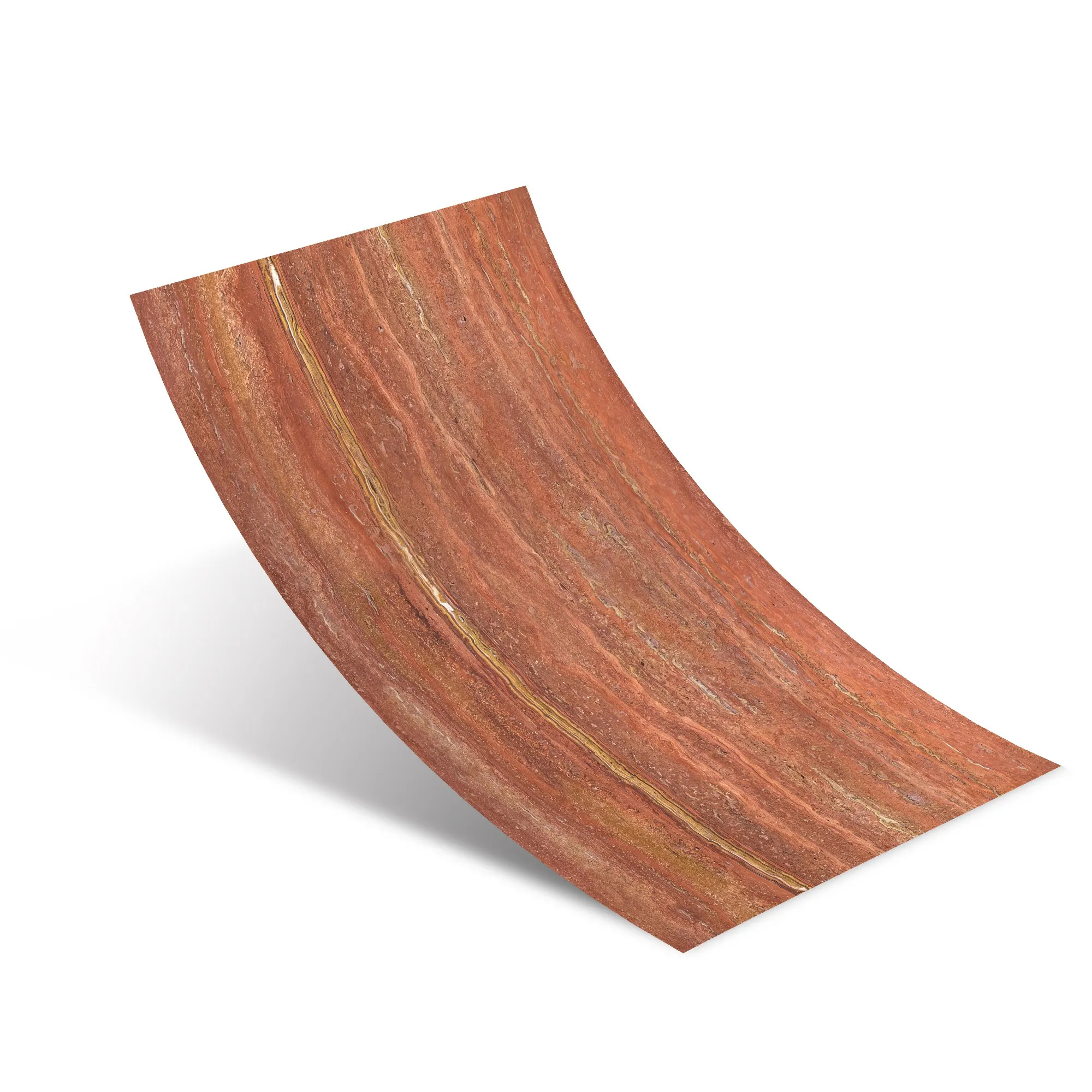
First, let's get up close with the star of the show: Starry Red Travertine MCM . MCM, or Modified Composite Material, is COLORIA's secret sauce—a technology that blends natural minerals with advanced polymers to create panels that are lightweight, durable, and eco-friendly. But what makes the Starry Red variant so special? Picture this: a surface that shimmers like a summer sunset, with tiny flecks of iridescent "stars" scattered across a rich, terracotta-red base. It's the kind of material that turns a plain wall into a statement piece—yet its true magic lies in what you can't see.
Unlike traditional travertine, which is mined from the earth and often requires heavy processing, Starry Red Travertine MCM starts with recycled stone particles. These particles are mixed with a low-VOC (volatile organic compound) polymer binder, pressed into thin panels, and cured using energy-efficient methods. The result? A material that uses 70% less raw stone than natural travertine, cuts down on transportation emissions (thanks to being 80% lighter than solid stone), and lasts up to 50 years without fading or cracking. That's not just sustainability—it's longevity, too.
Take, for example, the "stars" in its design. Those aren't just for show. They're made from recycled glass particles, giving new life to waste that would otherwise end up in landfills. It's a small detail, but it's the kind of thoughtfulness that sets COLORIA apart. "We wanted to create something that didn't just look good, but felt good to specify," says Maria Gonzalez, COLORIA's Lead Material Scientist. "Every time an architect chooses Starry Red, they're not just picking a color—they're voting for a process that respects the planet."
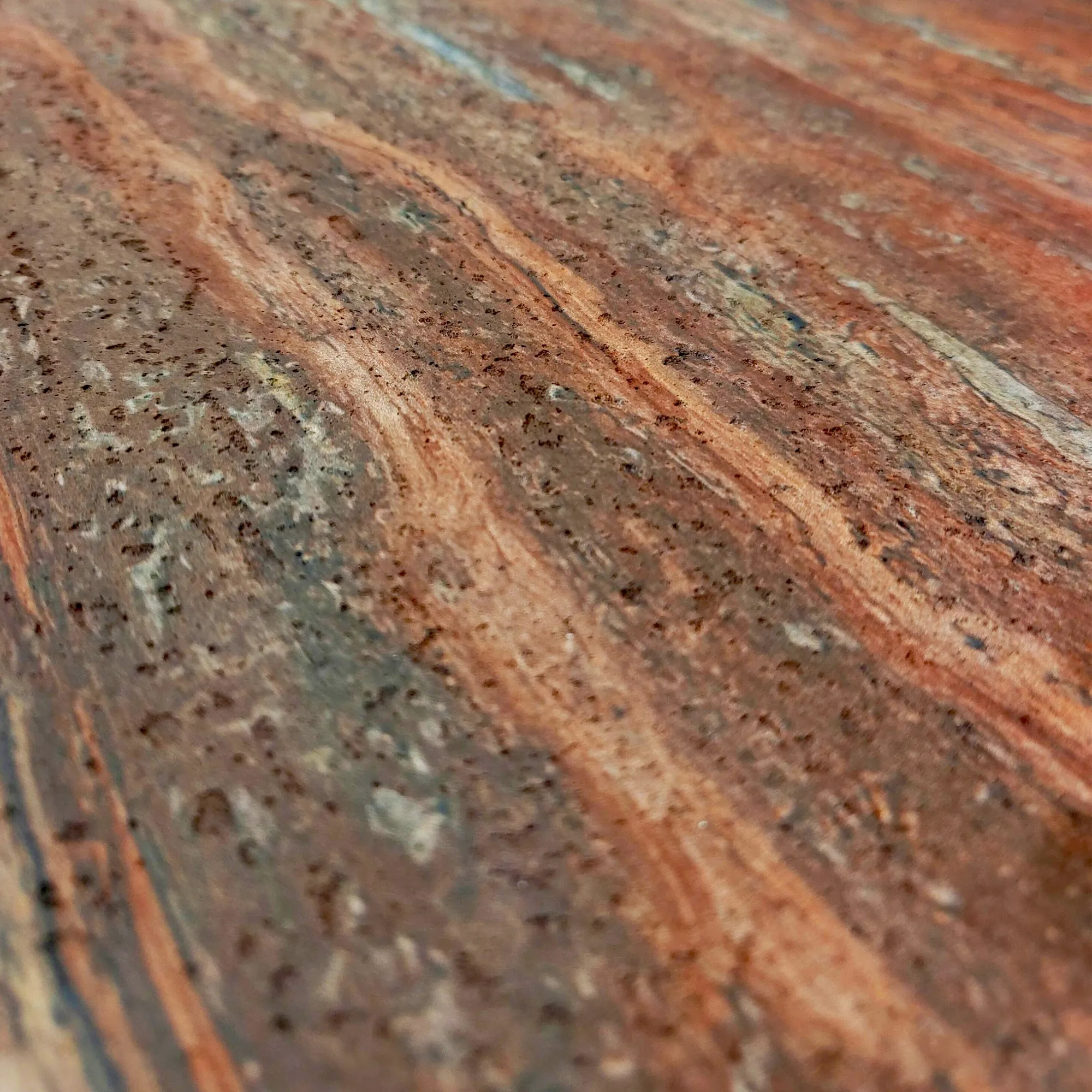
To truly grasp the impact of Starry Red Travertine MCM, let's stack it up against the materials it's replacing. Below is a breakdown of key environmental metrics, comparing MCM with natural travertine, traditional concrete, and even COLORIA's own foamed aluminium alloy board (vintage silver) —another sustainable option in their lineup.
| Material | Carbon Footprint (kg CO₂/m²) | Recyclability | Lifespan (Years) | Weight (kg/m²) |
|---|---|---|---|---|
| Starry Red Travertine MCM | 8.2 | 95% (recyclable at end-of-life) | 50+ | 12 |
| Natural Travertine | 22.5 | 30% (limited recyclability) | 30-40 | 65 |
| Traditional Concrete | 18.3 | 40% (crushed for aggregate) | 25-30 | 240 |
| Foamed Aluminium Alloy (Vintage Silver) | 10.1 | 100% (fully recyclable) | 60+ | 8 |
The numbers speak volumes. Starry Red Travertine MCM has a carbon footprint less than half that of natural travertine and concrete. Its lightweight nature means fewer trucks are needed to transport it, slashing emissions during delivery. And when it finally reaches the end of its life? It can be ground down and reused to make new panels—closing the loop on waste. Compare that to natural stone, which often ends up in landfills after demolition, and the difference is clear.
Even when pitted against COLORIA's own foamed aluminium alloy board (vintage silver) —a sleek, metallic option popular for modern facades—Starry Red holds its own. While the aluminium board has a slightly higher recyclability rate, Starry Red's lower carbon footprint and warmer aesthetic make it a favorite for projects aiming to blend sustainability with natural beauty. "It's about choice," Gonzalez explains. "Not every building needs a silver sheen. Sometimes, you want the warmth of stone—without the environmental cost."
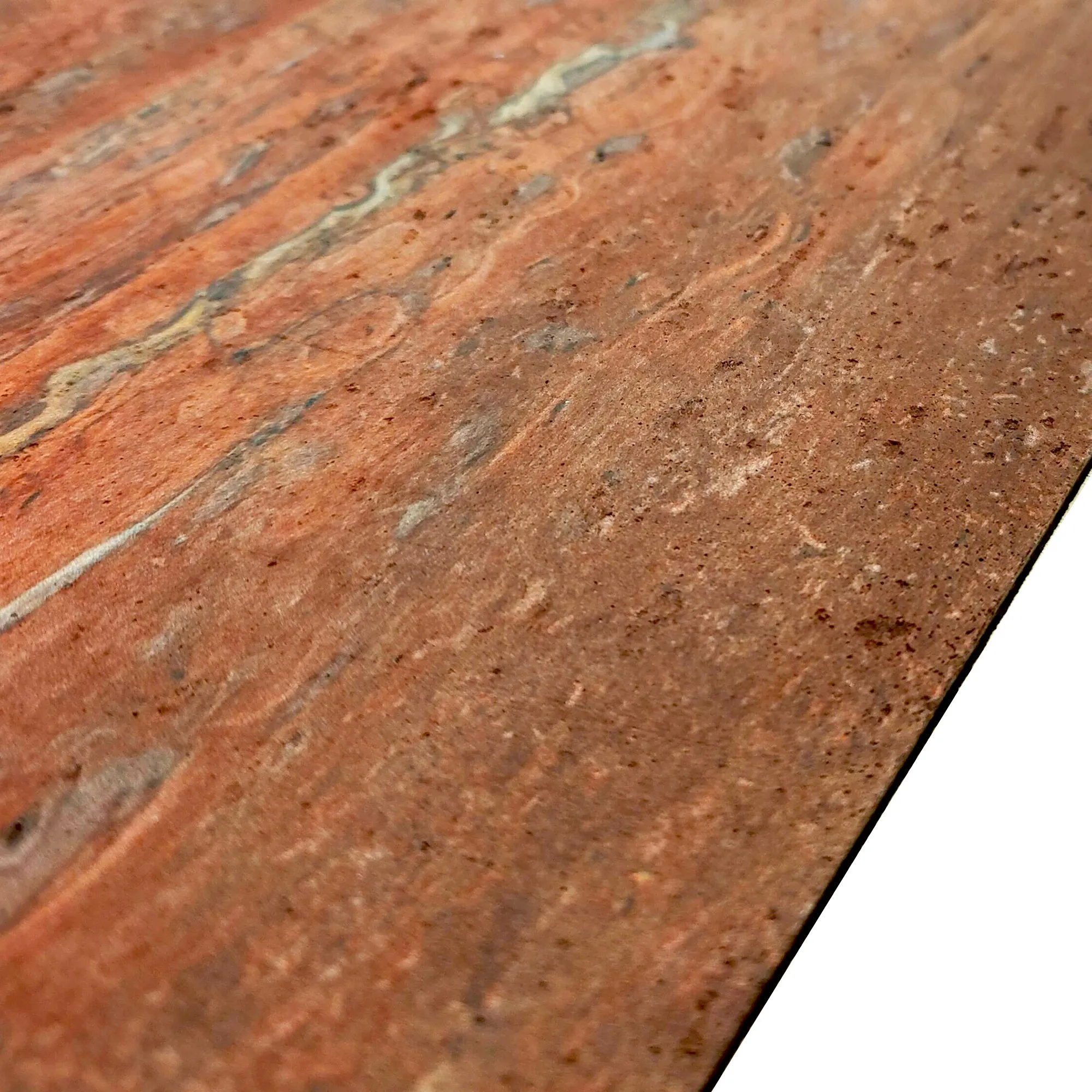
Starry Red Travertine MCM isn't alone in COLORIA's eco-friendly lineup. The brand's travertine (starry blue) variant, for instance, swaps the crimson base for a deep, oceanic hue, using recycled ceramic particles to mimic the look of water-worn stone. It's become a hit for coastal projects, where durability against salt and humidity is key—all while keeping environmental impact low.
Then there's the green building materials umbrella, which includes everything from bamboo mat board (made from fast-growing, renewable bamboo) to fair-faced concrete (formulated with recycled aggregates). Each product is designed with the same core principles: reduce, reuse, rethink. Take the wood grain board , for example. It looks and feels like real wood, but it's made from recycled wood fibers and a plant-based binder, eliminating the need to cut down trees. "We don't believe in sacrificing aesthetics for sustainability," says James Chen, COLORIA's CEO. "Why choose one when you can have both?"
One of the most exciting developments is COLORIA's 3D printing series, which allows architects to create custom textures and shapes without the waste of traditional carving. A recent project in Barcelona used 3D-printed travertine (starry orange) panels to recreate the look of ancient Roman mosaics—using 90% recycled materials. "It's like painting with sustainability," says lead architect Carlos Mendez. "We could never have achieved that level of detail with natural stone, and we certainly couldn't have done it this responsibly."
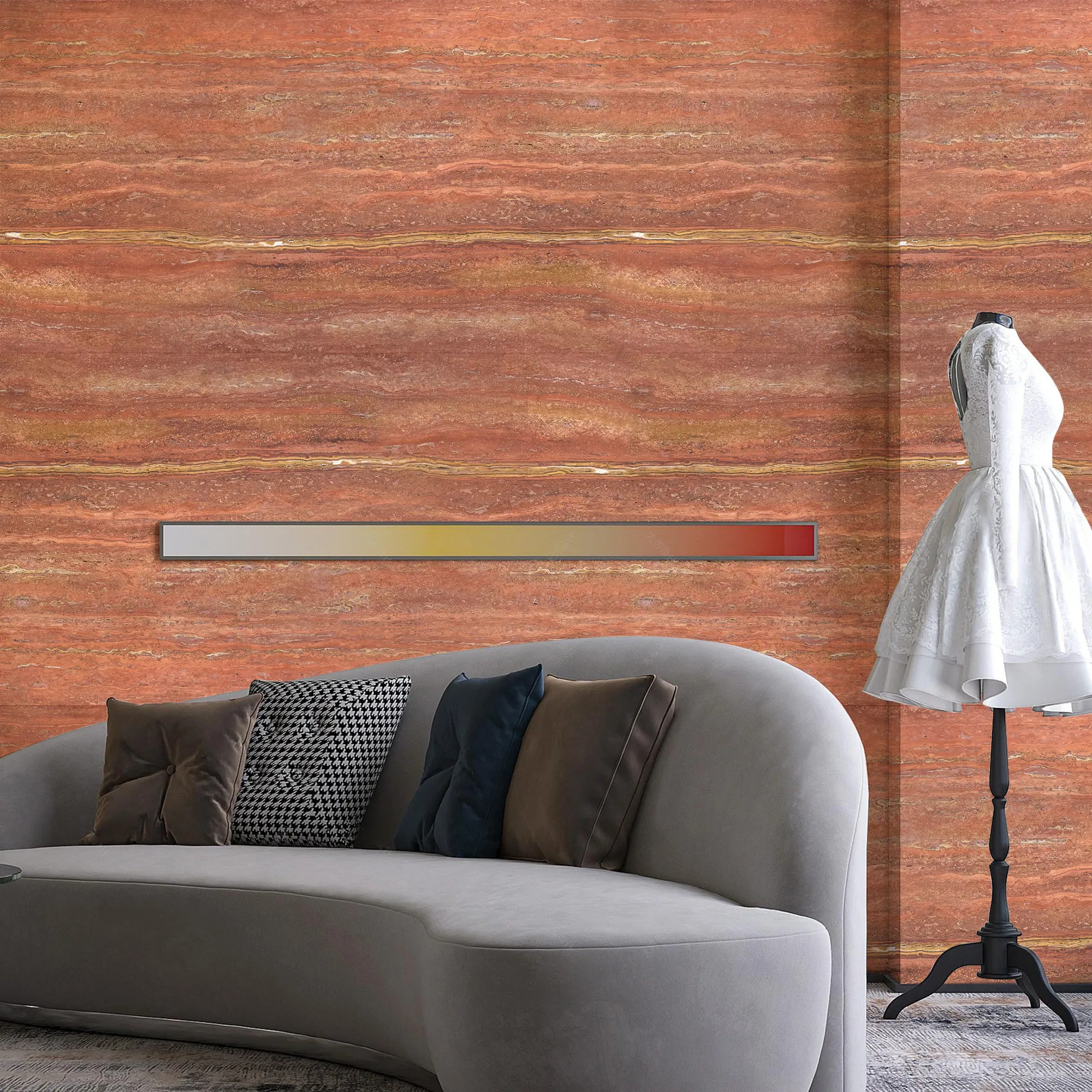
Sustainability isn't just about the materials themselves—it's about how they're made. COLORIA's manufacturing plants run on 100% renewable energy (solar and wind), and their water usage is offset by on-site rainwater harvesting systems. Even the packaging for their panels is made from recycled cardboard and biodegradable shrink wrap. "We audit every step of the process," Chen says. "If there's a way to make it greener, we're on it."
Take their Italy-based facility, which produces the Starry Red Travertine MCM. The plant's roof is covered in solar panels that generate enough energy to power the entire production line, with excess energy fed back into the grid. Wastewater from the panel washing process is treated and reused to water the facility's green spaces. And employees are trained in circular economy practices, from sorting waste to suggesting efficiency improvements. "It's a culture, not just a checklist," Gonzalez adds.
Certifications back up the claims: COLORIA holds LEED Platinum, Cradle to Cradle Silver, and GREENGUARD certifications for all its products. "These aren't just badges," Chen emphasizes. "They're proof that we're held to the highest standards by third parties. When a client sees those certifications, they know we're not just talking the talk."
So, what's next for COLORIA? The company is currently testing a new line of gradient color rammed earth board , which uses soil from construction sites (otherwise discarded as waste) to create panels with natural, earthy tones. Early prototypes have shown a 95% reduction in embodied carbon compared to traditional rammed earth—all while retaining that signature textured look.
There's also a focus on education. COLORIA recently launched a free online course for architects and builders, teaching them how to specify sustainable materials and calculate the environmental impact of their projects. "Sustainability can't be a niche," Chen says. "It needs to be the default. And that starts with knowledge."
At the end of the day, materials like Starry Red Travertine MCM are more than just products—they're a promise. A promise that our cities can grow without growing at the planet's expense, that beauty and responsibility can coexist, and that every building we put up can be a step toward a healthier future. "When I walk past a building clad in our panels, I don't just see a wall," Gonzalez says. "I see a community that cares. And that's the impact we're chasing."
Recommend Products











