
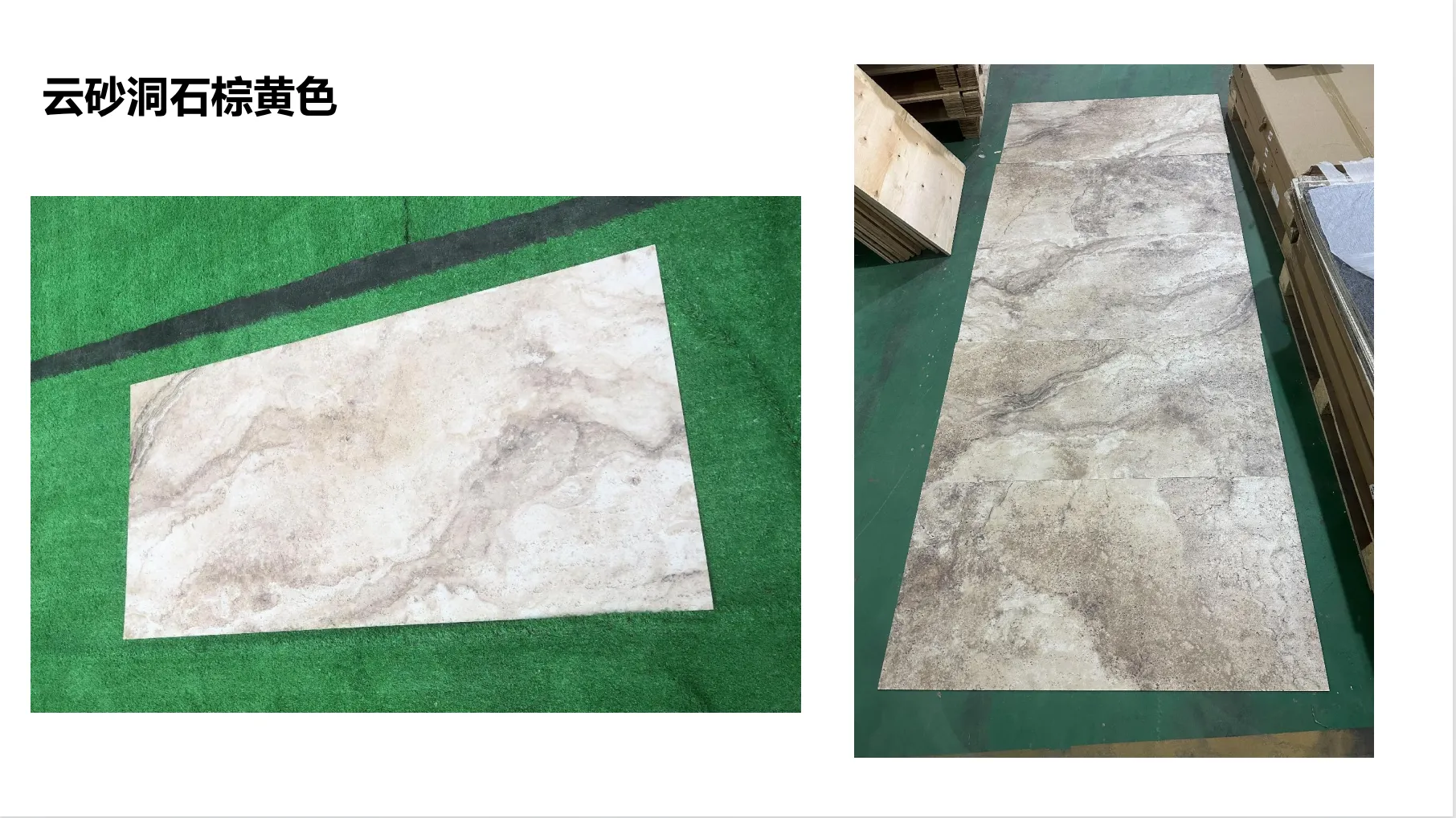
Picture this: a geologist kneels beside a sun-warmed outcrop in the rolling hills of Tuscany, brush in hand, carefully sweeping away dust to reveal a layer of stone that shimmers like honeyed sand. Its surface is pockmarked with tiny, fossilized bubbles, as if the earth itself once exhaled here, and its color—warm, earthy, a soft blend of terracotta and cream—seems to glow in the afternoon light. This isn't just any rock. It's dolomitic travertine (claybank), a sedimentary stone with a story written in minerals, water, and time. To understand it is to decode a million-year-old diary of the planet's quiet, relentless creativity.
Most of us think of rocks as static—solid, unchanging sentinels of the landscape. But dolomitic travertine (claybank) is a reminder that stone is, in fact, a record of motion. Its journey begins not with tectonic collisions or volcanic fire, but with something far gentler: water. Rainwater, groundwater, even the trickle of a mountain stream—these are the sculptors here, armed with a chemical toolkit that dissolves, transports, and rebuilds.
It starts when water percolates through layers of limestone or dolomite bedrock, the kind you might find in ancient seabeds lifted by geological upheaval. As it moves, the water acts like a patient chemist, dissolving tiny amounts of minerals—calcium carbonate, magnesium carbonate, and trace elements—from the rock. This isn't a violent process; it's slow, almost imperceptible. Carbon dioxide (CO₂) from the air or soil dissolves in the water, creating a weak acid (carbonic acid) that eats away at the stone, turning solid rock into a mineral-rich solution. Think of it like sugar dissolving in tea, but on a geological timescale.
The key ingredients here are calcium (Ca²⁺) and magnesium (Mg²⁺) ions—dolomitic travertine gets its name from the high magnesium content, setting it apart from "regular" travertine, which is mostly calcium carbonate. This magnesium comes from dolomite rock, which is itself a mix of calcium and magnesium carbonate (CaMg(CO₃)₂). So, when water passes through dolomite, it picks up both ions, creating a solution that's rich in the building blocks of our stone.
Once loaded with minerals, the water continues its journey, eventually emerging at the surface—maybe as a hot spring, a cave pool, or a seep along a hillside. Here, something crucial happens: the water loses its ability to hold onto those dissolved minerals. Why? It all comes down to CO₂. At the surface, the water is exposed to air, and the CO₂ that made it acidic starts to bubble off, like opening a soda can. As CO₂ levels drop, the water's pH rises, making it less acidic. Suddenly, the calcium and magnesium ions can no longer stay dissolved. They bond with carbonate ions (CO₃²⁻) in the water, forming solid crystals of calcium magnesium carbonate—the heart of dolomitic travertine.
This process is called precipitation, and it's the same reason stalactites grow in caves: mineral-rich water drips from the ceiling, loses CO₂, and leaves behind a tiny deposit of stone. Over time, those deposits build up, layer by layer, like a slow-motion waterfall freezing in place.
Nature rarely works alone, and dolomitic travertine (claybank) is no exception. While chemical processes kickstart the formation, living organisms often act as catalysts, speeding up the process and adding texture. Algae, bacteria, and even tiny aquatic plants thrive in the mineral-rich waters where travertine forms. As they photosynthesize, these organisms absorb CO₂ from the water, lowering its acidity further and triggering more mineral precipitation. In some cases, the microbes themselves get trapped in the growing stone, leaving behind fossilized traces—microscopic time capsules of life that once danced in the water.
This biological influence is why dolomitic travertine often has a porous, "spongy" texture. The microbes create small pockets and channels as they grow, and when the minerals precipitate around them, those spaces remain. Run your hand over a slab of dolomitic travertine (claybank), and you're touching the ghost of a microbial community that lived, ate, and died millions of years ago.
Precipitation builds layers, but layers alone don't make stone. For dolomitic travertine (claybank) to become the dense, durable material we recognize, it needs pressure and time—lots of time. Over centuries, even millennia, new layers of mineral deposits pile atop the old, compressing the lower layers. The weight squeezes out water and air, packing the crystals closer together. Minerals like calcite or dolomite act as natural cements, gluing the grains into a cohesive mass. What starts as a soft, crumbly deposit gradually hardens into rock, though it remains more porous than, say, granite—a trait that gives it its unique, breathable quality.
Walk into a showroom, and you'll notice dolomitic travertine (claybank) immediately. Its color isn't the stark white of marble or the deep gray of slate; it's a soft, inviting claybank—a blend of beige, terracotta, and warm cream, like sunlight on dried earth. That hue isn't an accident. It's a signature written by the minerals that snuck into its formation story.
The primary culprits here are iron oxides. As water travels through the earth, it often picks up trace amounts of iron from soil or bedrock. When these iron-rich solutions precipitate into dolomitic travertine, the iron oxidizes (think rust) and stains the stone. The result? Hues that range from pale cream (low iron) to rich claybank (higher iron). It's a subtle gradient, but it's what makes this stone feel so alive—like it carries a piece of the soil, the rain, and the rusted nails of time within it.
Compare that to, say, travertine (starry blue)—a cousin in the travertine family. Its vivid blue is often due to copper or manganese impurities, a reminder that the smallest mineral "spice" can dramatically change a stone's appearance. Dolomitic travertine (claybank) takes the opposite approach: understated, earthy, and deeply connected to the landscapes where it forms.
To truly appreciate dolomitic travertine (claybank), it helps to meet its relatives. The world of sedimentary stones is a crowded family, and each has its own quirks. Let's take a closer look at how it compares to two near-neighbors: stream limestone (claybank) and regular travertine.
| Feature | Dolomitic Travertine (Claybank) | Stream Limestone (Claybank) | Regular Travertine |
|---|---|---|---|
| Primary Minerals | Calcium magnesium carbonate (dolomite) | Calcium carbonate (calcite) | Calcium carbonate (calcite) |
| Formation Environment | Hot springs, cave pools, seeps with high magnesium | Streams, lakes, shallow marine environments | Hot springs, geysers, cave systems (low magnesium) |
| Texture | Porous, layered, with microbial or bubble pockets | Dense, often with fossil fragments (shells, coral) | Porous, but less magnesium gives a smoother feel |
| Durability | Moderate; magnesium adds strength vs. regular travertine | High; dense structure resists weathering | Moderate; softer than dolomitic varieties |
Stream limestone (claybank), for example, forms in flowing water—rivers or lakes—where calcium carbonate precipitates in calmer moments. It's often denser than dolomitic travertine, with visible fossils (think tiny shells or plant fragments) that tell of ancient aquatic life. Regular travertine, on the other hand, lacks the high magnesium content of its dolomitic cousin, making it slightly softer and more prone to etching from acidic substances. Dolomitic travertine (claybank) hits a sweet spot: the magnesium boosts its hardness, while its porous texture keeps it lightweight and breathable.
Then there's rough granite stone (beige)—an igneous rock, born from magma, with large, interlocking crystals. It's a reminder of how different geological processes create wildly different materials. Granite is hard, dense, and unyielding; dolomitic travertine (claybank) is porous, layered, and almost tactile in its warmth. They're like two artists using the same earth but painting with entirely different brushes.
Stones don't just shape landscapes—they shape civilizations. For centuries, humans have turned to rocks that blend beauty and function, and dolomitic travertine (claybank) has often been in the mix. Its warm color, durability, and ease of cutting made it a favorite in regions where it's found, from the hills of Italy to parts of the Middle East.
Consider historical pathfinders stone—a term used to describe stones that guided ancient builders, their properties (workability, availability, aesthetics) making them foundational to architectural traditions. Dolomitic travertine (claybank) fits this bill. In ancient Rome, for example, travertine (of various types) was used in structures like the Colosseum, prized for its strength and the way it weathered to a soft patina. While we can't know for sure if dolomitic travertine (claybank) specifically was used there, its modern reputation as a "heritage stone" speaks to its timeless appeal—one that bridges the gap between a geologist's brush and an architect's blueprint.
Fast forward to today, and dolomitic travertine (claybank) is still making waves. Its earthy color and natural texture have made it a darling of interior designers and architects, who use it for flooring, wall cladding, even countertops (though it requires sealing to protect against stains). It's a stone that feels both modern and ancient—perfect for spaces that want to honor the past while embracing the present.
But its uses go beyond aesthetics. Thanks to its porosity, dolomitic travertine (claybank) is breathable, making it ideal for humid environments like bathrooms or outdoor patios. It also has good thermal properties, staying cool in summer and warm in winter—a practical bonus. And because it's formed from sustainable, natural processes (no mining of rare resources or harsh chemicals), it's increasingly popular in green building projects, a nod to the stone's own eco-friendly origins.
As we wrap up this journey—from raindrop to rock, from mineral to masterpiece—there's a lesson in dolomitic travertine (claybank) that goes beyond geology. It's a story about patience. This stone didn't form overnight. It took centuries of water trickling, minerals precipitating, and microbes bustling. It's a reminder that some of the world's most beautiful things aren't born of speed or force, but of quiet, consistent effort.
So the next time you run your hand over a slab of dolomitic travertine (claybank), remember: you're touching more than stone. You're touching the memory of rain, the labor of microbes, the weight of time, and the quiet, persistent creativity of our planet. It's a million-year-old story, and it's still being written—one drop, one crystal, one layer at a time.
Recommend Products












