
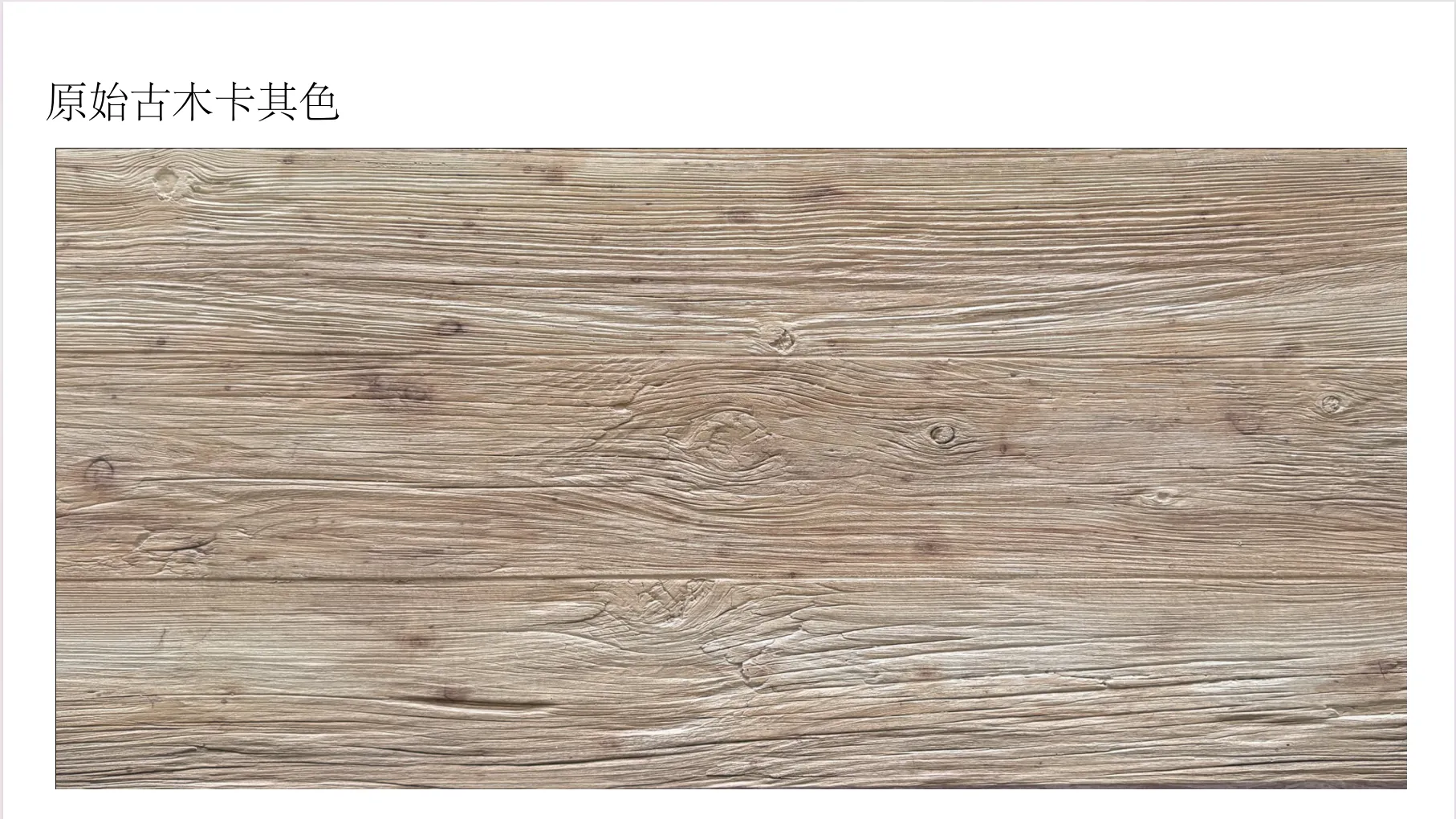
There's something inherently comforting about wood. It's the creak of an old oak floorboard that holds decades of footsteps, the warm glow of a hand-carved mantel passed down through generations, the way sunlight filters through wooden beams to paint patterns on a kitchen counter. For centuries, wood has been more than a building material—it's a storyteller, carrying the memories of civilizations, craftsmen, and families in its grain. But as we step into an era where sustainability and durability are non-negotiable, the question arises: How do we honor the timeless beauty of ancient wood design while adapting to the needs of modern life? Enter MCM, a brand redefining the boundaries of material innovation, and in doing so, breathing new life into the art of wood-inspired architecture.
Ancient wood design wasn't just about aesthetics; it was a language. In Japanese shoji screens, the delicate latticework spoke of harmony with nature. In medieval European timber-framed homes, the bold, interlocking beams were a testament to engineering ingenuity. Even in the simple, weathered planks of a Greek island taverna, there was a quiet resilience—a material that aged gracefully, gaining character with every storm and sunbeam. But for all its charm, traditional wood has always had limitations: it warps, rots, burns, and demands constant maintenance. In a world where buildings need to stand strong for decades (and even centuries) with minimal upkeep, relying solely on natural wood often feels like trying to fit a square peg into a round hole.
That's where MCM comes in. Rather than replacing wood entirely, the brand has chosen to elevate it—drawing inspiration from the texture, warmth, and narrative of ancient wood design while infusing it with cutting-edge materials science. The result? A lineup of products that capture the soul of wood without its vulnerabilities. Let's dive into how MCM is bridging the past and future, one innovative material at a time.
At the heart of MCM's approach is a simple belief: great design shouldn't require sacrificing practicality. For those who crave the look and feel of wood but need something tougher, more flexible, and kinder to the planet, the brand has developed three standout innovations that are changing the game: mcm flexible stone , wood grain board , and wood concrete board . Each of these materials is a love letter to ancient wood design, reimagined for the demands of today's architects, designers, and homeowners.
Imagine running your hand over a wall panel that feels like weathered teak—warm, slightly textured, with the subtle grooves of natural grain—but instead of splintering or fading, it bends. That's the magic of mcm flexible stone. Unlike rigid natural stone or fragile wood, this material is engineered to be pliable, making it perfect for curved surfaces, accent walls, or even furniture with organic shapes. It's a nod to the fluidity of ancient wood carvings, where craftsmen would follow the natural curves of a tree trunk to create pieces that felt alive. Now, designers aren't limited by straight lines or flat planes; they can mimic the sinuous beauty of a vine-wrapped oak or the gentle arc of a wooden canoe, all while knowing the material will stand up to humidity, scratches, and time.
Take, for example, a boutique hotel in Kyoto that wanted to evoke the serenity of a traditional ryokan but needed walls that could withstand the damp climate. By using mcm flexible stone in a warm, honeyed tone, the designers created accent walls that look like aged cypress—complete with the soft, irregular grain patterns of wood—without worrying about mold or warping. Guests run their hands over the panels, expecting splinters, and instead find a smooth, durable surface that still feels "alive," just like the ancient wood it honors.
If mcm flexible stone is about flexibility, wood grain board is about authenticity . Close your eyes and picture the kitchen of your childhood—the one with oak cabinets that had little nicks from years of opening and closing, the table where you traced the swirls of the grain with your finger while doing homework. Wood grain board captures that intimacy, but with a modern twist: it's made from a composite material that replicates the exact texture of real wood—from the deep, rich lines of mahogany to the light, airy streaks of pine—without the need for staining, sealing, or sanding. It's wood, but better.
For homeowners who love the look of a rustic wooden accent wall but live in a busy household with kids and pets, wood grain board is a revelation. It doesn't scratch when a dog runs past, doesn't fade when sunlight streams through the window, and doesn't require quarterly treatments to keep it looking fresh. A family in Portland, Oregon, recently used it to clad their living room walls, choosing a medium-brown oak pattern that reminds them of the old barn on their grandparents' farm. "It feels like coming home," the mother of two told me, "but I don't panic when the kids color on it with crayons. I just wipe it off and it's good as new." That's the beauty of MCM's approach: it doesn't erase the nostalgia of wood; it preserves it, making it accessible to everyone, regardless of lifestyle.
Then there's wood concrete board, a material that marries the rugged charm of wood with the industrial strength of concrete. Think of the ancient Roman aqueducts—massive, enduring structures built to last millennia—or the weathered wooden beams of a 19th-century factory, their surfaces worn smooth by time. Wood concrete board takes that duality—strength and softness—and turns it into something revolutionary. It's made by blending concrete with wood fibers, creating a material that has the compressive strength of concrete but the warm, organic texture of wood. It's perfect for spaces that need to feel both grounded and inviting, like a co-working studio or a restaurant with a "rustic-industrial" vibe.
A café in Berlin recently used wood concrete board for its bar counter, choosing a dark, espresso-toned finish that looks like reclaimed walnut. The countertop withstands daily spills, heat from coffee mugs, and the constant clatter of cups and utensils, yet it still has that tactile quality that makes customers want to lean against it, rest their elbows, and stay awhile. It's a far cry from the cold, sterile concrete of modernist design; this is concrete with a heart, inspired by the way ancient wood and stone worked together to build communities.
What makes MCM's approach so powerful isn't just the technology—it's the reverence for history. The brand's designers don't just copy wood grain; they study it, drawing inspiration from ancient techniques to ensure their materials capture the essence of wood, not just the appearance. For example, the wood grain board's patterns are based on scans of century-old wooden planks, preserving the irregularities that make real wood so unique—those little knots, the slight variations in color, the way the grain suddenly swerves, as if the tree had grown around a rock. It's a digital age love letter to the craftsmen of old, who saw beauty in imperfection.
| Traditional Wood Design Element | MCM Innovation | Why It Matters |
|---|---|---|
| Irregular grain patterns (knots, swirls) | Wood Grain Board texture replication | Preserves the "handmade" feel of ancient wood without the fragility |
| Curved, organic shapes (e.g., wooden canoes, carved beams) | MCM Flexible Stone pliability | Allows modern designers to recreate the fluidity of ancient woodwork |
| Weathered, "lived-in" appearance | Wood Concrete Board's worn texture | Captures the charm of aged wood without waiting decades for it to develop |
| Warmth and tactile appeal | All three materials (flexible stone, wood grain, wood concrete) | Keeps the emotional connection of wood while adding durability |
Ancient wood design was inherently sustainable—craftsmen used every part of the tree, built structures to last, and respected the natural world. MCM carries that ethos forward by prioritizing eco-friendly materials and processes. Unlike traditional wood, which often requires clear-cutting forests, or natural stone, which involves energy-intensive mining, MCM's products are made with recycled materials and low-VOC (volatile organic compound) binders. Wood grain board, for instance, uses reclaimed wood fibers mixed with non-toxic resins, reducing the demand for new timber. Wood concrete board incorporates recycled concrete, giving new life to construction waste. And mcm flexible stone? It's made from a blend of natural minerals and recycled polymers, minimizing its carbon footprint.
This commitment to sustainability isn't just good for the planet—it's good for the stories we want to tell. When we build with materials that respect the earth, we're creating spaces that will have their own stories to tell decades from now, just like the ancient wood structures we admire. A home built with MCM's wood-inspired materials today won't just be a house; it will be a legacy, passed down to future generations who can look at the walls and say, "They built this with care—for us, and for the world."
MCM's wood-inspired materials aren't limited to cozy homes or boutique hotels—they're making waves in commercial and even large-scale architecture. Imagine a corporate headquarters in Seattle, where the lobby features a soaring wall clad in wood grain board, designed to look like a forest of Douglas firs. Employees walk through the space, and instead of feeling the sterility of glass and steel, they feel grounded, connected to the Pacific Northwest's natural beauty. Or a museum in Rome, where mcm flexible stone is used to recreate the warm, honey-colored wood beams of ancient Roman villas, allowing visitors to step back in time without worrying about the artifacts being damaged by real wood's volatility.
Even exterior cladding is getting a makeover. Traditional wood siding looks stunning but needs constant repainting and is prone to rot in wet climates. MCM's wood concrete board, on the other hand, can be used as exterior siding, mimicking the look of weathered cedar—complete with the subtle graying of age—without the maintenance. A coastal home in Maine recently used it, and after two harsh winters, the siding still looks as warm and inviting as the day it was installed, with none of the warping or splitting that would have plagued natural wood.
Ancient wood design taught us that buildings are more than just structures—they're vessels for memory, culture, and connection. MCM's innovations—mcm flexible stone, wood grain board, and wood concrete board—don't just replicate the look of wood; they capture its spirit . They allow us to build spaces that feel like home, that tell stories, that age with grace, all while standing up to the demands of modern life. In a world that often prioritizes sleekness over soul, MCM is a reminder that the future of design doesn't have to leave the past behind.
So the next time you walk into a room and feel that familiar warmth—the kind that makes you want to stay, to linger, to create memories—take a closer look. It might not be wood, but it will be something even better: a material that honors the ancient craftsmen who first saw beauty in a tree, and the innovators who are ensuring that beauty lasts for centuries to come. That's the future of ancient wood design. And with MCM leading the way, it's a future worth building.
Recommend Products












