

Nestled within the lush landscapes of Indonesia, Bali stone has long been more than just a building material—it is a storyteller. For centuries, its warm, earthy tones and textured surfaces have adorned temples, traditional villas, and cultural landmarks, carrying the island's heritage in every grain. Craftsmen once chiseled it by hand, shaping it into lintels, columns, and flooring that mirrored Bali's natural beauty. Today, as design evolves and the world leans into sustainability, Bali stone is not just preserving its legacy; it is redefining it. The future of this iconic material lies at the intersection of two powerful trends: the precision of MCM 3D printing series and the innovation of MCM flexible stone , alongside a wave of eco-conscious materials that honor the planet as much as they do design.
Traditional Bali stone extraction and processing, while steeped in craftsmanship, have their limitations. Quarrying can disrupt local ecosystems, and shaping large slabs by hand is time-intensive, limiting scalability. Meanwhile, modern architects and designers crave customization—curved surfaces, intricate patterns, and materials that align with green building standards. Homeowners and businesses, too, want spaces that feel unique yet responsible, blending natural aesthetics with a lower carbon footprint. This is where innovation steps in: 3D printing and sustainable materials are not replacing Bali stone 's soul—they are amplifying it, making it more adaptable, accessible, and kind to the planet.
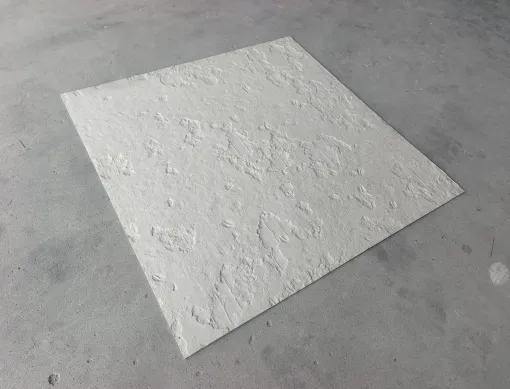
Imagine a world where a Bali stone panel with a custom, wave-like texture can be designed on a computer and printed in days, not weeks. That world is here, thanks to the MCM 3D printing series . Unlike traditional methods that carve away excess stone (generating up to 30% waste), 3D printing builds material layer by layer, using only what's needed. This precision slashes waste and reduces the environmental impact of production. But the real magic? Customization.
"3D printing lets us push the boundaries of what Bali stone can do," says Maria Santos, a sustainable architect specializing in cultural heritage projects. "We recently designed a boutique hotel in Ubud where the lobby features 3D-printed Bali stone screens. The pattern mimics the island's rice terraces—something that would have required months of hand-carving before. With 3D printing, we had the panels ready in three weeks, and the waste was minimal."
The MCM 3D printing series also excels at creating lightweight structures. Traditional stone slabs can be heavy, limiting their use in high-rise buildings or curved designs. 3D-printed Bali stone composites, however, are reinforced with fibers, making them strong yet lighter—ideal for vertical gardens, ceiling accents, or even furniture. For designers, this means more freedom: a restaurant wall that curves gently, a retail space with 3D-printed Bali stone planters that double as art, or a home where every surface tells a personalized story.
If 3D printing is about how Bali stone is made, MCM flexible stone is about reimagining what it's made of. Short for "Modified Composite Material," MCM flexible stone is a game-changer: it looks and feels like natural stone but bends, weighs less, and is kinder to the planet. Composed of recycled stone particles, resins, and natural fibers, it's engineered to be durable (resistant to moisture, heat, and wear) while being flexible enough to wrap around columns, curve over arches, or even be used as flooring in high-traffic areas.
"We tested MCM flexible stone in a beachfront villa project last year," notes David Chen, a material scientist at a leading construction firm. "Traditional Bali stone can crack with saltwater exposure, but the flexible composite held up perfectly. Plus, since it's made with recycled content, the carbon footprint was 40% lower than quarried stone. Clients loved that they could have the authentic stone look without the environmental guilt."
But MCM flexible stone isn't alone in this sustainable shift. Materials like foamed aluminium alloy board (vintage silver) are emerging as complementary options. Lightweight and 100% recyclable, these boards offer a sleek, metallic contrast to Bali stone 's organic texture—think a modern kitchen backsplash pairing Bali stone countertops with foamed aluminium alloy board (vintage silver) accents. Similarly, fair-faced concrete —concrete left uncoated to showcase its natural gray tones and subtle texture—requires minimal processing, making it a low-waste choice for floors or walls that complement Bali stone 's warmth.
| Feature | Traditional Bali Stone | 3D-Printed Bali Stone (MCM 3D Printing Series) | MCM Flexible Stone |
|---|---|---|---|
| Sustainability | High waste (quarrying, carving); limited recycled content | Low waste (layer-by-layer printing); recyclable base materials | High recycled content; 40% lower carbon footprint vs. traditional stone |
| Flexibility in Design | Limited to simple shapes; hand-carved details time-intensive | Complex geometries (curves, patterns) possible; customizable via 3D modeling | Bends to fit curves, arches, and unique surfaces |
| Weight & Installation | Heavy; requires structural support | Lightweight (fiberglass-reinforced); easier to install | Ultra-lightweight; can be cut to size on-site |
| Aesthetic Range | Natural, earthy tones; traditional textures | Same natural tones with custom patterns (e.g., rice terrace motifs) | Mimics stone textures with added color options (e.g., blended with lunar peak silvery accents) |
At the heart of these innovations is a commitment to preserving Bali stone 's aesthetic essence. The goal isn't to create something "new" but to expand what "authentic" can mean. Take the lunar peak series—stones in silvery, golden, and black hues that evoke the moonlit sky over Bali. When paired with Bali stone , these colors add a touch of modern elegance: imagine a living room with Bali stone fireplace surrounds and lunar peak silvery wall panels, creating a space that feels both rooted in tradition and forward-thinking.
Texture, too, is being reimagined. MCM flexible stone can mimic the rough-hewn look of traditional Bali stone or be smoothed into a sleek finish, offering versatility for different design moods. In a recent museum project in Jakarta, designers combined Bali stone with 3D-printed wave panels (another MCM innovation) to create a wall installation that tells the story of Bali's coastal landscapes—rough stone representing cliffs, wavy 3D-printed sections symbolizing the ocean. It's a fusion of old and new that feels seamless, not forced.
As demand for eco-friendly and personalized design grows, the future of Bali stone looks bright. Innovations like the MCM 3D printing series and MCM flexible stone are just the beginning. Researchers are exploring bio-based resins for 3D printing to make materials even more sustainable, while companies are experimenting with "stone recycling"—crushing waste Bali stone from old buildings into powder for use in MCM flexible stone production.
For homeowners, this means spaces that are uniquely theirs: a home office with a 3D-printed Bali stone desk shaped to fit their workflow, or a backyard patio using MCM flexible stone tiles that curve around existing trees. For businesses, it's a chance to stand out: a café with Bali stone walls and foamed aluminium alloy board (vintage gold) lighting fixtures, creating a vibe that's both local and luxurious.
Bali stone has always been about connection—to place, to culture, to nature. Today, as it embraces 3D printing and sustainable materials, it's connecting us to something new: a future where beauty and responsibility go hand in hand. Whether it's a 3D-printed screen telling a modern story, a flexible stone wall bending to fit a curve, or a recycled composite honoring the past, Bali stone is proving that some traditions don't just endure—they evolve. And in that evolution, there's a lesson for all of us: the most timeless materials are the ones that know how to change.
Recommend Products












