
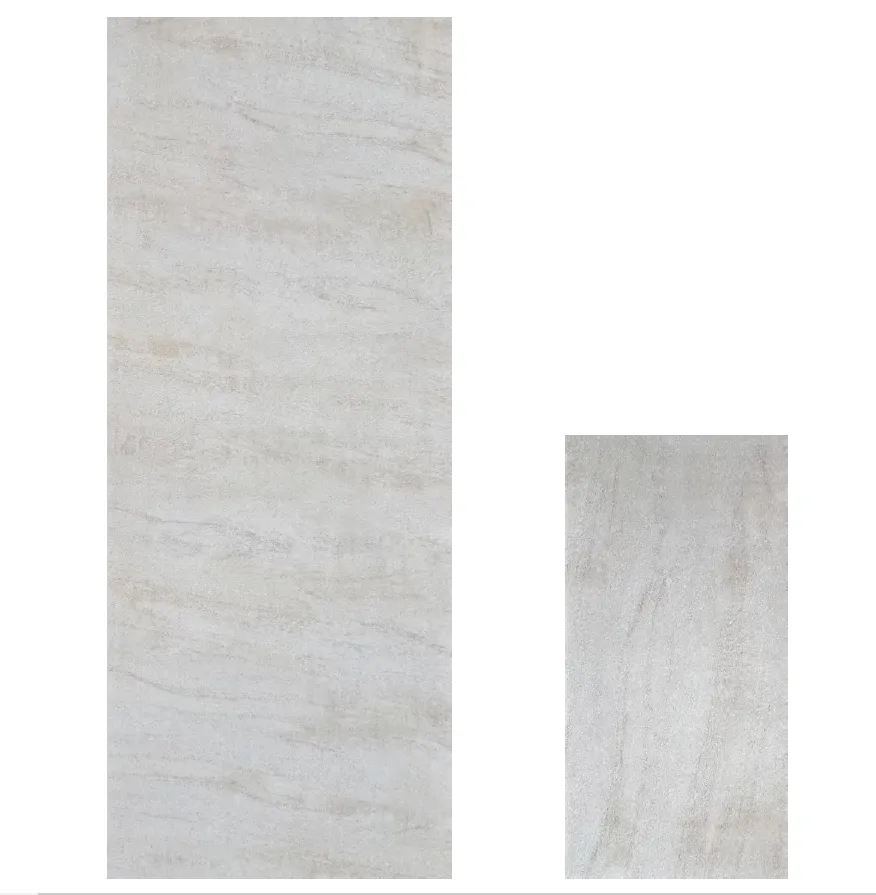
Walk down any city street, and you'll notice something: buildings don't just stand—they speak. The way a facade catches the light, the texture under your fingertips as you brush a wall, the colors that blend or clash with the sky—these details shape how we feel about the spaces we inhabit. For decades, cladding was an afterthought, a utilitarian layer to protect against the elements. But today? It's the storyteller. And at the heart of this narrative shift is a revolution led by MCM (Modified Composite Material) innovations—products that marry durability with design, science with soul. Let's dive into the materials redefining how we build, live, and experience the world around us.
Think back to the last time you visited a historic building. Chances are, its stone walls felt imposing—solid, unyielding, like they'd been there for centuries. That's the magic of natural stone, but it comes with a trade-off: weight. Traditional stone cladding can weigh hundreds of pounds per square foot, limiting where it can be used and driving up construction costs. Enter MCM flexible stone —a material that feels like stone but bends like a sheet of metal. It's the kind of innovation that makes architects whisper, "Finally."
I remember sitting down with a designer friend, Mia, a few years ago. She was working on a boutique hotel in Kyoto, and her vision was bold: a curved, organic facade that mimicked the nearby hills. "Traditional stone would crack under the curve," she sighed, sketching loops on her notebook. "Concrete? Too cold. Wood? Not durable enough." Then she discovered MCM flexible stone. A few weeks later, we stood on-site as workers unrolled sheets of the material, bending them to fit the wall's gentle arc. The result? A facade that looks like it was carved by wind, not machines—lightweight enough to meet structural codes, yet rich with the texture of quarried stone.
What makes MCM flexible stone so special? It starts with a core of mineral composites, reinforced with fibers that add tensile strength. The surface is treated with natural stone aggregates, giving it the look and feel of travertine, slate, or granite—without the heft. At just 4-6mm thick, it weighs a fraction of traditional stone (around 8-12 kg per square meter, compared to 50+ kg for natural stone). This lightness isn't just about ease of installation; it's about possibility. Suddenly, a rooftop bar can have a stone-look accent wall without reinforcing the floor. A home with a curved entryway can wrap stone around the bend, turning a simple doorframe into a statement.
But durability? Let's talk about that. MCM flexible stone isn't just bendy—it's tough. It resists moisture, fire, and UV rays, making it ideal for both interior and exterior use. In coastal areas, where saltwater eats away at metal and concrete, it holds its own. In snowy climates, it doesn't crack under freeze-thaw cycles. And here's the kicker: it's eco-friendly. Unlike traditional stone quarrying, which disrupts ecosystems, MCM production uses recycled materials and emits 60% less carbon than mining. For developers and homeowners alike, that's a win-win—beauty without the environmental guilt.
If MCM flexible stone is about flexibility, the MCM big slab board series is about grandeur. Picture walking into a lobby where the entire wall—from floor to ceiling—is a single, unbroken expanse of stone. No grout lines, no seams, just a seamless sweep of color and texture. That's the power of large-format slabs, and MCM has perfected the art. These aren't your average tiles; we're talking slabs up to 3 meters tall and 1.5 meters wide—big enough to cover a small room in one piece.
I visited a tech headquarters in Austin last year that used MCM big slabs for its main atrium. The design team wanted the space to feel "limitless," so they chose a neutral, earthy tone with subtle veining. As I stood at the entrance, the wall stretched upward like a cliff face, uninterrupted by joints. Sunlight streamed through the skylights, casting shadows that made the stone look like it was breathing. A security guard noticed me staring. "Everyone does that," he chuckled. "First time I saw it, I thought it was one solid block. Took me three months to realize it's actually panels."
Why does this matter? Seams break the illusion. In traditional cladding, every grout line is a pause in the story the wall is trying to tell. With big slabs, the narrative flows. It's why luxury hotels use them in lobbies—to create a sense of opulence that feels effortless. It's why retail stores line their walls with them—to make products pop against a backdrop that doesn't compete. And for installers? Fewer panels mean faster installation. A 500-square-foot wall that might take a week to clad with small tiles can be finished in two days with big slabs. Less labor, fewer errors, and a cleaner end result.
But big slabs aren't just about size—they're about precision. MCM's manufacturing process ensures each panel is consistent in thickness and color, so when you line them up, there's no "this one's lighter" or "that one's thicker" mishap. It's the kind of reliability that makes contractors breathe easier. "With natural stone, you never know what you're gonna get from the quarry," a builder friend told me. "One slab has a big vein, the next is plain. MCM? It's like printing—exact every time."
If MCM flexible stone is the problem-solver and big slabs are the showstoppers, then Marble Stream Stone is the poet. It's cladding that doesn't just cover a wall—it tells a story of rivers, time, and the quiet beauty of erosion. I first saw it in a restaurant in Barcelona, where the entire back wall was clad in it. At first glance, I thought it was marble, but as I got closer, I noticed something different: the veining wasn't random. It swirled and curved like a stream frozen mid-flow, with flecks of gold and gray that looked like sunlight on water.
The restaurant's owner, Carlos, explained that he wanted guests to feel "rooted in nature, even in the middle of the city." So he replaced the original drywall with Marble Stream Stone. "People used to rush through the door, heads down, checking phones," he said. "Now? They stop. They touch the wall. They ask, 'What is this?'" It's true—during lunch, I watched a couple run their fingers over the surface, tracing the "current" with their nails. A child pressed her palm against it, marveling at how cool and smooth it felt. That's the power of a material that connects us to the natural world.
Marble Stream Stone is crafted using a blend of marble aggregates and MCM technology, which allows for precise control over the veining pattern. Unlike natural marble, which forms over millions of years with unpredictable mineral deposits, this material's "stream" is intentional—designed to evoke movement. Available in soft beiges, deep grays, and even hints of blue, it's versatile enough for a cozy café or a high-end penthouse. I've seen it used in bathrooms, where the flowing pattern makes a small space feel larger, and in home offices, where it adds a calm, meditative vibe during stressful workdays.
One of the most striking things about Marble Stream Stone is how it interacts with light. In the morning, when the sun is low, the gold flecks glow softly, like dappled sunlight on a riverbed. In the evening, under warm artificial light, the grays deepen, creating a moody, intimate atmosphere. It's a material that changes with the day, keeping spaces feeling alive. As Carlos put it, "A wall shouldn't be static. It should grow with the room."
Not all cladding aims for earthiness—some reach for the cosmos. Enter the Lunar Peak series: a collection of MCM panels inspired by the moon's rugged, otherworldly surface. Available in silvery, golden, and black finishes, these panels feel like they belong on a space station or a futuristic art museum. They're bold, unapologetic, and perfect for designers who want to make a statement.
I toured a boutique hotel in Dubai that used Lunar Peak silvery for its exterior. From the street, the building shimmered like a chunk of moon rock dropped into the desert. The texture was rough, with tiny indentations that mimicked craters, but the color was a soft, reflective silver that caught the sun during the day and the city lights at night. The architect, a visionary named Zara, told me she wanted the hotel to feel "timeless yet futuristic—like it's been here forever and just arrived." Lunar Peak delivered. Guests often take photos outside, posing against the "moon wall" as if they're on a spacewalk.
Lunar Peak Golden is equally stunning, with a warm, metallic sheen that feels luxurious without being flashy. I saw it used in a penthouse lobby in New York, paired with dark wood and black marble. The effect was opulent, like stepping into a gilded observatory. And Lunar Peak Black? It's dramatic—almost matte, with subtle highlights that make it look like basalt from a lunar volcano. A tech startup in Seattle chose it for their office facade, saying it "mirrors our mission: exploring the unknown."
What makes Lunar Peak unique isn't just its looks—it's its versatility. While it's showstopping on exteriors, it shines indoors too. A recording studio in London used Lunar Peak Black for its walls, and the texture helps absorb sound, improving acoustics. A yoga studio in Los Angeles opted for Lunar Peak Silvery in its meditation room, where the cool color and rough texture create a sense of grounding, even as the name evokes the vastness of space. It's a material that balances contradiction—earthy yet celestial, industrial yet serene.
If Lunar Peak is cosmic, Foamed Aluminium Alloy Board is industrial chic with a twist. Made from lightweight, porous aluminium, these panels have a vintage vibe—think mid-century modern meets steampunk—with a durability that's thoroughly modern. Available in vintage silver, vintage gold, and classic gold, they're the perfect choice for designers who want to blend nostalgia with resilience.
I visited a renovated warehouse in Berlin that now houses a co-working space. The owners wanted to preserve the building's industrial roots but add warmth. They chose Foamed Aluminium Alloy Board (vintage silver) for the main facade, and the result was breathtaking. The panels retained the warehouse's raw, utilitarian feel, but the soft silver color and matte finish kept it from looking cold. Inside, they used the vintage gold variant for accent walls in meeting rooms, pairing it with leather furniture and exposed bulbs. The contrast of old and new made the space feel both historic and fresh.
Foamed aluminium's claim to fame is its weight—or lack thereof. It's up to 70% lighter than solid aluminium, making it easy to install on both exterior and interior walls. But it's also surprisingly strong. The foam structure creates a honeycomb-like pattern that resists dents and scratches, and it's fireproof, corrosion-resistant, and sound-absorbent. That's why concert venues love it: a music hall in Tokyo used Foamed Aluminium Alloy Board (gold) for its walls, and the material helped reduce echo, making every note sound crisp. "We didn't just want good acoustics," the sound engineer told me. "We wanted the walls to look as good as the music sounds."
Another perk? Sustainability. Aluminium is 100% recyclable, and the foaming process uses less energy than traditional aluminium production. For brands that prioritize green building, this is a huge selling point. A brewery in Portland used vintage gold foamed aluminium for its taproom walls, not just for the look, but because it aligned with their "zero-waste" mission. "Our customers care about where their beer comes from," the owner said. "Why wouldn't they care about where our walls come from, too?"
| Product Series | Core Material | Color Palette | Standout Features | Best For |
|---|---|---|---|---|
| MCM Flexible Stone | Mineral composites + fiber reinforcement | Earthy tones (beige, gray, terracotta) | Bendable, lightweight (8-12 kg/m²), weather-resistant | Curved walls, historic renovations, coastal buildings |
| MCM Big Slab Board Series | High-density MCM with stone aggregates | Neutrals, bold solids, subtle veining | Large format (up to 3m x 1.5m), seamless look, fast installation | Lobbies, retail spaces, feature walls |
| Marble Stream Stone | Marble aggregates + MCM matrix | Beige, gray, blue with flowing veining | Natural stone appearance, light-responsive, eco-friendly | Restaurants, bathrooms, meditation rooms |
| Lunar Peak Series | MCM with metallic pigments | Silvery, golden, black (crater-like texture) | Futuristic aesthetic, sound-absorbent, UV-resistant | Tech offices, luxury hotels, art galleries |
| Foamed Aluminium Alloy Board | Porous aluminium alloy | Vintage silver, vintage gold, classic gold | Lightweight, fireproof, 100% recyclable | Industrial spaces, concert halls, eco-friendly builds |
In 2023, I attended a green building conference in Copenhagen, and one statistic stuck with me: 40% of global carbon emissions come from construction. That's more than cars, more than factories. As architects and developers grapple with this reality, materials like MCM are no longer just "nice to have"—they're necessary. The best part? MCM innovations don't force a choice between sustainability and style.
Take MCM flexible stone, for example. Traditional stone quarrying involves heavy machinery, deforestation, and habitat destruction. MCM production, by contrast, uses recycled stone dust and industrial byproducts, reducing the need for new mining. The manufacturing process also requires less water and energy—up to 70% less than firing ceramic tiles. And because MCM panels are lightweight, transporting them emits fewer greenhouse gases than shipping tons of natural stone. It's a closed-loop system that feels good on paper and in practice.
Foamed aluminium alloy boards take it a step further. Aluminium is one of the most recyclable materials on the planet—recycling it uses 95% less energy than producing new aluminium. The foaming process itself is low-waste, and any scraps from installation can be melted down and reused. A developer in Amsterdam recently used vintage silver foamed aluminium for a housing complex, and the project earned LEED Platinum certification in part because of the material's sustainability credentials. "We didn't just build homes," the project manager said. "We built a legacy."
Even the durability of MCM products plays into sustainability. A facade that needs to be replaced every 10 years creates waste; MCM cladding, with a lifespan of 50+ years, reduces the need for frequent renovations. And when it does reach the end of its life? Most MCM materials are recyclable, turning old panels into new ones instead of landfill fodder.
As cities grow and design tastes evolve, cladding will only become more important. We're no longer satisfied with buildings that "just work"—we want them to inspire, to connect, to reflect who we are. MCM innovations like flexible stone, big slabs, Marble Stream Stone, Lunar Peak, and foamed aluminium are leading this charge, proving that function and beauty can coexist.
Imagine a world where every building tells a story. A school with a facade of MCM flexible stone, curved to feel welcoming to kids. A museum wrapped in Lunar Peak Black, inviting visitors to explore the unknown. A home with Marble Stream Stone walls, bringing the calm of a forest indoors. This isn't science fiction—it's happening now. And as MCM technology advances, we'll see even more possibilities: self-cleaning panels that repel dirt, color-changing cladding that shifts with the seasons, materials embedded with sensors that monitor air quality. The future of cladding isn't just about covering walls—it's about creating experiences.
So the next time you walk past a building, take a closer look. Run your hand along its facade. Notice how the light hits it, how it feels under your fingertips. Chances are, if it makes you pause, it's not just stone or concrete. It's MCM—quietly revolutionizing the way we build, one story at a time.
*All product names and features mentioned are based on MCM industry innovations and best practices. Specific applications and results may vary by project.*
Recommend Products












