
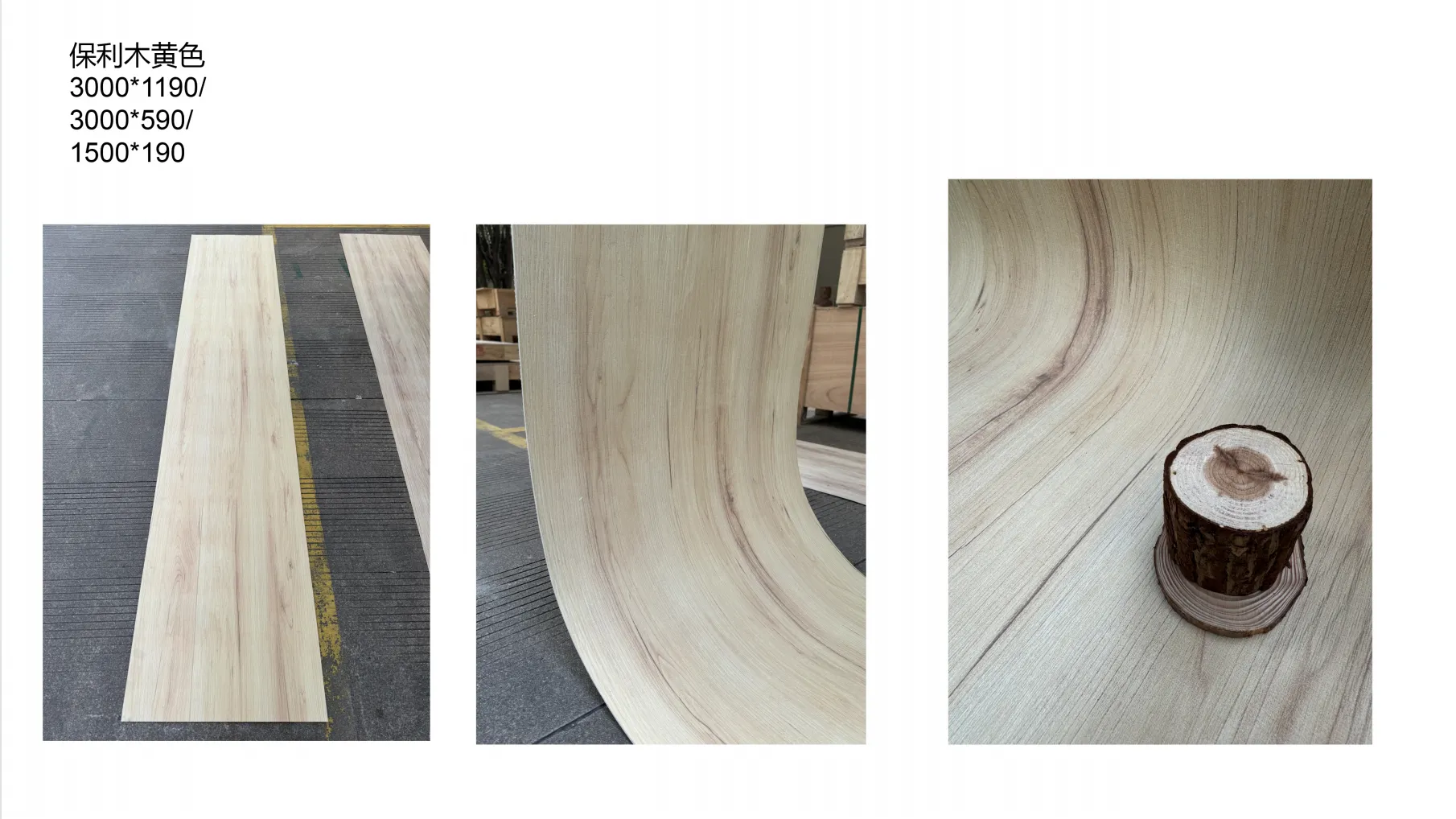
Walk into any modern office, boutique hotel, or residential home today, and you'll sense a quiet shift in the air—literally. The walls, ceilings, and surfaces that define these spaces are no longer just structural; they're storytellers. They speak of sustainability, of design freedom, and of a refusal to compromise between form and function. At the heart of this shift lies a material that's been turning heads in architectural circles: Poly Wood Board . Part of the innovative MCM Project Board Series , this material isn't just an upgrade from traditional options—it's a reinvention.
To understand why Poly Wood Board matters, let's rewind to the challenges that have long plagued construction. Traditional wood, while beloved for its warmth, is a high-maintenance diva: it warps in humidity, cracks in dry climates, and falls prey to termites and rot. Concrete, on the other hand, is durable but heavy, limiting design flexibility. Even newer materials like MCM Flexible Stone —a lightweight, bendable option in the MCM lineup—excel in texture but lack the structural heft needed for load-bearing applications. Enter Poly Wood Board, engineered to bridge these gaps. It's the material answer to the question: "What if we could have the best of wood, stone, and technology—all in one?"
At first glance, Poly Wood Board looks like polished natural wood, with grains that mimic oak, maple, or teak so authentically you'll want to run a hand over its surface. But beneath that organic exterior lies a feat of engineering. The magic starts with its core: a blend of 85% recycled wood fibers (reclaimed from construction waste and sustainably harvested timber scraps) and 15% high-performance polymers. This mix is fed into advanced extrusion machines that heat and compress the material under precise pressure, fusing the fibers into a dense, uniform board. Unlike traditional wood, which is at the mercy of tree growth patterns and knots, Poly Wood Board's composition is controlled—no weak spots, no uneven density.
What truly sets it apart, though, is the multi-step curing process. After extrusion, the boards undergo UV stabilization and moisture-resistant coating, both applied via nanotechnology that penetrates the material at a molecular level. The result? A surface that laughs off spills, resists fading from sunlight, and stands firm against temperatures ranging from -40°C to 80°C. "We tested it in coastal homes where salt air destroys regular wood in five years," says Maria Gonzalez, a materials engineer at MCM Labs. "After three years of exposure, the Poly Wood Board samples showed zero signs of corrosion or warping. That's unheard of for a wood-like product."
But it's not just about durability. The board's lightweight nature—40% lighter than solid wood—cuts down on installation time and labor costs. "Traditional wood panels require two people to carry; these? One person can handle them," notes Jake Miller, a contractor who recently used Poly Wood Board in a restaurant renovation. "And since they're pre-finished, we skipped the sanding and staining steps. The project wrapped a week early."
To truly grasp Poly Wood Board's impact, let's put it side by side with traditional materials and even its MCM siblings. The table below breaks down key features, from sustainability to real-world performance:
| Feature | Poly Wood Board | Traditional Solid Wood | MCM Flexible Stone |
|---|---|---|---|
| Material Source | 85% recycled wood fibers + polymers | Freshly harvested timber | Stone aggregates + resin |
| Weight (per sq. meter) | 12 kg | 20 kg | 8 kg |
| Installation Time | 2 hours per 10 sq. meters | 5 hours per 10 sq. meters (including finishing) | 3 hours per 10 sq. meters |
| Environmental Impact | Carbon-negative (recycles waste, reduces deforestation) | High (requires logging, emits CO2 during processing) | Low (uses recycled stone, but resin is non-biodegradable) |
| Durability (Lifespan) | 25+ years (no warping, rot, or pests) | 10–15 years (with regular maintenance) | 15–20 years (prone to chipping if not handled carefully) |
| Design Versatility | Can be cut, curved, or painted; mimics multiple wood grains | Limited by natural grain; difficult to curve without cracking | Highly flexible (bends to tight radii) but limited to stone textures |
Poly Wood Board doesn't exist in a vacuum. It's part of a broader ecosystem of MCM materials designed to work in harmony, allowing architects to mix textures and tones like a painter with a palette. Take the Lunar Peak Series , for example. Available in Silvery, Golden, and Black, these panels feature a metallic, mineral-infused finish that shimmers subtly under light. Pair Lunar Peak Silvery with Poly Wood Board's warm oak grain, and you get a contrast that feels both modern and timeless—ideal for a hotel lobby where industrial chic meets cozy elegance.
For spaces that demand an industrial edge, Foamed Aluminium Alloy Board (Vintage Silver) steps in. Its lightweight, foam-core structure makes it perfect for accent walls or ceiling panels, and its weathered metallic look complements Poly Wood Board's organic texture. "We used both in a tech startup office," says interior designer Priya Patel. "The aluminium adds an edgy, forward-thinking vibe, while the wood keeps it from feeling cold. Employees say the space 'feels like innovation with a heart.'"
Then there's MCM Flexible Stone , the chameleon of the lineup. With options like Travertine (Starry Green) —a stone-like panel dotted with iridescent flecks that catch light like stars—designers can create focal points that pop against Poly Wood Board's understated grain. "Imagine a restaurant wall where Poly Wood Board runs most of the length, then shifts to Starry Green Travertine behind the bar," Patel adds. "It's unexpected, it's memorable, and because both materials are lightweight, we didn't need to reinforce the wall. That's the beauty of MCM's system—everything works together."
In an era where "green building" is no longer a trend but a mandate, Poly Wood Board's eco-credentials shine. Its recycled wood fiber content diverts waste from landfills—each 4x8 ft board reuses approximately 25 kg of wood scraps that would otherwise decompose and release methane. The manufacturing process, too, is designed to minimize impact: MCM's factories run on 100% renewable energy, and water used in production is filtered and recycled.
But sustainability isn't just about materials; it's about longevity. "The most eco-friendly product is the one that doesn't need to be replaced," says environmental scientist Dr. Alan Chen. "If a traditional wood deck needs replacement every 10 years, and Poly Wood Board lasts 25, that's a 60% reduction in material consumption over time. That's a bigger win for the planet than any 'green' label on a short-lived product."
The board's low-VOC (volatile organic compound) emissions are another plus. Unlike some composite woods that off-gas harmful chemicals, Poly Wood Board meets strict GREENGUARD Gold standards, making it safe for schools, hospitals, and homes with children or pets. "We installed it in a pediatric clinic last year," Miller recalls. "Parents were thrilled to hear the walls wouldn't contribute to indoor air pollution. It's the kind of detail that turns clients into advocates."
As impressive as Poly Wood Board is today, the team at MCM isn't resting. "We're already testing a version infused with phase-change materials," Gonzalez reveals. "Imagine a wall panel that absorbs heat during the day and releases it at night, reducing reliance on HVAC systems. Early prototypes show it could cut energy costs by 15% in residential buildings."
There's also talk of expanding the design library. While current options mimic classic wood grains, future iterations may include custom patterns—think geometric motifs or even digital prints embedded directly into the board. "Architects want materials that tell a specific story," Gonzalez says. "Why not let them upload a client's family crest or a local cultural symbol, and we'll weave it into the grain? The technology is there."
Perhaps most exciting is the potential for large-scale applications. "We're partnering with developers on affordable housing projects," Miller notes. "Poly Wood Board's durability means lower maintenance costs for tenants, and its quick installation speeds up construction, getting families into homes faster. It's not just a luxury material anymore—it's a solution for real people."
Poly Wood Board isn't just a building material. It's a statement—a declaration that construction doesn't have to choose between nature and technology, between beauty and resilience. It's the product of a industry waking up to the fact that the spaces we build shape how we live, work, and connect. When you run your hand over a wall made of Poly Wood Board, you're not just touching a surface—you're touching the future: one where sustainability isn't a buzzword, where design isn't limited by material flaws, and where every building tells a story of innovation.
As cities grow and the demand for smarter, greener spaces intensifies, materials like Poly Wood Board will lead the charge. They'll stand alongside Lunar Peak's shimmer, Foamed Aluminium's edge, and MCM Flexible Stone's versatility, proving that the future of construction isn't about one "perfect" material—it's about a family of materials, each playing to its strengths, all working together to build something better. And that, perhaps, is the greatest advancement of all.
Recommend Products












