
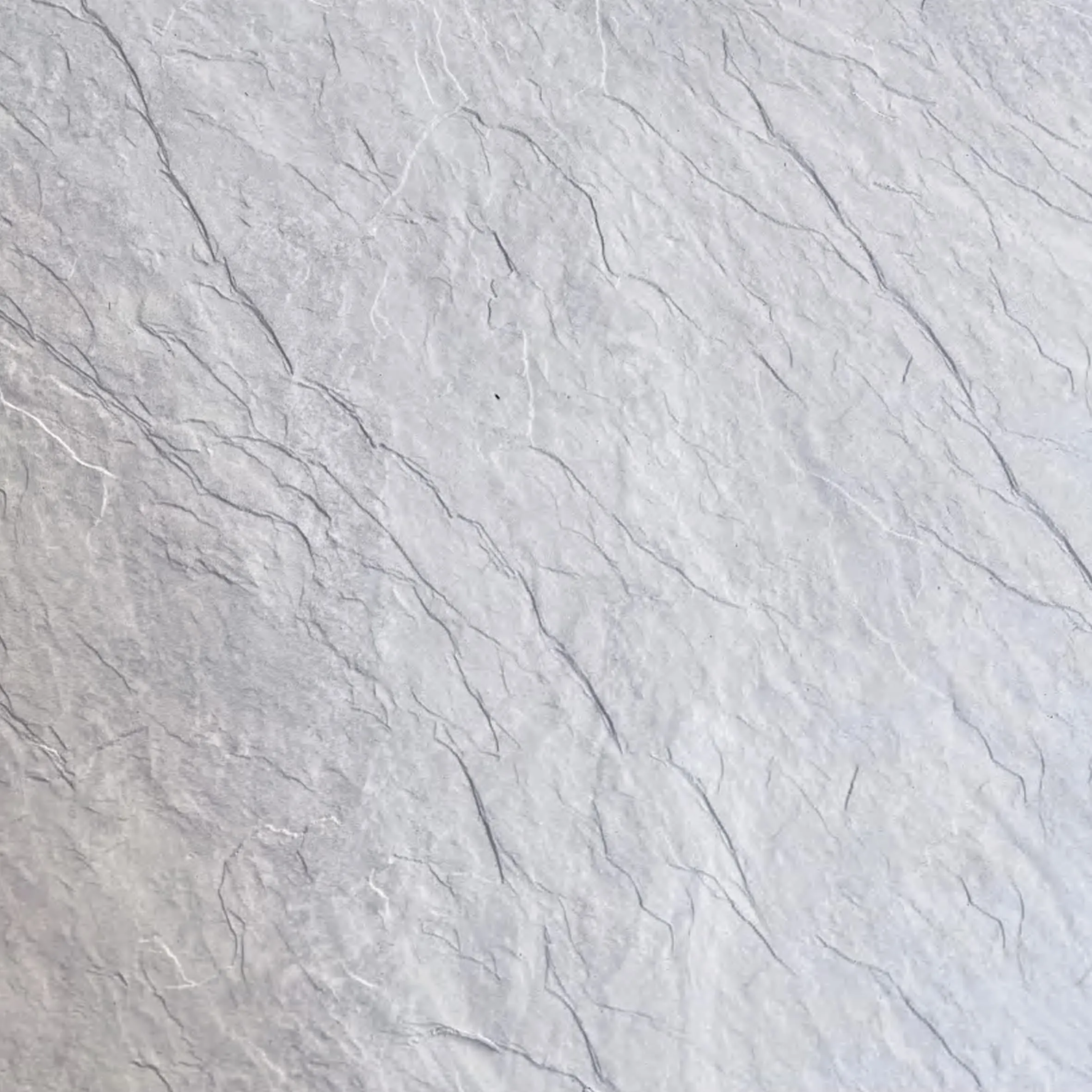
Last week, I stood in the lobby of a new art gallery downtown, and before I even noticed the paintings, my attention was drawn to the walls. They were a soft, creamy white, but not the flat, lifeless white of office drywall. Up close, faint gray veins wove through the surface, like mist settling over a mountain—subtle, but impossible to ignore. When I pressed my palm against the wall, it felt cool and solid, yet lighter than I expected, as if the stone itself had been granted a gentle weightlessness. Later, the curator said, "That's Slate Veil White MCM. We wanted the space to feel calm, but not empty—like standing in a forest at dawn, where the light plays tricks on the trees." That moment stuck with me: buildings aren't just structures. They're silent storytellers, and the materials we choose are their language. Today, that language is evolving faster than ever, thanks to innovations like Slate Veil White MCM and 3D printing technology. Let's dive in.
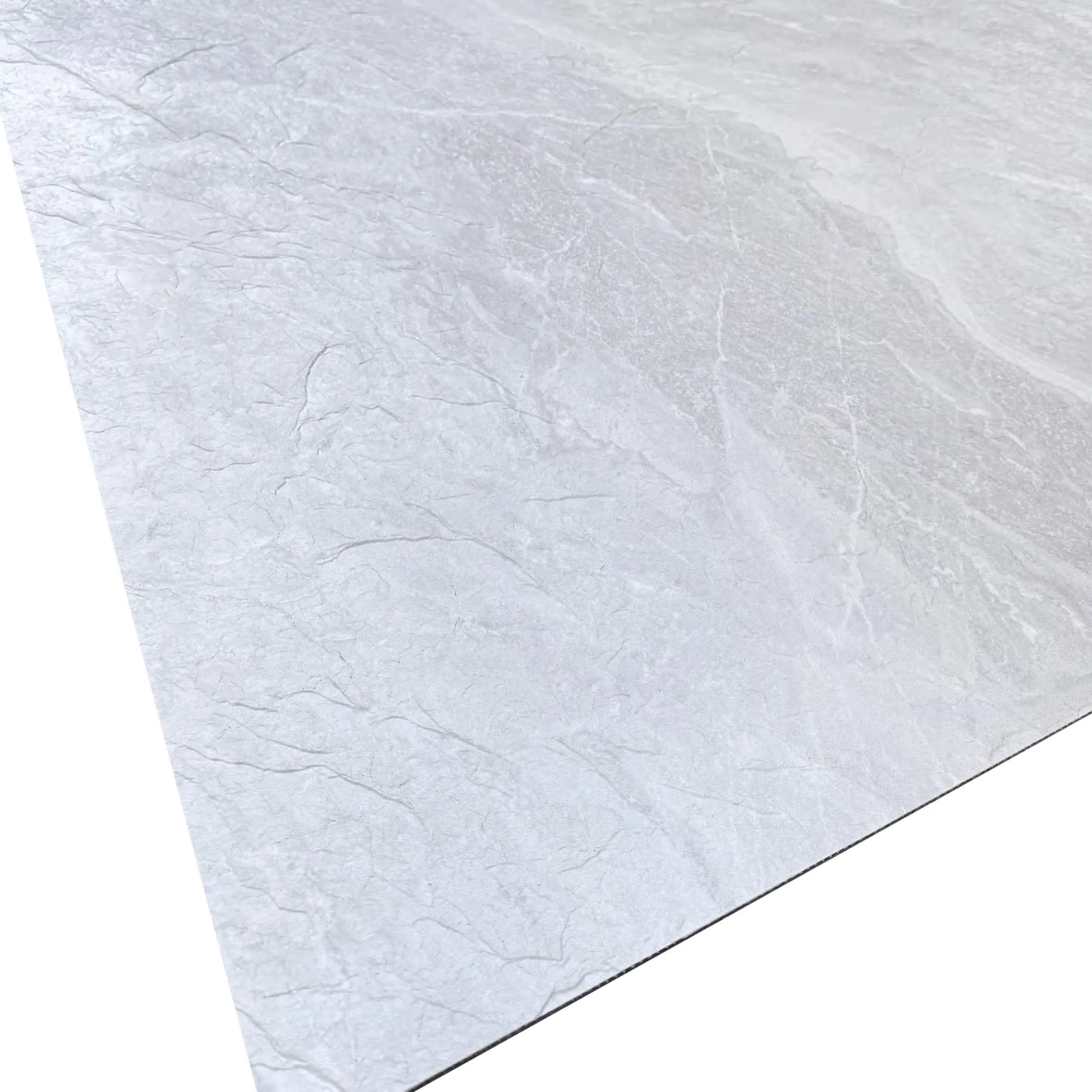
Imagine running your fingers over a wall and feeling the texture of stone, but without the heaviness that makes traditional cladding impractical. That's the magic of Slate Veil White MCM. Short for "Modified Composite Material," MCM is a revolution in construction—a blend of natural stone particles, recycled polymers, and reinforcing fibers that creates a material 70% lighter than solid slate, yet just as durable. And Slate Veil White? It's the crown jewel of this lineup.
What makes it special? Start with the aesthetics. Unlike stark, clinical whites that can make a room feel cold, Slate Veil White has depth. Its "veil-like" patterns aren't printed on; they're part of the material itself, formed by natural stone aggregates that settle during production. The effect is a surface that shifts with light: warm ivory at noon, soft gray-tinged at dusk, never the same twice. "It's like bringing a piece of the outdoors in, but tamed," says Mia Chen, an interior designer who used Slate Veil White in a recent boutique hotel project. "Guests walk in and say, 'This feels… alive.' Not in a loud way—in a way that makes you want to stay a little longer."
But it's not just about looks. Slate Veil White MCM is a workhorse. It resists moisture, mold, and UV rays, making it perfect for both interiors (think kitchen backsplashes, accent walls) and exteriors (cladding that stands up to rain, snow, and sun). And because it's lightweight, installation is a breeze—no need for heavy machinery or reinforced walls. A crew can clad a 2,000-square-foot facade in days, not weeks, cutting labor costs by up to 40% compared to traditional stone.
| Material | Weight (kg/m²) | Installation Time (100m²) | Sustainability Score* |
|---|---|---|---|
| Traditional Slate | 45-55 | 5-7 days | 3/5 |
| Fair-Faced Concrete | 22-28 | 3-4 days | 4/5 |
| Slate Veil White MCM | 12-15 | 1-2 days | 5/5 |
*Sustainability score based on recycled materials, carbon footprint, and longevity.
And let's talk sustainability. Slate Veil White MCM is made from 80% recycled stone waste—scraps from quarrying that would otherwise end up in landfills. Its production process uses 30% less energy than firing traditional ceramic tiles, and because it lasts 50+ years without fading or cracking, it cuts down on replacement waste. "We're not just building walls," says Raj Patel, a green building consultant. "We're building a future where beauty and responsibility don't have to compete."
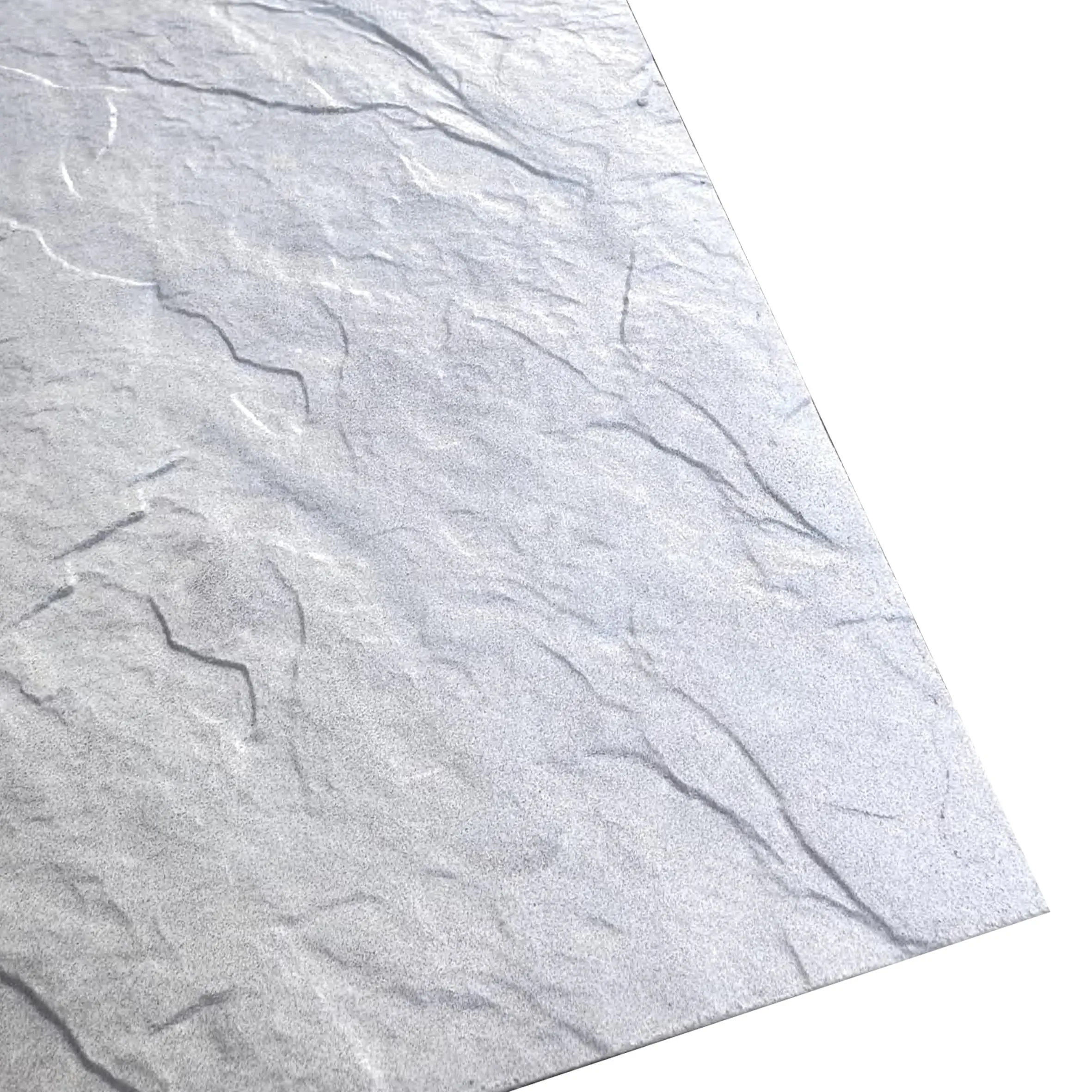
If Slate Veil White MCM is the canvas, 3D printing is the brush that lets architects paint without boundaries. The MCM 3D Printing Series isn't just a buzzword—it's a shift in how we think about construction. Imagine a world where a wall isn't just a flat surface, but a sculptural element with waves, curves, or even custom textures that mimic the rough grandeur of Lunar Peak Black or the shimmer of Foamed Aluminium Alloy Board (Vintage Gold). That's the promise of 3D printing.
Here's how it works: Digital designs—created in software like CAD—are sent to large-scale 3D printers that extrude layers of MCM material, building up panels from the ground up. No more cutting stone with saws that generate piles of dust and waste; no more limiting designs to what can be carved by hand. Want a wall that looks like a riverbed, with undulating "stones" and that catch light? 3D printing can do that. Need 50 identical wave panels for a hotel facade? Print them in a week, with zero variation. "It's like having a sculptor and a factory in one," says Elena Kim, a tech-focused architect. "We used to say, 'That's impossible.' Now we say, 'How soon do you need it?'"
The benefits go beyond design freedom. 3D printing slashes waste by 60% compared to traditional cutting methods—since it only uses the material needed for the design. It also speeds up construction: a custom 3D-printed MCM panel takes 24 hours to print, vs. 5-7 days for a hand-carved stone slab. And because the process is digital, changes are easy. "Last month, a client wanted to tweak the texture of their lobby panels halfway through the project," Elena laughs. "With 3D printing, we just updated the design file. No retooling, no delays. They were shocked."
Take the recent renovation of a historic theater in Chicago. The architects wanted to honor the building's 1920s grandeur but add a modern twist. They used 3D-printed Slate Veil White MCM panels with intricate floral patterns—replicating the original plasterwork but with a lighter, more durable material. "The old plaster was crumbling, and we couldn't find craftsmen who could replicate it," says the project manager. "3D printing saved the day. Now, the theater feels both timeless and fresh."
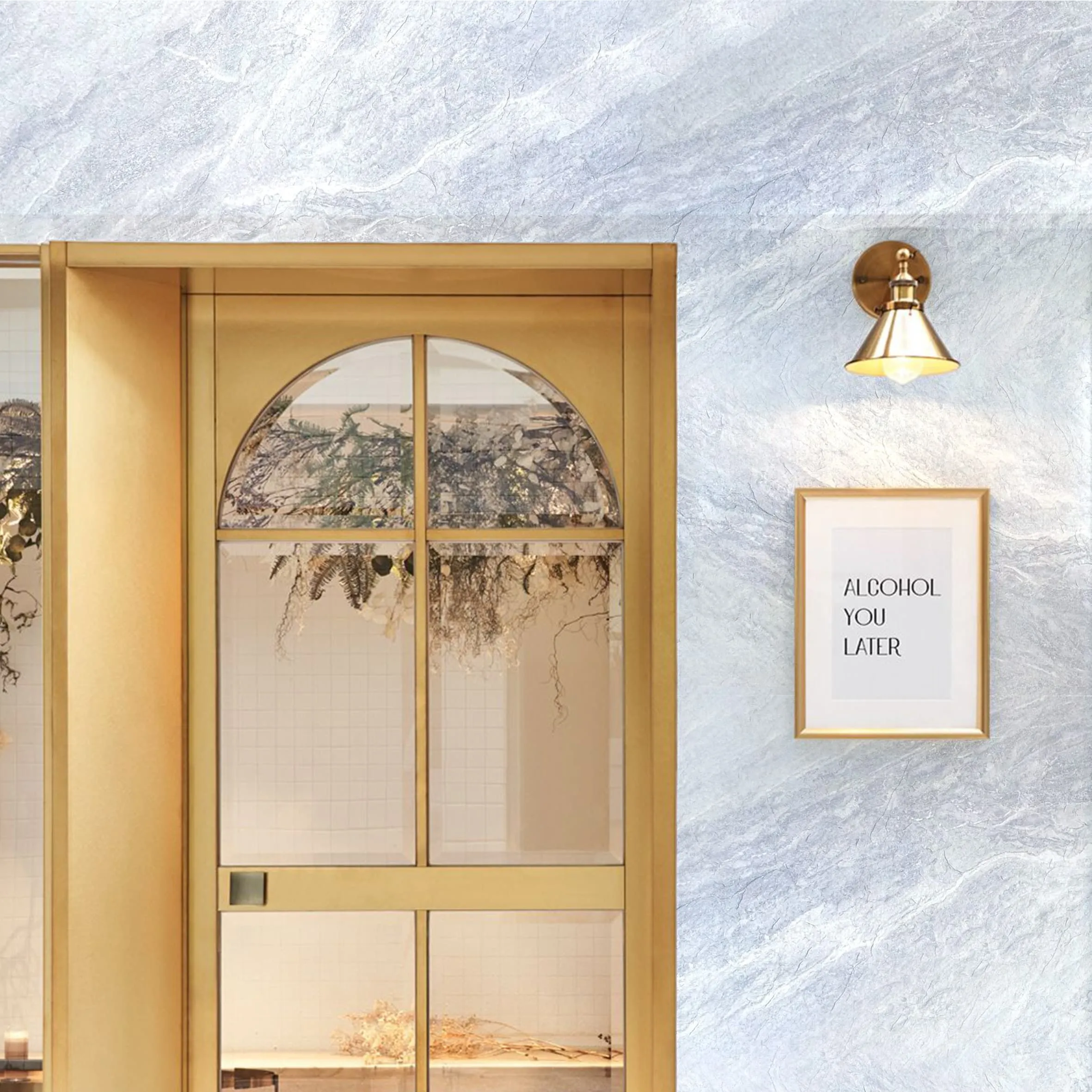
Individually, Slate Veil White MCM and 3D printing are game-changers. Together? They're rewriting the rules of architecture. Let's take a hypothetical example: a boutique hotel in Bali, where the owner wanted to blend local culture with modern luxury. The design called for a lobby wall that felt like a "mountain sunrise"—soft whites and golds fading into each other, with texture that mimics the island's rice terraces.
In the past, this might have meant hiring artisans to carve each stone, a process that would take months and cost a fortune. Instead, the architects used 3D printing to layer Slate Veil White MCM with hints of Lunar Peak Golden—a material with a subtle metallic sheen—creating a gradient effect that shifts from white to gold as you walk across the room. The panels were printed off-site, shipped to Bali, and installed in 3 days. "Guests stop and stare," the owner says. "They take photos of the wall before they even check in. It's become part of the experience."
Or consider a home in Portland, where a family wanted an outdoor patio that felt like an extension of the forest behind their house. The designer used 3D-printed Slate Veil White MCM panels shaped like semicircles, arranged to look like stepping stones frozen in mid-flow. The lightweight material meant no need for heavy concrete footings, and the MCM's weather resistance ensures it will look fresh for decades. "My kids love running their hands over the curves," the homeowner says. "It's not just a patio—it's a playground for the imagination."
Standing back, it's clear: Slate Veil White MCM and 3D printing technology aren't just about building better walls. They're about building better spaces—spaces that feel human, that adapt to our needs, that reflect the beauty of nature without harming it. They're about a world where the materials around us don't just serve a function, but stir something in us: calm, curiosity, joy.
So the next time you walk into a building, take a moment to touch the walls. Maybe they're cool and veined like Slate Veil White MCM, or curved and textured like a 3D-printed masterpiece. Whatever they are, remember: they're more than materials. They're the future, and it feels pretty amazing.
Recommend Products












