
How innovative materials are turning buildings into storytelling canvases
Walk into a modern building today, and you might notice something different. It's not just the sleek lines or energy-efficient windows—though those matter. What stands out is the feeling it evokes: a sense of place, a whisper of memory, a connection to something real. Construction, once a realm of bricks, steel, and function, is evolving into an art form where buildings don't just shelter us—they tell stories. At the heart of this transformation is a material that's redefining what's possible: Modified Composite Material, or MCM. And within MCM's diverse family, a new trend is emerging: "weaving real photos" into the very fabric of building materials.
But what does "weaving real photos" mean, exactly? It's not about printing snapshots onto walls (though that's possible). Instead, it's about capturing the essence of real-world textures, landscapes, and even emotions in the materials themselves. Imagine a wall panel that mimics the iridescent sheen of a starry night sky, or a facade that feels like the rough-hewn warmth of handwoven fabric. These aren't just decorative flourishes—they're intentional design choices that turn buildings into experiences. And MCM is the medium making it all possible.
For centuries, building materials were chosen for one primary reason: durability. Stone was strong, wood was abundant, concrete was versatile. Aesthetics mattered, of course—think of the intricate carvings on Gothic cathedrals or the marble floors of ancient Roman villas—but they were often secondary to function. Fast forward to the 20th century, and the focus shifted to efficiency: steel skyscrapers, prefab concrete blocks, glass curtain walls. These materials allowed for taller, lighter, cheaper buildings, but they sometimes sacrificed soul in the process. The "international style" of the mid-1900s, with its stark, boxy designs, became a symbol of modernity—but also of impersonality.
Today, we're in a new era. As our lives become increasingly digital, there's a growing hunger for authenticity. We crave spaces that feel "real"—that ground us in tangible experiences. This shift has pushed architects and designers to rethink materials. They're no longer just selecting something that holds up; they're choosing materials that communicate . Does this lobby feel innovative? Does this home feel like a retreat? Can this office building reflect our brand's values?
Enter MCM: Modified Composite Material. Born from a desire to merge the best of traditional and modern materials, MCM is a hybrid of polymers, minerals, and fibers. It's lightweight yet strong, flexible yet durable, and—most importantly—infinitely customizable. Unlike natural stone, which is limited by what the earth provides, or concrete, which defaults to a uniform gray, MCM can be engineered to mimic almost any texture, color, or pattern. And that's where the "weaving real photos" concept comes in. MCM doesn't just copy real-world visuals; it interprets them, turning a photograph of a starry sky, a woven basket, or a weathered metal gate into a material that can be touched, lived with, and experienced.
To understand why MCM is revolutionizing construction, let's break down its superpowers. First, flexibility . Traditional materials like natural stone or solid wood are rigid—you can't bend them, curve them, or install them on uneven surfaces without cracking or breaking. MCM, on the other hand, is thin and malleable, making it ideal for unique architectural features: curved walls, undulating facades, even custom furniture pieces. This flexibility opens up a world of design possibilities, allowing architects to move beyond boxy, flat structures and create buildings that flow like natural forms.
Second, lightweight . A typical MCM panel weighs a fraction of natural stone or concrete, which means easier transportation, faster installation, and less stress on building structures. This isn't just a logistical win—it's an environmental one, too. Lighter materials reduce the need for heavy machinery and cut down on carbon emissions during construction.
Third, and perhaps most exciting, aesthetic versatility . MCM can replicate the look and feel of almost any material—from the porous texture of travertine to the smooth sheen of polished metal to the soft drape of fabric. But it doesn't stop at replication. MCM can enhance these materials, adding new colors, patterns, or finishes that nature alone can't produce. Want travertine with flecks of iridescent green that glow under light? MCM can do that. Crave the warmth of woven fabric in a durable, weather-resistant facade? MCM makes it possible. This ability to blend reality with imagination is what "weaving real photos" is all about—it's taking the familiar and elevating it into something extraordinary.
When designers talk about "weaving real photos" into MCM products, they're referring to a deliberate process of translating visual and tactile memories into material form. It's not about slapping a high-resolution image onto a wall—it's about distilling the essence of a moment, a place, or a texture into a surface that evokes emotion.
Take, for example, the feeling of walking through a forest at dusk. The air is cool, the trees rustle, and above, the first stars begin to twinkle. A traditional building material might try to replicate the color of the sky or the texture of tree bark, but MCM can capture the mood of that moment. Enter travertine (starry green) —a MCM product that mimics the porous, earthy texture of natural travertine but adds a twist: tiny, iridescent green flecks that catch the light like distant stars. Installed in a hotel lobby, it doesn't just look like stone—it feels like stepping into that twilight forest, calm and full of wonder.
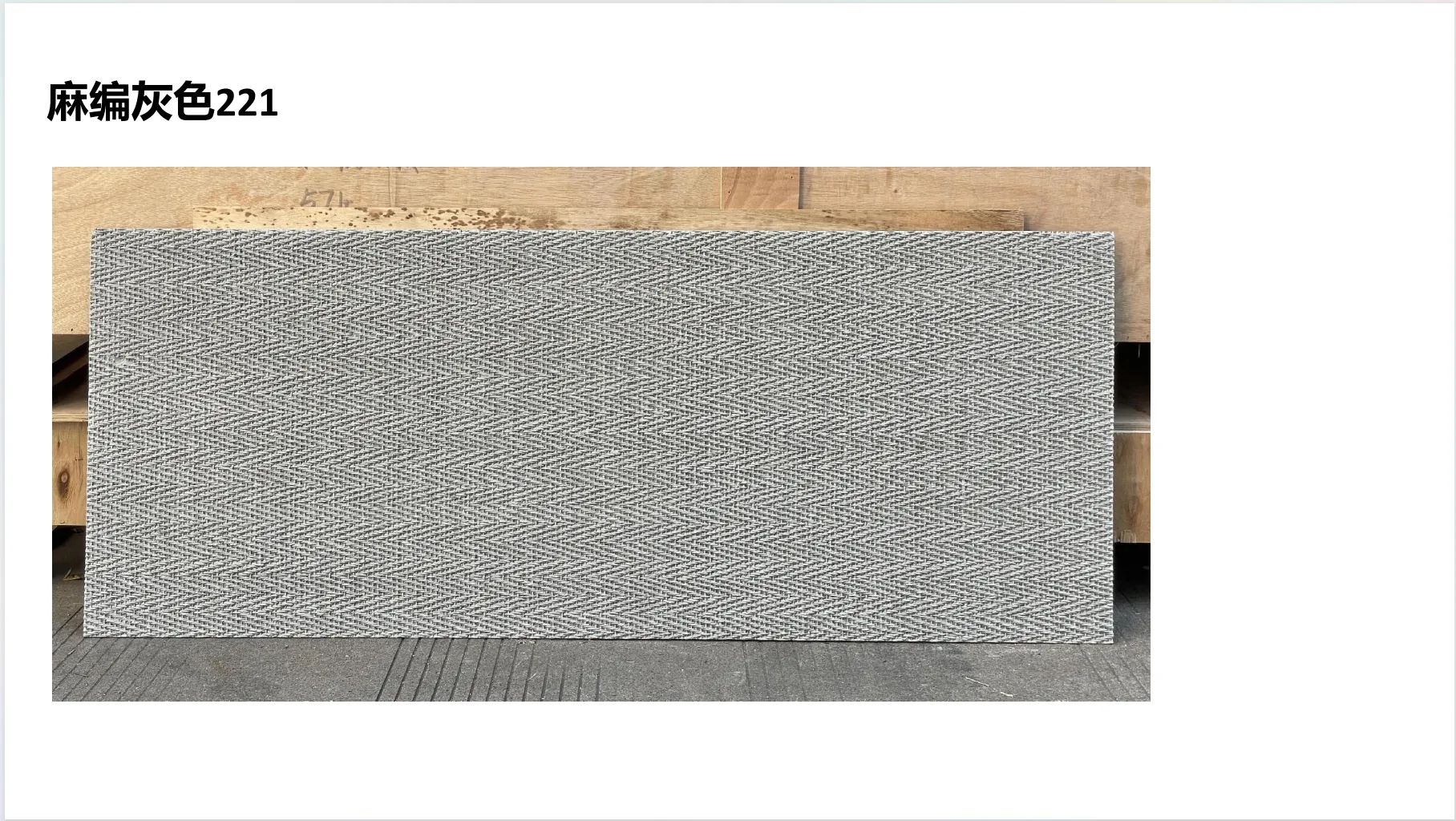
Or consider the comfort of a handwoven blanket on a cold day—the way the threads crisscross, creating a pattern that's both ordered and organic, the softness that invites you to touch. Translating that into a building material might seem impossible, but MCM makes it real with products like weaving (khaki) . These panels feature a textured surface that mimics the tight, rhythmic pattern of handwoven fabric, in a warm, earthy khaki tone that feels like sunlight on linen. Imagine this material lining the walls of a café: suddenly, the space isn't just a place to grab coffee—it's a cozy nook that feels like home.
This storytelling isn't accidental. MCM designers work with architects, psychologists, and even artists to understand how textures and colors affect human emotion. They study photographs of landscapes, textiles, and urban scenes, then translate those visuals into material properties: the size of a stone's pores, the angle of a woven thread, the sheen of a metal finish. The result? Buildings that don't just exist—they resonate .
The MCM product lineup is vast, but a few standouts perfectly embody the "weaving real photos" philosophy. Let's dive into some of the most compelling options reshaping architecture today:
At the core of MCM's design revolution is MCM flexible stone —a thin, lightweight panel that can bend, curve, and conform to almost any surface. Unlike natural stone, which is heavy and brittle, flexible stone weighs as little as 4kg per square meter and can be bent to a radius of just 30cm. This flexibility opens up endless possibilities: curved accent walls in a home, undulating facades on a museum, or even custom-shaped furniture. But what truly sets it apart is its texture. MCM flexible stone mimics the rough, organic feel of quarried stone, complete with pits, grooves, and color variations that make each panel feel unique—like a piece of the earth itself, reimagined for modern design.
For spaces that crave a blend of industrial edge and timeless elegance, foamed aluminium alloy board (vintage silver) is a showstopper. Made from a lightweight aluminium alloy with a foam core, this material has a matte, brushed finish that mimics the weathered silver of antique machinery or vintage jewelry. The "vintage" in its name isn't just a color—it's a texture: tiny, irregular brush marks and subtle color variations that make the metal feel like it has a history, like it's been passed down through generations. Installed in a restaurant or office, it adds a touch of sophistication without feeling cold, proving that industrial design can be warm and inviting.
As mentioned earlier, travertine (starry green) is a masterclass in "weaving real photos" into stone. Natural travertine is beloved for its porous, honeycombed texture, formed by mineral-rich water flowing through limestone. MCM takes this classic material and adds a celestial twist: tiny, iridescent green particles embedded in the stone's pores, which catch light and shimmer like stars in a dark forest. It's a material that blurs the line between earth and sky, making it perfect for spaces that aim to inspire—think a yoga studio, a library, or a hotel spa. When you run your hand over it, you feel the familiar roughness of travertine, but your eye sees something magical: a stone that tells a story of night skies and quiet wonder.
Weaving (khaki) is proof that MCM can turn soft, delicate materials into durable design elements. This product replicates the tight, interlacing pattern of handwoven fabric, in a warm khaki hue that feels like sun-bleached linen. What's remarkable is how faithfully it captures the texture of woven thread: you can see the slight variation in each "strand," the way the pattern shifts when viewed from different angles, and even the subtle shadowing that makes the surface feel three-dimensional. Unlike real fabric, though, MCM weaving panels are water-resistant, fire-retardant, and built to last—making them ideal for high-traffic areas like airports, hospitals, or retail stores. It's fabric, reimagined for the demands of modern life.
Sometimes, the most powerful stories are told without interruption—and that's where the MCM big slab board series shines. These panels come in extra-large sizes (up to 3 meters long), allowing for seamless installations with minimal grout lines or seams. Imagine a wall covered in a single slab of MCM that mimics the smooth, flowing surface of a river stone, or a facade made of big slabs in travertine (starry green), creating a continuous "starry sky" across the building's exterior. The lack of seams makes the design feel more immersive, drawing the eye in and inviting people to lose themselves in the material's story. It's a reminder that sometimes, bigger really is better—especially when it comes to storytelling.
| Feature | Traditional Materials (Stone, Wood, Metal) | MCM Products |
|---|---|---|
| Weight | Heavy (e.g., natural stone: 20-30kg/m²) | Lightweight (4-8kg/m²) |
| Flexibility | Rigid; limited to flat or simple curves | Highly flexible; can bend to tight radii |
| Aesthetic Range | Limited to natural variations (e.g., stone colors, wood grains) | Unlimited; can replicate, enhance, or invent textures/colors |
| Storytelling Ability | Relies on natural symbolism (e.g., marble = luxury) | Can "weave real photos" to evoke specific moods, memories, or landscapes |
| Installation | Labor-intensive; requires heavy machinery | Easy to install; can be cut, drilled, or glued on-site |
The rise of MCM isn't just changing how buildings look—it's changing how they function, how they're built, and how people interact with them. For architects, MCM is a dream come true: a material that combines sustainability, flexibility, and beauty. It allows for more ambitious designs, from curving skyscrapers to interactive public art installations, without sacrificing structural integrity or budget.
For building owners, MCM means lower costs—both upfront (lighter materials = cheaper shipping and installation) and long-term (durability = less maintenance). And for the people who use these buildings? MCM creates spaces that feel more human. A hospital with weaving (khaki) panels in patient rooms might reduce anxiety; a school with travertine (starry green) walls could spark creativity. These aren't just aesthetic choices—they're investments in well-being.
Perhaps most importantly, MCM is pushing the construction industry toward sustainability. Traditional building materials often require extensive mining, logging, or manufacturing processes that harm the planet. MCM, by contrast, uses recycled materials in many cases and produces less waste during production. Its lightweight nature also reduces the carbon footprint of transportation, making it a greener choice for eco-conscious projects.
As technology advances, the possibilities for MCM are only growing. Imagine MCM panels that change color based on light, or that incorporate QR codes linking to the "story" behind their design—a video of the starry night that inspired travertine (starry green), or an interview with the weaver who influenced weaving (khaki). We might see MCM that mimics not just visuals, but sounds or even scents, creating multi-sensory experiences in buildings.
There's also a trend toward hyper-personalization. As more people seek unique, one-of-a-kind spaces, MCM could allow for custom designs tailored to a specific community or individual. A library in a coastal town might feature MCM panels that mimic local seashells; a tech startup could commission panels that look like circuit boards, but in warm, inviting colors. The "real photos" woven into MCM could become more specific, more personal, and more deeply connected to the people who use the buildings.
One thing is clear: the future of construction isn't just about building bigger or faster. It's about building better —creating spaces that tell stories, foster connection, and make us feel alive. And MCM, with its ability to weave real photos into the very fabric of buildings, is leading the way.
In the end, construction has always been about more than bricks and mortar. It's about creating shelters, yes—but it's also about creating meaning. From the caves of our ancestors to the cathedrals of the Middle Ages, buildings have told the stories of who we are, what we value, and where we've been. Today, MCM is carrying on that tradition, but with a modern twist: it's allowing us to tell those stories not just through grand architecture, but through the very materials we touch and see every day.
Whether it's the starry glow of travertine (starry green), the cozy warmth of weaving (khaki), or the industrial charm of foamed aluminium alloy board (vintage silver), MCM products are more than building materials—they're storytellers. They turn walls into canvases, facades into narratives, and buildings into experiences that connect us to the world around us and to each other.
So the next time you walk into a building, take a moment to touch the walls. Listen to what they're saying. Chances are, if they're made with MCM, they're telling a story—one that's as unique and human as the people who designed them. And that, perhaps, is the future of construction: not just buildings that stand tall, but buildings that speak to the soul.
Recommend Products












