



Take a look around at the skyline of any major city. What do you see? For decades, the answer has been a predictable sea of glass, steel, and concrete. While functional, this architectural palette has often led to a sense of uniformity, a landscape of monoliths that, while impressive in scale, can lack a human touch, a unique identity. But something is changing. The very concept of a city is evolving. We're entering the era of the "smart city"—urban environments designed not just for efficiency, but for sustainability, resilience, and a deeper connection with their inhabitants. This evolution demands a new generation of building materials, ones that are as intelligent, flexible, and forward-thinking as the cities they will help build.
The age-old craft of masonry, the art of building with stone, has given us some of the world's most enduring and beautiful structures. Yet, traditional masonry stone, with its immense weight, high cost, and significant environmental footprint from quarrying and transport, faces significant challenges in the context of a modern smart city. It's a material rooted in the past, often at odds with the future's demand for lightweight construction, rapid deployment, and boundless design creativity. The question then becomes: how do we retain the timeless appeal and solidity of stone while embracing the principles of 21st-century design and sustainability? The answer lies not in abandoning masonry, but in revolutionizing it from the ground up. This is where a groundbreaking innovation, pioneered by COLORIA GROUP , enters the picture: 3D printed designs using Modified Cementitious Material (MCM) . This isn't science fiction; it's the next logical step in architecture, a technology poised to redefine our buildings and, in turn, our cities.
The Architectural DNA of a Smart City
Before we can appreciate the solution, we must fully understand the problem it solves. What does a "smart city" truly need from its building materials? The term "smart" extends far beyond integrated technology and IoT sensors. It refers to a holistic philosophy of urban development centered on a few core pillars. The materials used to construct the city's very fabric are critical to achieving these goals.
Pillar 1: Deep Sustainability
This is perhaps the most urgent demand. Smart cities must be green cities. This means a radical reduction in the carbon footprint of construction and a move towards a circular economy. Traditional materials fall short here. The production of cement for concrete is one of the world's largest industrial emitters of CO2. Quarrying for natural stone permanently scars landscapes, consumes vast amounts of energy, and involves heavy, fossil-fuel-dependent transportation. A smart material, therefore, must come from a place of environmental responsibility. It should be produced with minimal energy, utilize abundant or recycled raw materials, and be recyclable itself at the end of its life. These aren't just nice-to-haves; they are non-negotiable requirements for any city aiming for a sustainable future. The buildings themselves must be considered as part of the ecosystem, not as an imposition upon it. This requires a shift towards eco-friendly building materials that are inherently low-impact.
Pillar 2: Hyper-Customization and Identity
The era of the "one-size-fits-all" skyscraper is ending. Smart cities aim to foster community and culture, and architecture is a primary language for expressing this. Buildings should tell a story about their location, their purpose, and the people who use them. This calls for a move away from generic, flat panels and towards facades with unique textures, patterns, and forms. Architects dream of creating buildings that are as unique as a fingerprint, but the limitations of traditional manufacturing have made this prohibitively expensive. Creating custom molds for precast concrete is costly and slow. Carving intricate patterns into natural stone is a task for master artisans, not a scalable solution for large projects. A smart material must break free from these constraints, enabling what is known as "mass customization"—the ability to produce highly individualized components at an industrial scale and cost.
Pillar 3: Efficiency and Resilience
Time is money in construction, and labor is a significant cost. Heavy materials like stone and concrete require heavy machinery, extensive structural support, and time-consuming installation processes. A smart material should be lightweight, reducing the load on the building's foundation, making it ideal for both new high-rises and retrofitting older structures. Lighter weight means easier transport, faster installation with smaller crews, and a safer construction environment. Beyond efficiency, resilience is key. Urban environments are harsh. Materials must be able to withstand extreme weather, UV radiation, pollution, fire, and moisture without degrading. They need to be durable not for years, but for decades, minimizing the need for costly maintenance and replacement.
The Material Revolution: Understanding Modified Cementitious Material (MCM)
To meet the demanding criteria of smart city architecture, we need a material that is fundamentally different. This is where COLORIA GROUP 's core technology, Modified Cementitious Material (MCM) , represents a true paradigm shift. It's a material that looks and feels like stone or terracotta but behaves in ways that traditional materials simply cannot. So, what exactly is it?
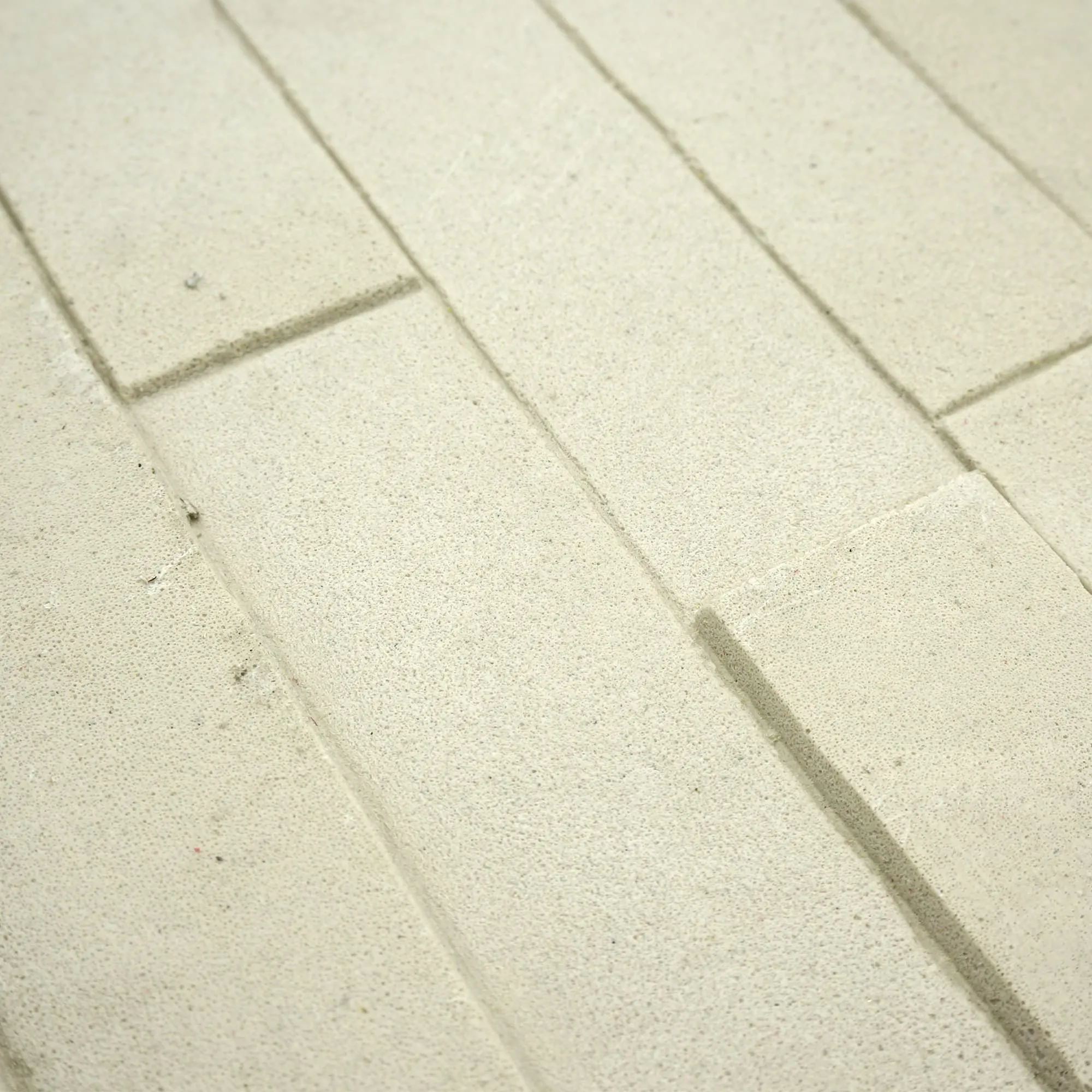
At its heart, MCM is an innovative composite material born from a simple but ingenious idea: what if we could recreate the geological process of forming stone, but in a controlled, low-energy environment? MCM is primarily composed of natural, inorganic materials like common soil, mineral powders, and quarry dust, which are mixed with a small amount of water-based polymers. This carefully calibrated mixture is then shaped and cured through a low-temperature process, typically below 150°C.
Let's contrast this with traditional materials. Firing ceramics and bricks requires temperatures exceeding 1000°C. Producing Portland cement involves heating a kiln to over 1400°C. These are incredibly energy-intensive processes with a massive carbon footprint. The low-temperature curing of MCM, on the other hand, consumes a fraction of that energy, making it one of the most compelling eco-friendly building materials available today. It transforms low-value, abundant raw materials into a high-performance architectural product, embodying the principles of a circular economy.
The Innate Qualities of MCM
The unique composition and production process give MCM a remarkable set of properties that make it an ideal base material for modern construction.
- Remarkably Lightweight: MCM products are typically only a few millimeters thick and weigh a fraction of traditional stone or tile. This is a game-changer. It dramatically reduces the structural load on a building, allowing architects to design more ambitious forms on lighter frames. For retrofitting projects, it means a new, modern facade can often be applied directly over the old one without costly structural reinforcement.
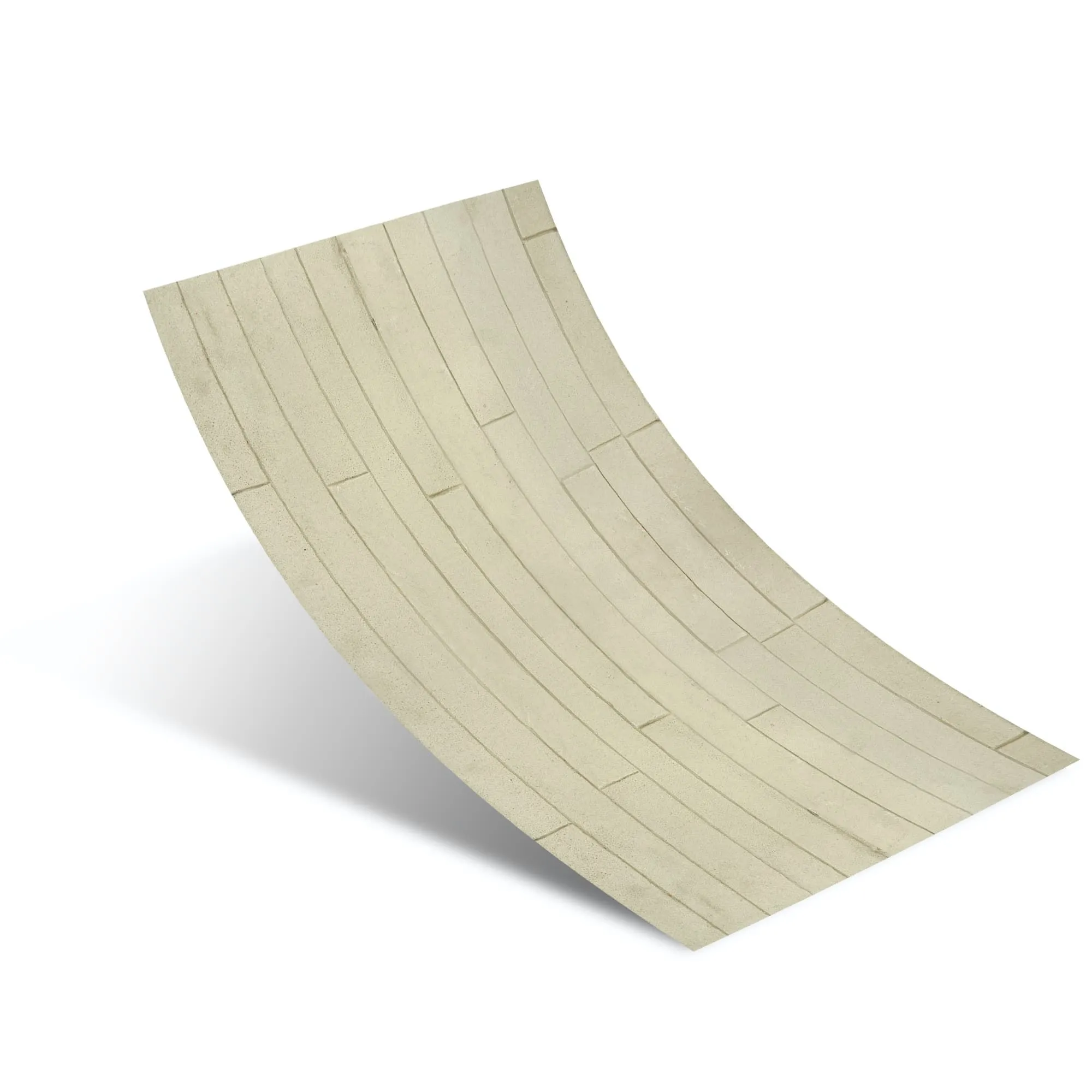
- Incredibly Flexible: Unlike rigid stone or ceramic, MCM possesses a degree of flexibility. This is most evident in products like COLORIA GROUP 's MCM Flexible Stone , which can be wrapped around curved columns, arches, and undulating walls, creating seamless, organic forms that are impossible with traditional masonry. This flexibility also makes the material more resistant to cracking from minor building shifts or impacts.
- Exceptionally Durable: Don't let the light weight fool you. MCM is a workhorse. It is rated Class A for fire resistance, meaning it's non-combustible. It is highly resistant to water, freezing and thawing cycles, and alkaline substances. The colors, which are derived from the natural mineral components, are an integral part of the material and are incredibly resistant to fading from UV exposure.
- Breathable and Healthy: MCM has a high vapor permeability. This means it allows water vapor trapped inside a wall cavity to escape, preventing the buildup of mold and moisture that can damage the structure and impact indoor air quality. It contributes to a healthier, "breathing" building envelope.
For decades, COLORIA GROUP has been at the forefront of refining and perfecting this material technology, developing a comprehensive portfolio of products, from large-format boards to the incredible versatility of MCM Flexible Stone . This deep expertise set the stage for the next, most exciting evolution.
The Ultimate Synergy: Where MCM Meets 3D Printing
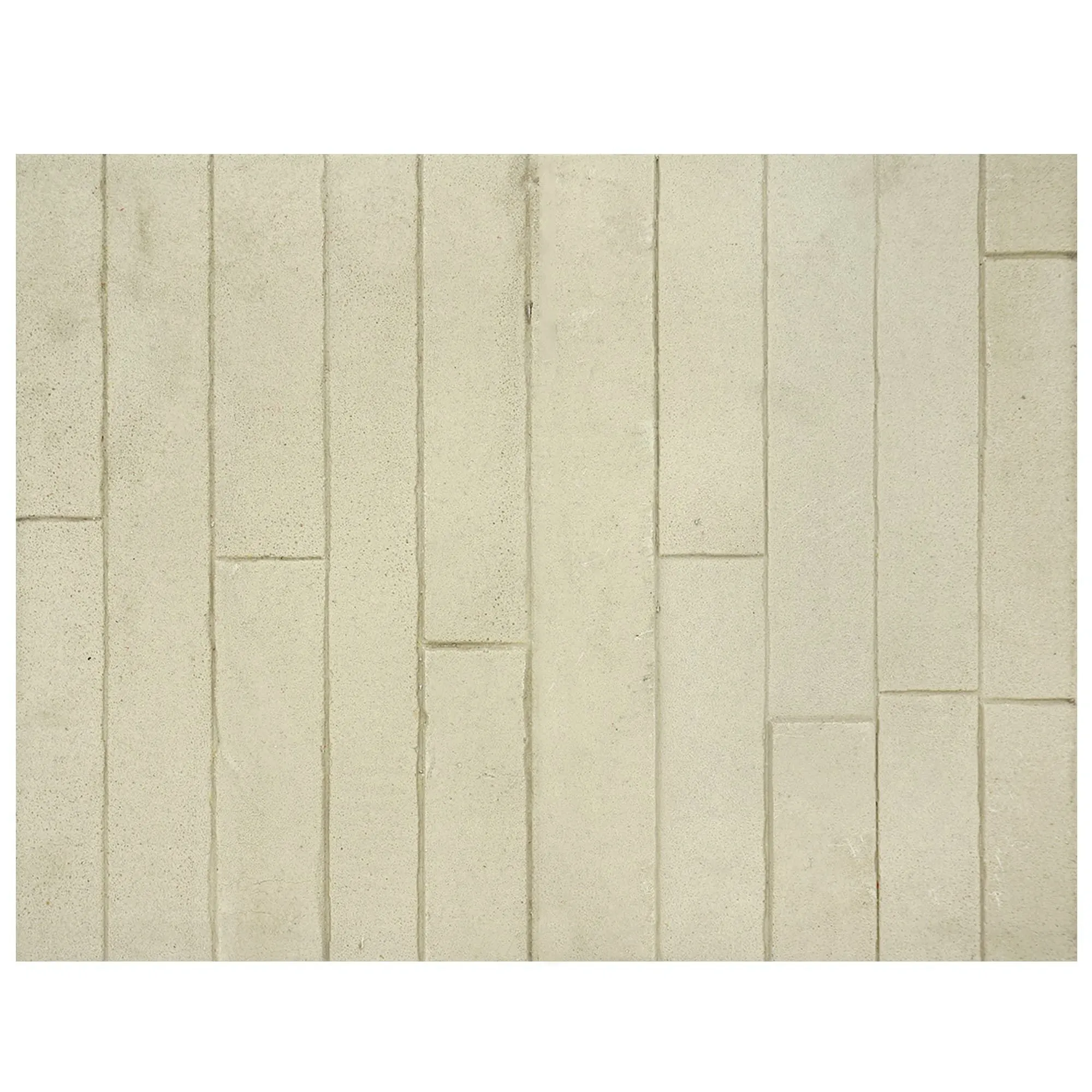
If MCM is the revolutionary ink, then 3D printing is the revolutionary pen. The combination of these two technologies, championed by the COLORIA GROUP MCM 3D Printing series, unlocks a level of design freedom that architects could previously only dream of. It directly addresses the smart city's need for hyper-customization and unique architectural identity.
How does it work? Imagine a highly precise robotic arm extruding the MCM paste, layer by layer, to build up a three-dimensional panel. The digital design file, created by an architect, is translated directly into physical form. There are no molds, no carving, no cutting. This is additive manufacturing in its purest form, and its implications are profound.
Unlocking Parametric and Biophilic Design
This is where things get really exciting. Architects are increasingly using computational tools to create "parametric" designs, where complex patterns and forms are generated by algorithms. This can result in facades that mimic patterns found in nature (biophilia)—the structure of a leaf, the ripples of water, the formation of crystals. These designs are not only beautiful but can also be functional, optimized for things like sunlight diffusion, ventilation, or acoustics.
Before MCM 3D Printing , realizing these complex digital designs was the biggest hurdle. The cost and difficulty of manufacturing such non-standard, intricate forms were astronomical. With 3D printing, complexity is virtually free. The machine doesn't care if it's printing a straight line or a complex curve; it simply follows the digital instructions. This technology democratizes intricate design, allowing architects to create breathtaking, nature-inspired building skins that are both aesthetically pleasing and deeply connected to their environment. Imagine a hospital facade with a calming, wave-like texture, or an office building whose skin is a pattern of apertures designed to perfectly modulate daylight throughout the day. This is the power that COLORIA GROUP puts into the hands of designers.
The End of Waste and the Dawn of Mass Customization
Traditional construction is a subtractive process. You start with a big block of stone or a slab of material and cut away what you don't need, creating enormous amounts of waste. 3D printing is an additive process. You start with nothing and add only the material that is required for the final form. This results in a near-zero-waste manufacturing process, perfectly aligning with the sustainability goals of smart cities.
Furthermore, it enables true mass customization. On a single project, every single panel on a facade can be unique. An architect could design a facade that tells a story, with patterns that flow and evolve across the building's surface. With traditional methods, this would require thousands of unique, expensive molds. With MCM 3D Printing , it just requires a different set of digital instructions for each panel. This allows for an unparalleled level of architectural expression, giving every building its own distinct personality. The technology empowers architects to move beyond repetition and embrace variation and narrative in their designs.
| Feature | 3D Printed MCM (COLORIA GROUP) | Natural Quarried Stone | Traditional Precast Concrete |
|---|---|---|---|
| Design Freedom | Virtually unlimited; intricate, parametric, and custom textures are easily achievable. | Limited by cutting and carving capabilities; complex designs are extremely expensive and time-consuming. | Limited by mold-making; high cost for custom or non-repetitive patterns. |
| Weight | Extremely lightweight (approx. 4-8 kg/m²). Reduces structural load and costs. | Very heavy (50-80 kg/m² or more). Requires significant structural support and heavy machinery. | Very heavy (80-150 kg/m²). Puts immense load on the building structure. |
| Installation Speed | Fast and efficient due to light weight and simple fixing systems. Lower labor costs. | Slow and labor-intensive. Requires specialized equipment and skilled masons. | Slow and requires heavy cranes for lifting and placement. |
| Environmental Impact | Very low. Low-energy production, use of natural/recycled materials, near-zero manufacturing waste. A prime example of eco-friendly building materials. | High. Destructive quarrying, high energy consumption for extraction and transport, significant waste. | Very high. Cement production is a major source of CO2 emissions. High energy and water consumption. |
| Durability & Resilience | Excellent. Class A fire-rated, water-resistant, freeze-thaw resistant, UV stable, and flexible. | Good durability, but can be brittle and susceptible to staining and cracking. | Good durability, but is rigid, heavy, and can be prone to cracking and spalling over time. |
| Cost-Effectiveness | Lower lifecycle cost. Reduced structural, transport, and installation costs offset initial material price. Complex designs are highly cost-effective. | High material and labor costs. Extremely expensive for any custom work. | Can be cost-effective for simple, repetitive shapes, but custom molds are very expensive. High transport and installation costs. |
The Complete Solution: From Concept to Completion
A revolutionary material is only as good as the ecosystem that supports it. This is why COLORIA GROUP operates not just as a manufacturer, but as a genuine one-stop solution provider for architects, designers, and developers around the globe. We understand that adopting a new technology requires partnership and expertise.
Our role begins at the conceptual stage. Our teams work alongside architects to explore the possibilities of MCM 3D Printing , helping them translate their most ambitious digital visions into tangible, manufacturable designs. We provide the technical know-how to optimize patterns for both aesthetics and performance. This collaborative approach ensures that the final product is not only beautiful but also practical and buildable.
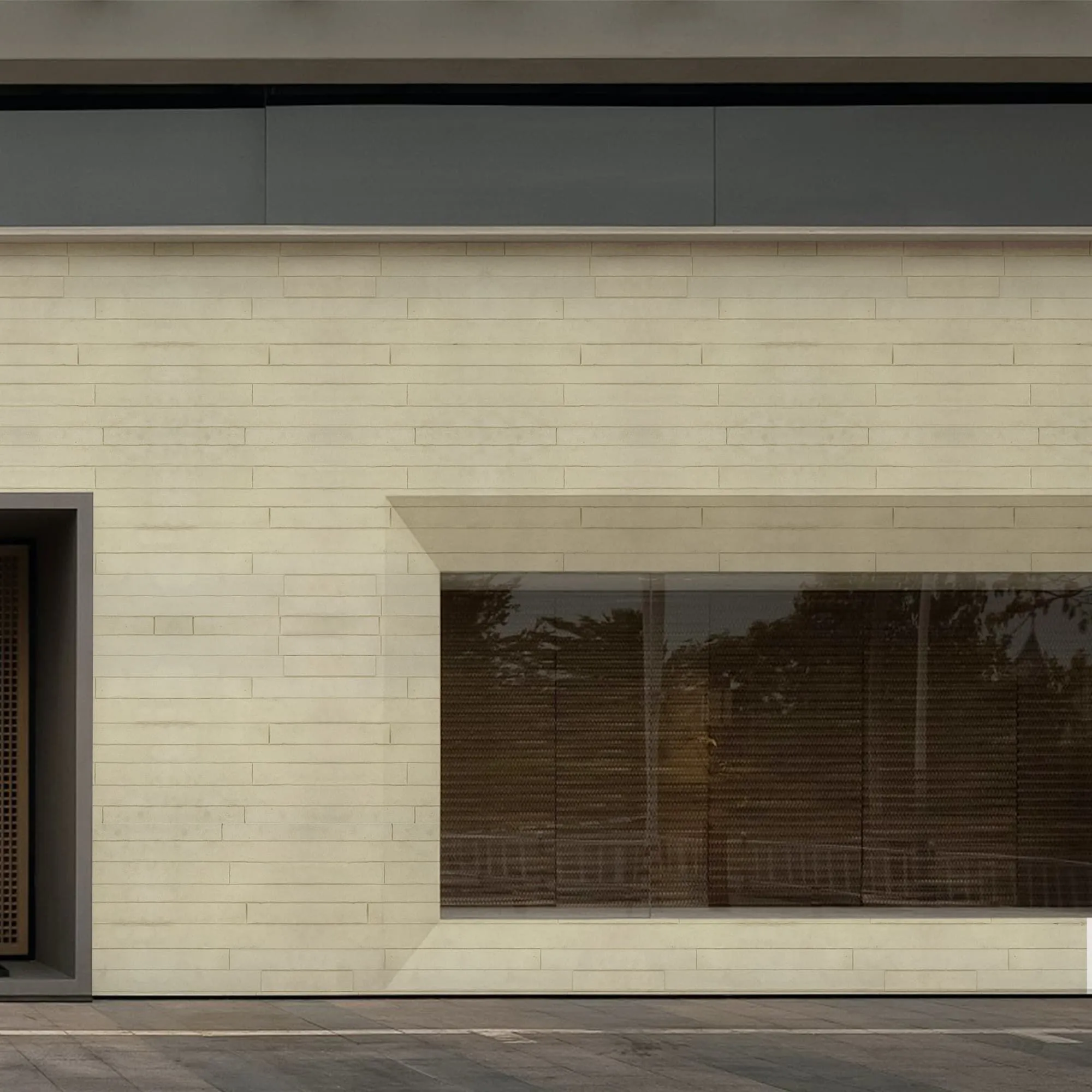
Moreover, the 3D Printing series is part of a broader, integrated product family. For a large-scale project, an architect might use the MCM 3D Printing Series for a stunning, intricate feature wall or entrance facade. For the vast expanses of the upper floors, they might specify the cost-effective and elegant MCM Big Slab Board Series . For curving interior columns or reception desks, the remarkable MCM Flexible Stone would be the perfect choice. COLORIA GROUP provides a cohesive palette of materials that work together seamlessly, all sharing the same core benefits of being lightweight, durable, and sustainable. This integrated system simplifies the design and procurement process, ensuring aesthetic consistency and performance across the entire project. With a global presence, including a dedicated agency in key growth markets like Saudi Arabia, we have the experience and logistical capability to deliver these solutions to ambitious projects anywhere in the world.
Building the Cities of Tomorrow, Today
The future of masonry stone is not to be found in a quarry. It's being printed, layer by layer, in a clean, efficient facility. It's a future where architecture is liberated from the constraints of weight, cost, and standardized manufacturing. It's a future where our buildings are smarter, greener, and more expressive than ever before.
Smart cities demand materials that embody their core principles. Modified Cementitious Material (MCM) , especially when combined with the limitless potential of 3D printing, is precisely that material. It answers the call for sustainability with its low-energy production and use of natural materials. It answers the call for identity with its capacity for infinite customization. And it answers the call for efficiency with its lightweight, durable, and easy-to-install nature.
This is more than just a new product; it is a new way of thinking about building. It's a shift from the extractive and rigid methods of the past to the additive, flexible, and intelligent methods of the future. As a pioneer in this field, COLORIA GROUP is not just supplying materials; we are providing the tools for architects and visionaries to build the next generation of urban masterpieces. The future of our cities is being designed right now, and it is being built with the ingenuity and responsibility that technologies like MCM 3D Printing make possible.









