
Run your fingers along the wall of the Colosseum, and you'll feel it—the grit of travertine, warm from the Roman sun, each pore a fingerprint of time. For millennia, this stone has been more than a building material; it's a storyteller. It carried the roars of gladiators, the whispers of senators, and the weight of an empire's ambition. But here's the thing about legacy: it doesn't just live in the past. It demands to be reimagined. Today, as architects reach for the skies and dream of curves that ancient masons could never carve, traditional travertine—heavy, unyielding, and stubbornly stuck in its ways—has met its match. Enter MCM's digital revolution, where 3D printers hum like modern-day sculptors, and stone bends not just to tools, but to the wildest dreams of design.
Let's start with the obvious: travertine is heavy . A single slab can weigh upwards of 300 kilograms, turning construction sites into logistical puzzles. Ancient Romans solved this with brute force—hundreds of laborers hauling blocks on ramps—but today's skyscrapers, with their sleek glass facades and delicate steel frames, can't afford that kind of structural strain. Then there's waste: quarrying travertine carves gashes into landscapes, and shaping it with traditional tools often leaves 30% of the stone as rubble, discarded like crumpled. worst of all? Design limits. For centuries, travertine has been boxed into rectangles and squares, its natural beauty trapped in rigid forms. An architect wanting a curved wall? A sculptor craving a texture that shimmers like a starlit sky? They'd have to compromise. Until now.
Walk into MCM's innovation lab in Shanghai, and you'll see the future in action: a 3D printer the size of a small truck, its nozzle tracing intricate patterns in mid-air, depositing layers of composite material that look, feel, and even breathe like travertine—only better. This is the MCM 3D printing series , and it's not just about making stone faster. It's about making stone flexible . Enter MCM flexible stone : a marvel of engineering that retains travertine's natural texture but bends like leather. Imagine a facade that curves around a building like a wave, or a ceiling panel that swoops overhead, weightless yet durable. Suddenly, that museum with the organic, cloud-like design isn't impossible. It's a blueprint.
The magic lies in the material. MCM's 3D printing process blends recycled travertine powder with a polymer matrix, creating a substance that's 60% lighter than traditional stone but just as strong. "We're not replacing travertine—we're setting it free," says Li Wei, MCM's lead materials scientist, gesturing to a sample of travertine (starry green) on her desk. The slab shimmers, tiny flecks of iridescent pigment catching the light like bioluminescent plankton in a midnight sea. "Ancient Romans used to inlay gold into travertine for temples. We're using 3D printing to inlay the night sky."
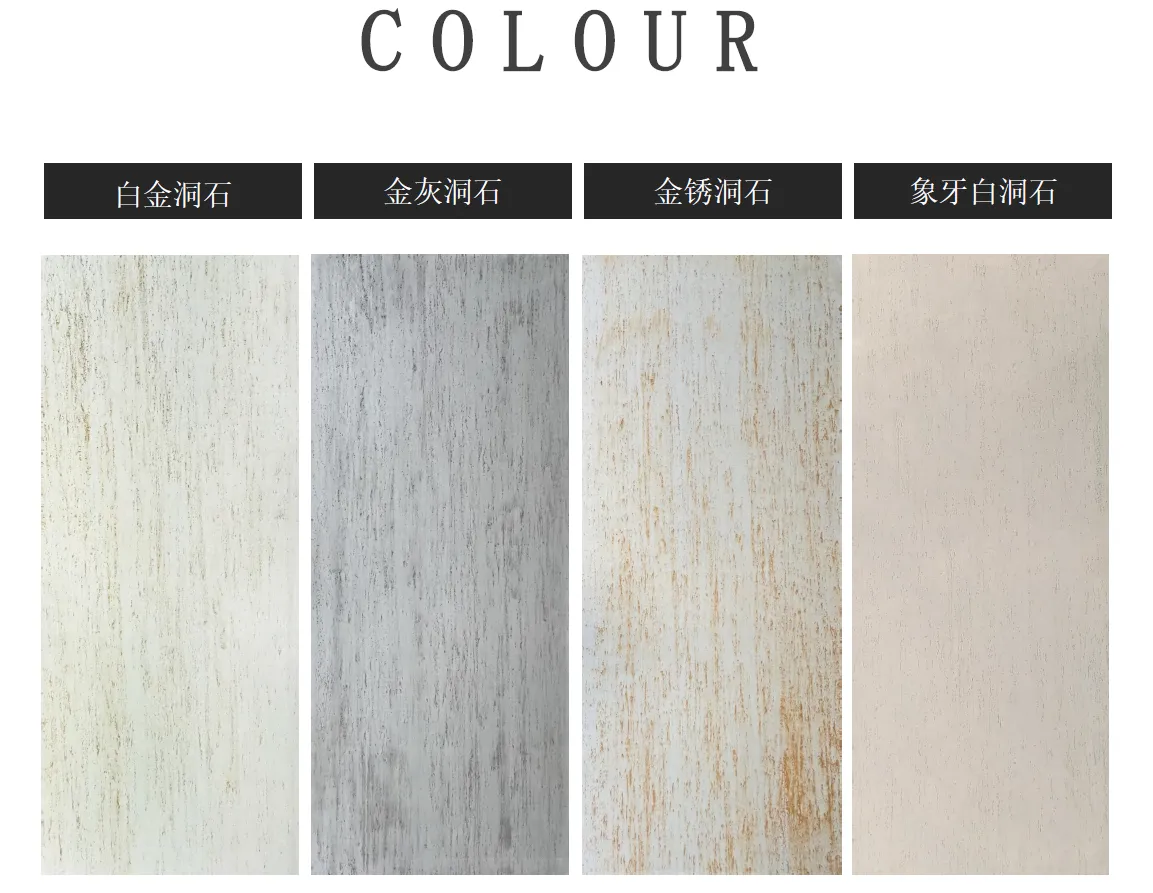
Traditional travertine's beauty lies in its imperfection—the pits, the veins, the earthy tones that feel like a hug from the planet. MCM hasn't lost that. Instead, they've multiplied it. Take lunar peak silvery : a finish that mimics the moon's pockmarked surface, matte yet luminous, as if someone chiseled a slice of the lunar landscape and glued it to a wall. Or boulder slab , which captures the raw, rugged texture of river stones, complete with the subtle dents left by centuries of water erosion—only this "boulder" weighs half as much and can be printed in any size, from a kitchen backsplash to a skyscraper facade.
Architects are already obsessed. Last year, Tokyo's Odaiba District unveiled a cultural center wrapped in MCM's 3D-printed travertine panels, each one printed with a unique pattern inspired by Japanese calligraphy. The panels, made with MCM flexible stone , curve gently around the building's corners, their surface rippling like paper in the wind. "We wanted the building to feel alive," says lead architect Yuki Tanaka. "With traditional travertine, we'd have needed steel supports every meter. With MCM, we printed the entire facade in sections, like assembling a puzzle. It took half the time and cost, and the result? It looks like the stone itself is moving."
| Aspect | Traditional Travertine Fabrication | MCM 3D Printing Series |
|---|---|---|
| Weight | 300-500 kg per slab | 120-180 kg per slab (60% lighter) |
| Design Flexibility | Limited to straight lines and basic shapes | Intricate curves, custom textures (e.g., starry green, lunar peak silvery) |
| Waste Production | ~30% of stone discarded as rubble | ~5% waste (recyclable powder) |
| Installation | Requires heavy machinery and structural reinforcement | Lightweight panels install with standard tools; no extra structural support |
| Customization | Pre-cut slabs; minimal texture variation | On-demand patterns, colors, and sizes (e.g., boulder slab with vintage silver finish) |
Case Study: The Starry Library, Barcelona
When Spanish architect Marina Ortega set out to design a library dedicated to astronomy, she had one non-negotiable: the walls must tell the story of the universe. Traditional travertine, with its earthy hues, felt too grounded. Then she discovered MCM's
travertine (starry green)
and
lunar peak silvery
panels. "The 3D printer let us map constellations directly into the stone," Ortega says, standing in the library's main hall. Above us, the ceiling shimmers with star-like indentations, each one placed to match the night sky over Barcelona in 1492, when Columbus set sail. "The green travertine represents the cosmic ocean, and the silvery lunar panels? They're the moon, guiding him. With traditional stone, this would have taken years of hand-carving. With MCM, we did it in six weeks."
Ancient Romans didn't worry about carbon footprints, but we do. Quarrying travertine releases 2.5 tons of CO2 per ton of stone; MCM's 3D printing process? Just 0.8 tons. The secret? Recycled materials. "We take waste stone from quarries—pieces that would otherwise end up in landfills—and grind them into powder," explains Li Wei. "Then we add a plant-based polymer, so the final product is 80% natural, 20% eco-friendly binder." The result? A stone that's not just lighter and more flexible, but kinder to the planet. In Dubai, a recent hotel project using MCM's boulder slab (vintage black) reduced its carbon emissions by 40% compared to traditional travertine. "It's not just about building for today," says the hotel's sustainability director, Ahmed Al-Mansoori. "It's about building for the next Colosseum."
Critics might argue that 3D-printed stone loses the "soul" of traditional craftsmanship. But walk through MCM's workshop, and you'll meet artisans like Zhang Mei, who's been hand-mixing pigments for 15 years. "This isn't about replacing skill—it's about amplifying it," she says, adding a dash of iridescent powder to a batch of travertine (starry green) mixture. "Ancient masons learned from their fathers; I learn from algorithms. But the goal is the same: to make stone feel alive." Zhang's latest creation? A custom panel for a private villa in Kyoto, where MCM flexible stone bends around a koi pond, its surface rippling like water. "The client wanted stone that 'flows,'" she laughs. "With traditional tools, I'd have said no. With 3D printing? I said, 'How fast do you need it?'"
Stand in front of MCM's latest prototype—a boulder slab printed with a pattern that mimics the rings of Saturn, its edges so thin they're almost translucent—and you'll realize: this isn't just about building materials. It's about redefining what "forever" means. Travertine, which has outlived empires, now has a new superpower: adaptability. It can climb skyscrapers, curve around art galleries, and even glow in the dark (yes, MCM's working on that). It's stone that doesn't just last—it evolves.
So the next time you walk past a building with a facade that seems to dance, or a wall that shimmers like a starry night, pause. Run your hand along it. You might just be touching the future—a future where the Colosseum's grit meets 3D printer precision, and where the stone that built empires now builds dreams.
Recommend Products












