
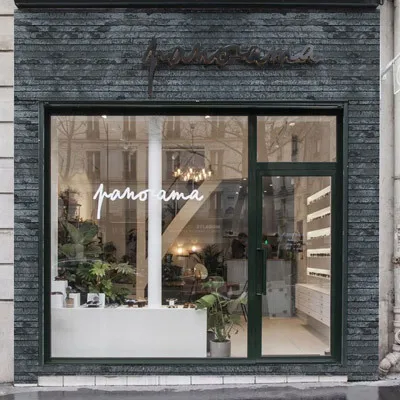
Walk down any city street, and you'll notice something: buildings aren't just structures—they're stories. They tell us about the people who designed them, the era they were built in, and even the values of the communities they serve. But in recent years, there's a new chapter being written in that story: sustainability. Architects, builders, and homeowners alike are waking up to a simple truth: the choices we make about our buildings today shape the planet we leave for tomorrow. And when it comes to exterior cladding—the first impression a building makes—one material is quietly redefining what "sustainable" and "beautiful" can mean together: Dark Grey Muretto Stone.
Let's start by asking why cladding matters. It's not just about looks (though that matters too). Cladding protects a building from the elements, insulates it to keep energy costs low, and sets the tone for how we interact with the space. For too long, the options felt limited: either prioritize durability and cost, or chase sustainability at the expense of style. But what if there was a material that didn't force that trade-off? That's where Dark Grey Muretto Stone steps in—and it's not alone. It's part of a new generation of green building materials that are changing the game, one facade at a time.
If you're not in the construction world, you might be thinking, "Muretto… that sounds Italian." You're not wrong. The word "muretto" translates to "small wall" in Italian, and it's a nod to the material's roots in traditional stone craftsmanship—reimagined for the 21st century. Dark Grey Muretto Stone is a type of modified composite material panel, part of the broader category of flexible stone cladding. Unlike heavy, brittle natural stone slabs that require cranes to install and often crack under stress, Muretto Stone is engineered to be lightweight, bendable, and surprisingly tough.
Picture this: a material that looks and feels like quarried stone—with all the depth, texture, and earthy warmth you'd expect from natural rock—but weighs a fraction of the real thing. It's made by blending natural stone aggregates with advanced polymers, creating a panel that can be cut, shaped, and installed like a giant sticker (though "sticker" doesn't do justice to its strength). The dark grey hue? It's intentional. It's a color that bridges modern minimalism with timeless elegance—think storm clouds meeting ancient cliffs, or the quiet sophistication of a well-worn leather journal. It pairs effortlessly with wood, metal, or glass, making it a favorite for architects who want a building to feel both grounded and forward-thinking.
But here's what really sets it apart: sustainability. Traditional stone mining is resource-intensive, often leaving behind scarred landscapes and high carbon footprints from transportation. Muretto Stone, on the other hand, uses recycled stone dust and aggregates from existing quarry waste, diverting tons of material from landfills. Its lightweight nature also cuts down on transportation emissions—since you can fit more panels per truck—and reduces the structural load on buildings, meaning less concrete and steel are needed for the frame. It's a material that respects the past (those natural stone aggregates) while embracing the future (innovative engineering).
To truly appreciate Dark Grey Muretto Stone, let's compare it to some common cladding options. We'll focus on three popular alternatives: foamed aluminium alloy board (a lightweight metal option), traditional natural stone, and fair-faced concrete (a staple of industrial design). How does Muretto Stone stack up?
| Material | Sustainability | Durability | Aesthetic Appeal | Installation Ease |
|---|---|---|---|---|
| Dark Grey Muretto Stone | High: Uses recycled stone aggregates; low carbon footprint; recyclable at end-of-life. | Excellent: Resists cracking, fading, and moisture; withstands extreme temperatures. | Timeless: Natural stone texture with consistent color; versatile for modern/classic designs. | Easy: Lightweight (5-8 kg/m²); can be installed with basic tools; no heavy machinery needed. |
| Foamed Aluminium Alloy Board (Vintage Silver) | Medium: Recyclable but energy-intensive to produce; limited natural texture. | Good: Resists corrosion but dents easily; prone to scratching. | Modern: Sleek metallic finish; lacks organic warmth of stone. | Moderate: Lightweight but requires specialized cutting tools; sharp edges can be hazardous. |
| Traditional Natural Stone (Granite/Marble) | Low: High mining impact; heavy transportation emissions; non-recyclable. | High: Extremely hard but brittle; prone to chipping and staining. | High: Unmatched natural beauty; unique veining and patterns. | Difficult: Requires cranes, structural reinforcement; high labor costs. |
| Fair-Faced Concrete | Low: High carbon footprint (cement production is emissions-heavy); limited recyclability. | Moderate: Cracks over time; stains easily; fades in sunlight. | Industrial: Raw, minimalist look; lacks warmth and texture variation. | Moderate: Heavy; requires formwork and curing time; prone to surface defects. |
The table tells the story: Dark Grey Muretto Stone isn't just "good for green building"—it's often better than the alternatives in almost every category. But numbers and charts only tell part of the story. Let's talk about real-world impact.
To understand why architects are falling in love with Dark Grey Muretto Stone, let's visit a project that put it to the test: the Riverbank Community Center in Portland, Oregon. Completed in 2024, the center was designed to be a hub for the neighborhood—a place for after-school programs, senior yoga classes, and community meetings. The architects, a small firm called GreenSpaces Design, had a clear goal: create a building that felt like a "natural extension of the park" next door, while keeping energy use low and construction waste to a minimum.
"We originally considered natural limestone," says Maria Hernandez, lead architect on the project. "But the site has a lot of slope, and the foundation couldn't support the weight of real stone. Then we found Muretto Stone. The dark grey color matched the river rocks in the park, and the flexibility meant we could wrap it around the building's curved corners without cutting it into a million pieces. Installation took half the time of traditional stone, and we saved over 30% on labor costs. But the best part? When the kids first saw it, they ran their hands over the walls and said, 'It feels like real rock!' That's the magic—you don't lose that tactile connection to nature."
Inside, the building's energy bills tell another success story. Thanks to Muretto Stone's insulating properties (those polymers in the composite help trap heat in winter and keep it out in summer), the center uses 22% less energy than similar-sized buildings in the area. And because the panels are moisture-resistant, there's no sign of mold or mildew—even in Portland's rainy winters. "It's not just a pretty face," Hernandez laughs. "It's a workhorse."
But Riverbank isn't an anomaly. Dark Grey Muretto Stone is popping up everywhere: on boutique hotels in Barcelona, where it complements Gothic architecture; on sustainable housing developments in Tokyo, where space is tight and lightweight materials are a must; even on heritage buildings in Rome, where it's used to restore facades without damaging the original stonework underneath. Its versatility is part of its appeal. Whether you're designing a modernist home with clean lines or a rustic cabin that blends into the woods, Muretto Stone adapts—without losing its core identity.
Let's get a little technical (but don't worry—we'll keep it simple). What makes Dark Grey Muretto Stone a standout in green building materials ? It starts with the manufacturing process. Traditional stone quarrying involves blasting rock from mountainsides, which disrupts ecosystems and releases tons of CO2. Muretto Stone, by contrast, uses stone dust and scraps from existing quarries—material that would otherwise end up in landfills. By repurposing these "waste" products, it reduces the need for new mining by up to 70%, according to a 2023 study by the International Green Building Institute.
Then there's transportation. A standard natural stone slab weighs about 50 kg per square meter; Muretto Stone weighs 5-8 kg per square meter. That means a single truck can carry 10 times as much Muretto Stone as natural stone, cutting transportation emissions by roughly 90%. For a large project—say, a 10-story office building—that's the equivalent of taking 40 cars off the road for a year.
Durability matters too for sustainability. A material that needs to be replaced every 10 years isn't "green" no matter how eco-friendly it is to make. Muretto Stone is designed to last 50+ years with minimal maintenance. It resists UV fading (so that dark grey color stays rich for decades), doesn't absorb water (no more unsightly stains from rain), and stands up to extreme temperatures—from the desert heat of Dubai to the freezing winters of Stockholm. "We tested it in our lab at -30°C and 50°C," says Dr. James Lin, a materials scientist at the University of Washington who studies composite cladding. "It didn't crack, warp, or lose strength. That longevity means less waste over time—no tearing off old panels and sending them to landfills every decade."
And when the day finally comes to replace it (decades from now), Muretto Stone is recyclable. The panels can be ground down and reused as aggregates in new panels or even in road construction. Compare that to vinyl siding (which sits in landfills for centuries) or aluminum cladding (which requires massive amounts of energy to recycle), and the choice becomes clear: Muretto Stone isn't just sustainable for today—it's sustainable for the long haul.
Dark Grey Muretto Stone is part of a larger family of materials called MCM (Modified Composite Material) panels. And the future of MCM is looking bright—literally and figuratively. Companies are experimenting with new colors (think deep forest greens, terracotta reds, even iridescent finishes that shift with the light), but they're also pushing the boundaries of what the material can do. One exciting development? MCM 3D printing series cladding. Imagine being able to 3D-print custom Muretto Stone panels with intricate patterns—like tree bark, flowing water, or even abstract art—directly on-site. No more cutting and fitting; just layer upon layer of sustainable, stone-like material, tailored to a building's unique design.
Another trend? Integration with smart technology. Researchers are working on MCM panels embedded with sensors that can monitor a building's energy use, detect leaks, or even change color to reflect sunlight (further reducing cooling costs). "We're not just making cladding—we're making 'living' facades," says Dr. Lin. "Materials that don't just protect the building, but actively help it perform better."
And let's not forget about affordability. As MCM production scales up, prices are coming down, making materials like Dark Grey Muretto Stone accessible to more people. "Five years ago, it was a luxury material," says Carlos Mendez, a contractor in Miami who specializes in sustainable builds. "Now, we're using it on mid-range homes. Homeowners love that they can get the look of natural stone without the sticker shock."
In the remote Gobi Desert, where temperatures swing from -40°C in winter to 50°C in summer, and sandstorms rage for days on end, durability isn't optional—it's survival. That's why the Gobi Desert Research Station, a facility studying climate change, chose Dark Grey Muretto Stone for its exterior cladding. "We needed something that could handle the desert's extremes and blend into the landscape," says Dr. Elena Park, the station's director. "Muretto Stone checked both boxes. The dark grey color doesn't reflect sunlight (which would overheat the building), and the panels haven't cracked or faded in five years of sandstorms. We even had a rare flash flood last year, and the walls stayed bone-dry. It's been a game-changer for our work."
The station's carbon footprint? Thanks to Muretto Stone's low transportation and installation costs, the building's embodied carbon (the emissions from construction) is 45% lower than similar research facilities. "We're studying sustainability, so we have to practice it too," Park says. "Muretto Stone helps us walk the walk."
You might be thinking, "I'm not an architect or a builder—why should I care about cladding materials?" Here's the thing: the buildings around us shape our daily lives. They affect our mood (a dark, sterile office vs. a light-filled space with natural textures), our health (poor insulation leading to mold, or toxic materials off-gassing), and even our sense of community (a welcoming facade that invites people in vs. a cold, closed-off one).
Dark Grey Muretto Stone—and materials like it—are part of a shift toward buildings that don't just serve us, but support us. They're a reminder that sustainability doesn't have to mean sacrificing beauty, and that innovation can honor tradition. The next time you walk past a building with a stone-like facade, take a closer look. Maybe it's Muretto Stone. Maybe it's not. But either way, ask yourself: What story is this building telling? And is it a story we want to keep writing?
For architects and builders, the message is clear: the future of cladding is here, and it's dark grey, flexible, and unapologetically green. For the rest of us? It's a reason to get excited about the buildings of tomorrow—ones that look good, do good, and stand the test of time.
So here's to Dark Grey Muretto Stone: a small wall with a big impact. Here's to the future of sustainable cladding. And here's to buildings that don't just exist—but thrive, for us and for the planet.
Recommend Products












