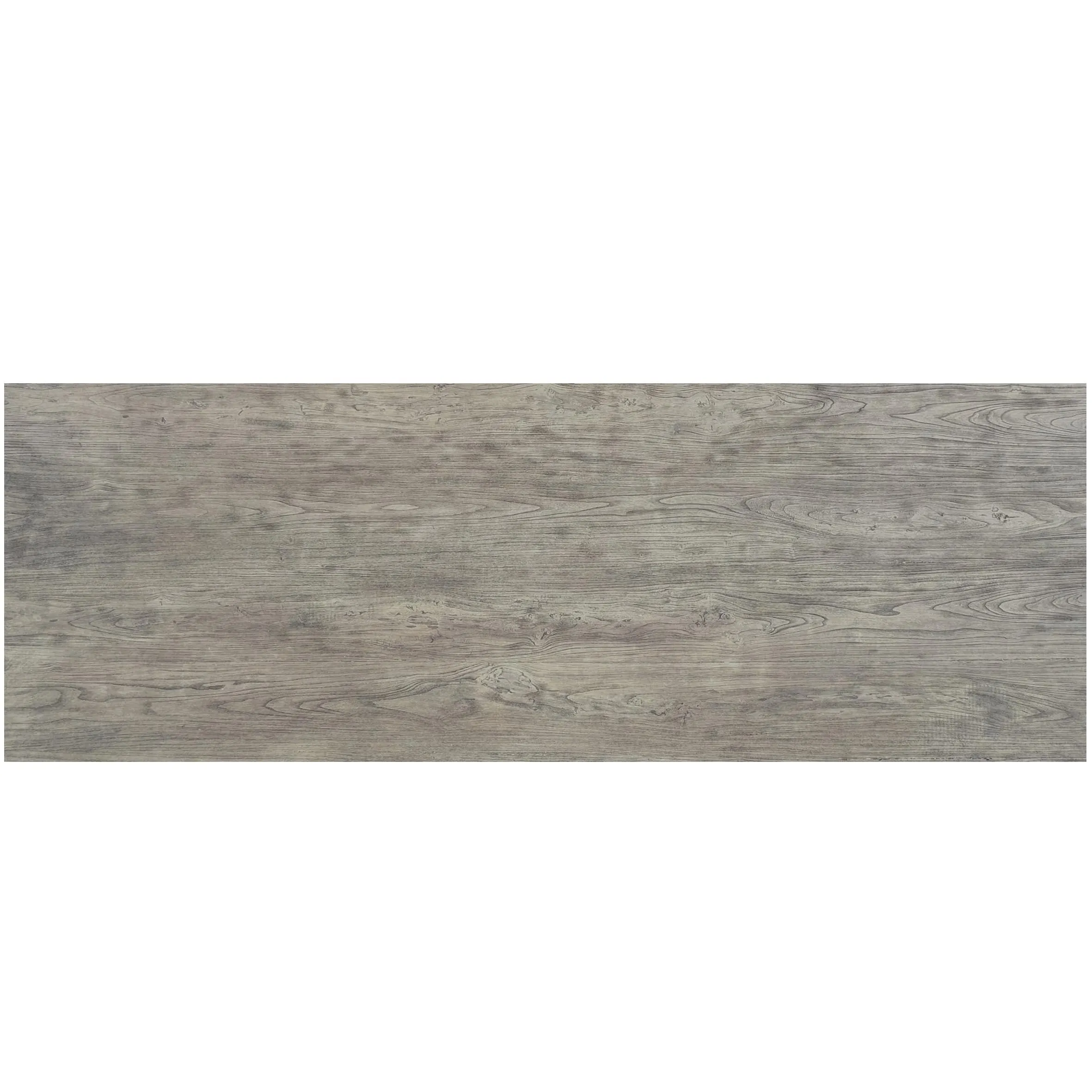
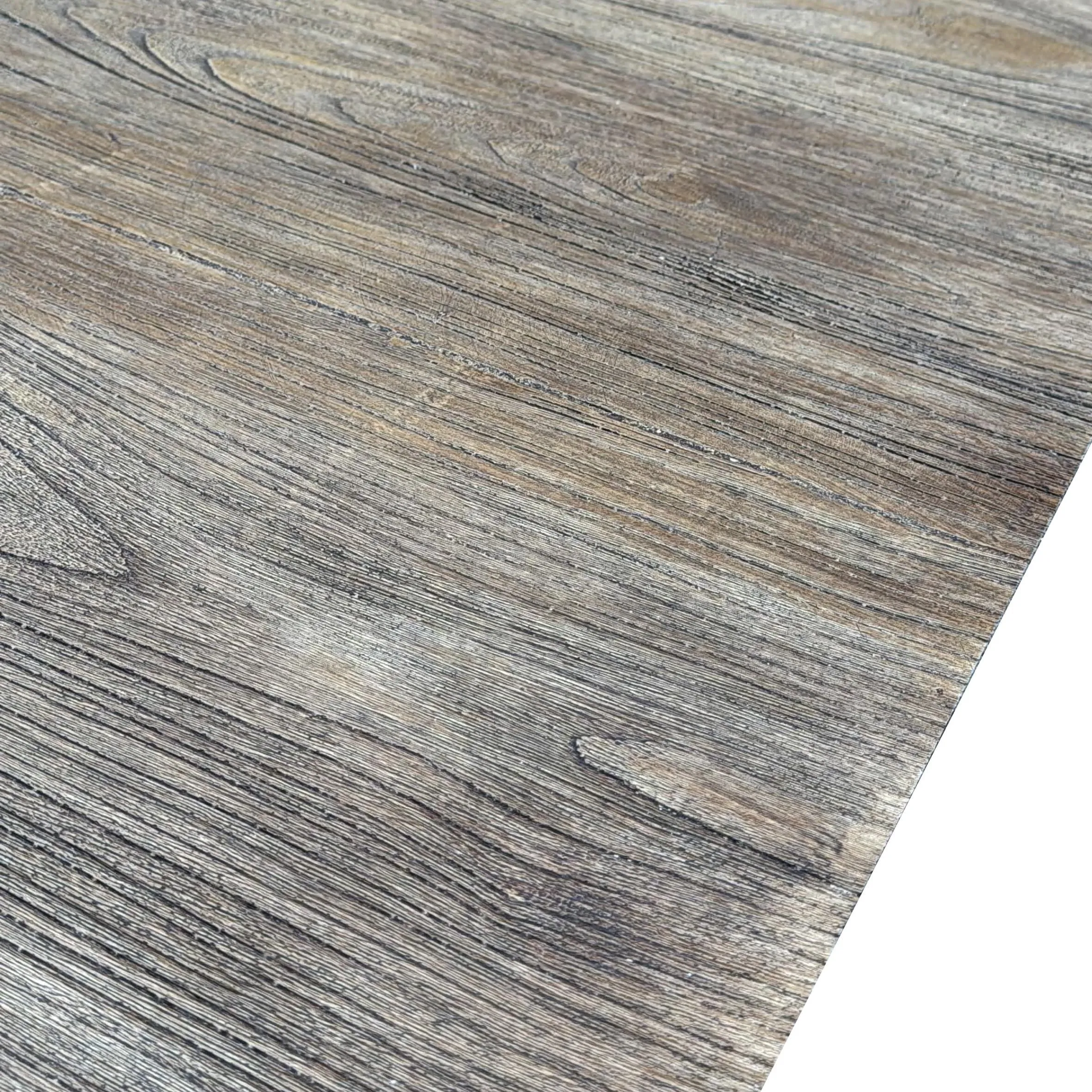
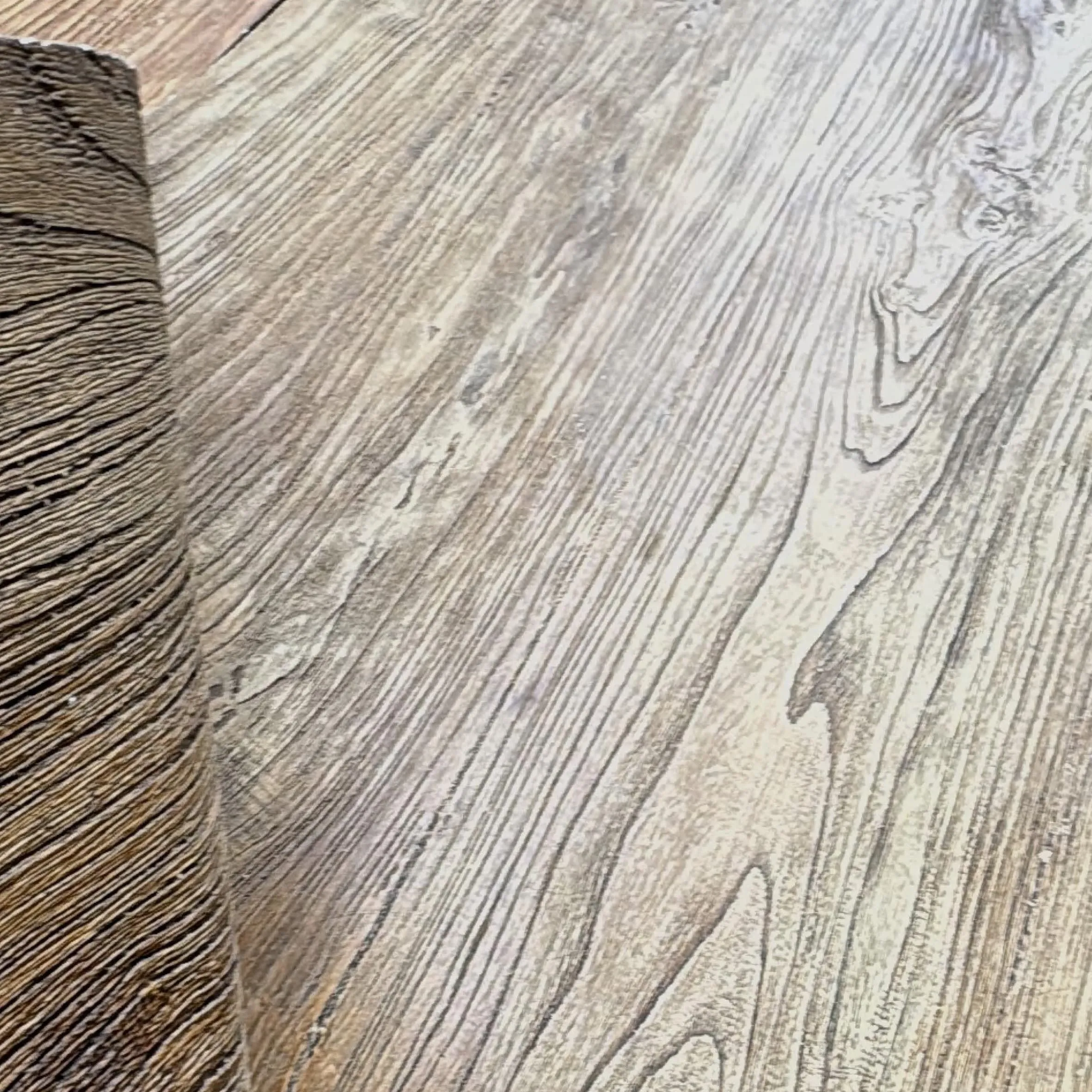
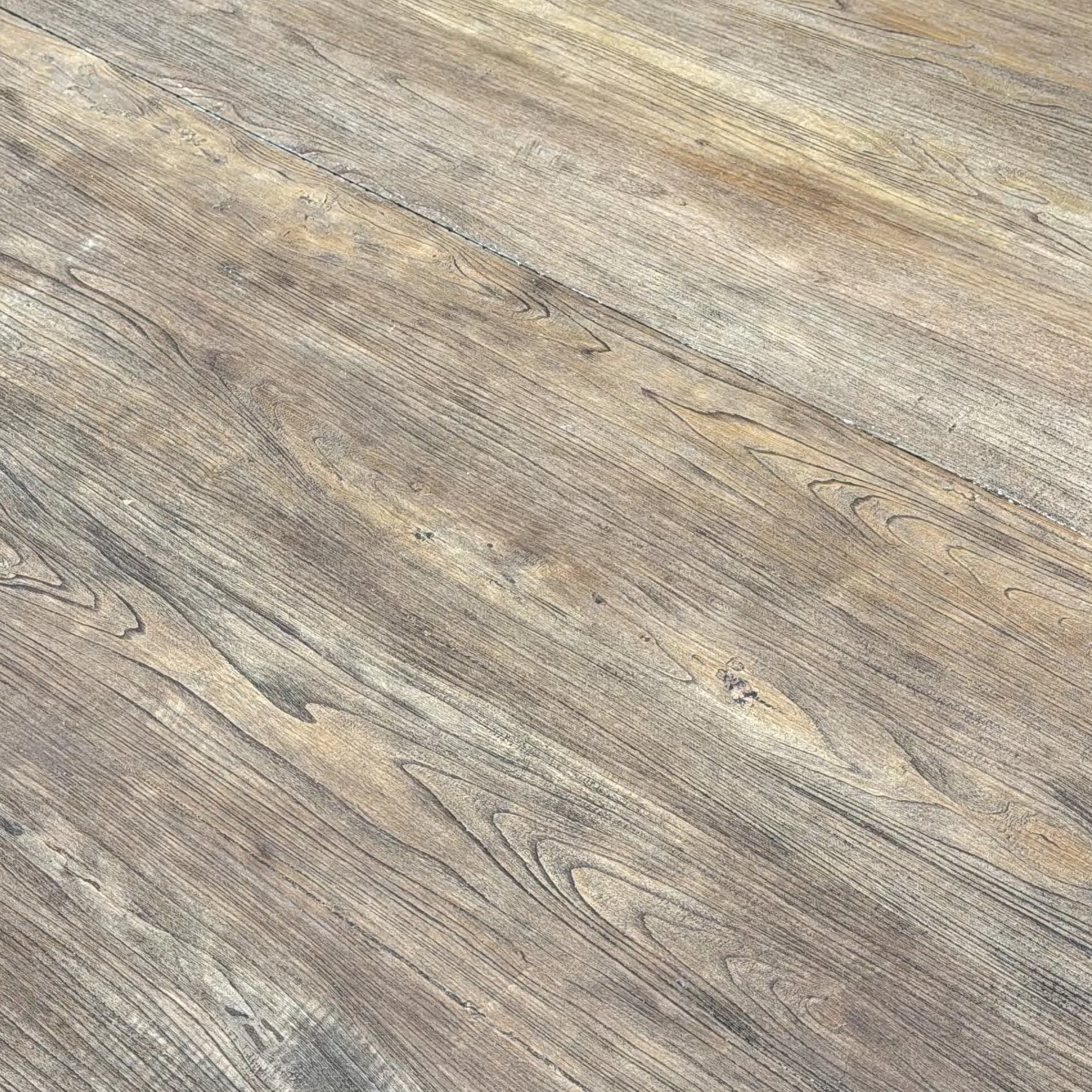
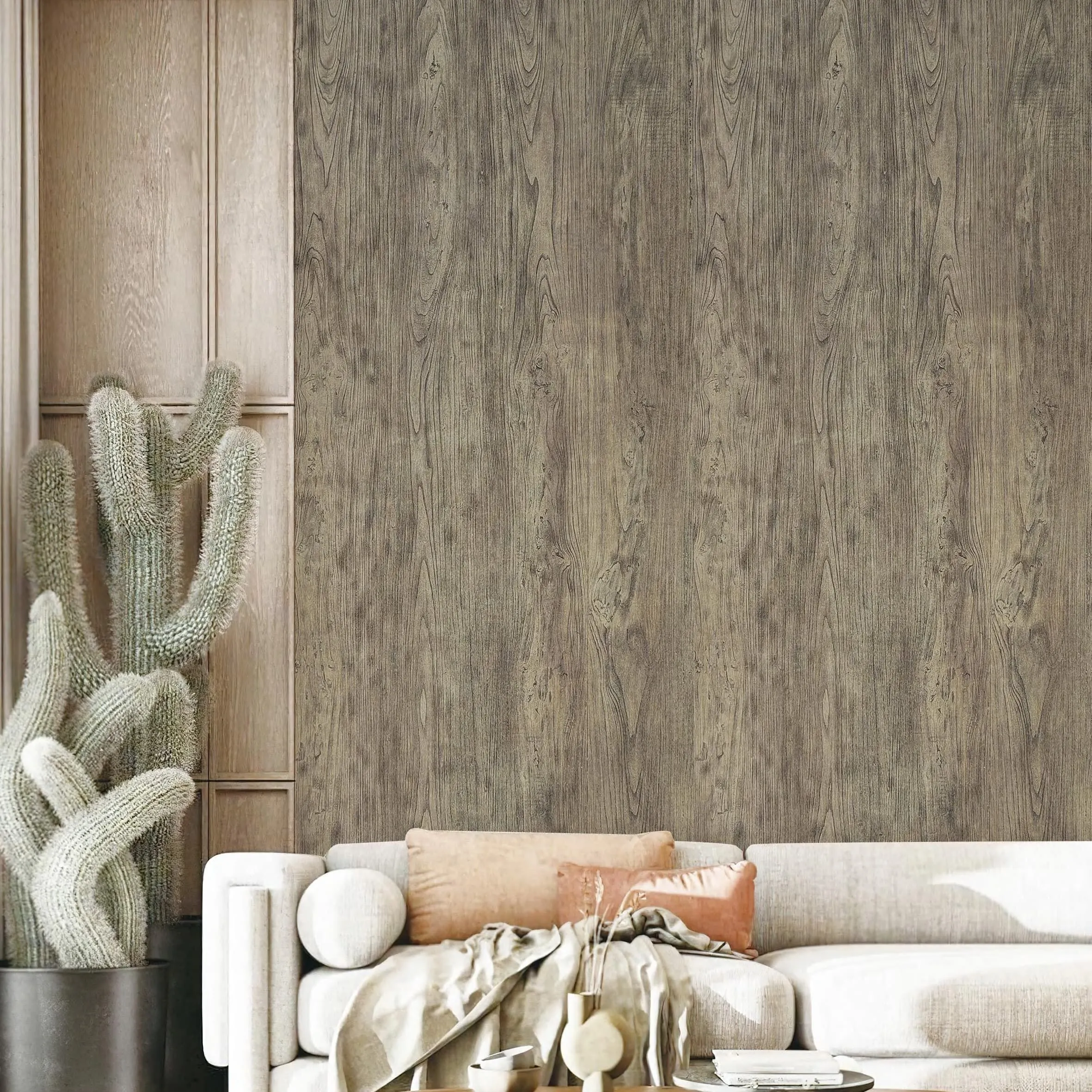
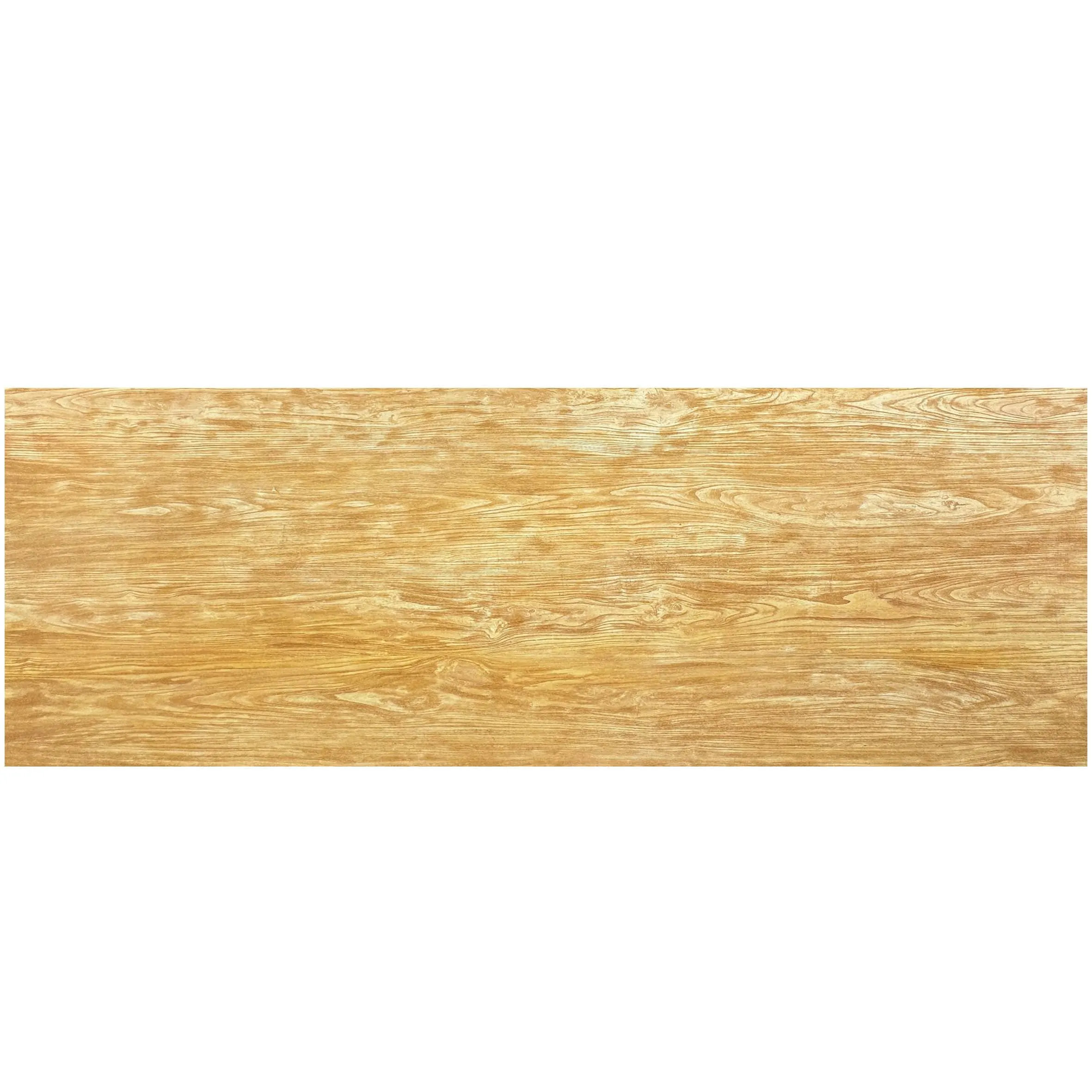
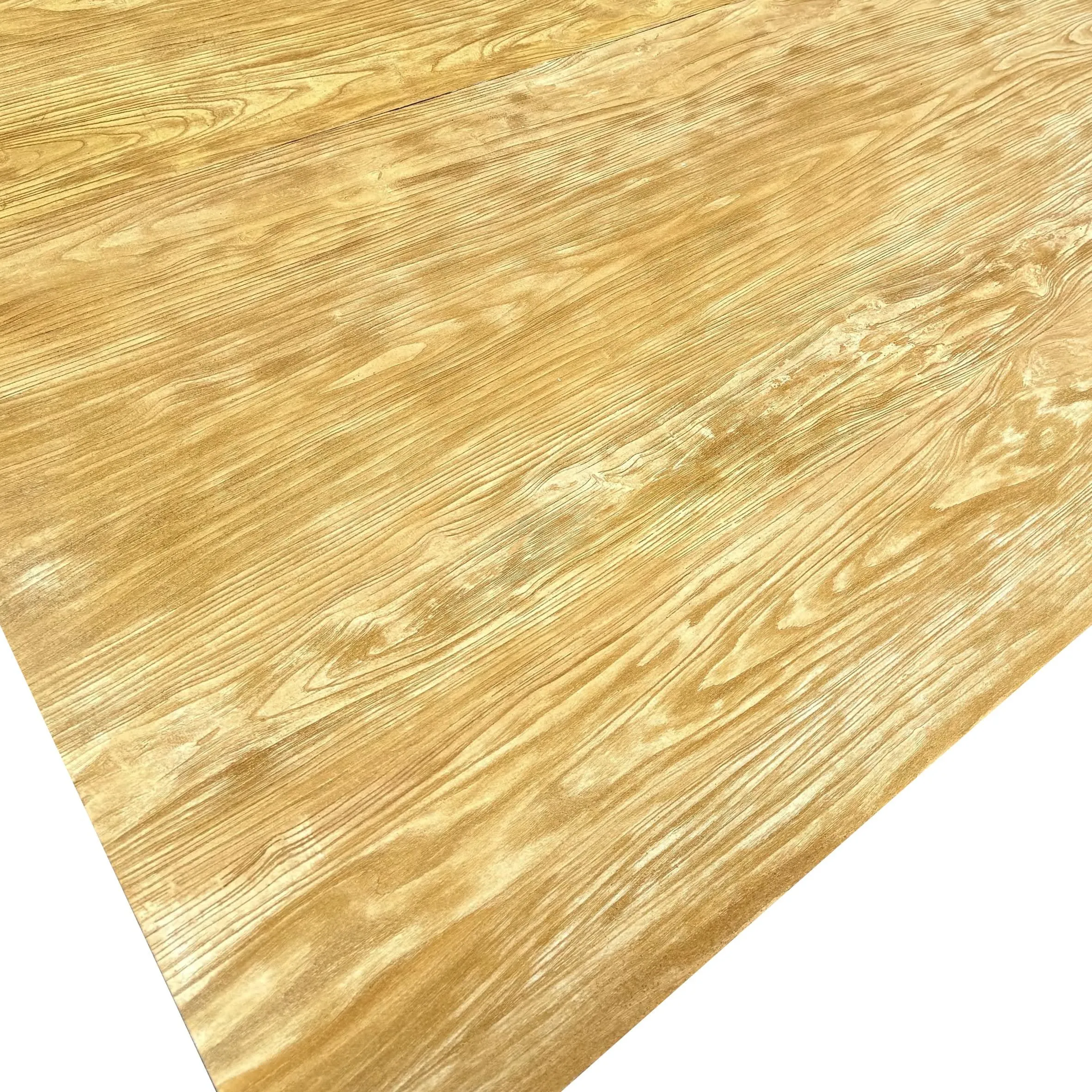
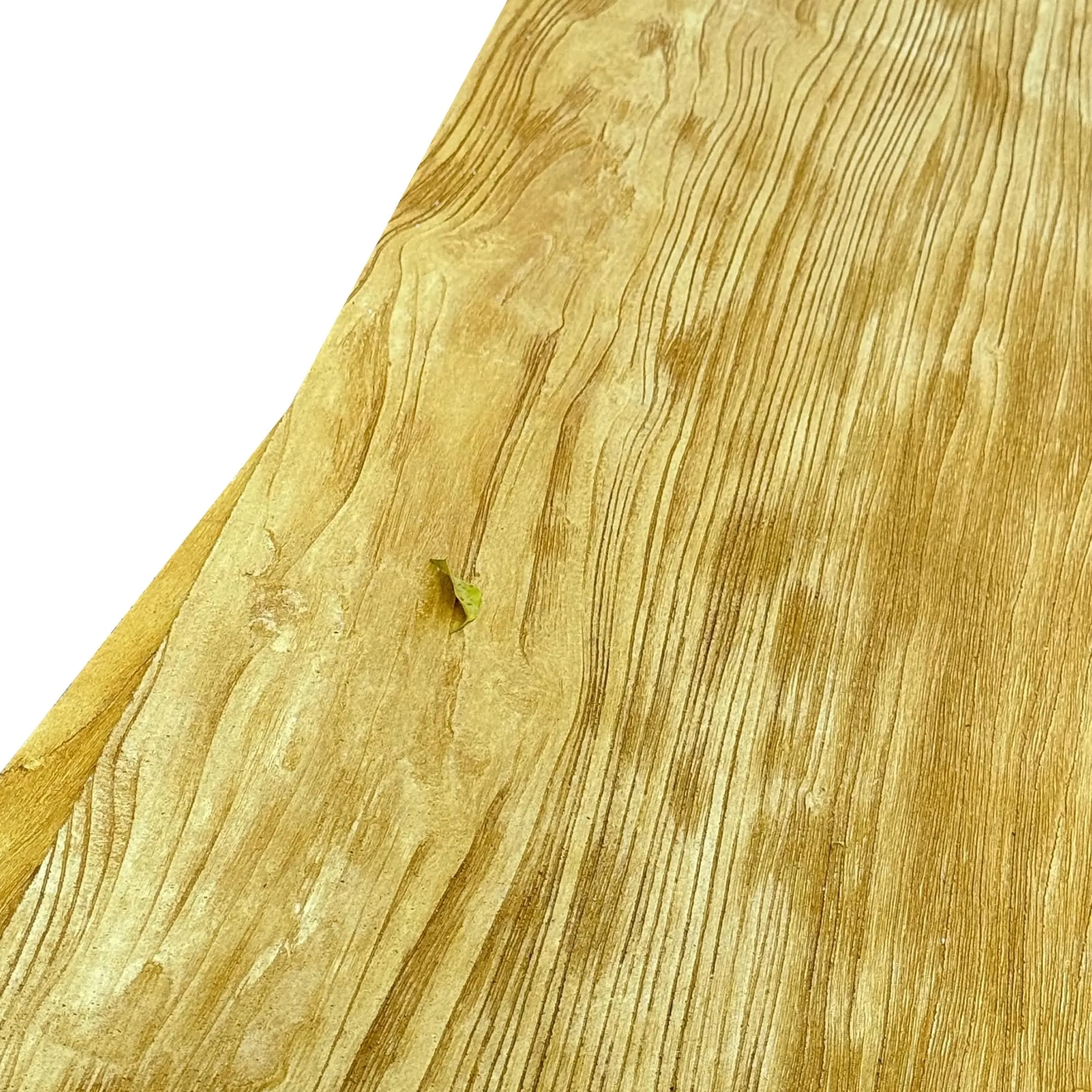
MCM wood grain boards aren't just a "better wood"—they're a reinvention of what wood grain can be. Let's break down the key innovations that set them apart:
1. Design Flexibility That Blows Traditional Wood Out of the Water
Imagine wanting a wood grain accent wall that curves gently from the ceiling to the floor, or a kitchen backsplash with wood grain panels that wrap around cabinets. With solid wood, that's a nightmare—you'd need custom-cut pieces, expensive tools, and a master craftsman to pull it off. MCM wood grain boards? They're flexible by design. Thanks to their composite core, they can bend to radii as tight as a few inches, making curved surfaces, arches, and even cylindrical columns possible. This opens up a world of design possibilities: think rounded headboards in bedrooms, curved bar fronts in restaurants, or spiral staircases clad in continuous wood grain panels.
But flexibility isn't just about shape—it's about texture, too. MCM wood grain boards use advanced printing and embossing techniques to mimic the feel of real wood. Run your hand over a high-quality MCM panel, and you'll feel the slight ridges of the grain, the tiny indentations of knots, even the subtle pores that make wood feel organic. Some manufacturers go a step further, adding layers of real wood dust or natural pigments to the surface coating, giving the panels an authentic scent (yes, they can even smell like wood!).
And the color range? Unlike solid wood, which is limited to the hues of natural tree species, MCM wood grain boards can be tinted to match any palette. Want a soft sage-green wood grain for a coastal home? Done. A deep espresso with golden undertones for a luxury hotel? No problem. Even bold colors—like navy blue or terracotta wood grain—are possible, allowing designers to create truly one-of-a-kind spaces.
2. Durability That Stands Up to Real Life
Let's talk about the "real life" test. MCM wood grain boards are built to withstand the chaos of daily living—and then some. Take moisture, for example: traditional wood absorbs water like a sponge, leading to warping and rot. MCM panels, on the other hand, are non-porous. Spill a glass of wine on a kitchen backsplash? Wipe it up, and there's no stain. Install them in a bathroom with steam showers? No swelling, no mildew. This makes them ideal for wet areas where wood was once off-limits.
Sunlight is another enemy of traditional wood, causing fading and discoloration. MCM wood grain boards are treated with UV-resistant coatings that lock in color, so a wood grain exterior siding will still look vibrant after years of sun exposure. Scratches? While no material is completely scratch-proof, MCM's tough top layer is far more resistant than solid wood or vinyl. A chair scraping against an MCM wood grain floor panel might leave a faint mark, but it won't dig into the surface like it would on solid oak.
Even pests don't stand a chance. Termites and wood-boring insects are attracted to the cellulose in wood; MCM panels contain no cellulose, so they're naturally pest-resistant. And because they're lightweight (about 1/5 the weight of solid wood panels), installation is faster and safer—no need for heavy machinery or extra structural support. This not only saves time and money but also reduces the risk of installation errors that can compromise a material's performance.
3. Sustainability: The "Green" Advantage
Here's where MCM wood grain boards truly shine: their environmental footprint. As the world shifts toward
green building materials
, MCM technology checks all the boxes. Let's start with raw materials: unlike solid wood, MCM wood grain boards don't require cutting down trees. Instead, they use recycled or abundant materials—like aluminum from recycled cans, mineral fibers from industrial byproducts, or plant-based polymers. Some manufacturers even incorporate
MCM flexible stone
particles into the composite core, reducing the need for quarried stone and further lowering environmental impact.
Production is another win. Creating MCM panels uses significantly less energy than processing solid wood (which often involves logging, transportation, drying, and chemical treatments). Many MCM factories run on renewable energy, and because the panels are lightweight, shipping them requires less fuel, cutting down on carbon emissions.
Then there's longevity. A well-maintained MCM wood grain board can last 30+ years, compared to 10-15 years for traditional wood siding or 5-7 years for vinyl. That means fewer replacements, less waste, and a lower overall environmental impact over time. And when they do reach the end of their life, many MCM panels are recyclable, with the aluminum core and composite materials repurposed into new products.
For eco-conscious designers and homeowners, this is a game-changer. You can have the warmth of wood grain without contributing to deforestation or filling landfills with short-lived materials. It's design that feels good—for your space and for the planet.