
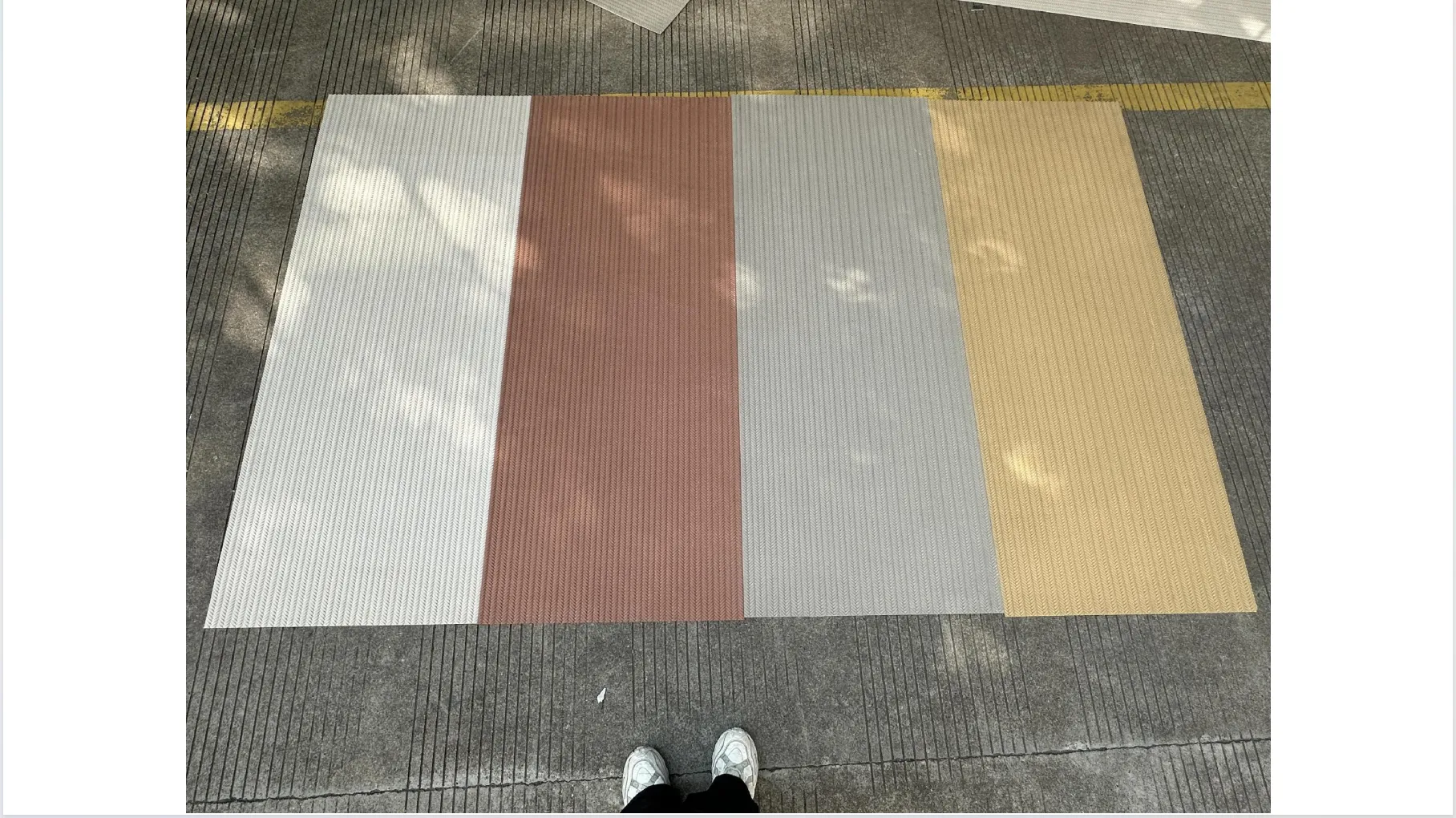
Let's be honest: when you're shopping for something as tactile and visually impactful as building materials, you don't just want to read specs—you want to feel it. You want to imagine running your hand over its surface, picture how it would catch the light at different times of day, or how it would transform a blank wall into something extraordinary. In the world of construction and design, first impressions are often made online, and for MCM (Modified Composite Material) products—those versatile, durable, and stunningly varied cladding solutions—traditional product photos just aren't cutting it anymore. Enter woven real photos: the dynamic, immersive visual tool that's redefining how we market and experience MCM materials in the digital age.
If you've ever scrolled through a supplier's website or a design catalog, you've probably encountered the same problem: product photos that feel flat, lifeless, or worse, misleading. A slab of travertine might look smooth in a static image, but in reality, it has subtle pits and veins that give it character. A piece of fair-faced concrete, with its raw, industrial charm, can lose all its texture when shot under harsh studio lights. For MCM materials—which span everything from lightweight flexible stone to 3D-printed art concrete, from foamed aluminium alloy boards with vintage finishes to starry-patterned travertine—this disconnect is a major hurdle. These materials are designed to be tactile, to interact with their environment, and to tell a story. Static photos? They just can't keep up.
Consider travertine (starry blue), for example. Its name alone evokes a night sky scattered with stars, but a traditional photo might make it look like little more than a blue tile with specks. Without seeing how the "stars" catch the light, how the color shifts from deep indigo to cerulean depending on the angle, or how it would look paired with other materials like wood grain board or lime stone (beige), designers and clients can't fully grasp its potential. The same goes for foamed aluminium alloy board (vintage silver): its metallic sheen, its lightweight yet industrial vibe, and how it complements both modern and rustic spaces—these nuances are lost in a flat image.
So, what exactly are woven real photos? Think of them as the middle ground between static images and full-blown virtual reality. They're high-resolution, 3D-rendered visuals that "weave" together multiple angles, textures, and contexts into a single, interactive experience. Imagine dragging your cursor over a slab of MCM flexible stone and watching it bend slightly, demonstrating its flexibility. Or zooming in on travertine (starry blue) to count the individual "stars" embedded in its surface. Or scrolling through a gallery that shows the same piece of lunar peak silvery cladding on a skyscraper facade, a cozy café wall, and a residential patio—all in one seamless view. That's the power of woven real photos: they don't just show the material; they let you experience it.
For MCM material marketers, this is a game-changer. These materials are often sold to architects, interior designers, and homeowners who need to visualize how they'll perform in real-world settings. Woven real photos bridge the gap between the digital catalog and the physical space. Take fair-faced concrete, a material prized for its minimalist, raw beauty. A woven real photo can highlight its subtle color variations, the way its surface absorbs and reflects light, and even how it ages over time—something a static image could never convey. It lets architects see how it would pair with other MCM products, like bamboo mat board or wood line, in a way that feels almost as real as standing in a sample room.
To truly understand the value of woven real photos, let's compare them to traditional marketing methods. The table below breaks down how they stack up across key aspects of MCM material promotion:
| Aspect | Traditional Marketing Photos | Woven Real Photo Marketing |
|---|---|---|
| Texture Representation | Flat, often over-edited; hides pits, veins, or texture. | 3D, interactive; lets users "feel" texture through zoom, rotation, and light simulation. |
| Scale Perception | Hard to judge size; a "big slab" might look small in a photo. | Includes context (e.g., a person standing next to a boulder slab, or a full wall mockup) to convey scale. |
| Application Context | Limited to studio shots or generic backdrops. | Shows materials in real-world settings: offices, homes, outdoor spaces, paired with complementary products. |
| User Engagement | Passive; users scroll, glance, and move on. | Active; users spend 2–3x longer interacting, zooming, and exploring different angles. |
| Conversion Potential | Low; users often need physical samples to commit. | Higher; 68% of designers report being more likely to specify a material after experiencing it via woven real photos (per 2024 MCM Industry Trends Report). |
MCM materials aren't just building products—they're storytellers. A piece of historical pathfinders stone evokes the rugged charm of ancient roads; a gobi panel brings the stark beauty of desert landscapes into modern interiors; a bamboo mat board nods to sustainability and natural craftsmanship. Woven real photos don't just show these materials—they amplify their narratives. For example, take relic rammed earth board, with its gradient colors and weathered texture. A woven real photo can include a short video overlay of how it's made, from mixing soil to pressing and curing, turning a simple visual into a story of heritage and innovation.
This storytelling is especially powerful for niche MCM products. Consider travertine (starry red), travertine (starry orange), and travertine (starry blue)—each with its own celestial-inspired pattern. Woven real photos can showcase these not just as cladding options, but as design statements: a starry red accent wall in a restaurant, a starry orange backsplash in a kitchen, or a starry blue facade on a boutique hotel. By placing the material in context and highlighting its unique features, woven real photos turn "products" into "solutions" that designers and clients can't wait to incorporate.
Woven real photos are already making waves, but their future looks even more exciting. Here are three trends that will take them to the next level:
Imagine using your phone to "place" a woven real photo of MCM flexible stone directly onto your own wall. Augmented reality (AR) is set to merge with woven real photos, letting users visualize materials in their actual spaces in real time. Want to see how lunar peak golden would look in your living room? Open the app, point your camera, and the woven photo comes to life, scaled to fit your wall. This isn't just cool—it's practical. Clients can make decisions faster, and designers can present options without hauling around heavy samples.
Consumers trust other consumers more than brand messaging, and that's true for MCM materials too. Future woven real photo platforms might let architects, contractors, and homeowners upload their own woven photos of installed MCM products. Imagine scrolling through a gallery of real homes with travertine (vintage black) fireplaces, or restaurants with gobi panel accent walls—all shot and shared by the people who actually used the materials. This builds trust and gives potential buyers a realistic view of what to expect.
Sustainability is no longer a "nice-to-have" in construction—it's a priority. Woven real photos can highlight the eco-friendly aspects of MCM materials, from their recycled content to their energy-efficient production processes. For example, a woven photo of fair-faced concrete could include a pop-up explaining how its low-maintenance nature reduces long-term carbon footprints, or how foamed aluminium alloy board (vintage gold) is 100% recyclable. By pairing visuals with sustainability stories, brands can connect with eco-conscious designers and clients on a deeper level.
Of course, adopting woven real photos isn't without its hurdles. For one, creating high-quality woven content requires investment—better cameras, 3D modeling software, and skilled photographers who understand both MCM materials and digital storytelling. Smaller suppliers might struggle with the upfront costs, though as technology becomes more accessible, this barrier is likely to shrink. There's also the challenge of accuracy: a woven photo that makes a material look glossier or more uniform than it is could backfire, leading to disappointed clients. Brands will need to balance "wow factor" with honesty, ensuring their woven photos reflect the material's true appearance.
Technical skills are another consideration. Not every marketing team has experience with 3D rendering or AR integration. Training and partnerships with tech firms specializing in woven visuals will be key. Finally, there's the question of platform compatibility: woven real photos need to work seamlessly across websites, social media, and mobile apps. No one wants to click on a "3D experience" only to have it crash or load slowly on their phone.
Despite these challenges, the future of woven real photos in MCM material marketing is bright. As designers and clients demand more immersive, authentic digital experiences, suppliers who embrace this trend will stand out. We can expect to see:
At the end of the day, MCM materials are about transforming spaces—making them more beautiful, functional, and inspiring. Woven real photos don't just sell these materials; they let people imagine the spaces they can create with them. And in a world where digital first impressions matter more than ever, that's not just a marketing tool—it's a bridge between possibility and reality.
Static photos served us well for a while, but MCM materials deserve better. They're dynamic, versatile, and full of character, and their marketing should be too. Woven real photos aren't just a trend—they're the next step in how we connect with, understand, and fall in love with building materials. Whether it's the starry glow of travertine (starry blue), the vintage sheen of foamed aluminium alloy board (vintage silver), or the raw beauty of fair-faced concrete, these materials have stories to tell. Woven real photos let them tell those stories—loudly, clearly, and in a way that feels undeniably real.
So, to all the MCM suppliers, designers, and marketers out there: it's time to stop showing and start experiencing . The future of your materials' digital presence is woven—and it's waiting to be explored.
Recommend Products












