

Walk into a boutique hotel in the Greek Islands, and you might run your hand along a wall that feels both ancient and alive—rough yet warm, with subtle variations in tone that catch the sunlight like a whispered story. Chances are, that wall is clad in Bali Stone. In Tokyo's trendiest cafes, the countertop beneath your matcha latte might bear the same earthy texture, grounding the sleek, modern space in something tactile and real. From the facades of luxury resorts in the Maldives to the accent walls of high-end apartments in New York, Bali Stone has quietly become a global darling of architects, designers, and homeowners alike. But what is it about this material that transcends borders? And who is behind making sure that a stone with roots in one corner of the world can reach building sites thousands of miles away?
Enter COLORIA—a name that, in the world of architectural materials, has become synonymous with reliability, innovation, and a deep respect for the stories materials tell. As demand for authentic, sustainable, and visually striking building materials surges globally, COLORIA has positioned itself not just as a supplier, but as a bridge between the raw beauty of materials like Bali Stone and the creative visions of designers worldwide. In this article, we'll explore the rising global demand for Bali Stone, the unique qualities that make it so sought-after, and how COLORIA is meeting that demand while pushing the boundaries of what's possible in architectural design.
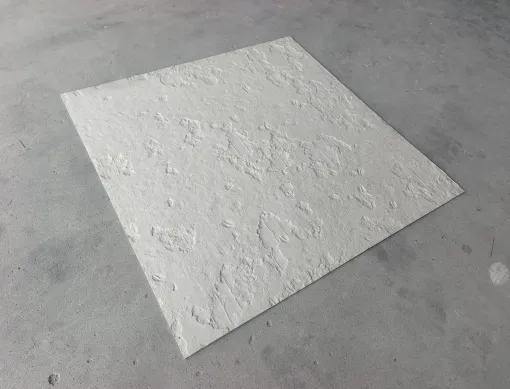
To understand Bali Stone's global appeal, you first have to touch it. Unlike the uniform sheen of polished marble or the cold industrial feel of concrete, Bali Stone has a soul. Its surface, often described as "sun-baked" or "wind-kissed," carries the marks of nature—tiny pits, subtle color variations, and a texture that feels like a handshake from the earth itself. It's warm to the touch, even on cool days, and it ages gracefully, developing a richer patina over time that tells the story of the space it inhabits.
"Bali Stone isn't just a cladding material—it's a mood," says Elena Kostova, an interior designer based in Barcelona who has used the stone in over a dozen projects, from restaurants to private villas. "Clients today don't want spaces that feel 'manufactured.' They want authenticity. Bali Stone brings that. It's organic without being chaotic, timeless without feeling old-fashioned. In a world of quick fixes and disposable design, it's a material that lasts, both physically and aesthetically."
Beyond its tactile and visual appeal, Bali Stone is surprisingly versatile. Its neutral beige base, flecked with hints of gold and soft gray, pairs effortlessly with bold colors or minimalist palettes. It works indoors and out, standing up to harsh coastal winds in Sydney and freezing winters in Stockholm. Architects love it for its flexibility—whether used as large slabs for a statement wall or cut into smaller tiles for a backsplash, it adapts to the vision of the designer. And in an era where sustainability is non-negotiable, Bali Stone checks that box too: it's a natural material, often sourced from ethical quarries, and its durability means less frequent replacement, reducing waste over time.
Meeting the global demand for Bali Stone isn't as simple as digging it out of the ground and shipping it off. It requires expertise, infrastructure, and a commitment to quality that spans continents. That's where COLORIA comes in. Founded in 2005, the company started as a small family-owned business in Turkey, specializing in natural stone extraction. Today, it's a global player with quarries, processing facilities, and distribution centers across Europe, Asia, and North America—and Bali Stone is at the heart of its success.
"Our approach has always been to treat materials with respect," explains Mehmet Yilmaz, COLORIA's Chief Operations Officer, during a visit to the company's flagship processing plant in Izmir. "Bali Stone isn't just a product for us; it's a legacy. When we extract it from our quarries in central Turkey, we do so with minimal environmental impact. We use water recycling systems to reduce waste, and we replant native vegetation in areas where we've finished extraction. Then, in our factories, we don't just cut and polish—we curate each batch. Every slab is inspected by hand to ensure it meets our quality standards. If a piece has a unique veining pattern or color variation, we flag it as a 'feature slab' and work with designers to highlight that uniqueness in their projects."
This attention to detail has made COLORIA a trusted partner for some of the world's biggest architectural firms. Take, for example, the 2023 renovation of the historic Grand Hotel in Rome. The design team wanted to preserve the hotel's 19th-century charm while updating its interiors. They chose Bali Stone for the lobby's feature wall, but they needed slabs that matched the building's original stonework in both color and texture. COLORIA spent three months sourcing and processing the perfect batch, even sending a team to Rome to oversee installation. The result? A space that feels both timeless and fresh, with Bali Stone acting as the thread that ties past and present together.
But COLORIA's role doesn't end at the factory door. The company has invested heavily in logistics, building a network of warehouses in key markets like Dubai, Singapore, and Chicago. This means that when a contractor in Miami needs Bali Stone for a project with a tight deadline, COLORIA can deliver within days, not weeks. "We track global construction trends closely," says Sofia Patel, COLORIA's Head of Global Sales. "If we see a spike in demand for Bali Stone in Southeast Asia, we adjust our production and shipping schedules to meet that need. It's about being proactive, not reactive. Our clients don't just want materials—they want peace of mind."
While Bali Stone is a cornerstone of COLORIA's offerings, the company has never rested on its laurels. Recognizing that modern designers crave variety, COLORIA has expanded its product line to include a range of innovative materials that complement Bali Stone's natural warmth with cutting-edge functionality. Let's take a closer look at some of these materials and how they're making waves in global markets:
| Material | Key Features | Popular Applications | Sustainability Highlights |
|---|---|---|---|
| Bali Stone | Natural beige base with gold/gray flecks; rough, tactile texture; weather-resistant | Exterior cladding, interior feature walls, countertops | Ethically sourced; minimal processing waste; 100% recyclable |
| Travertine (Starry Blue) | Deep blue-gray base with iridescent "star" flecks; polished or honed finish | Statement floors, luxury bathroom walls, hotel lobbies | Low-carbon extraction; water-based sealants used |
| Foamed Aluminium Alloy Board (Vintage Gold) | Lightweight, durable, metallic gold finish; fire-resistant | Modern facade accents, ceiling panels, retail displays | 70% recycled aluminum content; 100% recyclable at end of life |
| MCM Big Slab Board Series | Large-format (up to 3m x 1.5m) composite panels; high strength-to-weight ratio | High-rise exteriors, commercial building facades | Energy-efficient production; reduces transportation emissions (lightweight) |
| Flexible Stone | Thin (3-5mm), bendable stone veneer; real stone surface, resin backing | Curved walls, furniture, column cladding | Reduces material waste by 50% compared to traditional stone |
Take, for instance, COLORIA's travertine (starry blue) —a newer addition to its lineup that has taken the luxury hospitality sector by storm. Unlike traditional travertine, which is often beige or cream, this variant is mined from a rare quarry in Iran, where mineral deposits give it a deep blue-gray hue interspersed with tiny, reflective flecks that catch the light like stars. "We launched it in 2022, and demand has been (fēngkuáng—crazy)," laughs Patel. "Designers in places like Dubai and Monaco love it for high-end projects. It's bold but not overwhelming, and it adds a touch of drama to any space. We've used it in the lobby of the new Azure Tower in Doha, and it's become the talking point of the building."
Then there's foamed aluminium alloy board (vintage gold) , a material that blends the warmth of metal with the practicality of modern engineering. Lightweight yet strong, it's ideal for facades and interior accents where weight is a concern. "We developed it in response to clients asking for something that looks like aged brass but is more durable and sustainable," Yilmaz explains. "Traditional brass tarnishes easily and requires frequent polishing. Our foamed aluminium alloy resists corrosion, and the vintage gold finish is achieved through anodization, a process that uses no harmful chemicals. It's perfect for coastal projects, where salt air can damage other metals."
And let's not forget flexible stone —a game-changer for designers working with curved surfaces. Traditional stone is rigid, making it nearly impossible to clad rounded walls or columns without visible seams. Flexible stone solves that problem: it's made by bonding a thin layer of real stone to a flexible resin backing, allowing it to bend up to 90 degrees. "We first used it in a residential project in Tokyo, where the architect wanted a curved feature wall in the living room," says Yilmaz. "The client was blown away—you can't even tell it's not solid stone. Now, we're seeing demand from automotive designers for custom car interiors and even yacht builders. It's amazing how a simple innovation can open up so many possibilities."
The rise in demand for Bali Stone and COLORIA's other materials isn't accidental—it's tied to broader trends reshaping the global construction and design industries. Let's break down the key drivers:
1. The "Biophilic Design" Movement : In an increasingly digital world, people are craving connections to nature. Biophilic design—incorporating natural elements into built environments—has become a top priority for designers. Bali Stone, with its organic texture and earthy tones, fits perfectly here. "Clients often tell me they want their spaces to feel 'calming,'" says Kostova, the Barcelona designer. "Bali Stone does that. It's like bringing a piece of the outdoors in, without the maintenance of plants. In offices, it reduces stress; in homes, it creates a sense of comfort."
2. The Luxury Residential Boom : Post-pandemic, people are investing more in their homes, turning them into sanctuaries. High-net-worth individuals, in particular, are seeking unique materials that set their properties apart. COLORIA has capitalized on this, launching "bespoke batches" of Bali Stone for luxury clients. For example, a tech entrepreneur in Silicon Valley recently commissioned a custom batch with deeper gold flecks to match his home's art collection. "These clients don't just want materials—they want exclusivity," Patel explains. "We work with them to co-create, whether that means sourcing rare stone variants or developing custom finishes."
3. Sustainable Construction Mandates : Governments worldwide are tightening regulations on building materials, with a focus on reducing carbon footprints and promoting circular economies. COLORIA's commitment to sustainability—from ethical sourcing to recyclable packaging—has made it a go-to for projects aiming for LEED or BREEAM certifications. "Ten years ago, sustainability was a 'nice-to-have' for clients," Yilmaz notes. "Today, it's a requirement. Architects won't even consider a supplier if they can't provide transparency on their environmental practices. Our sustainability reports are among our most-requested documents."
4. Globalization of Design : Thanks to social media and design platforms like Pinterest and Houzz, trends spread faster than ever. A hotel in Bali using Bali Stone goes viral on Instagram, and suddenly designers in Paris and Toronto are asking for the same material. COLORIA's global distribution network allows it to meet this demand quickly, ensuring that a hot trend doesn't fizzle out while materials are in transit.
Of course, meeting global demand isn't without its challenges. Supply chain disruptions, fluctuating raw material costs, and geopolitical tensions have tested COLORIA's resilience in recent years. In 2022, for example, the war in Ukraine disrupted shipping routes in the Black Sea, delaying deliveries to European clients. To mitigate this, the company expanded its shipping partnerships, adding routes through the Mediterranean and the Suez Canal. It also increased stockpiles in its European warehouses, so clients wouldn't face shortages during crises.
Another challenge is the rise of imitation materials. Cheap, synthetic "Bali Stone lookalikes" have flooded the market, often sold at a fraction of the price. "These imitations might look similar at first glance, but they lack the durability and depth of real stone," Yilmaz warns. "We've had clients come to us after using fakes, complaining that the color faded after a year or the texture wore off. Our response is to educate—we host workshops for designers and contractors, showing them how to spot the difference. Real Bali Stone has inconsistencies; that's part of its beauty. Imitations are too perfect, too uniform. They feel 'flat' because they have no soul."
Looking ahead, COLORIA has big plans. The company is investing in research and development to create even more sustainable materials, including a "carbon-negative" version of its MCM Big Slab Board Series, which would sequester more carbon than it emits during production. It's also exploring partnerships with startups in the 3D printing space, aiming to create custom stone shapes using additive manufacturing. "The future of architectural materials isn't just about what's natural—it's about merging nature with technology," Yilmaz says. "We want to be at the forefront of that."
Bali Stone's journey from a local Turkish material to a global design icon is a testament to the power of authenticity, quality, and innovation. And COLORIA's role in that journey—from responsible sourcing to global distribution—highlights what it takes to succeed in today's competitive market: a balance of tradition and forward-thinking, of respect for materials and responsiveness to client needs.
As Elena Kostova puts it: "Materials are the language of design. They speak to who we are and what we value. Bali Stone speaks of connection—to nature, to history, to the people who craft and install it. COLORIA doesn't just supply materials; they supply stories. And in a world that's hungry for meaning, that's invaluable."
So the next time you walk into a space and feel an inexplicable sense of calm, or admire a wall that seems to glow with quiet beauty, take a closer look. It might just be Bali Stone—and behind it, a team at COLORIA who believes that the best buildings aren't just made of materials. They're made of care.
Recommend Products












