
Exploring the intersection of innovation, tradition, and sustainability in modern architecture
In the world of architecture, materials are more than just building blocks—they are storytellers. They shape how we experience space, reflect cultural identity, and adapt to the demands of modern life. Enter Modified Composite Material (MCM), a revolutionary category that has taken the global construction industry by storm. From the sleek skyscrapers of Dubai to the eco-conscious developments of Scandinavia, MCM has proven itself as a material that marries durability with design flexibility, and nowhere is this more evident than in the booming markets of Saudi Arabia.
MCM's rise can be attributed to its core strengths: it is lightweight yet robust, resistant to harsh weather, and infinitely customizable. Unlike traditional stone or concrete, which often come with heavy transportation costs and installation challenges, MCM panels—such as those in the mcm project board series and mcm 3d printing series —offer architects and builders a blank canvas. Whether mimicking the rough texture of natural stone or the smooth finish of polished marble, MCM adapts to vision, not limitations. And at the heart of this versatility lies mcm flexible stone , a variant that bends without breaking, allowing for curved facades, organic shapes, and designs that were once thought impossible with rigid materials.
Saudi Arabia is in the midst of a construction revolution. Driven by Vision 2030—a bold plan to diversify the economy and build a sustainable future—the kingdom is investing billions in mega-projects that redefine urban living. From NEOM, the $500 billion futuristic city, to The Line, a 170-kilometer linear metropolis with zero cars and 100% renewable energy, these developments demand materials that are as ambitious as the visions themselves. Traditional materials like natural limestone or granite, while beautiful, often struggle to keep up with the pace, scale, and sustainability goals of such projects. This is where MCM steps in.
Take, for example, NEOM's coastal city of Oxagon or the entertainment hub of Qiddiya: these projects require materials that can withstand extreme temperatures (Saudi Arabia's summers often reach 50°C), resist saltwater corrosion, and maintain their aesthetic appeal for decades. MCM, with its UV-resistant coatings and low maintenance needs, checks all these boxes. Moreover, in a country where water scarcity is a pressing concern, MCM's manufacturing process uses significantly less water than quarrying natural stone—a small but crucial step toward aligning with Saudi Arabia's sustainability targets.
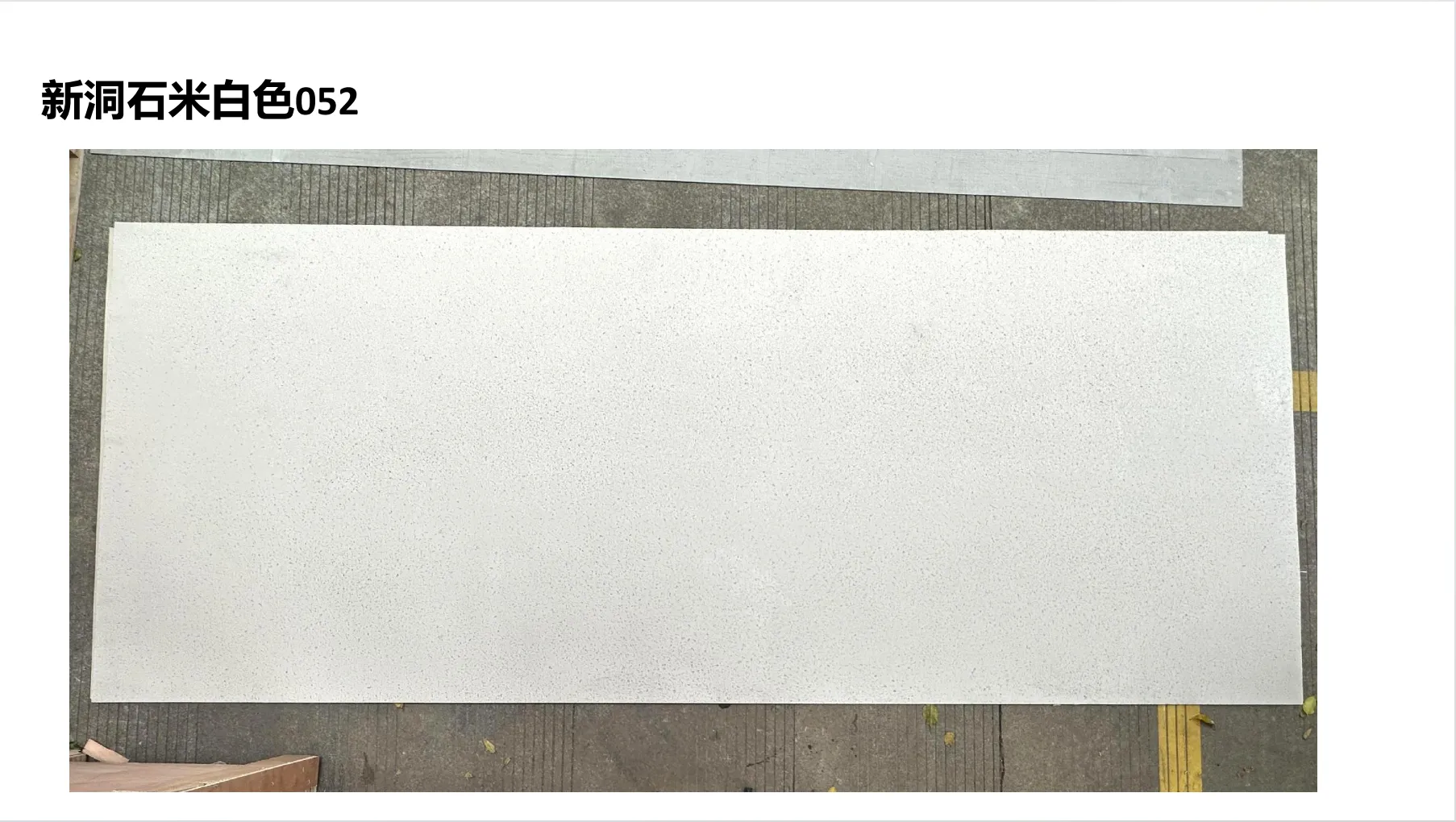
Among the vast array of MCM products, one variant has emerged as a favorite in Saudi Arabia's high-end projects: White Travertino MCM. Inspired by natural travertine—a stone revered for its porous, organic texture—White Travertino MCM captures the essence of this classic material while eliminating its drawbacks. Natural travertine is heavy, prone to staining, and varies wildly in color and pattern; White Travertino MCM, by contrast, offers consistent quality, lighter weight, and enhanced durability, making it ideal for large-scale applications like facades, interior walls, and even flooring.
What sets White Travertino MCM apart is its aesthetic versatility. Its soft, creamy base pairs beautifully with bold accents—think travertine (starry green) for a pop of color in a minimalist space, or lunar peak silvery for a modern, metallic contrast. In Saudi Arabia's luxury hospitality sector, for instance, hotels are using White Travertino MCM in lobbies to create a sense of calm grandeur, complementing it with warm wood tones or the earthy texture of bamboo mat board to add depth. The material's subtle veining and matte finish also make it a favorite for residential projects, where homeowners seek a balance between sophistication and comfort.
| Material | Key Features | Best For |
|---|---|---|
| White Travertino MCM | Creamy base, subtle veining, lightweight, UV-resistant | Facades, lobbies, residential interiors |
| Natural Travertine | Porous, heavy, unique patterns, high maintenance | Small accents, heritage projects |
| Fair-Faced Concrete | Raw, industrial texture, durable, cost-effective | Commercial buildings, urban developments |
Beyond aesthetics, White Travertino MCM aligns with Saudi Arabia's push for innovation in construction. In mega-projects like The Line, where every detail is designed to maximize efficiency and sustainability, the material's lightweight nature reduces the load on structural systems, cutting down on construction time and costs. Its resistance to moisture also makes it suitable for the kingdom's coastal regions, where salt air can degrade traditional materials. For architects tasked with balancing beauty, function, and sustainability, White Travertino MCM is more than a material—it's a solution.
While White Travertino MCM shines on its own, its true potential is unlocked when paired with complementary materials. In Saudi Arabia's diverse architectural landscape, designers are mixing and matching MCM variants to create spaces that tell a story—one that honors tradition while embracing the future. Take fair-faced concrete , for example: its raw, industrial texture contrasts beautifully with White Travertino MCM's softness, creating a dynamic interplay of light and shadow in commercial buildings. In Riyadh's financial district, a new office tower uses this combination to great effect, with White Travertino MCM cladding the lower floors and fair-faced concrete dominating the upper levels, symbolizing stability and progress.
For projects rooted in Saudi heritage, materials like bamboo mat board add a touch of warmth and sustainability. Bamboo, a fast-growing resource, aligns with Vision 2030's focus on green building, and its natural weave complements White Travertino MCM's smooth surface. In the historic district of Jeddah, a boutique hotel has integrated both materials in its guest rooms: White Travertino MCM walls provide a clean backdrop, while bamboo mat board headboards and furniture add texture and a connection to nature. Similarly, lunar peak silvery —a metallic MCM variant with a subtle sheen—adds a futuristic edge to White Travertino MCM in tech-focused developments, reflecting Saudi Arabia's ambition to become a global innovation hub.
Sustainability is no longer a buzzword in Saudi Arabia—it's a mandate. With Vision 2030 emphasizing environmental stewardship, the construction industry is under pressure to reduce its carbon footprint, and MCM is rising to the challenge. Unlike natural stone, which requires extensive quarrying and transportation (contributing to deforestation and greenhouse gas emissions), MCM is manufactured using recycled materials and consumes less energy in production. White Travertino MCM, in particular, is often made with a high percentage of recycled content, making it a preferred choice for LEED-certified projects.
Moreover, MCM's durability translates to longevity. Buildings clad in MCM require less frequent replacement than those using traditional materials, reducing waste over time. In coastal areas like Jeddah, where saltwater and humidity can erode stone and concrete, MCM's resistance to corrosion ensures that structures remain intact for decades, minimizing the need for repairs and replacements. For Saudi Arabia, which aims to be a leader in sustainable development, these benefits are not just environmental—they're economic, too, as lower maintenance costs free up resources for other priorities.
As Saudi Arabia continues to build toward Vision 2030, the demand for innovative, sustainable materials like White Travertino MCM is only set to grow. Mega-projects like NEOM and The Line are already specifying MCM in their designs, and as smaller developers follow suit, the material will become a staple in everything from residential complexes to retail spaces. What's more, advances in MCM technology—such as the mcm 3d printing series —will allow for even more customization, enabling architects to create one-of-a-kind textures and patterns that reflect Saudi Arabia's unique cultural identity.
In the end, White Travertino MCM is more than a trend—it's a testament to the evolution of architecture. It proves that materials can honor tradition while embracing innovation, and that beauty and sustainability can coexist. For Saudi Arabia, a nation at the crossroads of heritage and progress, White Travertino MCM is not just building the future—it's defining it.
Recommend Products












