
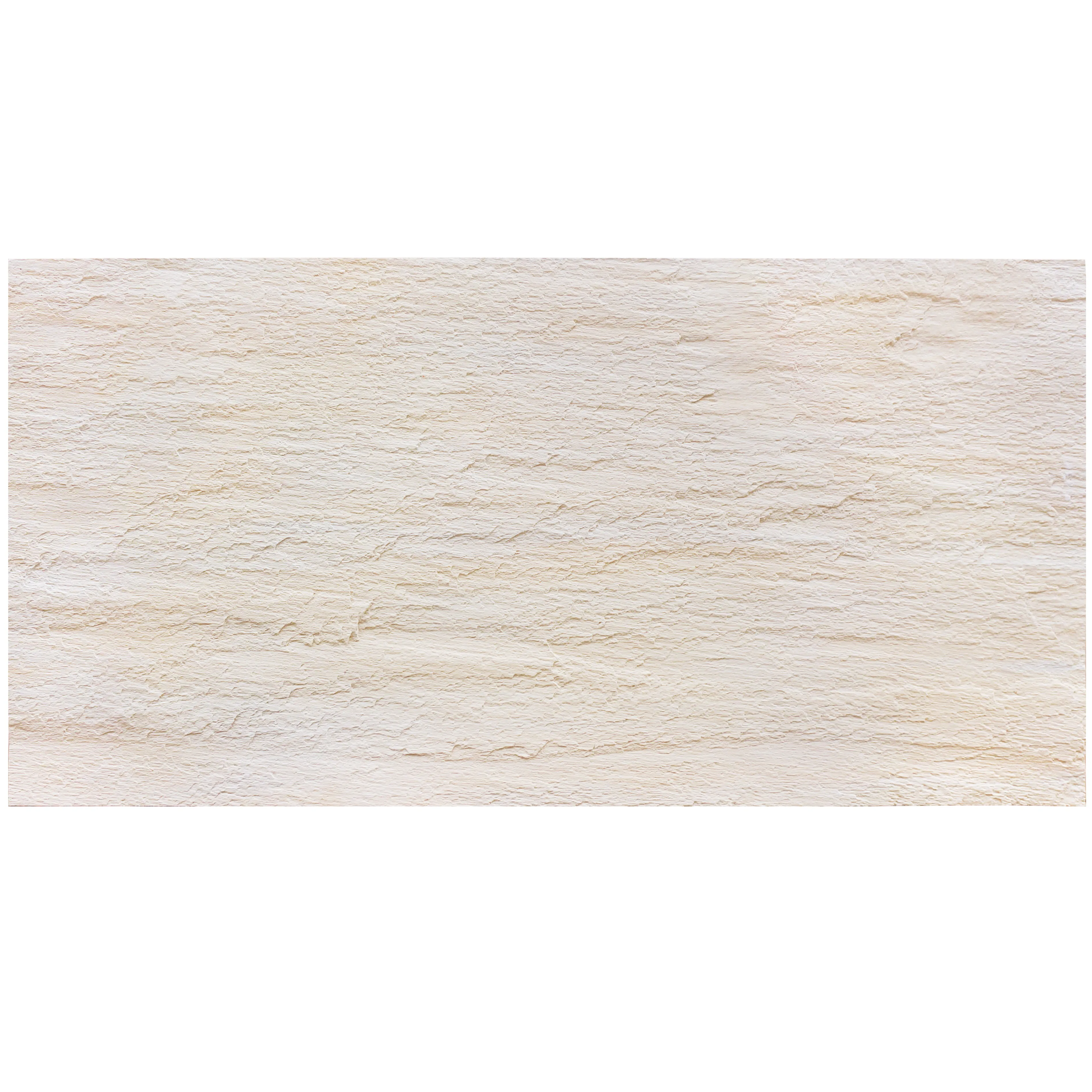
Walk through any modern urban district, and you'll likely encounter buildings that seem to defy the laws of traditional stone construction. A sleek office tower with a facade that shimmers like desert sand at sunset, a boutique hotel where the lobby walls mimic the texture of ancient cliff faces—yet neither feels heavy or cumbersome. Run your hand along the surface, and you'll notice something remarkable: it's cool to the touch, with the organic grain of natural stone, but surprisingly lightweight, as if it could bend without breaking. Chances are, you're touching Oasis Stone Foge —a material that's not just reshaping buildings, but rewriting the story of how we blend nature, history, and technology in construction.
To truly understand Oasis Stone Foge, we need to step back—not just decades, but centuries. Because its journey isn't just about engineering; it's about human ingenuity, the eternal quest to build better, and the quiet inspiration drawn from the stones that have surrounded us since the first civilizations rose from the dust.
Long before architects had access to 3D modeling or composite materials, there were historical pathfinders stone —the rough-hewn blocks that built pyramids, fortresses, and temples. Ancient builders relied on local resources: limestone from the Nile, sandstone from the Gobi, marble from the mountains. These stones were durable, yes, but they came with a cost. A single slab of traditional stone could weigh hundreds of pounds, requiring teams of laborers to transport and install. Fragility was another issue; a misplaced chisel or a seismic tremor could crack a wall, undoing months of work.
Fast forward to the 20th century, and the construction industry faced a new challenge: the rise of skyscrapers and modular design. Heavy stone cladding was no longer feasible for tall buildings—it added excessive weight to structures, strained foundations, and limited architectural creativity. Designers craved the warmth and authenticity of natural stone, but they needed something lighter, more adaptable, and easier to work with. This was the gap that would eventually give birth to Oasis Stone Foge.
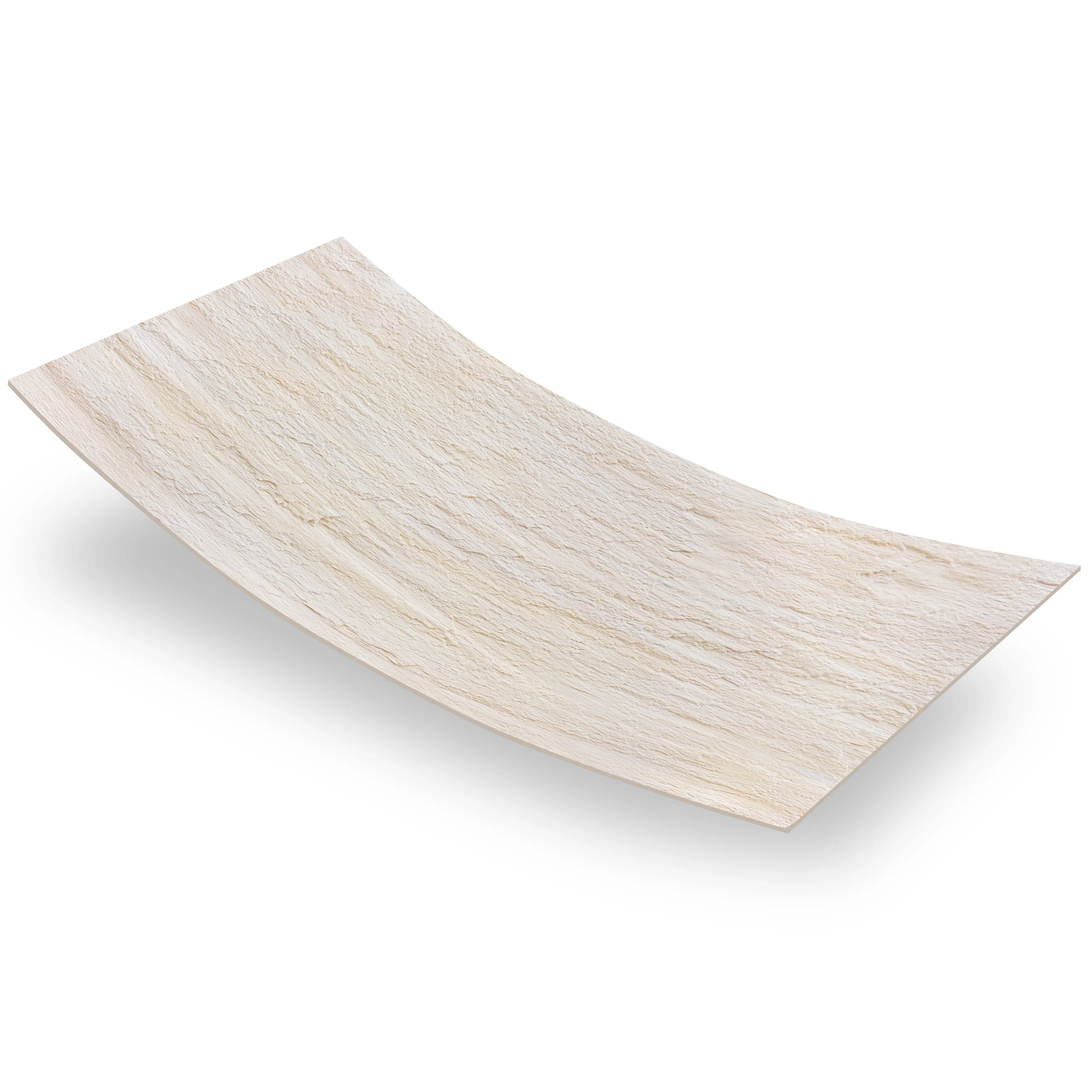
In the late 20th century, material scientists began experimenting with composite materials—blending natural stone particles with polymers and resins to create a substance that retained the look and feel of stone but shed its bulk. Early prototypes were promising, but they lacked the flexibility and durability needed for large-scale use. It wasn't until the development of MCM flexible stone (Modified Composite Material) that the vision of a truly versatile stone cladding started to take shape.
Oasis Stone Foge emerged from these experiments as a standout innovation. Unlike traditional stone, which is quarried in rigid slabs, Oasis Stone Foge is crafted by grinding natural stone into fine particles, then binding them with a high-performance polymer matrix. The result? A material that's just 3-5mm thick, weighs a fraction of traditional stone (as little as 4kg per square meter, compared to 20kg+ for natural stone), and can bend up to 90 degrees without cracking. Suddenly, architects weren't limited by the weight of their materials—they could clad curved surfaces, wrap columns, and even create dynamic, undulating facades that had once been impossible.
| Feature | Traditional Natural Stone | Oasis Stone Foge (MCM Flexible Stone) |
|---|---|---|
| Weight (per sq.m) | 20-30kg | 3-6kg |
| Flexibility | Rigid; prone to cracking under stress | Can bend up to 90° without damage |
| Installation Time | Labor-intensive; requires heavy machinery | Lightweight; can be installed by 2-3 workers with basic tools |
| Design Versatility | Limited to natural stone patterns and sizes | Customizable colors, textures, and shapes (via 3D printing) |
| Weather Resistance | Susceptible to water absorption and freeze-thaw damage | Waterproof; resistant to UV rays, salt, and extreme temperatures |
Early adopters of Oasis Stone Foge were primarily boutique designers and small construction firms, drawn to its ability to transform modest spaces into something extraordinary. A café in Barcelona used it to clad its exterior in a warm, earthy tone that matched the city's historic architecture, but without the risk of the building's old foundations bearing extra weight. A residential project in Tokyo employed it to create a feature wall in a living room, curving gently around a fireplace to mimic the flow of a river—something that would have been unthinkable with traditional stone.
If MCM flexible stone gave Oasis Stone Foge its foundation, the integration of MCM 3D printing series technology catapulted it into the future. 3D printing, once reserved for prototyping and small-scale manufacturing, revolutionized how Oasis Stone Foge could be designed and produced. Suddenly, the limitations of traditional molding were gone—designers could create intricate patterns, organic shapes, and even custom textures that mimicked everything from ancient hieroglyphs to modern abstract art.
Take, for example, the "Desert Bloom" project in Dubai, a commercial complex where the facade is adorned with 3D-printed Oasis Stone Foge panels shaped like blooming desert flowers. Each petal is unique, with a texture that catches the light differently throughout the day, creating a dynamic visual experience. Without 3D printing, producing hundreds of custom-shaped panels would have been cost-prohibitive and time-consuming. With MCM 3D printing, the design team was able to iterate quickly, test prototypes, and scale production to meet tight construction deadlines.
Another breakthrough came in the realm of restoration. Historic buildings often require replacement stones that match the original in texture and color, but quarries for rare stone types may have long since closed. Oasis Stone Foge, combined with 3D scanning and printing, solved this problem. By scanning original stone fragments, engineers could recreate exact replicas using Oasis Stone Foge, ensuring the building's historic integrity while adding the durability of modern materials. A 19th-century church in Prague, for instance, used this technique to restore its crumbling sandstone facade, with 3D-printed Oasis Stone Foge panels that were indistinguishable from the original stone to the untrained eye.

Today, Oasis Stone Foge is more than just a construction material—it's a canvas for architectural expression. Its versatility has made it a favorite among designers working across genres, from minimalist modernism to rustic industrial. In commercial spaces, it's used to create statement walls in lobbies and retail stores, adding warmth and texture without overwhelming the space. In residential design, it's employed in everything from kitchen backsplashes to outdoor patios, blurring the line between indoor and outdoor living.
It also plays well with other innovative materials in the MCM family, such as the gobi panel —a textured cladding inspired by the rugged landscapes of the Gobi Desert. Together, Oasis Stone Foge and gobi panel create layered, multidimensional facades that tell stories of place and heritage. A cultural center in Mongolia, for example, combines the smooth, flowing texture of Oasis Stone Foge with the rough, craggy surface of gobi panel to evoke the contrast between the country's nomadic past and its modern aspirations.
What truly sets Oasis Stone Foge apart, though, is its ability to evoke emotion. Unlike cold, sterile synthetic claddings, it retains the organic character of natural stone—the subtle variations in color, the tiny imperfections that make each panel unique. It's a material that feels human , as if it carries the memory of the earth it came from. This emotional resonance is why designers often describe it as "stone with a soul."
In an era where sustainability is no longer a buzzword but a necessity, Oasis Stone Foge shines as a green building material . Traditional stone quarrying is resource-intensive, often leading to habitat destruction and soil erosion. Oasis Stone Foge, by contrast, uses up to 80% recycled stone particles, reducing the need for new quarrying. Its lightweight nature also cuts down on transportation emissions—trucks can carry far more panels per trip than traditional stone slabs, lowering the carbon footprint of construction projects.
Additionally, Oasis Stone Foge is designed to last. Its polymer matrix resists fading, staining, and weathering, meaning buildings clad in it require less maintenance and fewer replacements over time. When a project does reach the end of its life, the panels can be recycled, with the stone particles repurposed into new materials. This circular approach aligns with the growing demand for construction practices that respect the planet's limits.
As we look to the future, the evolution of Oasis Stone Foge shows no signs of slowing down. Material scientists are experimenting with new polymer blends to make it even more flexible and durable, potentially opening up applications in high-rise construction and seismic zones. The MCM 3D printing series is also advancing, with larger printers capable of producing full-scale wall panels in a single piece, reducing installation time further.
Color and texture innovation is another frontier. While Oasis Stone Foge already comes in a wide range of hues—from warm beiges to deep grays—new formulations are being developed to mimic rare stones, such as the iridescent sheen of moonstone or the vibrant reds of desert sandstone at sunset. These new colorways will allow designers to create even more immersive and personalized spaces.
Perhaps most exciting is the potential integration of smart technology. Imagine Oasis Stone Foge panels embedded with sensors that monitor temperature, humidity, or structural stress, sending real-time data to building management systems. Or panels that change color in response to light, creating dynamic facades that adapt to the time of day. The possibilities are as limitless as human creativity.
Oasis Stone Foge's journey from a promising composite material to a staple of modern construction is a testament to the power of innovation rooted in history. It draws inspiration from the historical pathfinders stone that built our ancestors' world, yet embraces the cutting-edge technology of MCM flexible stone and 3D printing to shape the cities of tomorrow. It's a reminder that the best building materials aren't just about function—they're about connection: to the earth, to our past, and to the people who will inhabit the spaces we create.
So the next time you walk past a building with a stone-like facade that seems to glow with a quiet warmth, take a moment to appreciate the story behind it. Chances are, it's a story of ingenuity, of blending the old and the new, and of a material that's not just building walls—but building a better, more beautiful world, one panel at a time.
Recommend Products












