
Walk into a centuries-old cottage, and the first thing that wraps around you isn't just the scent of aged timber—it's a feeling. The creak of floorboards that've borne generations of footsteps, the way sunlight filters through wooden beams like old friends stopping by for a chat, the rough-hewn texture of a table that's held meals, laughter, and quiet tears. Wood has always been more than a building material; it's a storyteller. From the earliest human shelters to the grandest temples, it's woven itself into the fabric of our lives, carrying the weight of tradition while feeling as alive and warm as a heartbeat.
But here's the thing about stories: they evolve. As our world changes, so do our needs. We still crave that same warmth, that connection to the past—but we also need materials that can keep up with modern life. Enter MCM, or Modified Composite Materials. Think of MCM as a bridge between the wisdom of ancient woodworkers and the innovation of today's designers. It doesn't just mimic wood; it reimagines it, preserving the soul of those old styles while adding a resilience and versatility that would've made our ancestors shake their heads in wonder. Let's take a journey through time, from the rough timbers of ancient huts to the sleek, sustainable panels of MCM, and see how we've kept the story of wood alive—just with a few new chapters.
Long before blueprints and power tools, humans looked at trees and saw more than shade—they saw home. Ancient wood styles weren't just about building; they were about belonging . Let's wander through a few of the most iconic chapters in wood's history.
In the arid deserts of ancient Egypt, wood was a precious commodity, imported from Lebanon's cedar forests and Nubia's acacia groves. Yet even here, it wasn't just used for practicality. The wooden beams of temples like Karnak weren't just structural—they were carved with hieroglyphs, turning the ceiling into a canvas that told stories of gods and pharaohs. Ordinary homes, too, used palm wood and tamarisk, their simple, sloped roofs designed to catch the rare rain while letting in the cool desert breeze. Imagine stepping into one of those homes: the way the wood smelled of resin and sun, the way the light dappled through the gaps in the planks, making the space feel like a hug. Wood here wasn't just about keeping the elements out; it was about bringing the family in, creating a sanctuary where life could unfold.
The Greeks and Romans took woodworking to new heights—literally. The Parthenon's roof, for all its marble grandeur, relied on wooden beams to hold it aloft, their strength hidden beneath stone but essential to the temple's majesty. In Roman villas, wooden trusses spanned vast rooms, their curves and angles a testament to engineering skill, while interior walls were paneled with walnut or oak, polished to a glow that reflected the light of oil lamps. These weren't just buildings; they were expressions of power and beauty. A Roman atrium with its wooden ceiling beams wasn't just a space—it was a statement: "We build to last, and we build to honor."
If there's one culture that turned woodworking into poetry, it's Asia. In Japan, the kigumi joinery system uses interlocking wooden joints—no nails, no screws—to build temples that have stood for centuries, flexing with earthquakes but never breaking. Walk through a traditional machiya (wooden townhouse), and you'll feel the harmony: sliding wooden doors ( shoji ) that blur the line between indoors and out, wooden floors polished smooth by generations of feet, the faint scent of cedar that lingers like a memory. In China, the Forbidden City's wooden halls, with their sweeping eaves and intricate carvings of dragons and phoenixes, weren't just palaces—they were symbols of balance, between heaven and earth, strength and beauty.
Step into a medieval village in Europe, and you'd be greeted by a forest of wooden beams. Half-timbered houses—their wooden frames exposed, filled with wattle and daub—leaned into each other like old friends, their upper floors jutting out over narrow streets to create a canopy of wood and light. These weren't just homes; they were neighborhoods. The beams weren't just structural; they were a language. A carpenter might carve a symbol into a beam to ward off evil, or a family might add a scrollwork detail to show their trade. Walk down those streets, and you'd feel it: the sense that everyone was in this together, that the wood holding up the houses was holding up the community, too.
For all its beauty, wood has never been perfect. Ask any homeowner with a rotting deck, or a museum curator struggling to preserve a 500-year-old wooden statue. Traditional wood has a few Achilles' heels, and as our world grew more crowded and fast-paced, those flaws started to feel like deal-breakers.
First, there's durability. Wood loves water—and not in a good way. Leave a wooden beam out in the rain, and soon enough, mold and rot set in, turning solid timber into soft, crumbly dust. Pests love it too: termites, carpenter ants, even beetles see wood as an all-you-can-eat buffet. Then there's warping. Wood expands and contracts with humidity, so that beautiful wooden table you bought? A few years of summer heat and winter dryness, and it might start to bow or crack, like a spine giving out under too much weight.
And let's talk about sustainability. Ancient civilizations had forests to spare, but today? Deforestation is a global crisis. Clear-cutting old-growth trees to build homes or furniture isn't just bad for the planet—it's short-sighted. We can't keep chopping down trees at the rate we're building, not if we want there to be forests left for future generations to tell their own stories.
But here's the heartbreak: we didn't want to lose wood. We wanted the warmth, the texture, the stories. We just needed a way to have it all—without the rot, the pests, or the guilt. That's where MCM stepped in, like a clever apprentice who watches the master at work, then figures out how to make the old tricks even better.
So, what exactly is MCM? Let's break it down. MCM stands for Modified Composite Materials—think of it as a team effort. It takes natural materials (like stone, wood fibers, or minerals) and blends them with modern polymers or resins, creating something that's stronger, lighter, and more flexible than the sum of its parts. But MCM isn't just about solving problems; it's about feeling . It's about looking at a panel and thinking, "That looks like the oak beams in my grandfather's barn," but knowing it won't rot if a pipe leaks. It's about touching a surface and feeling the same rough grain as a weathered fence post, but without the splinters.
The magic of MCM is that it's not a copycat. It's a reinterpreter. Ancient woodworkers had to work with what the forest gave them—knots, grain patterns, imperfections that made each piece unique. MCM designers can take those imperfections, celebrate them, and then add their own twists. Want a wood-like panel that's thin enough to bend around a curved wall? MCM can do that. Need something that can handle the salty spray of an oceanfront home without warping? MCM's got your back. It's like taking the best parts of wood—the soul—and giving it a superpower upgrade.
Let's get specific. MCM has given us a whole lineup of products that tip their hats to ancient wood styles while forging new paths. These aren't just "fake wood"—they're love letters to the past, written with modern ink. Let's meet a few of the stars:
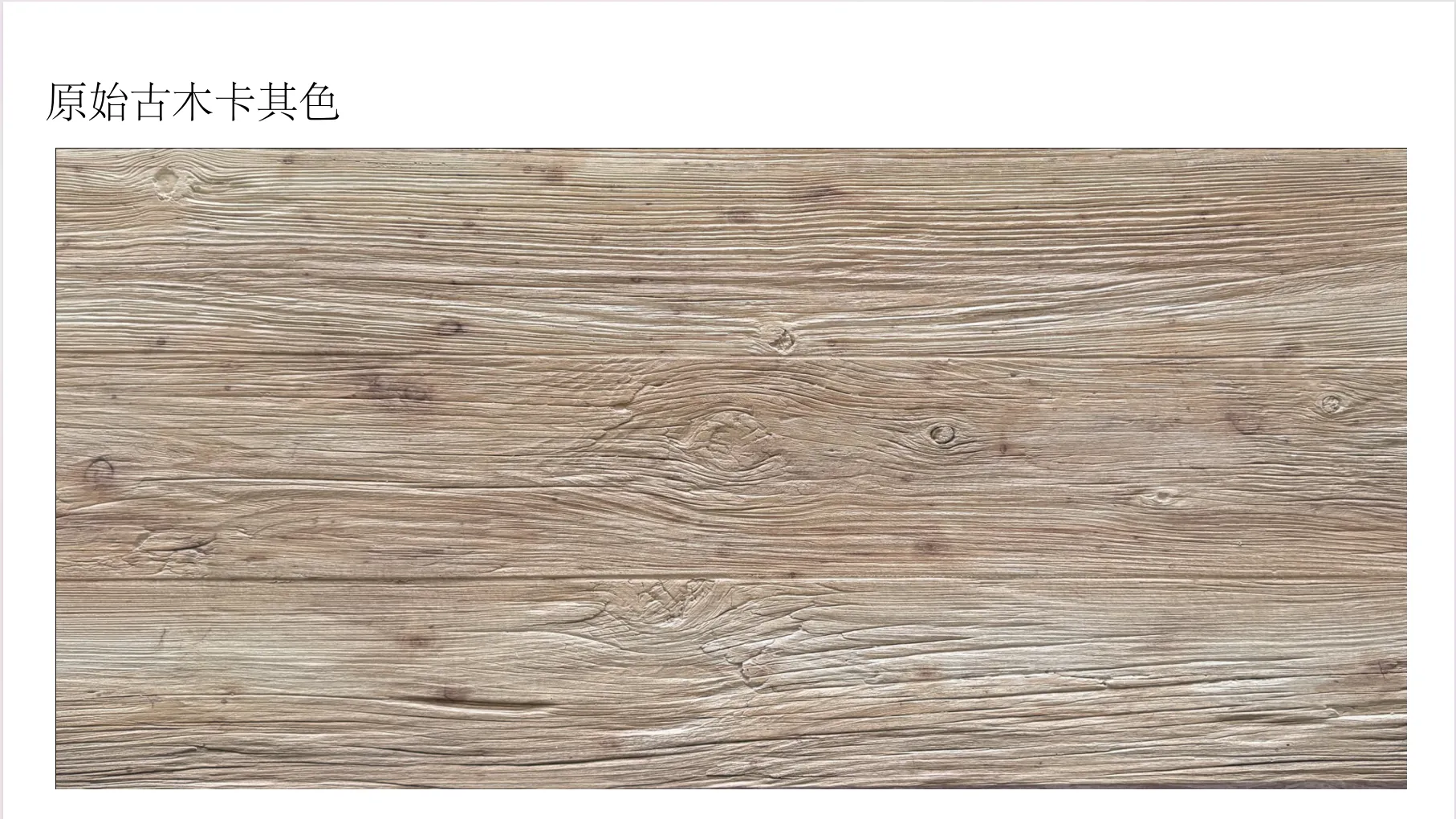
If there's one MCM product that feels like a warm hug from history, it's wood grain board . Close your eyes and imagine running your hand over a plank of old-growth oak—you can almost feel the deep grooves of the grain, the slight ridges where the tree grew faster in the spring, slower in the winter. Now open your eyes: that's exactly what wood grain board looks and feels like. But here's the kicker: it's made from a blend of wood fibers and recycled polymers, so it's resistant to moisture, pests, and warping. No more worrying about that basement wall panel swelling in the rain or that kitchen backsplash getting chewed by termites.
Designers are going wild for wood grain board because it's versatile. Want to recreate the cozy vibe of a medieval tavern in your downtown apartment? Line the walls with wood grain board in a rich walnut tone, and suddenly your living room feels like a place where stories are meant to be told. Need something sleek for a modern office? Go with a lighter ash finish, and the wood grain adds warmth without feeling old-fashioned. It's like having a time machine in a panel—you can dial up the nostalgia or dial it down, depending on the mood.
Ancient builders knew that wood and stone could work together—think of the wooden beams supporting stone arches in a Roman aqueduct. Wood concrete board takes that idea and runs with it. It's a mix of wood fibers and concrete, creating a material that has the raw, earthy texture of ancient stone but the warm undertones of wood. Run your hand over it, and you'll feel the best of both worlds: the slight roughness of concrete, softened by the subtle grain of wood peeking through.
This stuff is tough. It can handle heavy foot traffic, harsh weather, and even fire—making it perfect for both interiors and exteriors. Imagine a restaurant with a wood concrete board accent wall: it feels industrial and modern, but there's a hint of the old-world in the wood fibers, like a nod to the sawmills that once powered the town. Or a backyard patio paved with wood concrete board tiles: they look like weathered wooden planks, but you can hose them down without worrying about rot. It's the kind of material that makes you think, "Why didn't we think of this sooner?"
Ever visited a historic barn and marveled at the rough, sawn edges of the beams? That's the vibe sawing wood board is going for. It mimics the look of timber that's been cut by hand—with all the nicks, grooves, and uneven edges that make ancient wood so charming. But unlike real sawn wood, this MCM panel is smooth to the touch (no splinters!) and built to last.
Sawing wood board is all about texture. It's not trying to be perfect; it's trying to be authentic . A wall covered in sawing wood board feels like it's been there for decades, even if it was installed last week. It's the kind of material that makes a space feel lived-in, like a cabin in the woods that's been loved for generations. And because it's MCM, you can install it in places where real rough-sawn wood would be a disaster—like a bathroom, where moisture would turn the real thing into a moldy mess. It's rustic charm without the hassle, and honestly? We're here for it.
If ancient woodworkers cared about one thing, it was sustainability—they had to be, since they relied on forests for survival. Poly wood board takes that spirit and cranks it up to 11. It's made from recycled plastic (think old water bottles, milk jugs) and wood fibers, so it's keeping waste out of landfills while reducing the need to cut down new trees. And get this: it looks and feels like real wood. We're talking the same warm tones, the same grain patterns, even the same slight give when you lean against it.
Poly wood board is a workhorse. It's perfect for outdoor spaces—decks, fences, patio furniture—because it doesn't rot, fade, or splinter. Imagine having a deck that looks like it's made of old cedar, but you never have to stain it, seal it, or replace a board because of termites. That's poly wood board. It's the kind of material that makes you feel good about building—like you're not just creating a space, you're doing right by the planet. Ancient woodworkers would nod approvingly at that.
Okay, so MCM flexible stone isn't technically a "wood" product—but hear us out. Ancient builders often paired wood with stone (think of a stone foundation with wooden walls above), and MCM flexible stone carries on that tradition, but with a twist: it's flexible . That's right—you can bend this stone-like panel around corners, curves, even arches, opening up design possibilities that would've been impossible with traditional stone or wood.
But here's why it belongs in our wood love letter: many flexible stone designs take inspiration from wood's texture. There are panels that mimic the rough, weathered look of a wooden fence post, others that have a subtle grain pattern that echoes oak or pine. Install flexible stone on a feature wall, and you get the durability of stone with the warmth of wood—like building a castle that feels like a cottage. It's the kind of innovation that makes you realize: the future of design isn't about choosing between old and new; it's about making them dance together.
Curious how these modern marvels compare to the real deal? Let's put them side by side. The table below breaks down key features—texture, durability, sustainability, and applications—to show how MCM products honor ancient wood styles while solving their age-old problems.
| Feature | Traditional Wood (Oak/Teak) | Wood Grain Board (MCM) | Wood Concrete Board (MCM) | Poly Wood Board (MCM) |
|---|---|---|---|---|
| Texture | Deep, natural grain; knots and imperfections add character; can feel rough or splintery over time. | Replicates natural grain patterns with precision; smooth to the touch; consistent texture across panels. | Blend of concrete's roughness and wood fiber warmth; subtle grain peeks through for organic feel. | Mimics wood grain and texture; soft to the touch; no splinters or rough spots. |
| Durability | Prone to rot, pests, warping, and water damage; requires regular staining/sealing. | Resistant to moisture, pests, and warping; no sealing or staining needed; lasts 20+ years with minimal care. | Fire-resistant, water-resistant, and impact-resistant; ideal for high-traffic areas; minimal maintenance. | Weatherproof, fade-resistant, and pest-proof; no rot or warping; built to last 30+ years outdoors. |
| Sustainability | Requires harvesting trees; can contribute to deforestation if not sourced responsibly. | Made with recycled wood fibers and eco-friendly polymers; reduces reliance on virgin timber. | Uses recycled concrete and wood fibers; low carbon footprint compared to traditional concrete. | Made from 100% recycled plastic and wood fibers; keeps waste out of landfills; no tree harvesting. |
| Applications | Indoor walls, furniture, flooring (with caution in moist areas); limited outdoor use without heavy maintenance. | Indoor walls, ceilings, furniture, backsplashes; suitable for bathrooms and kitchens (moisture-resistant). | Exterior cladding, flooring, accent walls; commercial spaces (restaurants, offices), residential exteriors. | Outdoor decks, patios, fences, furniture; indoor/outdoor kitchens, pool surrounds. |
At the end of the day, MCM isn't just about materials—it's about emotion. We don't build spaces just to live in them; we build them to feel in them. We want our homes to feel like safe havens, our offices to feel like places where ideas thrive, our public spaces to feel like community hubs. Wood has always helped us do that, but it couldn't do it alone anymore.
MCM gives us the best of both worlds: the warmth and nostalgia of ancient wood styles, with the strength and sustainability of modern innovation. It lets us build spaces that honor the past while embracing the future. Imagine a school where the walls are lined with wood grain board, and the kids run their hands over the panels, feeling the same texture their grandparents did in old barns. Or a community center with poly wood board decks, where families gather for barbecues, and no one worries about splinters or rot. These spaces won't just be buildings—they'll be storytellers, carrying on the tradition of wood while writing new tales of resilience, creativity, and care for the planet.
Ancient woodworkers didn't have MCM, but they had something just as important: ingenuity. They looked at a tree and saw potential, and then they built something that would stand the test of time. Today, we're doing the same—just with a few more tools in our belt. The story of wood isn't over; it's just getting a new, exciting chapter. And we can't wait to see where it goes next.
Recommend Products












