
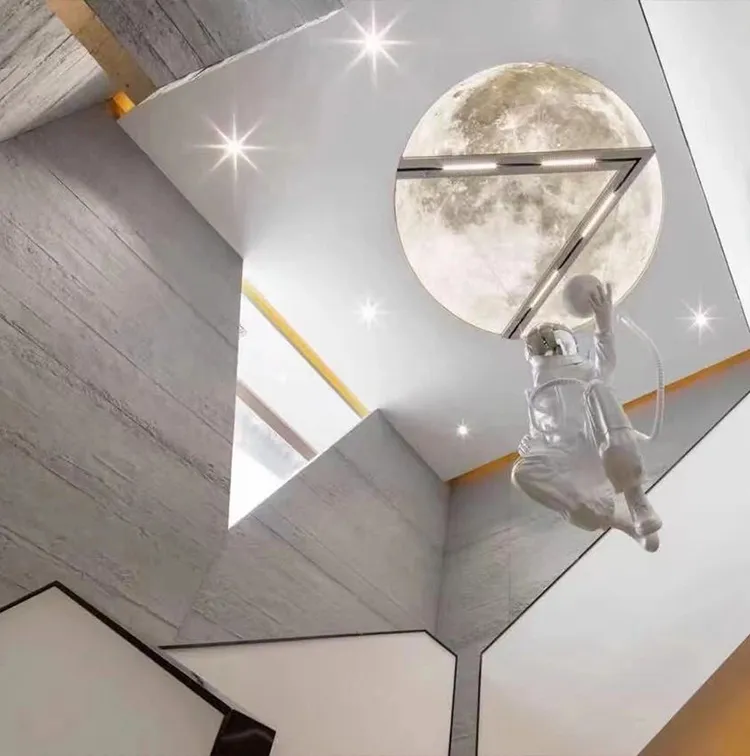
Walk down any street, and you'll notice buildings whispering stories—of eras, of cultures, of the people who built them. But before you step inside, it's the exterior that first catches your eye: the texture of the walls, the warmth of the materials, the way light plays on surfaces. For decades, cement board has been one of those quiet storytellers, evolving from a humble, utilitarian material to a canvas for architectural innovation. Today, it's not just about durability; it's about flexibility, beauty, and pushing the boundaries of what a "board" can do. Let's trace its journey—from rough, rigid sheets to the modified marvels we see today, including game-changers like MCM flexible stone, 3D printing series, and the timeless elegance of travertine.
To understand where we are, we need to start at the beginning. Traditional cement boards emerged in the early 20th century, a product of post-war necessity. As cities rebuilt and expanded, there was a desperate need for affordable, fire-resistant, and water-resistant cladding. Wood was prone to rot, stone was heavy and expensive, and early concrete mixes were too porous. Enter cement board: a simple blend of cement, sand, and cellulose fibers (like wood pulp), pressed into sheets and cured to harden. It was sturdy, cheap, and checked all the boxes for functionality.
In the 1950s and 60s, you'd find these boards on industrial warehouses, schools, and low-rise apartments—places where "good enough" was the goal. They were thick, rigid, and about as visually inspiring as a gray cardboard box. Architects didn't choose them for beauty; they chose them because they didn't burn, didn't warp, and could withstand rain, wind, and the occasional stray baseball. But as the decades passed, something shifted: people started caring about how buildings felt , not just how they functioned. A warehouse might need to be durable, but why couldn't it also feel welcoming? A home's exterior shouldn't just keep the rain out—it should reflect the personality of the family inside. Traditional cement boards, for all their strengths, couldn't keep up with this new demand for "form."
By the late 20th century, traditional cement boards were showing their age—literally and figuratively. Their biggest flaw? Rigidity. Those thick, heavy sheets were hard to install on curved surfaces, impossible to cut into intricate shapes, and added significant weight to buildings, limiting their use on high-rises. Worse, they were brittle: a sharp impact could crack them, and over time, temperature fluctuations caused them to expand and contract, leading to gaps or even delamination.
Design was another casualty. Traditional cement boards came in plain gray or off-white, with a texture that ranged from "slightly rough" to "sandpaper-like." If you wanted color, you painted them—but paint peeled. If you wanted pattern, you were out of luck. Architects began to grumble: here was a material that solved practical problems but left creativity in the dust. "We need something that works and looks good," they argued. And so, the push for modified cement boards began.
The 1990s and 2000s marked a turning point. Material science advanced, and manufacturers started asking: What if we mixed cement with other materials to fix the flaws? What if we borrowed from nature—like the timeless appeal of travertine—or from cutting-edge technology to add flexibility and design flair? The result was a wave of modified cement boards that blurred the line between "construction material" and "artistic medium."
One of the first steps toward "modified" was the rise of fair-faced concrete. Unlike traditional cement boards, which were hidden under paint or stucco, fair-faced concrete celebrated the raw, unadorned beauty of the material itself. It was poured into molds with textured surfaces—think wood grain, geometric patterns, or even imprints of natural stone—and left exposed. Suddenly, cement wasn't just a background player; it was the star. Architects like Le Corbusier and Tadao Ando embraced it, using it to create buildings that felt both modern and grounded, like Ando's Church of the Light, where fair-faced concrete walls frame a cross-shaped window, turning the material into a symbol of simplicity and spirituality.
But fair-faced concrete, while stunning, was still heavy and hard to manipulate. It solved the "beauty" problem but not the "flexibility" one. Enter the next game-changer: natural stone integration. Why not combine the durability of cement with the warmth of stone? Travertine, a porous limestone with a distinctive pitted texture, became a favorite. Manufacturers started embedding thin slices of travertine into cement board matrices, creating hybrid panels that had the strength of cement and the organic beauty of natural stone. Suddenly, a home's exterior could have the look of ancient Roman architecture (travertine was used in the Colosseum, after all) without the weight or cost of solid stone.
If traditional cement boards were the "brick walls" of the material world, MCM flexible stone was the "curtain"—light, pliable, and full of possibility. MCM, or Modified Composite Material, emerged in the early 2000s as a response to the need for lightweight, flexible cladding. Imagine a material that looks like stone but bends like rubber: that's MCM flexible stone. It's made by bonding ultra-thin layers of natural stone (like travertine, slate, or granite) or mineral aggregates to a flexible polymer backing. The result? Sheets that weigh a fraction of traditional cement boards, can be curved around columns, wrapped over arches, or even used as ceiling panels.
I remember visiting a boutique hotel in Barcelona a few years back, where the lobby featured a sweeping, curved wall that looked like it was carved from a single piece of starry blue travertine. I later learned it was MCM flexible stone—light enough to hang from the ceiling without extra structural support, and flexible enough to follow the wall's gentle curve. It felt luxurious, organic, and completely at odds with the "gray slab" image of cement boards past. That's the magic of MCM: it doesn't just imitate natural stone—it elevates it, making once-impossible designs possible.
If MCM flexible stone redefined flexibility, the MCM 3D printing series redefined design . 3D printing technology, once confined to small plastic trinkets, has exploded into architecture, and cement board is riding that wave. Instead of pressing sheets in a mold, manufacturers now use 3D printers to "print" cement-based mixtures layer by layer, creating textures, patterns, and shapes that were unthinkable with traditional methods.
Want a wall that looks like a forest of bamboo? Print it. A facade that mimics the ripples of a stream? Print it. Even complex geometric patterns, like honeycombs or interlocking circles, are possible. The 3D printing series isn't just about aesthetics, though—it's about efficiency. Traditional cutting and shaping of cement boards generate waste; 3D printing uses only the material needed, reducing scraps. And because the process is automated, custom designs that once took weeks to prototype can now be printed in days.
Take, for example, the "wave panel" trend in modern offices. These undulating, 3D-printed cement boards add movement to lobbies and conference rooms, breaking up the monotony of flat walls. Or the "star gravel" texture, where tiny, rounded aggregates are embedded into the printed layer, giving the surface a tactile, almost celestial feel. It's design on demand—and it's all thanks to modified cement boards embracing 3D technology.
Amidst all these high-tech innovations, there's one modified material that refuses to go out of style: fair-faced concrete. Unlike MCM flexible stone or 3D prints, fair-faced concrete is a celebration of simplicity. It's concrete left in its natural state, with visible aggregates, subtle color variations, and the marks of the mold it was cast in. It's raw, honest, and surprisingly versatile.
Modern architects love it for its chameleon-like quality: it can feel industrial in a loft apartment, rustic in a countryside home, or sleek in a minimalist museum. And when paired with other modified cement boards—say, a fair-faced concrete wall alongside MCM flexible stone accents—it creates a striking contrast of textures. It's proof that "modified" doesn't always mean "flashy"; sometimes, it means refining the old to feel new again.
To really grasp how far we've come, let's compare traditional cement boards with the modified versions we've discussed. The table below breaks down key features, from flexibility to design options:
| Feature | Traditional Cement Board | Fair-Faced Concrete | MCM Flexible Stone | MCM 3D Printing Series |
|---|---|---|---|---|
| Composition | Cement, sand, cellulose fibers | Cement, aggregates, minimal additives (uncoated) | Thin stone/mineral layer + flexible polymer backing | Cement-based mixture + 3D-printed layers |
| Flexibility | Rigid; cannot bend without cracking | Semi-rigid; limited to gentle curves | Highly flexible; can bend up to 90 degrees | Depends on design; can print curved or flat |
| Weight | Heavy (8-10 lbs/sq ft) | Heavy (similar to traditional) | Lightweight (2-3 lbs/sq ft) | Variable; lighter than traditional for complex shapes |
| Design Options | Plain gray; limited textures | Subtle color/aggregate variations; mold textures | Mimics natural stone (travertine, slate, etc.) | Custom patterns (wave, star gravel, geometric) |
| Typical Use | Industrial, low-rise, utilitarian | Museums, modern homes, public spaces | Curved walls, high-rises, interior accents | Custom facades, feature walls, artistic installations |
As we look to the future, modified cement boards are poised to play an even bigger role—not just in design, but in sustainability. MCM flexible stone, for example, uses less raw material than traditional stone cladding, reducing mining impact. 3D printing cuts down on waste, and fair-faced concrete often incorporates recycled aggregates, like crushed glass or reclaimed stone. Builders and architects are also exploring "green" binders, replacing some cement with materials like fly ash or slag, to lower carbon footprints.
But perhaps the most exciting trend is how these materials are helping buildings tell more personal stories. A restaurant using travertine (starry red) panels to evoke the warmth of a sunset. A community center with 3D-printed "historical pathfinders stone" textures, honoring the area's heritage. A home wrapped in MCM flexible stone that mimics the local "gobi panel" landscapes, connecting the building to its environment. Modified cement boards aren't just materials—they're storytellers, helping buildings speak to who we are and where we come from.
The history of cement board is a story of evolution—from function to form, from rigidity to flexibility, from "good enough" to "extraordinary." Traditional cement boards built the foundation, but modified versions like MCM flexible stone, 3D printing series, fair-faced concrete, and travertine-clad panels have turned that foundation into a canvas. Today, a "cement board" can be a lightweight, bendable sheet that looks like starry travertine, a 3D-printed wave panel that ripples in the light, or a fair-faced concrete wall that feels both ancient and modern.
As we walk down those streets of the future, the buildings will still whisper stories—but now, thanks to modified cement boards, those stories will be richer, more varied, and more beautiful than ever. And that, perhaps, is the greatest evolution of all: a material once chosen for what it does is now celebrated for what it expresses .
Recommend Products












